Sicilian Cannoli Palermo
Cannoli are the sweet most travellers associate with Palermo, but the city's dessert counter runs far deeper, through cassata, almond pastries and the fried snacks of its street markets.
Short answer
Cannoli in Palermo are crisp fried pastry tubes filled with sweetened sheep's-milk ricotta, and the accepted local practice is that the shell is filled only when the order is placed. This guide covers cannoli, cassata, almond sweets, sfincione, gelato and where to eat each one.
Cannoli are the sweet that carries Palermo's name furthest, and the city's pastry counters answer it with a whole family of desserts built on ricotta, almonds and fried dough. Palermo, the coastal capital of Sicily on the Tyrrhenian Sea, eats its sweets in bars, at market stalls and at the end of long lunches, and the desserts here are closer to street food than to restaurant courses.
The editorial desk of the Palermo Italy Travel Guide treats sweets as part of the city's food geography rather than a side note. Nothing here is priced from memory, because pastry prices change and the counter is the authority.
A dessert visit to Palermo also sits inside a working city of 628,693 residents at 31 December 2024, according to municipal statistics. The pastry bars open early with the coffee rush, the markets hit their stride by mid-morning, and the whole sweet economy pauses in the early afternoon before the evening round begins. Planning around those hours matters more than planning around any single address.
What Exactly Is A Sicilian Cannolo?
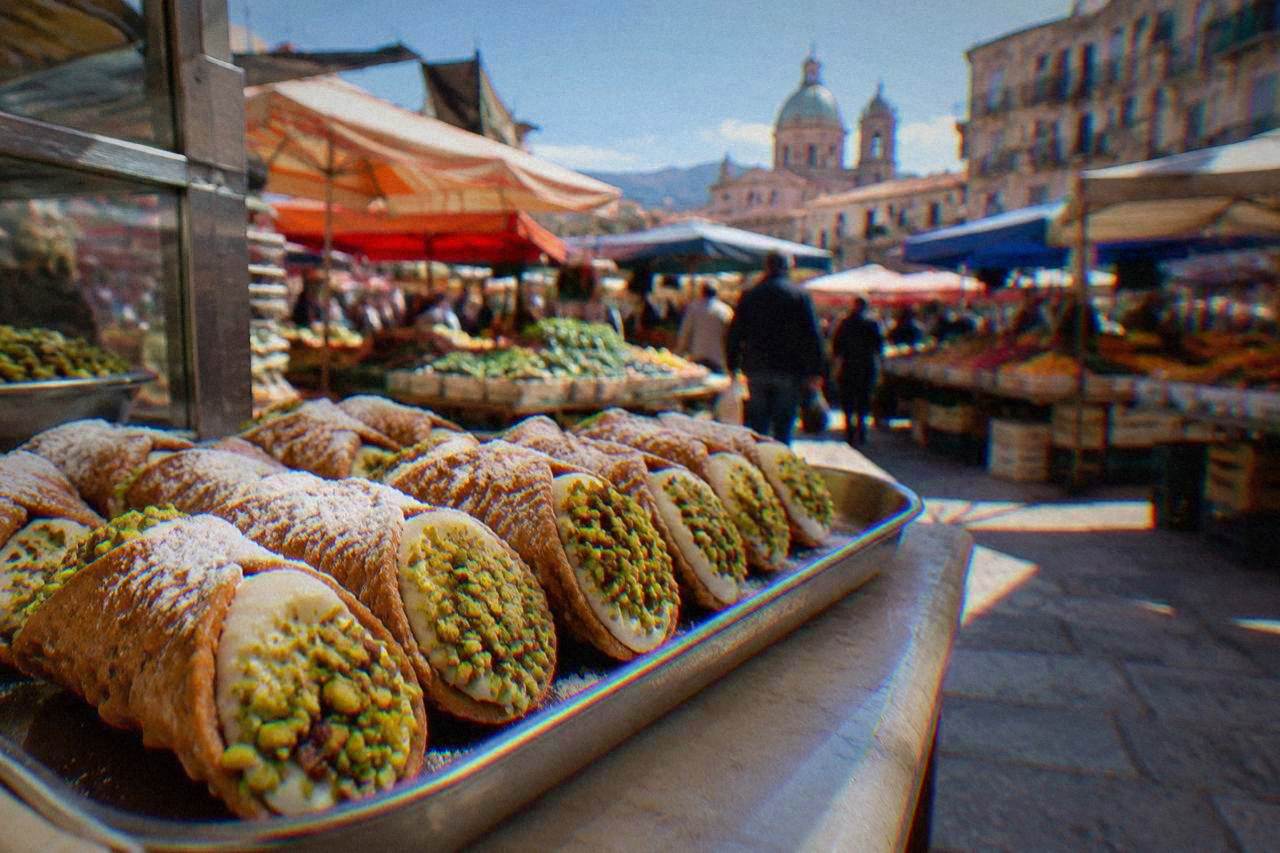
A cannolo is a tube of fried pastry dough, filled with sweetened ricotta, almost always sheep's milk ricotta in Sicily, and dressed at the ends with pistachio, candied fruit or chocolate chips. The shell is rolled around a metal form, fried until blistered and crisp, and the single rule that matters is that the filling goes in at the moment of ordering, so the shell stays hard. A cannolo assembled hours earlier has gone soft.
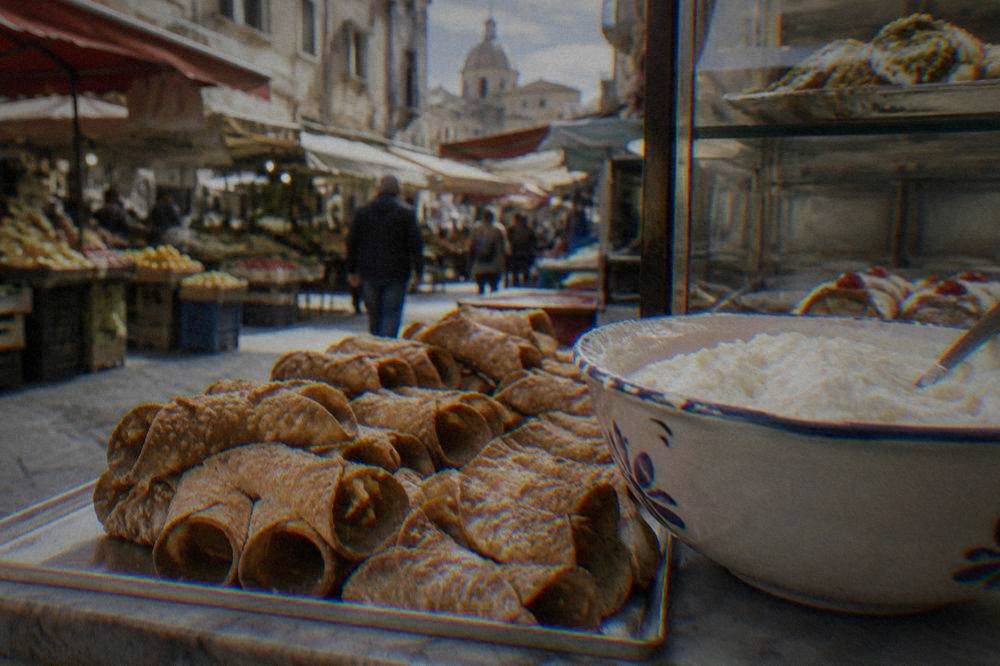
That rule is the one a visitor can check directly: a counter that fills to order, or a display of empty shells waiting beside the ricotta, is doing it the Palermo way. The ricotta is the heart of it, and the flavour is distinctly different from the cow's milk ricotta familiar outside Italy, denser and slightly tangy. Ends are finished in different ways, and the choice of finish, pistachio, candied orange, chocolate, is where each bar shows its hand.
The word itself is singular, and the plural is cannoli, a small point that matters when ordering at a busy counter. The name refers to the tube, from the Italian for a little cane, and the size varies from finger-length miniatures to the full pastry-shop format that defeats anything but a plate and a fork. Some counters offer the shell dipped in chocolate at the inner rim, a barrier against sogginess that also changes the last bite.
There is also a seasonal rhythm to watch. Ricotta production follows the pastoral calendar, and the freshest filling is a spring matter, while the fried shell carries no season at all. Visitors arriving for the Festino of Saint Rosalia, held each July from 10 to 15 July with the chariot procession on the 14th and the silver urn procession on the 15th, will find the whole city's sweet production at full volume. The municipal tourism page describes both processions in detail, and the sweets sold along the Cassaro route that week belong to the festival as much as to the pastry tradition.
Where Do You Find The Cannoli In Palermo?
Cannoli are made across Palermo in historic pastry bars, neighbourhood cafes and the street markets, and the honest division is between the famous old counter establishments in and around the centre and the market stalls of Ballarò, Capo and Vucciria, where sweets sit beside the fried savouries. The markets run mornings, with Ballarò Monday to Saturday from about 7:30 to about 20:00 and Sunday mornings, and Capo mornings and closed Sunday.
The three historic markets are the practical answer for a first visit. Ballarò sits in the Albergheria side of the old centre, Capo runs toward the Teatro Massimo end of Via Maqueda's crossing streets, and Vucciria, quieter by day and louder by night, links to the waterfront side around Piazza Marina. Each carries a different range, and the municipal tourism page lists all three among the city's main historic markets. A fuller layout of each quarter is in the old centre and mandamenti guide, and the Palermo markets guide covers stall-by-stall detail.
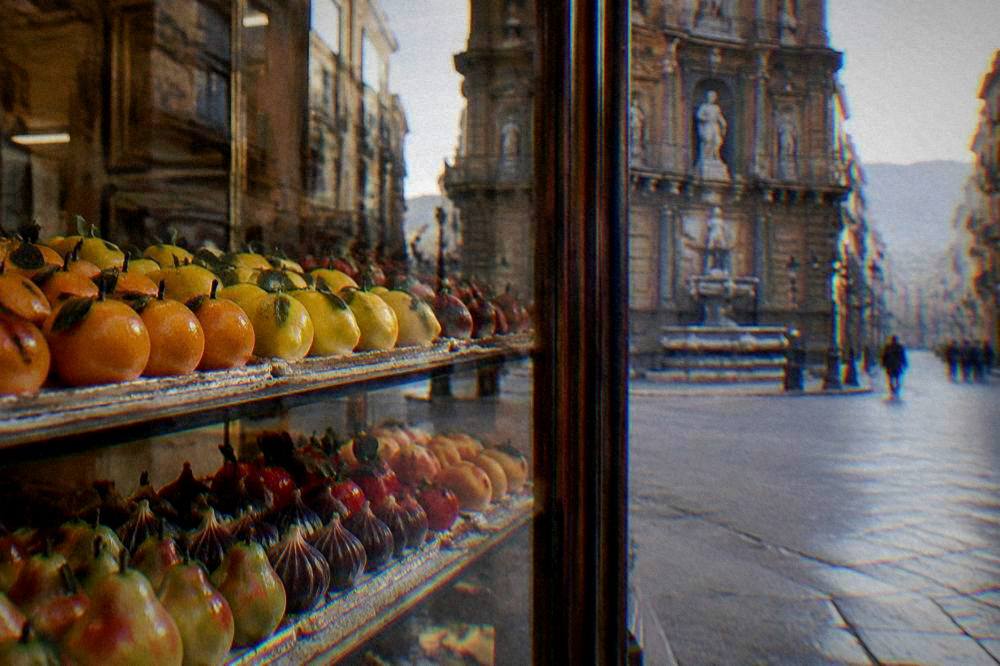
The crossing that organises all three is the Quattro Canti, where Via Maqueda and Corso Vittorio Emanuele meet and cut the old town into the four quarters the municipal page names Capo, Albergheria, Kalsa and Loggia. Every dessert walk in this article is measured from that point, and the Quattro Canti guide explains what stands at each of the four corners.
| Market | Days and hours | Nearest quarter | Notes |
|---|---|---|---|
| Ballarò | Monday to Saturday from about 7:30 to about 20:00, Sunday mornings | Albergheria | Largest of the three, sweets and fried snacks together |
| Capo | Mornings, closed Sunday | Capo | Runs toward the streets below the Teatro Massimo |
| Vucciria | Daytime market, strongest nights Thursday to Saturday | Loggia side | Evening food and drink scene after the stalls close |
Getting between them is cheap. The AMAT fares page shows 1.40 EUR for a 90-minute ticket, 3.50 EUR for a day ticket and 8.00 EUR for three days, with an onboard single at 1.80 EUR, and the four tram lines converge from the periphery to the centre. Buy before boarding and validate at once, which is the rule the fares page states plainly. The wider transport picture, including the tram lines and the suburban rail, is in the getting around guide.
A guided walk stitches the counters together without the guesswork. The Palermo food tour guide explains what a tasting walk covers, and the street food guide covers the savoury side that shares the same stalls.
What Sweets Come After The Cannolo In Palermo?
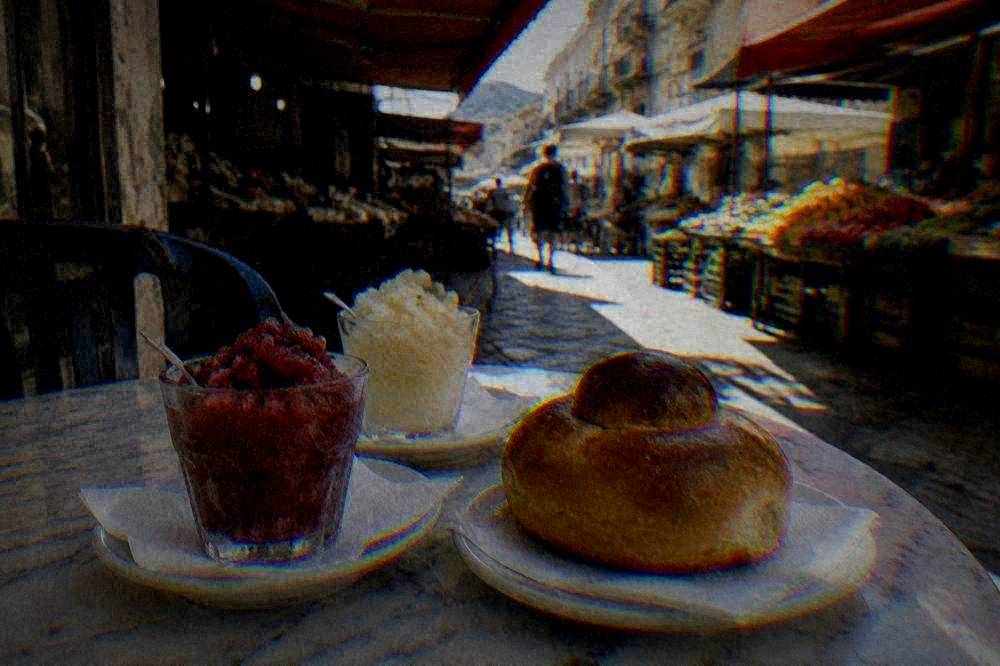
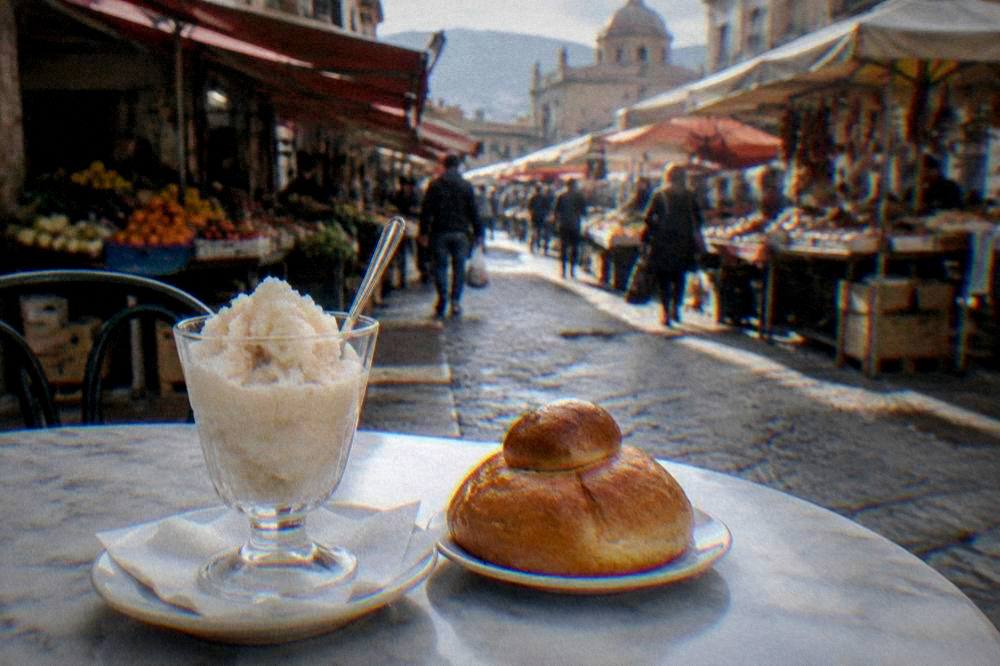
The sweets that follow cannoli in the Palermo order are cassata, the ricotta and marzipan cake iced and striped with candied fruit; almond and pistachio pastries of every size; gelato and granita eaten at breakfast with a brioche; and the fried savoury-sweet street items such as sfincione and panelle that blur the line between snack and dessert. Each has its own time of day.
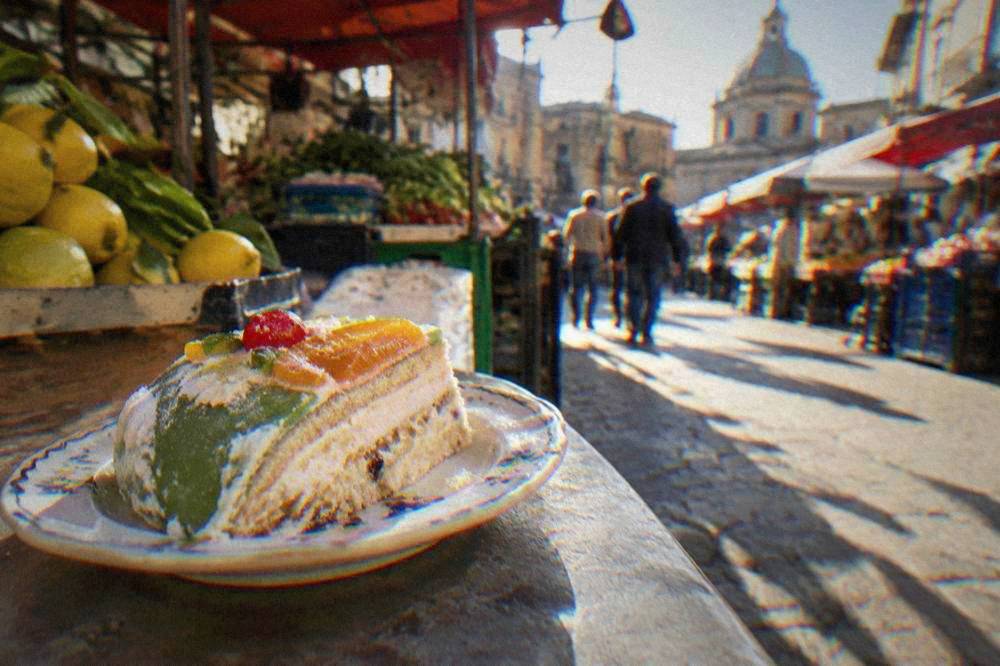
Cassata is the formal one, a celebration cake whose green marzipan shell and candied-fruit finish make it the most decorated thing on any counter. The almond pastries, small shaped fruits and shells called frutta martorana in Palermo, sit beside it and travel well, which the souvenir shops of the centre understand completely. Granita with brioche is the summer breakfast, and it is a full morning meal rather than a dessert here.
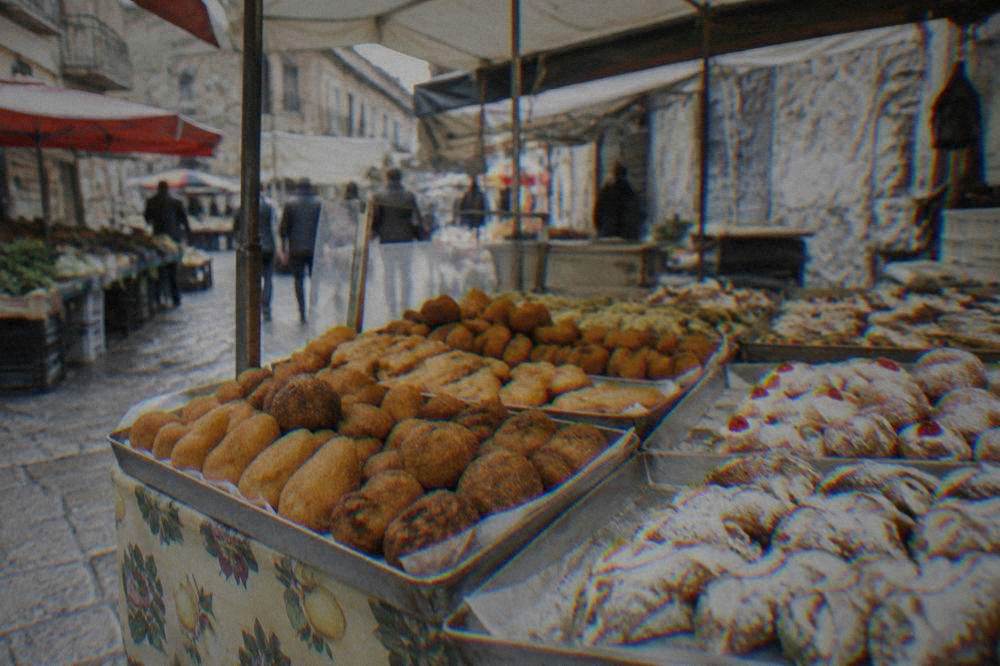
The fried side belongs to the markets. Sfincione, a thick spongy tomato and onion pizza baked in trays, and panelle, chickpea fritters in a bun, are covered in the dedicated sfincione and panelle guide. The arancina belongs to the same world, and the Accademia della Crusca accepts both forms of the word: arancina in Palermo and western Sicily, usually round, and arancino in Catania and the east, usually conical. Nobody in Palermo will accept that the eastern form is wrong, and the Crusca says both are attested. The arancine guide takes that argument further.
| Sweet or snack | What it is | When Palermo eats it |
|---|---|---|
| Cannolo | Fried pastry tube, ricotta filling, ends dressed with pistachio or candied fruit | Any time, filled to order |
| Cassata | Sponge and ricotta cake under marzipan, icing and candied fruit | Celebrations and Sunday tables |
| Frutta martorana | Almond paste shaped and painted as fruit | Gifts, souvenirs, November graveside tradition |
| Granita with brioche | Flavoured ice, often almond or lemon, with a sweet bun | Summer breakfast |
| Sfincione | Thick tray-baked dough with tomato, onion and cheese | Afternoon market snack |
| Panelle | Chickpea fritters in a sesame bun | Lunch on the street |
How Do The Seasons Change The Dessert Counter In Palermo?
The Palermo sweet calendar peaks twice: around Easter, when lamb-shaped marzipan and cassata fill the windows, and in July for the Festino of Saint Rosalia from 10 to 15 July, while summer belongs to granita and gelato and winter to hot sweets and fried dough. The climate table, modelled ERA5 normals for 1991 to 2020, shows why: July is the driest month at 7 mm and August the warmest at a 26.8 C mean, so the cold counter rules the hot months.
Easter Sunday falls on 28 March 2027, and the weeks before it are when the marzipan workshops produce their most decorated work. The Festino brings the chariot procession on 14 July along the Cassaro to Porta Felice with fireworks, and the silver urn procession on 15 July, both described on the municipal tourism page, with street sellers working the whole route. Autumn shifts the counter toward warm sweets and the almond end of the display, and October, the wettest month at 81 mm, is granita's quiet season.
| Season | What the counter shows | Weather context, modelled 1991 to 2020 normals |
|---|---|---|
| Spring | Lamb and dove marzipan shapes, fresh ricotta filling | March mean 13 C, rainfall easing |
| Summer | Granita, brioche, gelato, cannoli at the Festino | July driest at 7 mm, August warmest at 26.8 C mean |
| Autumn | Almond pastries, baked sweets, hot chocolate returns | October wettest at 81 mm |
| Winter | Fried sweets, hot ricotta dishes, cassata for Christmas | January mean 11.3 C |
None of this requires booking anything. It simply shapes what a visitor will find on any given day, and a counter that has run out of a seasonal item has not failed, it has finished the season.
Can You Learn To Make Cannoli And Sicilian Sweets Yourself?
Yes, cooking classes in Palermo cover the sweet side alongside the savoury, and the common formats are pasta and dessert classes, pizza and gelato classes, and market-to-table sessions that start with shopping at Ballarò and end at the stove. The desserts taught are typically cannoli filling, gelato or tiramisu rather than the full cassata process, which is a professional day's work. Class listings on the operator's live listing state exactly which dishes each session covers.
To make the gelato yourself with wine and dinner included, book a pizza and gelato cooking class here.
This matters because cassata in particular is not a home recipe so much as a workshop production, and a single class cannot compress it. What a class can do is teach the ricotta working, the shell frying and the gelato churning, and those are the parts that transfer to a home kitchen. The cooking class guide compares the formats, and booking holds the same advice as everything on this site: check the cancellation terms on the listing.
How Do You Build A Dessert Walk Through Palermo?
A realistic dessert walk runs from the Capo market in the morning, when the fried snacks are fresh, down through the Quattro Canti crossing and into Ballarò before the afternoon heat, finishing in the Vucciria streets after dark when the evening stalls open. The whole route sits inside the four mandamenti, Capo, Albergheria, Kalsa and Loggia, that the crossing of Via Maqueda and Corso Vittorio Emanuele cuts at the Quattro Canti.
The walk needs almost no transport. The Quattro Canti is the fixed point of the old centre, and the one day in Palermo itinerary uses the same spine for a general visit. Add the Kalsa quarter on the east side for the quieter pastry bars away from the market noise, and the Kalsa guide maps that. For a longer stay, the two days in Palermo and three days in Palermo itineraries fold the dessert stops into fuller days.
| Stop | Quarter | What to order | When |
|---|---|---|---|
| Capo market | Capo | Panelle in a bun, then a cannolo filled to order | Morning, stalls close early afternoon |
| Quattro Canti | Centre crossing | Nothing, it is the landmark that orients everything | Any time |
| Ballarò | Albergheria | Sfincione slice and a granita | Midday to early evening |
| Vucciria streets | Loggia | Cannoli from the late stalls, an evening drink beside | Evening, Thursday to Saturday strongest |
Where Does Sicily's Sweet Country Start Beyond Palermo?
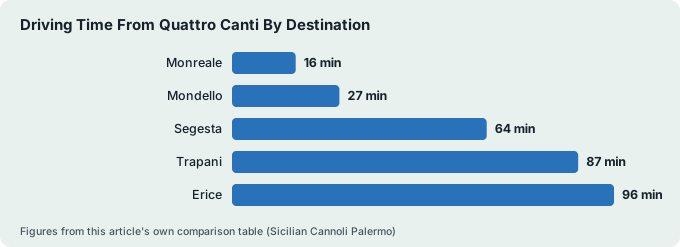
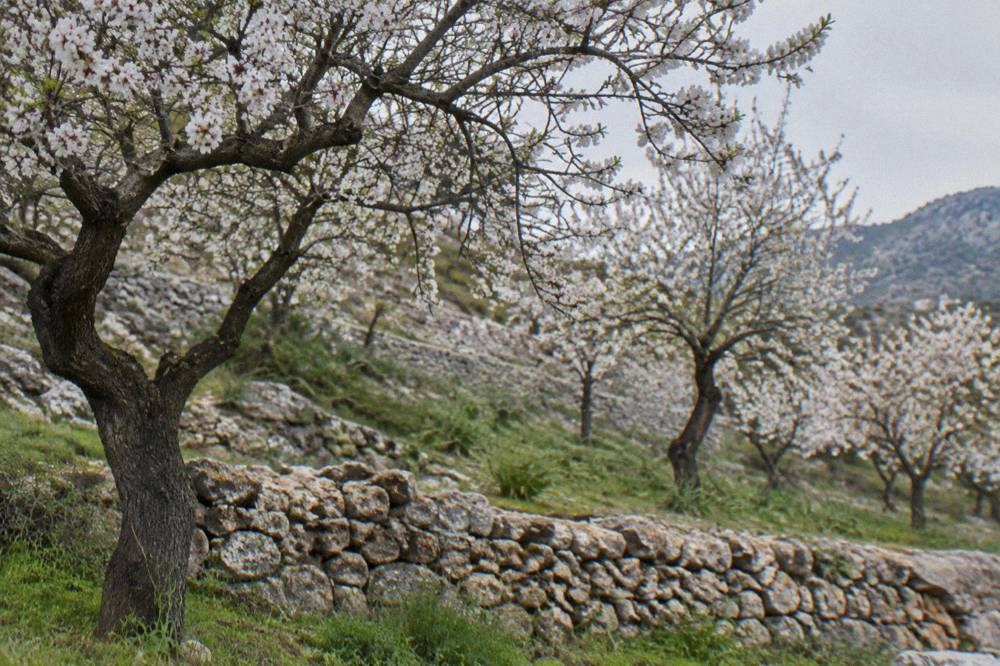
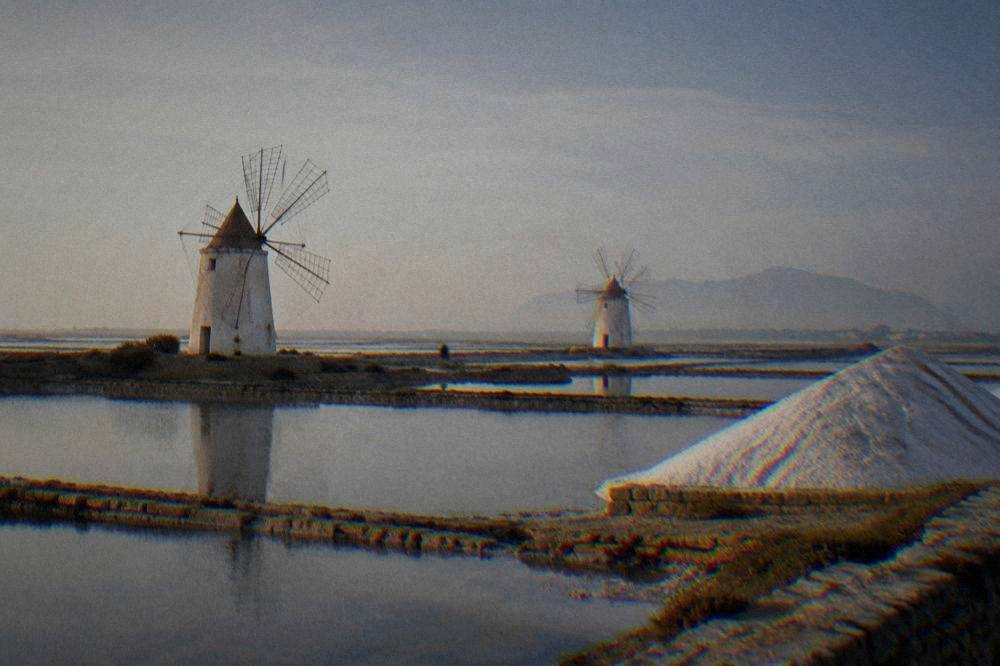
The countryside that supplies Palermo's desserts begins within an hour of the city: the almond and pistachio groves and the temples of Agrigento sit about two hours and sixteen minutes by road from the Quattro Canti, the salt pans and Erice that anchor Trapani's pastry tradition are 87 to 96 minutes out, and Monreale, where the cathedral's cloister sits at 8 EUR full and 4 EUR reduced, is 16 minutes away.
Agrigento's Valley of the Temples, a UNESCO site inscribed in 1997, is the long day at 129 km, and the Agrigento guide covers it in full. The temples themselves cost 14 EUR full and 7 EUR reduced and are open 8:30 to 20:00. Trapani and Erice carry the western pastry tradition, and the Erice cable car runs 9 EUR one way and 15 EUR return. Segesta, on the same western road, is 14 EUR full and 7 EUR reduced. The Trapani and salt pans guide and the Segesta guide hold the detail.
| Destination | Driving time from Quattro Canti | Entry cost |
|---|---|---|
| Monreale | 16 minutes | Cloister 8 EUR full, 4 EUR reduced |
| Mondello | 27 minutes | Beach: mixed free stretches and paid lidos |
| Segesta | 64 minutes | 14 EUR full, 7 EUR reduced |
| Trapani | 87 minutes | Salt pans museum free |
| Erice | 96 minutes | Cable car 9 EUR one way, 15 EUR return |
| Agrigento, Valley of the Temples | 2 hours 16 minutes | 14 EUR full, 7 EUR reduced |
For a first western day, one organised option that pairs the city with its surroundings is the Valley of the Temples day trip, and Check availability before locking dates, since summer departure slots fill around the temples' evening openings.
What Should You Know About Eating Sweets In Palermo Practically?
The practical rules are few: coperto, the cover charge, is legal when printed on the menu, tipping is not obligatory, tap water in Palermo is suitable for drinking according to AMAP, and the tourist tax, charged by the accommodation for a maximum of four consecutive nights, runs about 3 to 5 EUR per night by hotel rating with about 4 EUR for short-term rentals from 1 July 2025, to be confirmed at booking.
None of that is dessert-specific, but all of it lands at the table. The itemised bill is the reader's own check: the coperto appears as a line, and if it is not printed, it should not be charged. Water from the tap is a position the water utility itself states, so refilling a bottle is normal practice. The tax is collected where you sleep, not where you eat.
Safety on a dessert walk is the same as on any city walk. The US State Department advisory of September 2026 notes that petty crime such as pickpocketing and purse snatching is common in popular tourist locations and on public transportation, and the UK FCDO says the same about city centres and major attractions. A bag zipped and held in front on a crowded bus is the working answer, and the is Palermo safe guide expands on it.
For timing, the climate table, modelled ERA5 normals for 1991 to 2020, shows July the driest month at 7 mm and August the warmest at a 26.8 C mean, while October is the wettest at 81 mm. Granita weather is the July and August question, and a market walk in October carries an umbrella as often as an appetite.
Which Palermo Dessert Experiences Are Worth Booking?
The bookable experiences that connect to this page are food and walking tours that include the market sweets, cooking classes that teach cannoli filling and gelato, and day trips into the almond and pistachio country west and south of the city. Every price, rating and duration for these renders from the listing itself rather than from this page, and cancellation terms are shown at booking.
The three below are the picks this site carries for that combination, and the second band of recommendations sits here because it is the decision point of the article: after the dessert walk and before the day trip.
Between them, the Segesta, Erice and salt pans excursion covers the western pastry road in one movement, and the Monreale, Catacombs and Mondello trip pairs a short-drive morning with the beach in the afternoon. Both are day trips, not city tours, and both leave the dessert walk itself to the food formats described earlier.
Common Questions About Sicilian Desserts In Palermo
Are cannoli in Palermo filled to order?
The accepted practice is yes: the fried shell is filled with ricotta at the moment of ordering so it stays crisp, and a counter that fills to order is the one to choose. A display of shells sitting beside the filling is the visible sign.
Is it arancina or arancino in Palermo?
The Accademia della Crusca accepts both forms. Palermo and western Sicily say arancina, usually round, while Catania and eastern Sicily say arancino, usually conical, and both are historically attested.
What is the difference between cannoli and cassata?
Cannoli are crisp fried pastry tubes filled with ricotta, while cassata is a cake layered with ricotta under a marzipan shell, icing and candied fruit. Cannoli are a counter order, cassata a celebration slice.
Where can you eat sweets late at night in Palermo?
The Vucciria streets carry the evening scene, strongest Thursday to Saturday, with stalls and bars serving after the daytime market closes. The nightlife around Politeama and Mondello in summer adds further options.
Can you take Sicilian sweets home from Palermo?
Almond pastries such as frutta martorana travel well, and filled cannoli do not, because the shell softens within hours of filling. Some shops sell the shells packed separately with the ricotta for filling at home.
Do you tip for dessert and coffee in Palermo?
Tipping is not obligatory. The coperto, a cover charge, is legal when printed on the menu, and the itemised bill shows it as a line if it applies.
The last word on Palermo's sweets belongs to the order itself: one cannolo filled while you watch, one slice of cassata when the counter has it, and a granita in the morning heat. Everything else, the markets, the classes and the day trips into the countryside that grows the almonds and pistachios, is the structure around that simple pleasure.