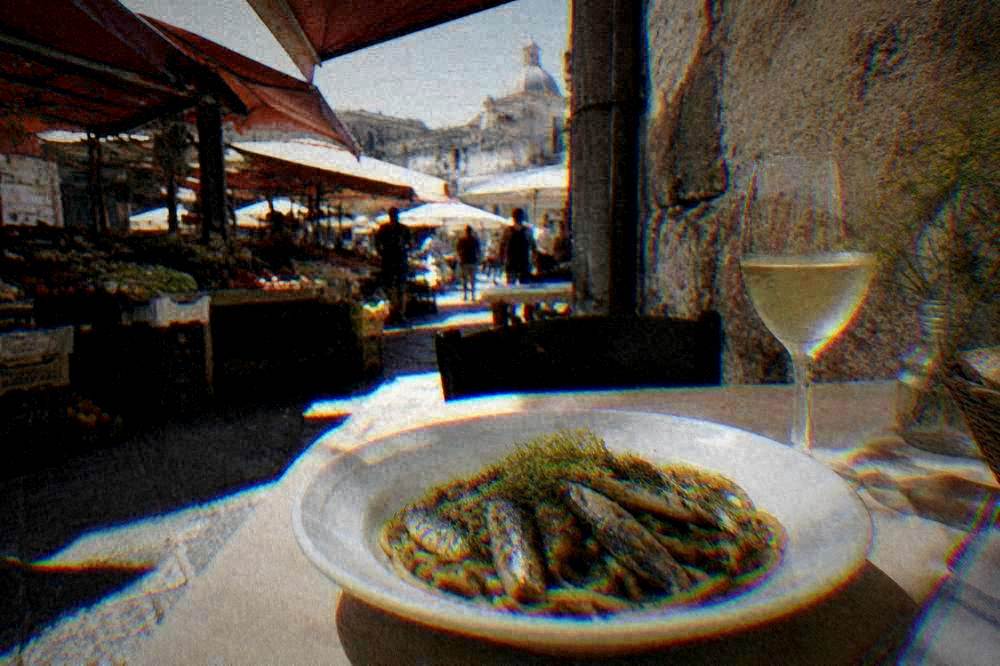
Palermo Markets
Ballarò, Capo and Vucciria are the three historic markets of Palermo, the coastal capital of Sicily, each sitting in a different quarter of the old centre. This guide sets out what each one sells, when the stalls trade, what to eat there and how to reach them on foot or by city transport.
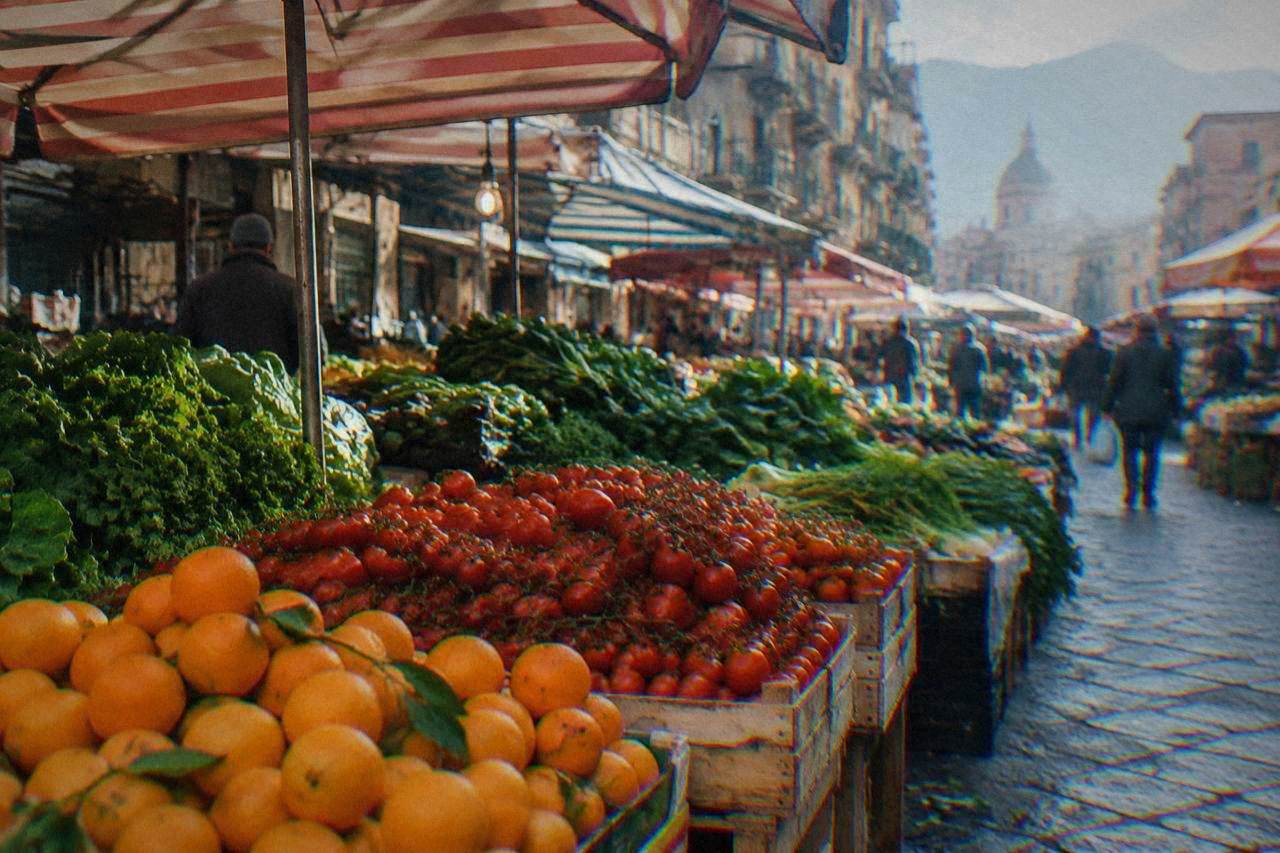
Short answer
The main historic markets of Palermo are Ballarò in the Albergheria quarter, Capo near the cathedral, and Vucciria between the Cassaro and the sea. The municipal tourism page describes Ballarò as the largest, of Arab origin, trading roughly Monday to Saturday from about 7:30 with Sunday mornings as well. All three are free to wander.
Palermo, the coastal capital of Sicily on the Tyrrhenian Sea, runs its daily food trade through historic street markets rather than through a single central hall. The municipal tourism page names three of them, Ballarò, Capo and Vucciria, as the city's main historic markets, and each sits in a different quarter of the old centre that the crossing of Via Maqueda and Corso Vittorio Emanuele divides at the Quattro Canti. The stalls spill across open streets under awnings, selling fish, vegetables, fruit, cheese and cooked street food, and entry costs nothing: a market here is a public street with traders in it, not a ticketed attraction.
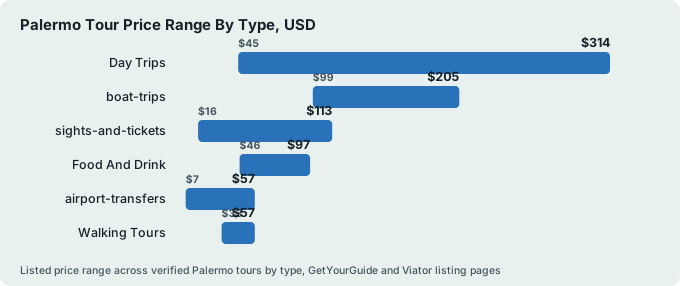
For planning purposes the three markets are close together. Ballarò sits inland of the Cassaro in the Albergheria side of the centre, Capo runs toward the cathedral in the north of the old town, and Vucciria lies between the Cassaro and the old harbour of La Cala. A visitor based anywhere in the historic centre can walk to all three, and the pages on getting around Palermo and where to stay in Palermo cover the transport and the quarters in more detail. This page from the Palermo Italy Travel Guide editorial desk stays on the markets themselves: what each sells, when trading happens, what to eat and how to behave at the stalls.
What Are The Palermo Markets And Where Are They?
The three main historic markets of Palermo are Ballarò, Capo and Vucciria, all inside the old centre and all free to enter. The municipal tourism page names them together as the city's main historic markets and describes Ballarò as the largest and of Arab origin, trading roughly Monday to Saturday from about 7:30 to about 20:00, with Sunday mornings as well. Capo and Vucciria are the other two named on the same page.
The old centre of Palermo is cut into four quarters, the mandamenti, by the crossing of Via Maqueda and Corso Vittorio Emanuele at the Quattro Canti: Capo, Albergheria, Kalsa and Loggia. The markets map onto that geography. Capo market runs through the quarter of the same name, close to the cathedral. Ballarò occupies the Albergheria side, inland of the Cassaro, the old straight street that is today's Corso Vittorio Emanuele. Vucciria sits in the Loggia quarter, between the Cassaro and the old harbour of La Cala, which the Palermo harbour and La Cala page covers in detail.
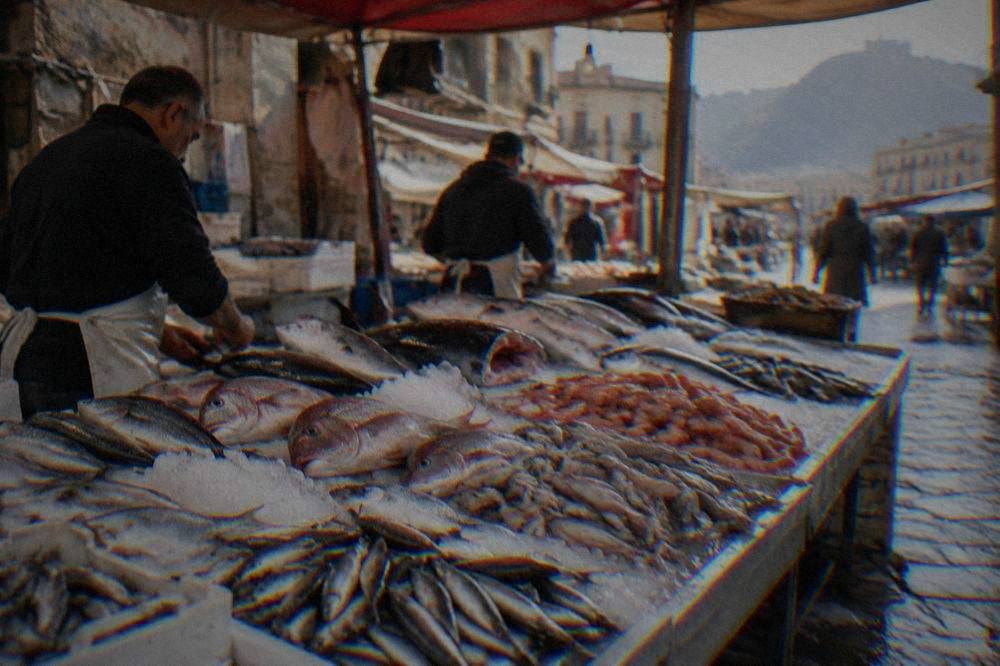
Each market grew as a street trading place rather than a building, which is why none has a single entrance, a gate or a ticket point. The stalls line lanes that stay public, so a visit can last five minutes or two hours and can be combined with the churches and palaces around them. The old town guide lays out the quarters street by street, and the one day in Palermo itinerary shows how a market pass fits into a first day.
| Market | Quarter of the old centre | Character | Nearest landmark |
|---|---|---|---|
| Ballarò | Albergheria, inland of the Cassaro | Largest of the three, heavy on produce and fish | Quattro Canti, a short walk south |
| Capo | Capo, north of the Cassaro | Food stalls mixed with clothes and household goods | Palermo Cathedral |
| Vucciria | Loggia, toward the sea | Daytime food stalls, evening bar and street scene | Foro Italico and La Cala |
Which Palermo Market Should You Visit First?
Ballarò is the one to see first, because the municipal tourism page describes it as the largest of the historic markets, of Arab origin, and its trading day runs longest, roughly Monday to Saturday from about 7:30 to about 20:00 with Sunday mornings as well. Capo makes a strong second stop beside the cathedral, and Vucciria works best as an evening destination.
That ordering reflects how the three trading days differ. Ballarò holds its full stall range across the widest hours, so a mid-morning arrival finds the fish counters, the vegetable pyramids and the street food stands all active. Capo concentrates its real trading into the morning, and the municipal page pairs it with the other two as a food market first and foremost. Vucciria still trades food by day, but its Piazza Caracciolo and Piazza Garraffello end is better known after dark, when the bars and the street food sellers take over, a shift the Palermo nightlife page picks up.
A guided walk is one way to cover the ground with a local lead. The Palermo food tour page explains what a guided tasting walk covers, and the Palermo walking tour page covers the general city walks that route through the markets. Tip-based walks also run in Palermo; confirm the meeting point and the expected contribution with the guide directly.
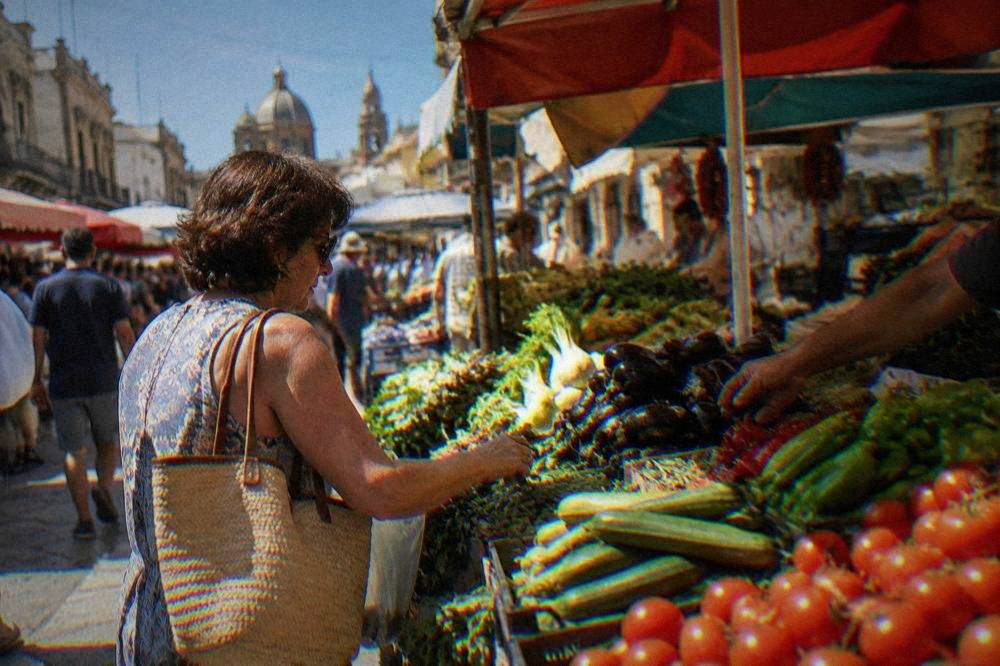
The choice also depends on the day of the week. Sunday changes the picture at all three: the municipal page gives Ballarò Sunday mornings, Capo's food trading is a Monday to Saturday affair, and Vucciria's daytime stalls thin out while its evening scene carries on regardless. Anyone planning a Sunday in the city should read the Palermo on a budget page, which lists the free sights that fill a Sunday afternoon once the stalls close.
When Is Ballarò Market Open In Palermo?
Ballarò trades roughly Monday to Saturday from about 7:30 in the morning to about 20:00 in the evening, with stalls out on Sunday mornings too, according to the municipal tourism page. Those are approximate pattern hours rather than a fixed timetable, and individual stalls set their own times, so late evening and early afternoon coverage varies from lane to lane.
The word "roughly" matters here. Street markets in Palermo are gatherings of independent traders, not a managed hall with one clock, so the municipal page gives pattern hours and no more. The fish counters tend to finish first, because fresh catch sells through in the morning, while the fruit, vegetable and household stalls run later into the evening.
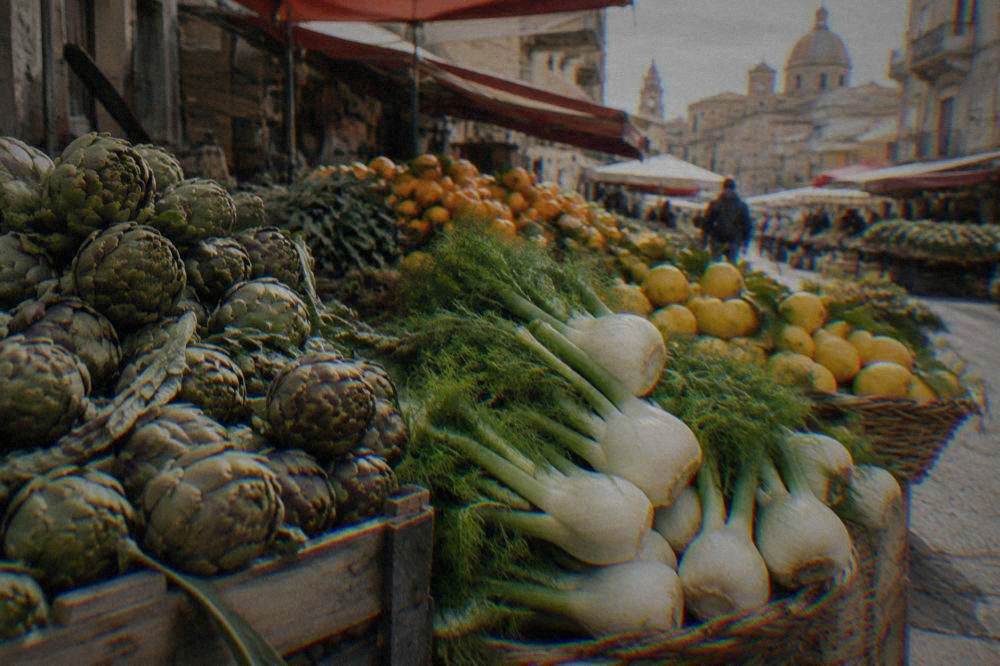
Ballarò also carries the longest historical description of the three. The market's name, its grid of lanes and its trading style are the visible inheritance, and the visitor who walks it after reading the Albergheria and Ballarò area guide will recognise the streets immediately.
| Market | Main trading days | Pattern hours | Sunday |
|---|---|---|---|
| Ballarò | Monday to Saturday | About 7:30 to about 20:00 | Morning stalls |
| Capo | Monday to Saturday | Mornings, stalls wind down after midday | No regular food trading |
| Vucciria | Monday to Saturday | Daytime stalls, evening food and bar scene | Morning stalls, evening scene continues |
What Should You Eat At The Palermo Markets?
The cooked stalls at the Palermo markets centre on fried and filled street food: arancine, panelle, sfincione, crocche and cuccia, alongside seasonal fruit, olives, cheese and fresh fish. The Accademia della Crusca accepts both arancina and arancino as correct, with Palermo and western Sicily using the feminine arancina for the round fried rice ball, so either word works at a stall.
The fried counter is where a market visit turns into lunch. Panelle are chickpea fritters, often served in a sesame roll; sfincione is a thick-crust Sicilian pizza sold by the slice; crocche are potato croquettes; and arancine are fried rice balls with a ragu or butter filling. The Palermo street food page walks through each of these in detail, and the dedicated pages on arancine and on sfincione and panelle go further still. Sweet options include cannoli filled to order and the Sicilian desserts the city is known for.
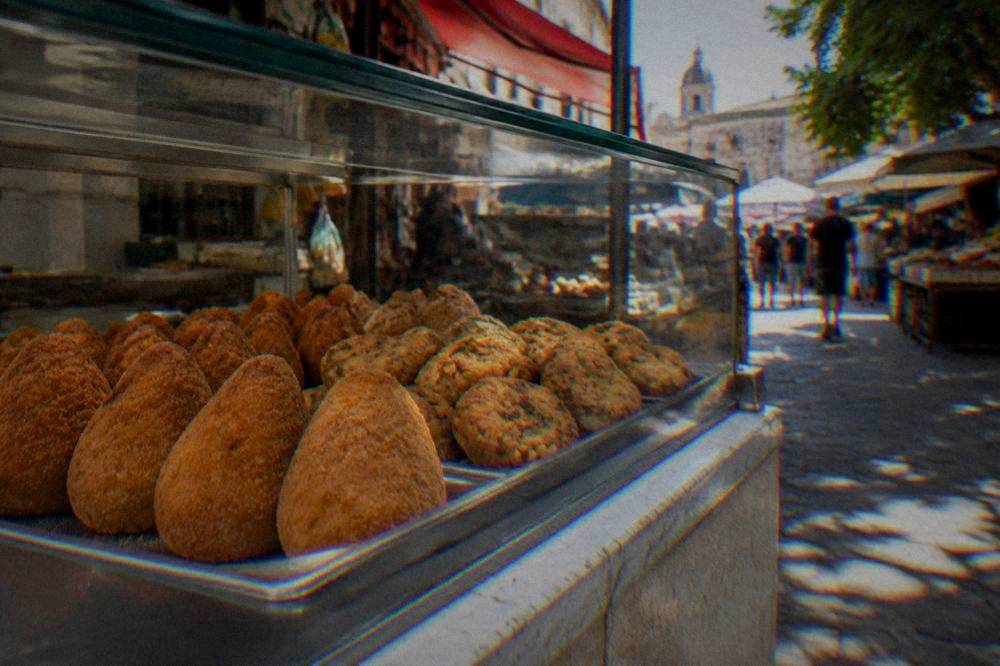
Two customs are worth knowing before eating at or near the stalls. A coperto, a cover charge, is legal in Italy when it is printed on the menu, and tipping is not obligatory anywhere. And the municipal water utility, AMAP, states that the tap water distributed in Palermo is suitable for drinking, so a refillable bottle is a reasonable thing to carry; the tap water question is covered fully on the site's water safety page. No tipping percentage is printed here because no official one exists.
| Food | What it is | Where to find it |
|---|---|---|
| Arancina | Round fried rice ball with a hot filling, the Palermo form of the word | Fried food counters at all three markets |
| Panelle | Chickpea flour fritters, often in a sesame roll | Ballarò and Capo fryers |
| Sfincione | Thick-crust pizza by the slice, onion and anchovy topping | Market bakeries and street sellers |
| Crocche | Potato croquettes, sometimes with cheese | Fried food counters |
| Cannolo | Pastry tube filled with sweet ricotta to order | Pastry stalls and nearby bars |
| Fresh fruit and olives | Seasonal citrus, prickly pears, table olives by weight | Produce stalls at Ballarò |
A guided tasting walk bundles several of these stops with the history of the streets around them. The Palermo restaurants page picks up where the stalls end, for sit-down lunches and dinners away from the market lanes.
Want to cook the food as well as taste it? Book a Sicilian cooking class here.
What Is Vucciria Market Like Today?
Vucciria today splits into two: a reduced daytime food market on its side streets, and an evening street scene around Piazza Caracciolo and Piazza Garraffello, where bars, street food sellers and crowds gather, strongest from Thursday to Saturday and in the warmer months. The municipal tourism page still lists Vucciria among the three main historic markets.
The shift matters for planning. A visitor arriving at Vucciria at ten in the morning finds working stalls but a quieter square; the same square after dark fills with people eating and drinking from the bars that open onto it. The evening scene runs daily but is strongest on weekend nights and through summer, and it is the reason Vucciria appears on the nightlife pages as well as the market pages.
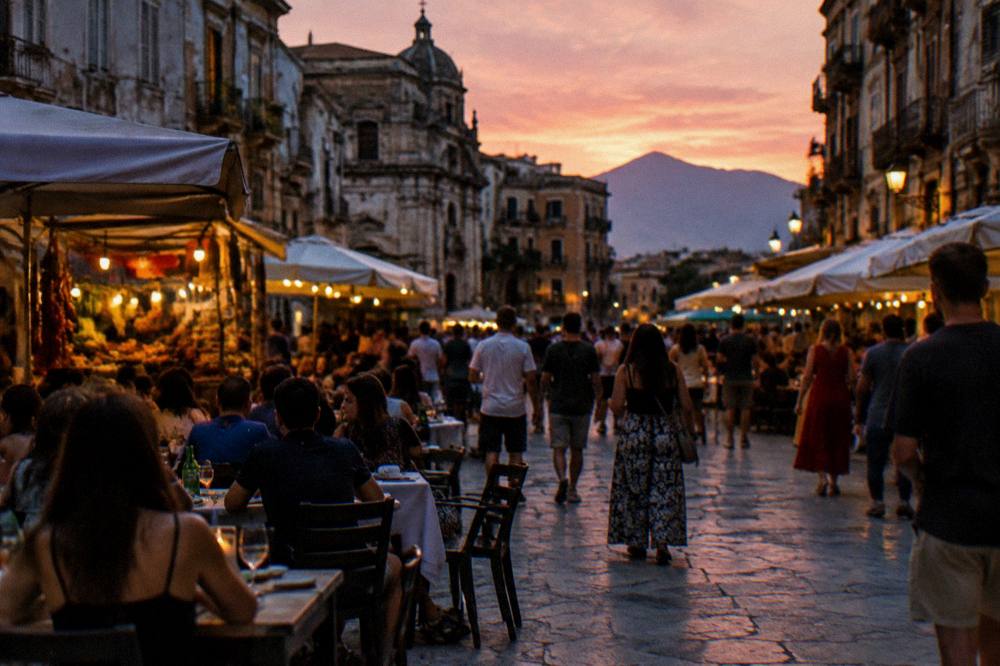
Vucciria's position, in the Loggia quarter between the Cassaro and the sea, makes it the natural market stop on a walk that takes in the Foro Italico seafront and the old harbour. The Foro Italico page and the harbour guide both sit within a few minutes' walk, and the Kalsa quarter begins just east across Via Maqueda. A loop of Vucciria, the seafront and the Kalsa covers the southern half of the old centre in one afternoon.
What Does Capo Market Sell In Palermo?
Capo sells the full historic market range, fresh fish, meat, fruit, vegetables, cheese and bread, mixed with clothing and household stalls along its lanes, which run from the Cassaro up toward Palermo Cathedral. Its food trading is a morning affair, Monday to Saturday, and it does not operate a regular Sunday food market.
Capo is the market most easily combined with the city's headline sights. The lanes climb from near the Cassaro toward the cathedral, so a morning at the stalls leads naturally to the cathedral itself, to the Via Roma axis, and down to the Quattro Canti where the four quarters meet. The Palermo cathedral page covers the building, its royal tombs and its monumental area, and the Quattro Canti page explains the crossing that gives the quarters their names.
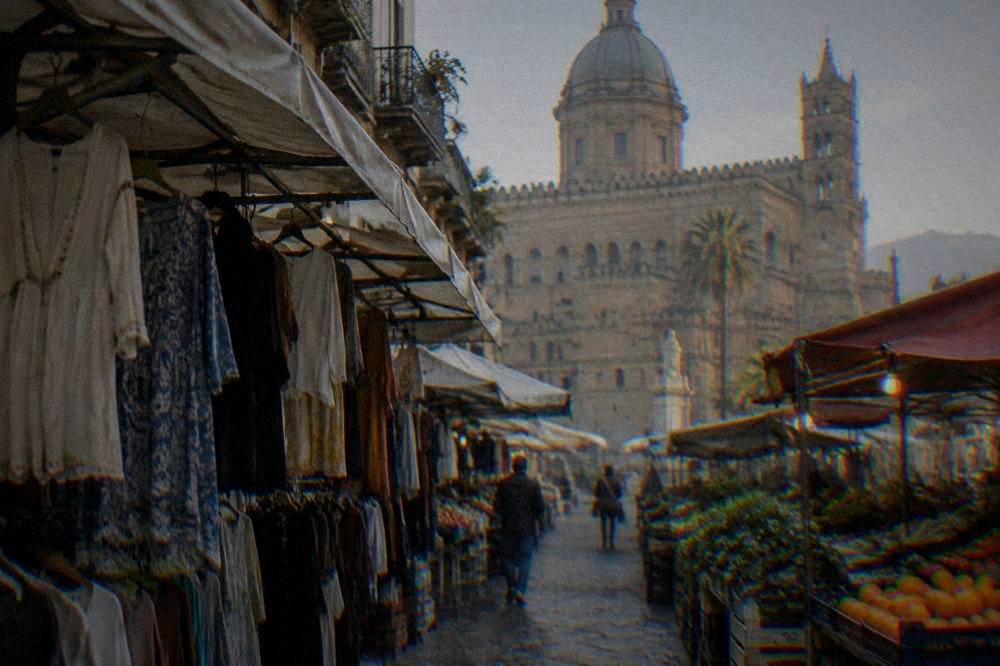
Like the other two, Capo is free to enter and has no single entrance or ticket point. The practical advice is the same for all three markets: carry small notes for the stalls, expect crowds and scooters in the narrower lanes, and keep bags closed and in front in the busiest stretches, the ordinary precautions for any crowded street. The site's safety pages carry the official advisory wording on petty crime in tourist areas and on public transport.
How Do You Get To The Markets In Palermo?
All three Palermo markets sit inside the old centre and are reached on foot from anywhere in that centre: Ballarò in Albergheria, Capo north of the Cassaro, Vucciria toward the sea. City buses and the four AMAT tram lines serve the centre, an ordinary AMAT ticket covers 90 minutes from validation, and no market has a car park, so arriving by public transport or on foot beats driving.
The historic centre is compact, and the three markets sit within a short walk of one another along the Cassaro axis. From Palermo Centrale station, the markets are a straight walk up Via Maqueda or a short bus ride; the Palermo train station page covers the station and its surroundings. Visitors landing at Falcone Borsellino airport connect to the centre by airport bus, and the airport to city centre and Palermo airport pages set out the options, including the airport bus product listed below.
Driving to the markets is the wrong plan. The historic centre holds a camera-enforced limited traffic zone with paid access permits, on-street parking is limited, and the market lanes themselves are narrow and busy. The driving and parking page explains the zone and the permits for anyone who has a car in Sicily, and the getting around Palermo page covers tickets, trams and buses in full.
| Starting point | Best way to the markets | Notes |
|---|---|---|
| Historic centre hotel | On foot | All three markets are inside the old centre |
| Palermo Centrale station | On foot up Via Maqueda or a short bus ride | Bus stops sit outside the station |
| Falcone Borsellino airport | Airport bus to Politeama, Via Roma or the Centrale area, then walk or bus | Airport connections have their own guide page |
| Mondello or the coast | City bus toward the centre, then walk | Beach transfers covered on the beaches page |
Do You Pay To Enter The Palermo Markets?
No, entry to Ballarò, Capo and Vucciria costs nothing: the municipal tourism page lists free entry to the historic markets, and they are public streets rather than enclosed sites. Money changes hands only at the stalls, for food, produce and goods, and prices are set by each trader, so haggling politely over produce is normal practice at a street market.
That makes the markets one of the free anchors of any Palermo itinerary, alongside the Quattro Canti, the Foro Italico seafront and Villa Giulia. The free-entry list, together with the free first Sunday of the month at many state and regional museums, is assembled on the budget page, and the is Palermo worth visiting page weighs what the city offers against the cost of getting there. At the stalls themselves, the practical rules are simple: prices are per kilo or per item and are usually displayed, and a receipt should accompany any purchase.
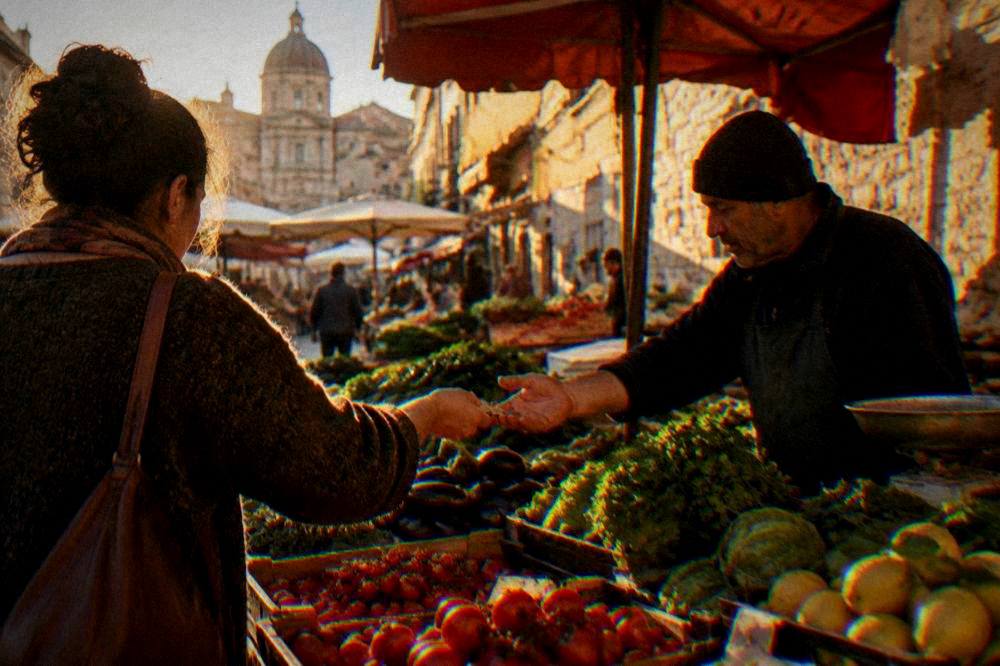
The markets also anchor longer plans. Many visitors pair a market morning with a day trip the following day, and the Agrigento excursion below is one such pairing, combining the Valley of the Temples with travel from Palermo; the Agrigento and how many days in Palermo pages help with the arithmetic. The temples site holds UNESCO inscription from 1997, a status it shares as a listing with the Arab-Norman Palermo property inscribed in 2015, which includes Palermo Cathedral and the other components covered across this site.
Common Questions About The Palermo Markets
When is Ballarò market open in Palermo?
Roughly Monday to Saturday from about 7:30 to about 20:00, with stalls on Sunday mornings, according to the municipal tourism page. Individual traders set their own hours within that pattern, and the fish counters usually finish earlier than the produce stalls.
Do you pay to enter the Palermo markets?
No. Entry is free at Ballarò, Capo and Vucciria, which are public streets rather than enclosed sites. You pay only for what you buy at the stalls.
Which Palermo market should you visit first?
Ballarò, because the municipal tourism page describes it as the largest of the historic markets and its trading day runs longest. Capo pairs well with the cathedral in the morning, and Vucciria works best as an evening stop.
Is it arancina or arancino in Palermo?
Both are correct according to the Accademia della Crusca. Palermo and western Sicily use the feminine arancina, typically round, while Catania and eastern Sicily use arancino, typically conical.
Can you drink tap water in Palermo?
Yes. The municipal water utility AMAP states that the water distributed in Palermo is suitable for human consumption, so refilling a bottle near the markets is a normal thing to do.
What should you eat at the Palermo markets?
The fried counters sell arancine, panelle, crocche and sfincione, with cannoli filled to order for something sweet. Seasonal fruit, olives and cheese come by weight from the produce stalls.
A morning at Ballarò, a cathedral visit above Capo and an evening in Vucciria together give a fair picture of what Palermo's street trading has been for centuries, and every one of those stops costs nothing to walk into.