Segesta From Palermo
Segesta, an ancient site with a temple and a hilltop theatre, sits inland in western Sicily and is one of the straightforward day trips from Palermo, reachable by bus, by tour or with a hire car.
Short answer
Segesta lies in western Sicily and is reached from Palermo by Segesta Autolinee bus in about 70 minutes, by organised excursion, or by car. Entry costs 14 EUR full and 7 EUR reduced, rising to 16 EUR and 9 EUR with temporary exhibitions, and hours shift with the seasons.
Palermo, the coastal capital of Sicily on the Tyrrhenian Sea, makes a practical base for the ancient site of Segesta, whose Doric temple and hillside theatre stand on open ground in the west of the island. The regional parks page lists the entry prices and the seasonal opening hours, the bus operator runs a direct line, and several full-day excursions fold Segesta into a western Sicily loop that also takes in Erice and the Trapani salt pans.
Where Is Segesta And Why Does It Pair Well With Palermo?
Segesta sits inland in western Sicily, in hilly countryside in the province of Trapani, and the site is close enough to Palermo to work as a half-day or full-day trip. The site has two main monuments, a temple and a theatre, set on opposing hilltops with a valley between them. The regional archaeological park that runs it publishes its own ticketing and hours. From Palermo the logical pairings are the hill town of Erice and the salt pans near Trapani, both further west, or Scopello and the Zingaro reserve on the coast. The municipal tourism pages in Palermo list Segesta among the standard day trips out of the city, alongside Monreale and Cefalu.
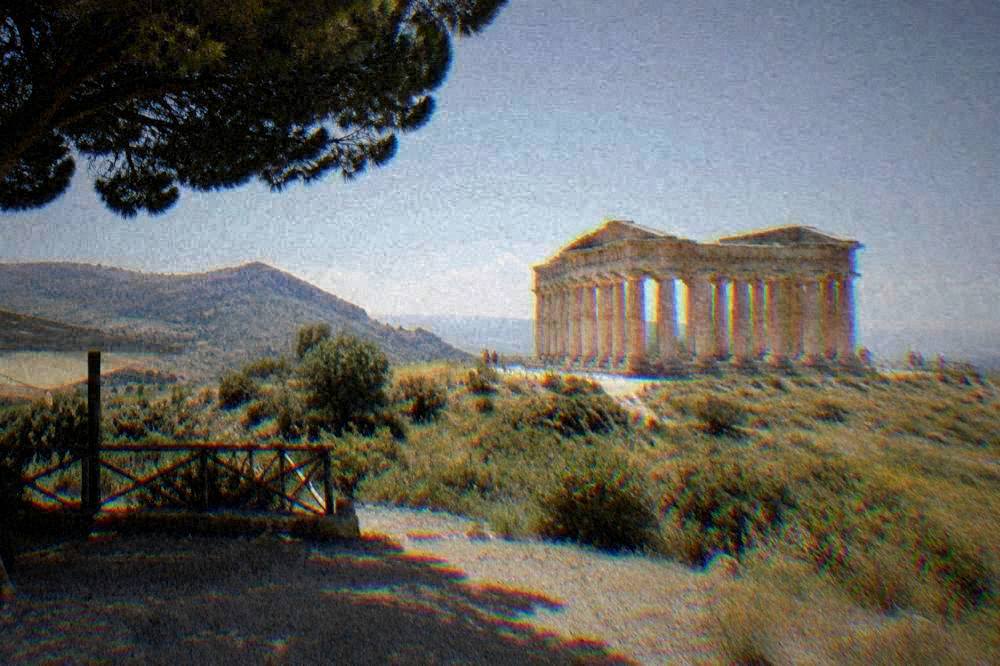
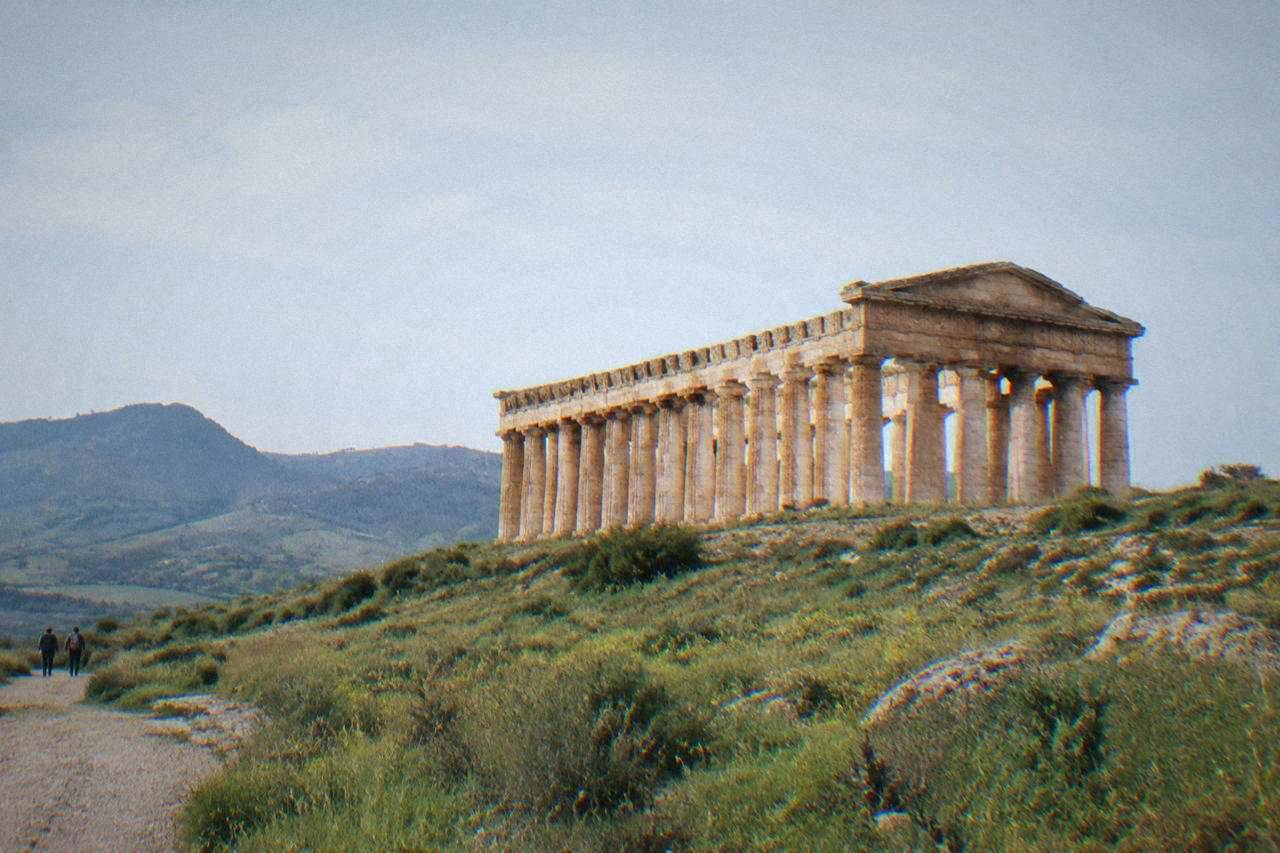
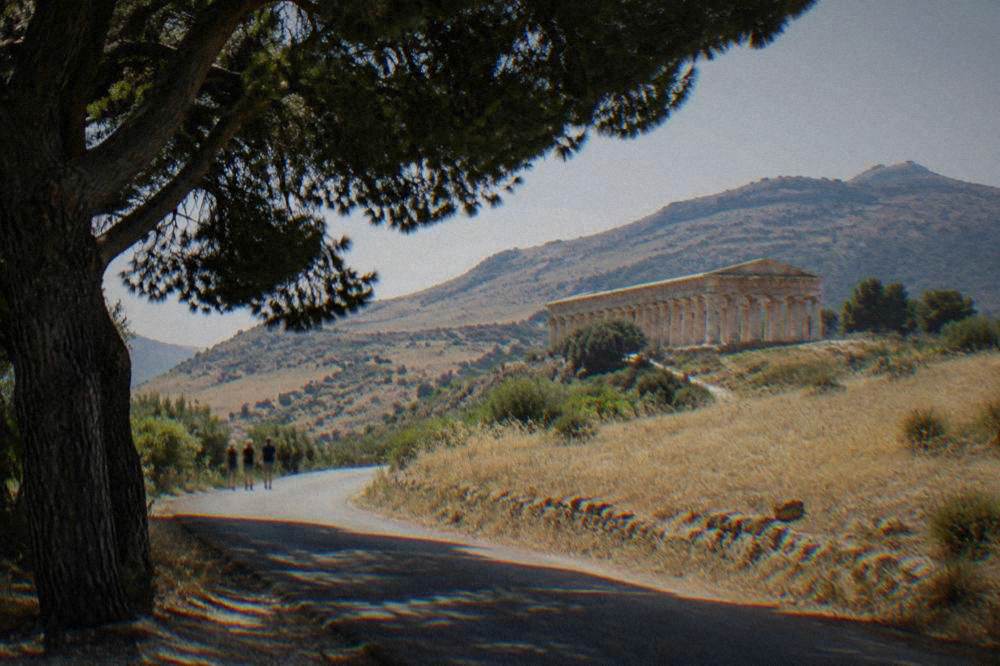
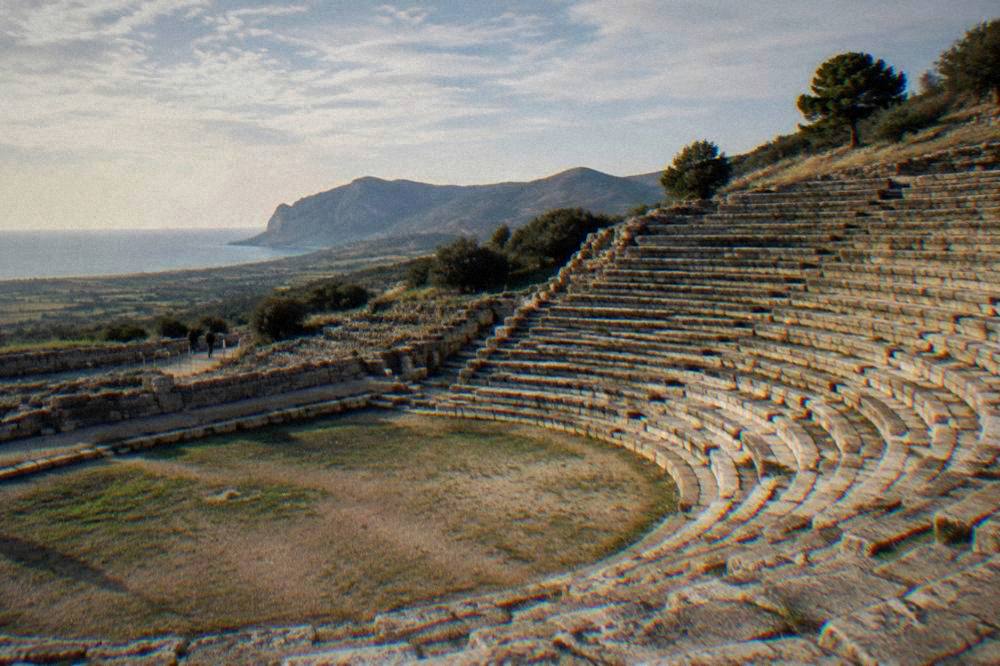
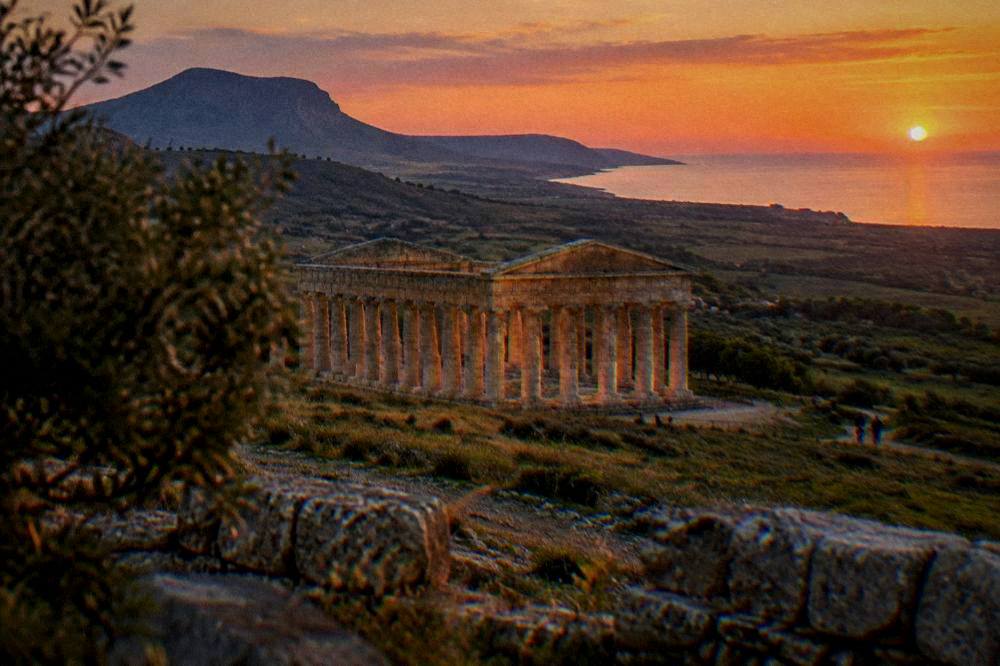
The temple is the image on every brochure. It is a peripteral Doric temple that was never fully finished: the columns stand, the inner cella walls were never completed to match, and the visible absence of a finished interior is part of why the structure survives so cleanly. The theatre sits on the opposite slope, reached by a shuttle or a walk up, and it looks out over a wide valley rather than framing a stage backdrop in the usual way. The park's own pages describe both monuments and the walking route between them.
Segesta also works as a stop rather than a destination. Full-day excursions from Palermo commonly pair it with Erice, reached by cable car from Trapani, and with the salt pans at Nubia, where the salt museum is free and open daily. Independent travellers with a car can build the same loop themselves, using the driving routes out of Palermo described on our Palermo driving and parking overview.
How Much Do Segesta Tickets Cost?
Entry to the Segesta archaeological area is 14 EUR full price and 7 EUR reduced, and when a temporary exhibition is running the prices rise to 16 EUR and 9 EUR. The same ticket covers both hilltops, as the temple and the theater are one archaeological area, not two separate admissions. On the first Sunday of the month, entry is generally free. Those figures come from the regional archaeological parks site, which runs the ticketing for the park. The reduced rate applies to the categories the park lists on its ticketing page, so anyone claiming a reduction should check that page or ask at the ticket office before paying. Children, groups and school visits have their own arrangements, again listed by the park.
The same ticket covers both hilltops: the temple and the theatre are one archaeological area, not two separate admissions. The shuttle that runs visitors up to the theatre, where the climb on foot is steep, is handled inside the park, and the park's visitor information says how it operates. On hot days the theatre climb is the part of the visit that rewards planning, because there is little shade on either slope.
| Ticket type | Standard price | With temporary exhibition |
|---|---|---|
| Full (intero) | 14 EUR | 16 EUR |
| Reduced (ridotto) | 7 EUR | 9 EUR |
Free-entry days follow the national pattern. State and regional museums and archaeological parks in Sicily are generally free on the first Sunday of the month, and the regional parks network says to confirm per site, so check the Segesta page for the month you travel. Arriving early on a free Sunday is the usual trade-off: no ticket cost against heavier numbers on the paths.
What Are Segesta's Opening Hours Through The Year?
Segesta's hours shift four times across the year: ticket offices open 9:00 to 15:30 in winter, 9:00 to 17:00 in March and early October, and 9:00 to 18:00 from late March to the end of September, with the park itself closing up to 90 minutes after the last ticket sale. The regional parks page publishes the exact cut-offs, and they matter because the site is large and the theatre is a distance from the gate. The table below reproduces the published pattern.
| Period | Ticket office | Park closing |
|---|---|---|
| 1 Jan to 28 Feb | 9:00 to 15:30 | 17:00 |
| 1 Mar to 28 Mar | 9:00 to 17:00 | 18:30 |
| 29 Mar to 30 Sep | 9:00 to 18:00 | 19:30 |
| 1 Oct to 24 Oct | 9:00 to 17:00 | 18:30 |
| 25 Oct to 31 Dec | 9:00 to 15:30 | 17:30 |
Two practical notes follow from the table. In the late-March-to-September window the last ticket is at 18:00 and the park closes at 19:30, which makes an afternoon arrival workable even in the heat of summer, when the temple stones hold the day's warmth well into the evening. In the deep winter window the last ticket is at 15:30, so a morning departure from Palermo is the safe plan. Our answers page on how long you need at Segesta breaks down the timing of the visit itself.
How Do You Get From Palermo To Segesta Without A Car?
The direct option is the Segesta Autolinee bus, whose timetables report a journey of about 70 minutes from Palermo toward Segesta and Trapani, and the alternative is the Segesta, Erice and Salt Pans full-day excursion from Palermo, a single loop with transport included, adding stops that are awkward to chain by public transport in one day. Trains do not serve Segesta. The bus route runs from Palermo towards Segesta and Trapani, and the operator's site carries the current timetable, which is the page to check for the departure point and the day's times, because the schedule the aggregator sites show is only as current as their last sync.
For anyone who prefers not to manage bus times, the excursion route is competitive. The Segesta, Erice and Salt Pans full-day excursion from Palermo runs as a single loop with transport included, leaving the driving to the operator and adding two stops that are awkward to chain by public transport in one day. You can Check availability on the operator's live listing, and our Segesta, Erice and salt pans tour page describes what the day covers.
| Option | Journey (reported) | Where to confirm |
|---|---|---|
| Segesta Autolinee bus | about 70 minutes | operator's timetable page |
| Full-day excursion with Erice and salt pans | full-day loop | the operator's live listing |
| Hire car from Palermo or the airport | route driving | the rental desk and a route planner |
Trains do not serve Segesta. The Sicilian rail network runs along the north and east coasts, and the inland hill country of the province of Trapani has no station near the site, so rail-plus-taxi is a worse plan than the direct bus. Anyone renting a car should read the notes on ZTL access and blue-line parking in Palermo first, on the driving and parking page, before deciding to keep the car in the city.
Is Segesta Worth The Trip From Palermo?
Segesta earns its day trip for two reasons the site itself provides: the temple is one of the most intact Doric structures anywhere, precisely because it was never finished or roofed, and the theatre's hillside setting looks over an unbroken valley that frames the visit. The regional parks network runs the site as a landscaped archaeological park rather than a fenced ruin, and the walk between the two monuments, or the shuttle that saves the theatre climb, is part of the experience. For a city whose centre is dense with churches and markets, Segesta delivers the opposite: open ground, stone and distance.
The honest counter-case is time. A visit that includes both monuments, done without rushing, uses half a day once travel from Palermo is added, and travellers who only want a taste of classical Sicily can see the Palermo Cathedral and the Palatine Chapel instead and stay in town. The UNESCO Arab-Norman circuit in Palermo, described in our old town guide, covers a different civilisation entirely, and some visitors find it more rewarding than the Greek west.
The middle path is the combined loop. Segesta paired with Erice, the cable-car hill town above Trapani, and the salt pans gives a full picture of the west: Greek antiquity, a medieval hill town and a working landscape of windmills and salt flats. That combination is what the excursion product was built around, and it is also entirely buildable by car using our Erice and Trapani and the salt pans pages.
What Do You Actually See At Segesta?
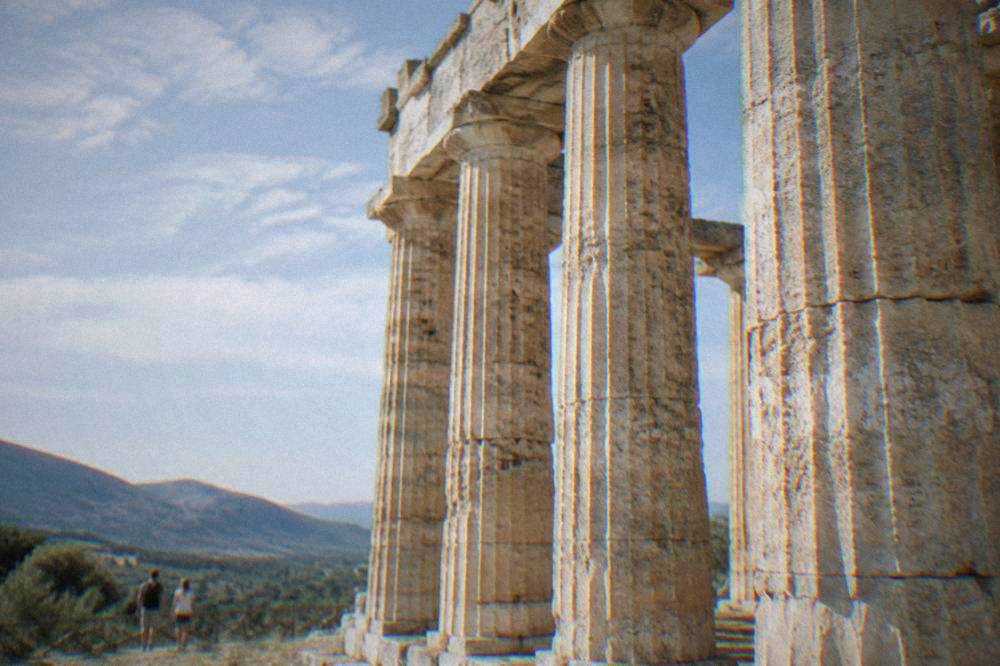
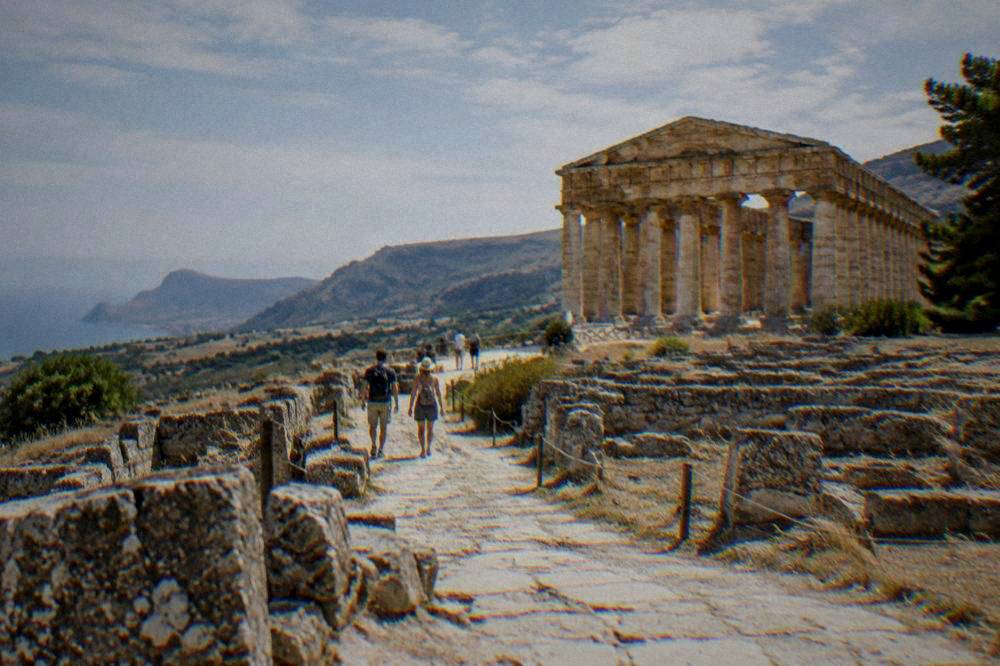
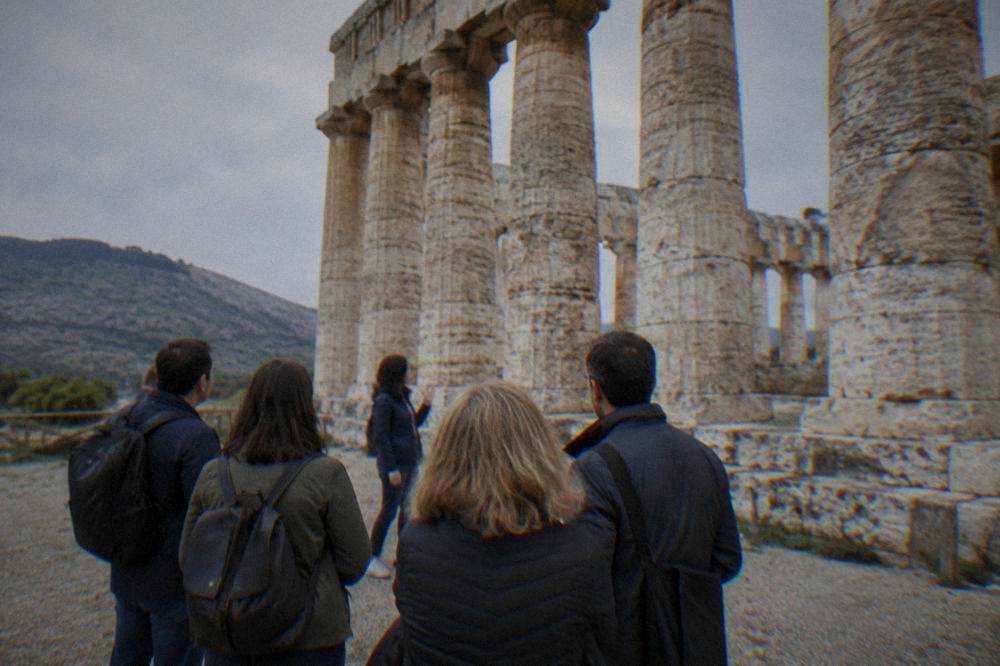
Two monuments inside a single archaeological park: the unfinished Doric temple, its perimeter columns complete and interior unfinished, and the theater cut into Monte Barbaro, whose seating cavea looks outward over the valley. Between them lie the fenced remains of the ancient city plus a sanctuary partway up the theater slope, reached on foot or by the park's shuttle. The temple is the first structure on arrival. Its columns stand complete around the perimeter, and the blocks remain unfluted in places and the interior unfinished, which archaeologists read as work stopped early rather than damage suffered later. Visitors walk around it and through the cella area, and the setting, bare hillside with distant ridges, is uncluttered.
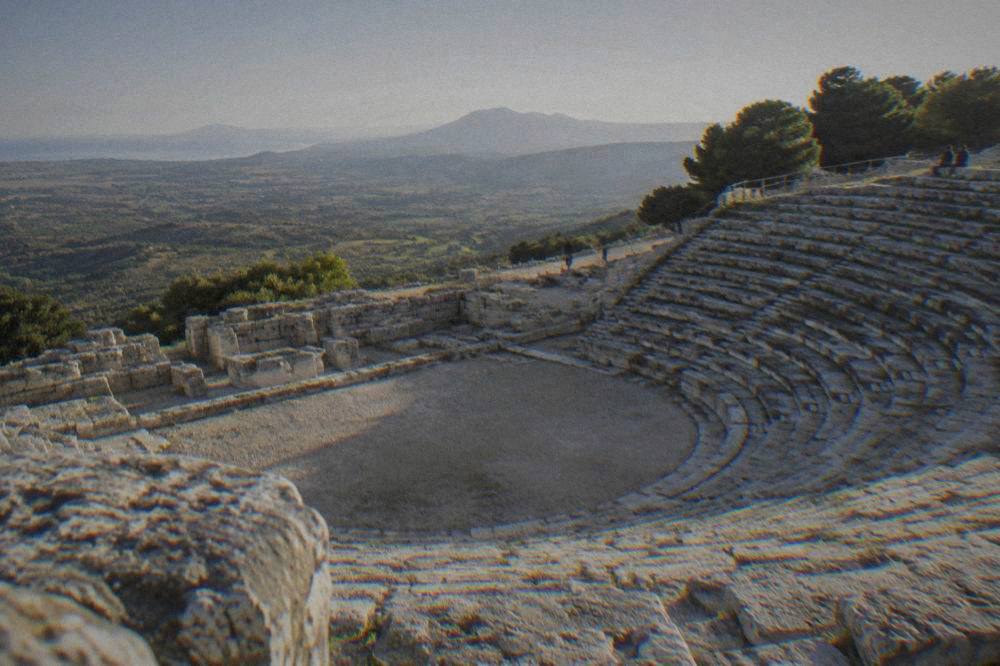
The theatre is the second act. Cut into Monte Barbaro, it preserves its seating cavea and looks outward over the valley, an arrangement the park describes on its visitor pages. In performance season the theatre hosts staged events, and the park publishes any such programme. Between the two monuments sits the fenced archaeological area of the ancient city, with the visible remains the park keeps open, plus a sanctuary area partway up the theatre slope.
| Element on the site | What you see | Practical note |
|---|---|---|
| Doric temple | Complete perimeter columns, unfinished interior | flat ground, close to the entrance |
| Ancient city area | excavated remains within the park | open during park hours |
| Theatre | hillside cavea with valley views | steep climb, or the park's shuttle |
| Sanctuary area | remains on the theatre slope | partway up the theatre path |
Shade is scarce. In summer the theatre slope reflects heat, and the water and sun protection advice in our Palermo in summer guide applies doubly here, inland and exposed. The climate table for Palermo, modelled 1991 to 2020 normals, puts the July mean at 26.2 C and August at 26.8 C on the coast, and inland hills commonly run warmer at midday, so the morning and late-afternoon windows are the comfortable ones.
How Long Should You Spend At Segesta?
A comfortable visit that covers the temple and the theatre runs about two to three hours on site, which is why the combined Palermo loop excursions budget roughly half a day of driving around it and still return by evening. The timing splits unevenly: the temple needs less than an hour, the theatre with its climb and views takes longer, and the connecting walk adds time that the shuttle removes. Travellers who want to sit in the theatre cavea and absorb the view use more of it.
The gates of the plan are the ticket office hours. With the last ticket at 18:00 in the long season and 15:30 in the short one, an excursion arriving at Segesta in the early afternoon has slack, while a late independent arrival in November can find the window already shut. Anyone planning the visit around a fixed return bus should also check the last departure time on the operator's page before committing to the theatre climb.
For comparison, the other classical headliner reachable from Palermo is the Valley of the Temples at Agrigento, a far larger site that needs longer on the ground; our Agrigento guide covers it. Choosing between them is often a question of direction: Agrigento sits south, Segesta west, and doing both in one day from Palermo is not a plan the timetables support.
Should You Combine Segesta With Erice And The Salt Pans?
Combining Segesta with Erice and the Trapani salt pans in one loop is the standard western Sicily day from Palermo, and it works because the three stops line up along a single westbound route rather than spreading in different directions. Segesta sits inland on the way west, Erice crowns a mountain above Trapani reached by the Funivia cable car at 9 EUR one way and 15 EUR return per the operator's tariff page, and the salt pans at Nubia hold a free salt museum open daily from 9:30 to 19:00. A car or an excursion covers the chain in a day; public transport alone strains it.
If you'd like the freedom to chain those stops yourself, book a rental car here.
The stops contrast with each other, which is what makes the combination hold up. Segesta is antiquity in open country. Erice is a walled hill town of churches and cobbled lanes, with the cable car ride giving the approach on a clear day. The salt pans are a working landscape of basins, windmills and stacked salt, and the museum explains the harvest. Our Scopello and Zingaro page extends the same route to the coast for anyone with two days rather than one.
| Stop on the western loop | What it is | Entry figure |
|---|---|---|
| Segesta archaeological park | Greek temple and theatre | 14 EUR full, 7 EUR reduced |
| Erice | hill town above Trapani | cable car 9 EUR one way, 15 EUR return |
| Salt pans and salt museum, Nubia | working salt landscape with museum | museum free |
The excursion version of this loop is the one this site features, and its full-day format exists precisely because the three stops are hard to chain by bus. Independent drivers should note that Erice's own streets are restricted and the standard plan is the cable car from Trapani or the out-of-town car parks, details our Erice page carries.
What Should You Know Before Booking A Segesta Excursion?
Before booking, check the operator's live listing for three things: what the price covers at Segesta itself, since park entry at 14 EUR full is sometimes separate from transport, whether the theater shuttle is included, and the cancellation window. Free cancellation up to 24 hours before departure is the common pattern, pay-later options appear on many listings, and the listing itself is the authority. The listing states what is and is not in the ticket, and the difference matters at a site where the entry fee is a published 14 EUR full. Free cancellation up to 24 hours before departure is the common pattern on these products, and pay-later options appear on many listings, but the listing itself is the authority.
Group size and season matter more at Segesta than at a city sight. The paths between temple and theatre are wide, but the theatre seating and the shuttle queue concentrate people, and a small-group format moves through them differently from a full coach. The tour pages on this site describe what each product covers, including the Norman Palace and Palatine Chapel small-group option for anyone pairing a classical day with a day inside Palermo's own monuments.
Weather is the third check. The site is inland and exposed, and the same excursion that is comfortable in April can be gruelling at the height of August, when the climate table's coastal August mean of 26.8 C understates midday heat on an unshaded hillside. Spring and autumn are the seasons the excursions themselves favour, and the best time to visit Palermo guide gives the month-by-month background.
What Should You Bring And When Should You Go?
Bring water, closed shoes with grip, sun protection and a paper or offline copy of the bus timetable, and go in spring or autumn if the choice is open, or in the early morning or late afternoon slots in summer. The terrain between the monuments is a mix of stone paths and unpaved ground, and the theatre slope is steep enough that sandals become a liability, a rule the parallel site of La Rocca in Cefalu states outright and that applies equally here. There is little shade anywhere on the site, and the park has no sheltered waiting area at the temple.
The seasonal choice follows the hours table. The late-March-to-September window gives evening light on the theatre, which photographers value, and the winter window narrows the day to a morning plan. Rain is the quiet variable: the Palermo climate table, modelled ERA5 normals for 1991 to 2020, shows October as the wettest month at 81 mm and July the driest at 7 mm, and an October visit should carry a light rain layer as well as sun protection, since showers move fast over the inland hills.
For anyone building a multi-day western Sicily plan, the sequence Palermo, Segesta, Erice, Trapani and the coast can stretch across several days, and our Palermo and western Sicily week itinerary lays it out. The shorter version is the single-day loop this page has described, and it remains the efficient way to see the west from a Palermo base.
Common Questions About A Segesta Day Trip From Palermo
How do I get from Palermo to Segesta?
The direct public transport option is the Segesta Autolinee bus, with timetables reporting a journey of about 70 minutes, and the alternative is a full-day excursion that includes Segesta in a loop with Erice and the salt pans. Check the operator's timetable page for current departure times, or the tour operator's live listing for the excursion.
How much are tickets to Segesta?
Entry is 14 EUR full price and 7 EUR reduced, and with a temporary exhibition running the prices are 16 EUR and 9 EUR, per the regional archaeological parks ticketing page. The same ticket covers the temple and the theatre.
What are Segesta's opening hours?
Ticket offices run 9:00 to 15:30 in the winter period, 9:00 to 17:00 in March and early October, and 9:00 to 18:00 from late March to the end of September, with the park closing up to 90 minutes after the last ticket. The regional parks page carries the exact dates.
How long do you need at Segesta?
Plan on two to three hours on site to cover both the temple and the theatre without rushing, longer if you walk rather than take the theatre shuttle. Full-day excursions budget the site as part of a western loop and still return to Palermo by evening.
Can you visit Segesta and Erice in one day from Palermo?
Yes, and it is the standard combination, usually with the Trapani salt pans added as the third stop. The chain works by car or by excursion; by public transport alone the connections are tight and the excursion is the simpler plan.
Is Segesta a UNESCO World Heritage Site?
No. The UNESCO inscription that touches this region is Arab-Norman Palermo and the Cathedral Churches of Cefalu and Monreale, listed in 2015, which covers monuments in and around Palermo, not Segesta. Segesta is run as a regional archaeological park with its own entry prices.
Segesta rewards a simple plan: check the seasonal hours against your travel dates, decide between the direct bus and the full-day loop, and carry water for the theatre slope. The Palermo Italy Travel Guide covers every other day trip out of the city, from Monreale to Mondello beach, for the days you keep closer to the coast.