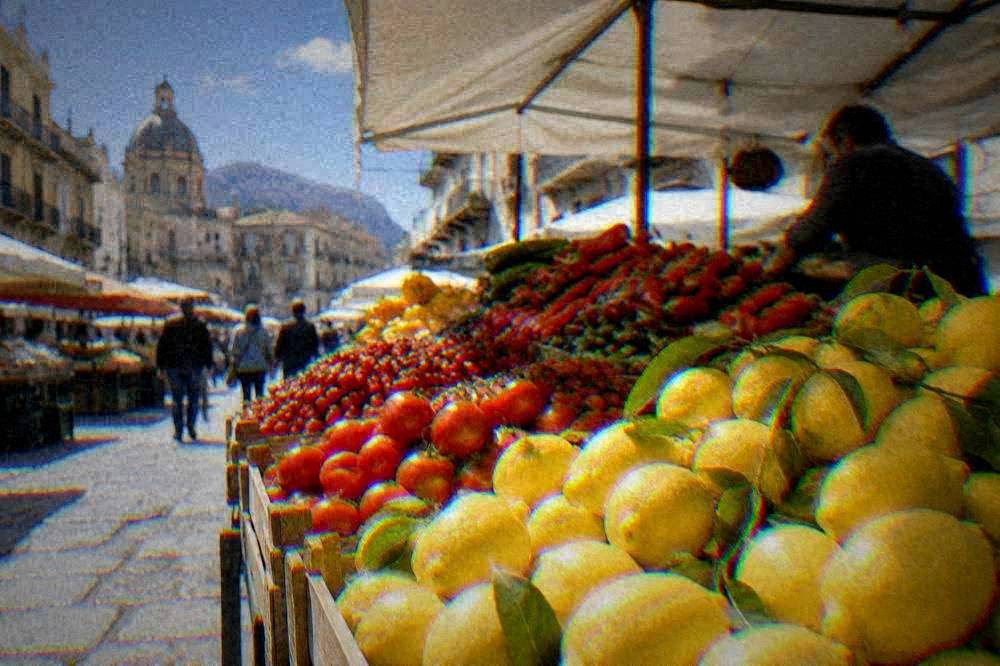
Palermo Arancina: Where To Find And How To Order The City's Signature Fried Snack
The arancina is the fried rice ball Palermo eats standing up, at markets, at bars and before train journeys. This guide covers what it is, how the city argues about its name, what goes inside, and where to find one on a normal day.
Short answer
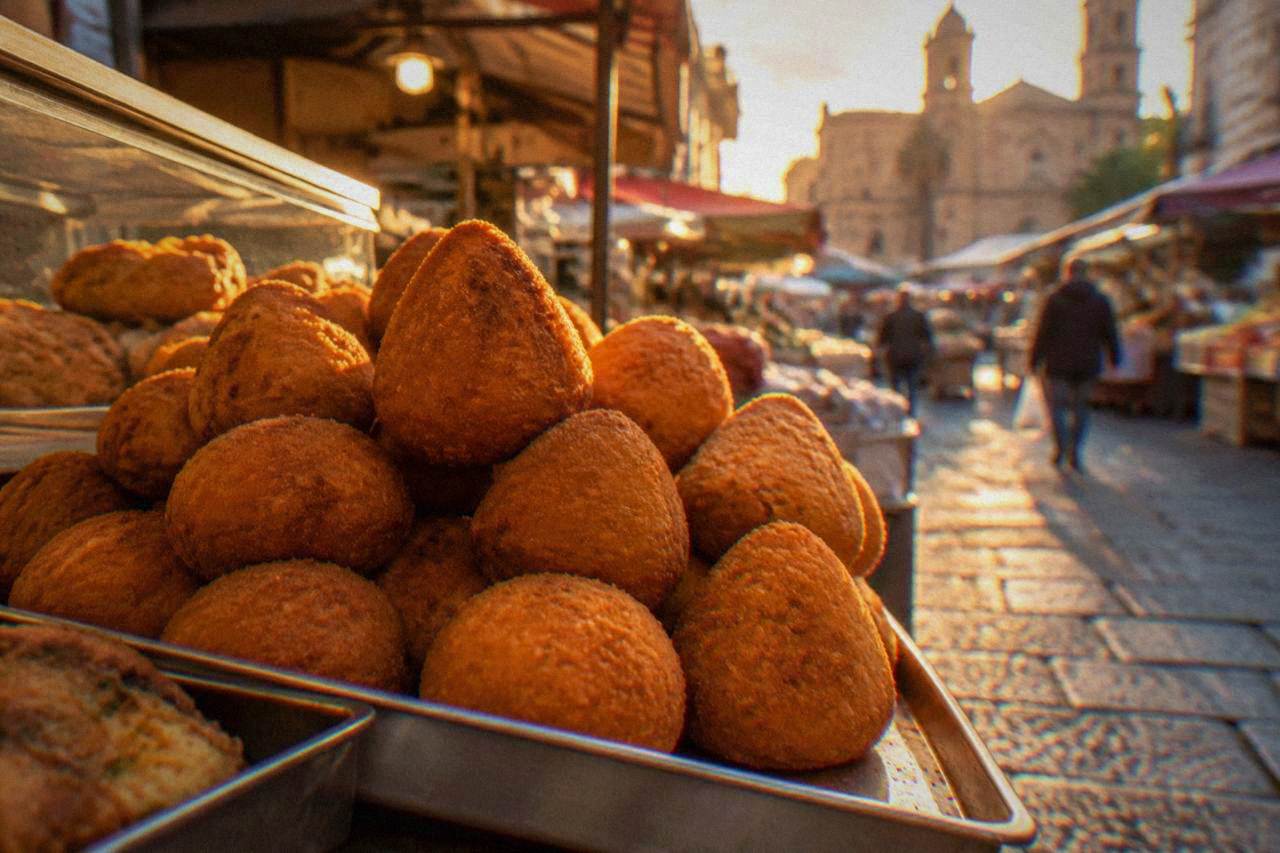
An arancina is a ball of risotto rolled in breadcrumbs and deep fried, filled most often with meat ragu and peas or with butter and ham. Palermo and western Sicily use the feminine name arancina, typically round, while Catania and the east say arancino, typically conical. Both forms are accepted Italian, according to the Accademia della Crusca.
The arancina is the one dish every visitor to Palermo eats within hours of arriving, usually standing at a bar counter with a napkin and no cutlery. It is a ball of risotto, filled, breaded and fried until the crust crackles, and in this city it functions as breakfast, lunch, train platform food and the universal answer to hunger between sights. This page from the Palermo Italy Travel Guide covers what an arancina actually is, the naming argument that splits Sicily in two, the fillings to order, and the markets and neighbourhoods where the city serves them from morning to night.
Palermo sits on the north-west coast of Sicily, on the Tyrrhenian Sea, and its fried food tradition belongs to that coastal position: rice, cheese, preserved meat and chickpeas, all cheap, all shelf-stable, all cooked fast in hot oil. The arancina grew out of that economy, and the city still eats it the same way, standing, walking or waiting for a train, which is why almost no restaurant puts it on a seated menu. It belongs to the street and to the bar counter, and that is where this guide sends you.
What Is A Palermo Arancina?
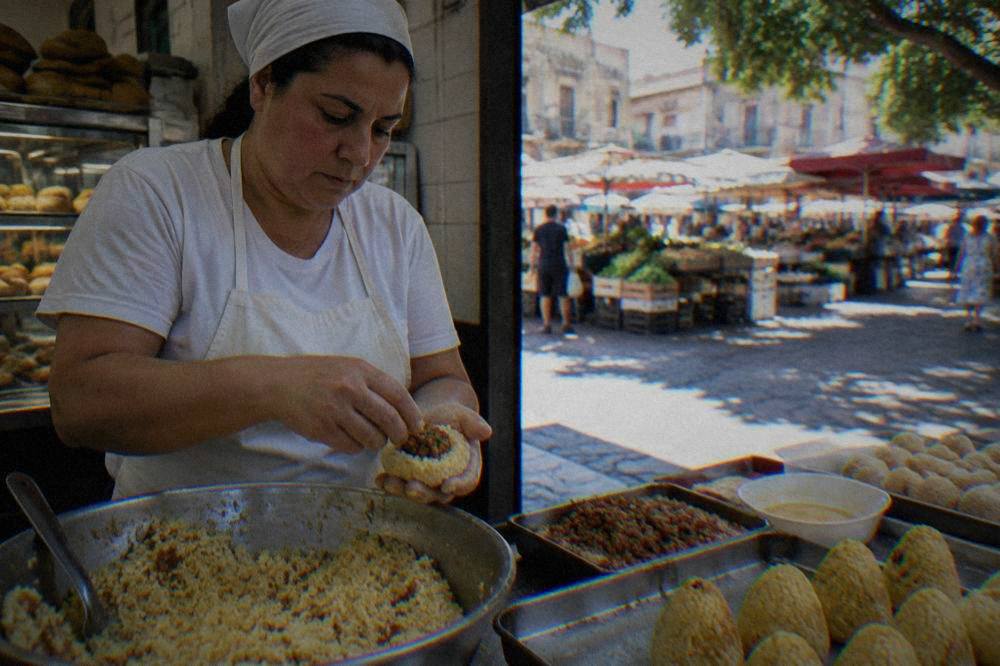
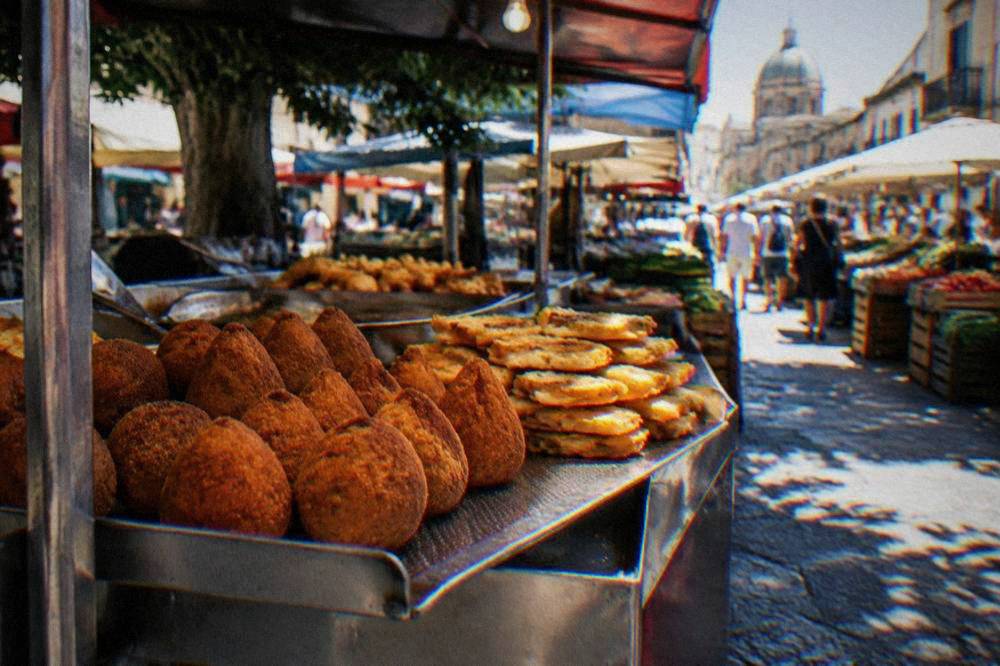
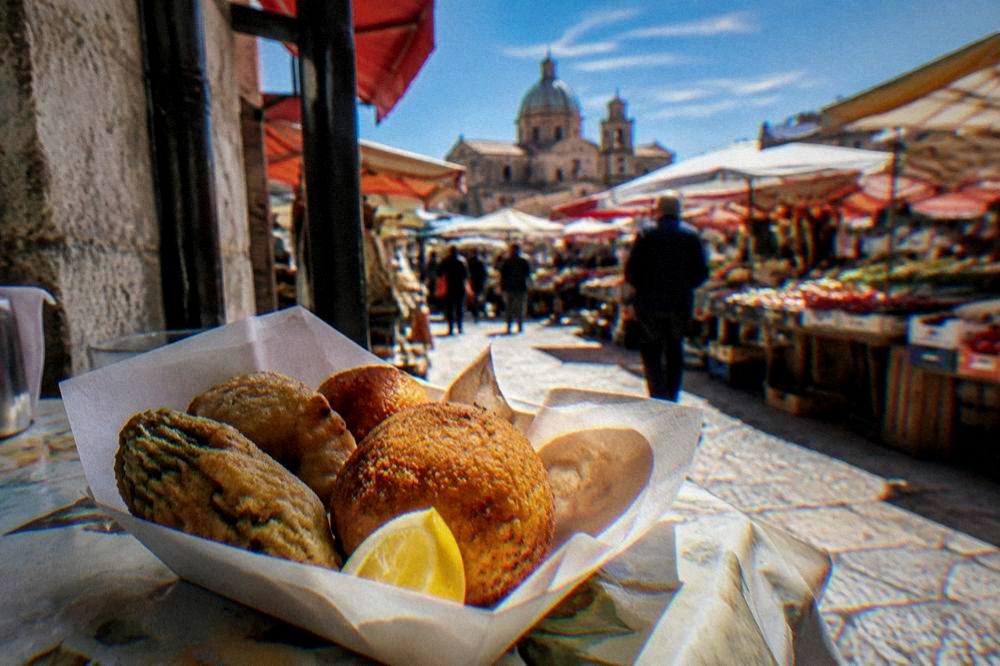
A Palermo arancina is a portion of risotto rice, shaped into a ball around a filling, rolled in breadcrumbs and deep fried until golden. The two classic fillings are meat ragu with peas, called al ragu, and bechamel with ham and cheese, called al burro. In Palermo the ball is round, and it is eaten hot, held in paper, at bars, bakeries and market stalls across the city.
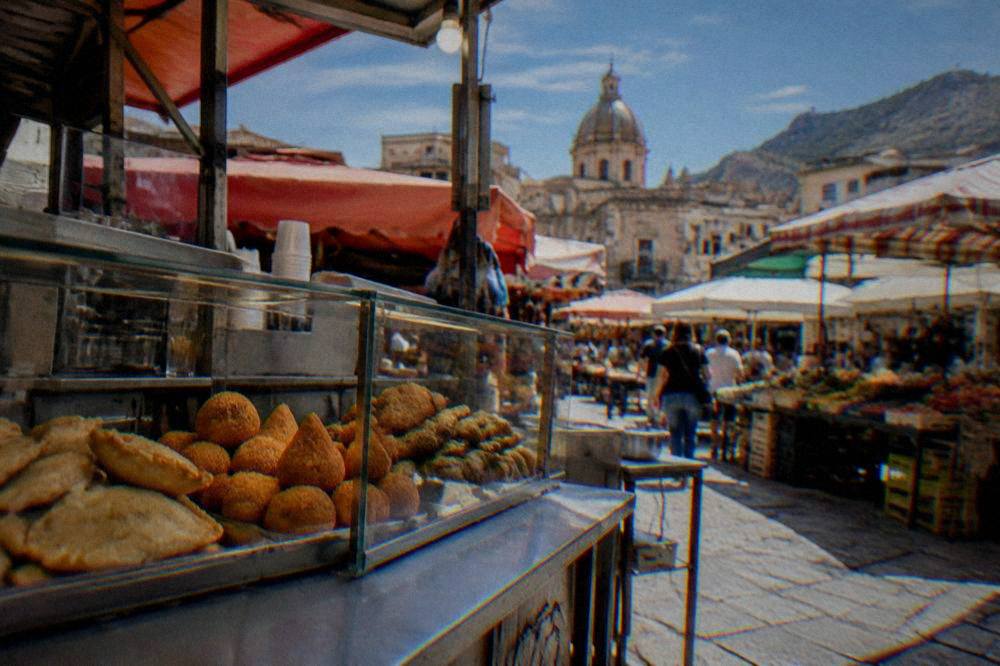
The construction matters more than it sounds. The rice is cooked, seasoned and cooled so it holds a shape, then moulded around the filling by hand. The crust is the point: breadcrumbs fried at temperature give a shell that keeps the inside intact while you walk. The name comes from arancia, the Italian word for orange, because the finished ball recalls the fruit in shape and colour. Vendors sell them from heated glass counters, and the standard order is one or two, eaten immediately.
The snack belongs to a family of Palermo fried foods rather than sitting alone. Palermo street food runs on hot oil: panelle, chickpea fritters served in a sesame roll; crocche, potato croquettes; and sfincione, a thick, spongy pizza topped with onion, anchovy and caciocavallo cheese. An arancina is the largest and most filling member of that family, and the one most easily mistaken for a full meal.
A note on timing: the crust is at its best within minutes of the fryer, so the ideal arancina stop is one where the counter is turning them over continuously, which in practice means the busy market stalls and the bars nearest the stations, where demand keeps the fryer working. A ball that has sat under glass for an hour is still food, but it is no longer the thing this page is about.
Arancina Or Arancino: Why Palermo And Catania Disagree?
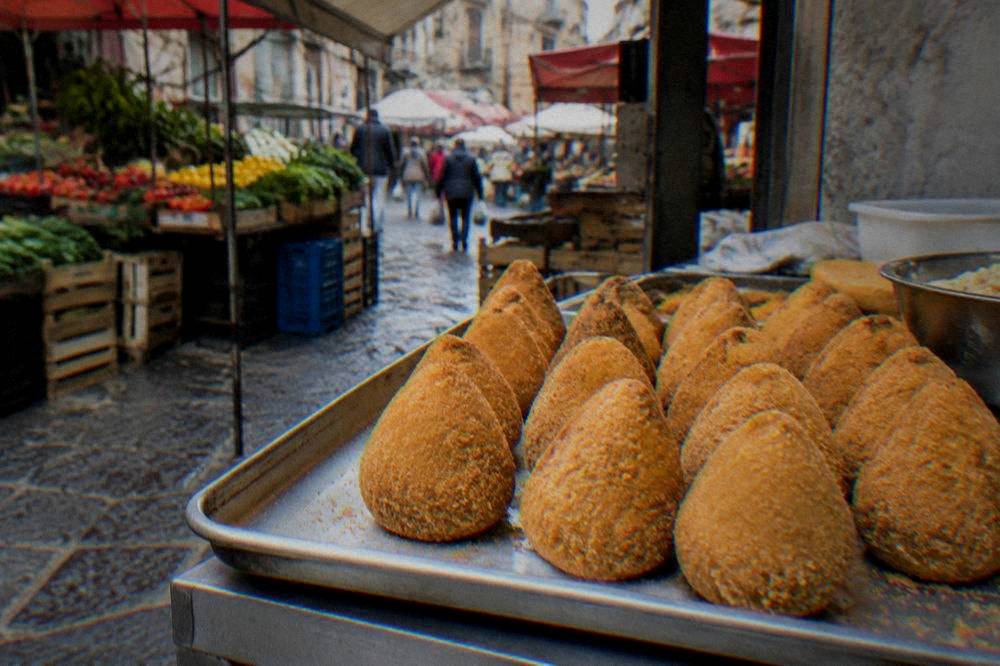
Palermo and western Sicily say arancina, the feminine form, and shape it round. Catania and eastern Sicily say arancino, the masculine form, and shape it into a cone with a pointed tip. The Accademia della Crusca, Italy's reference body on the language, accepts both forms as correct, noting that the feminine matches standard Italian for the fruit while the masculine has dialect roots. The split is real and locals will correct you.
The practical rule for a visitor is simple: order an arancina in Palermo and an arancino in Catania, and nobody will blink. Vendors in both cities understand either word, but the local form signals you know where you are. The shape is the giveaway before anyone speaks: round on this side of the island, pointed on the other.
| Feature | Palermo arancina | Catania arancino |
|---|---|---|
| Grammatical form | Feminine, arancina | Masculine, arancino |
| Shape | Round | Conical, pointed tip |
| Region | Palermo and western Sicily | Catania and eastern Sicily |
| Standard authority | Accepted by the Accademia della Crusca | Accepted by the Accademia della Crusca |
The Palermo markets are where the local form is heard most, shouted over counters in dialect alongside the rest of the fried repertoire. If a first page of search results tells you one form is wrong, it is not: the Crusca's published answer on the question treats both as attested Italian.
For travellers moving between the two cities, the difference becomes a small geography lesson. The regional train between Palermo and Catania takes about three hours, so the same day can hold a round arancina at one end and a conical arancino at the other, and both will be correct in the mouth of the person selling them.
What Are The Classic Arancina Fillings In Palermo?
The two historical fillings are al ragu, a slow meat sauce with peas, and al burro, bechamel with ham and cheese. Around those two the counters have grown: spinach, called nfriunate in dialect; aubergine with tomato; squid ink rice with seafood; mozzarella and prosciutto cotto; and salami with cheese. Every fry shop posts its list on the counter, and vendors separate the fillings with a marker such as a caper on the ragu.
Ordering is done by filling, not by size. Two arancine make a standard lunch, one is a between-sights snack, and the ragu version is the one to try first because it is the version with the longest local pedigree. The butter version is richer and milder, and it is the one Sicilian children grow up on.
| Filling | Italian name | What is inside |
|---|---|---|
| Meat and peas | Al ragu | Slow meat sauce, peas, sometimes caciocavallo |
| Butter | Al burro | Bechamel, ham, cheese |
| Spinach | Nfriunate | Spinach, bechamel, cheese |
| Aubergine | Alle melanzane | Fried aubergine, tomato, cheese |
| Seafood | Al nero di seppia | Squid ink rice, seafood |
| Ham and cheese | Al prosciutto | Mozzarella, prosciutto cotto |
Markers matter when you buy more than one. Sellers traditionally place a single caper or a strip of pepper on the ragu arancine so a mixed paper bag can be decoded without biting into each one. Ask at the counter which marker the shop uses, because there is no city-wide standard.
Vegetarians are better served here than the word fritter suggests. The spinach and aubergine fillings are meat-free, and the surrounding counter adds panelle, which are made from nothing but chickpea flour, water and parsley, so a full meat-free tray is possible at almost any fry shop in the old centre.
Where To Eat Arancine In Palermo: Markets, Bars And Bakeries?
The three historic markets, Ballarò, Capo and Vucciria, are the reliable ground for fried food in Palermo, with Ballarò running Monday to Saturday from about 7:30 and on Sunday mornings, and Capo trading in the mornings and closing on Sundays. Around them, ordinary bars and bakeries across the old centre sell arancine from heated counters from late morning onward, so no visitor is ever far from one.
Ballarò is the market that covers the longest day. Italia.it, the national tourism site, lists it as trading from about 7:00 or 7:30 in the morning, with stalls continuing well into the evening on weekdays and a Sunday-morning-only service. Capo follows a morning pattern and does not run on Sundays. Vucciria works as a daytime market and then turns into an evening street scene, with bars and food stalls replacing the produce trade after dark.
| Market | Days | Trading pattern | Character |
|---|---|---|---|
| Ballarò | Monday to Saturday, Sunday morning | From about 7:30, into the evening weekdays | Produce, fried food, biggest spread |
| Capo | Monday to Saturday | Mornings, closed Sunday | Fish, meat, fried counters |
| Vucciria | Monday to Saturday | Daytime market, evening bars | Historic market by night |
Inside these markets arancine sit beside panelle and crocche in the same fryers. The Palermo restaurants guide covers where to sit down instead, and for travellers who want the market explained while eating, a guided tasting walk pairs the stalls with the history around them; the walking tours listed below are the natural fit, and Palermo food tours are covered in depth on their own page.
Market hours are not fixed contracts, and the closing hour in particular shifts with the season and the individual stall. Treat the times above as the pattern rather than a timetable, and go early if a market morning matters to your plans, because that is when the produce trade, and the freshest fryers, are at their fullest.
How Much Does An Arancina Cost In Palermo?
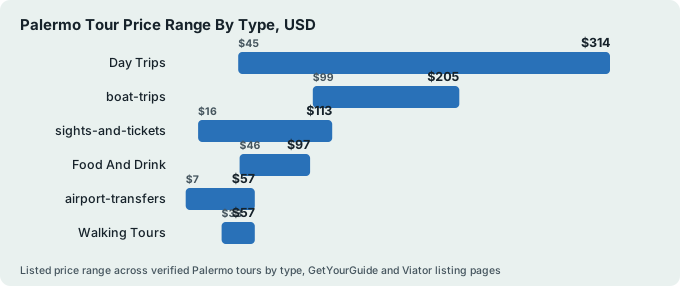
No official price list governs arancine in Palermo, and this guide does not print one: fried food is sold by private vendors whose prices change and are displayed at each counter. The rule that protects you is transparency: a legal Palermo counter posts its prices where you can read them before ordering, and a cover charge, the coperto, is legal only when printed on a menu. Read the board, then order.
What can be said with a source is the surrounding cost structure. Tipping is not obligatory in Italy, and the coperto is legal when listed in advance, per the national rules the country's consumer framework applies. Tap water is a different matter entirely: AMAP, the city's water utility, states that Palermo's distributed water is suitable for drinking, so a glass of tap water with your arancina is a normal request.
For travellers budgeting a whole day rather than one snack, the market food plus free sights approach keeps costs low: the Quattro Canti, Piazza Pretoria's exterior, the Foro Italico and Villa Giulia all cost nothing to walk through, and each sits within reach of a fry counter. A day built this way spends money on food and nothing on the spaces between meals.
When Do Palermans Eat Arancine During The Day?
There is no single sanctioned hour: arincine appear from late morning, when fry shops first open their counters, through the afternoon and into the evening at Vucciria's food stalls. The common local patterns are a mid-morning snack after the market shop, a standing lunch of two arancine, and a pre-dinner or late-evening bite in the streets around the old market quarters.
The strongest single tradition tied to the snack is the feast of Saint Rosalia in July. The Festino runs each year from 10 to 15 July, with the chariot procession along the Cassaro on 14 July and the silver urn procession on 15 July, and street food, arancine included, is part of how the city eats its way through those days. Visitors in July will find the markets and the processions overlapping, with fried food sold along the route.
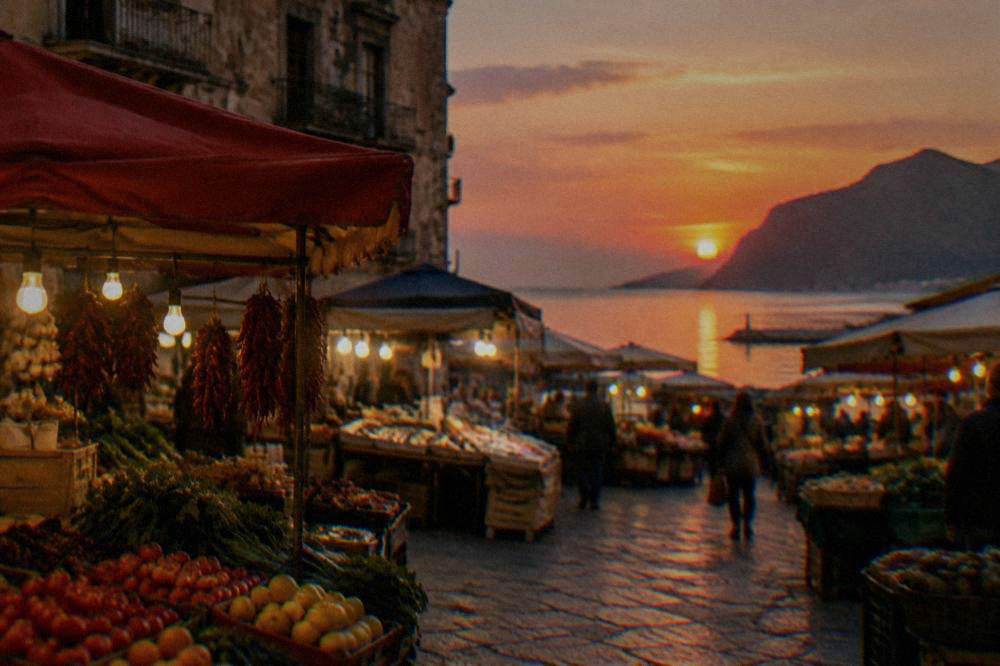
Pairing the snack with sightseeing needs no planning. The four old quarters that meet at the Quattro Canti, Capo, Albergheria, Kalsa and Loggia, each hold market streets or bar rows within a short walk of major sights, so an arancina fits naturally between the Cathedral, the Norman Palace and the seafront. La Kalsa and the old centre have their own food stops worth the detour.
| Time of day | Where they are eaten | Typical setting |
|---|---|---|
| Late morning | Market fry counters | Standing, mid-shop |
| Lunch | Bars and bakeries | One or two as a standing meal |
| Afternoon | Bakeries across the centre | Snack between sights |
| Evening | Vucciria and bar streets | Street food with drinks |
| Festino week, July | Stalls along the Cassaro | Procession street food |
How Do You Make Arancine At Home?
You cook risotto rice, season and cool it until it can be moulded, shape a handful into a cup, press in a spoonful of cold filling such as ragu with peas or bechamel with ham, close the rice into a ball, roll it in flour, egg and breadcrumbs, and deep fry at high temperature until the crust is deep gold. The cold filling is what stops the ball leaking into the oil.
If you would rather learn the method in person, book a Sicilian cooking class here.
The rice should be a round grain that clings as it cools, and the filling must be cold, even chilled, before moulding, so the bechamel or ragu sets and the rice seals around it. Frying takes only a few minutes per ball, and the crust should be heard before it is seen. Travellers who want the technique rather than the theory can take a class in the city, where instructors cover pasta, desserts and fried snacks in a working kitchen.
What Other Fried Foods Should You Try Alongside Arancine In Palermo?
Panelle, crocche and sfincione complete the Palermo fry counter: panelle are chickpea fritters served in a sesame roll, crocche are mashed potato croquettes with parsley and cheese, and sfincione is a thick sponge-based pizza topped with onion, anchovy and caciocavallo. Cartocciate, a filled fried roll, and quarumi, a chickpea stew, extend the same repertoire at the same stalls.
These foods share a history of cheap, hot, hand-held eating, and the same counters sell them together, so a mixed paper tray is the normal order. Panelle in a mafalda, the sesame bread roll, is the classic vegetarian pairing and the most common sight at market breakfasts. Sfincione is the one to buy by the slice, cut from a rectangular tray.
| Food | Base | Served as |
|---|---|---|
| Arancina | Rice, filled | Whole, by the piece |
| Panella | Chickpea flour | In a sesame roll, several at once |
| Crocca | Potato | By the piece, hot |
| Sfincione | Bread dough | Slice from a tray |
| Cartociata | Bread dough, filled | Whole, by the piece |
How Do You Fit An Arancina Stop Into A Day Of Sightseeing?
The practical method is to anchor the day at the Quattro Canti, where the four old quarters meet, and eat from whichever market street is next on the route: Capo for morning sights around the Cathedral and the Norman Palace, Ballarò for the Albergheria side and the Ballarò market itself, and the Vucciria and Kalsa streets for the afternoon walk down to the Foro Italico seafront. Every one of these stops is walkable from the others.
AMAT's fares page shows what moving between them costs if the legs tire: 1.40 EUR for a single 90-minute ticket, 3.50 EUR for a day ticket, and 8.00 EUR for three days, with tickets to be bought before boarding and validated at once. The four tram lines and the buses take the same tickets.
| Time | Quarter | Sight | Snack stop |
|---|---|---|---|
| Morning | Capo | Palermo Cathedral, Norman Palace | Capo market counters |
| Late morning | Albergheria | Ballarò market | Market fry stalls |
| Afternoon | Kalsa | Foro Italico, Villa Giulia | Bakeries en route |
| Evening | Loggia | Vucciria and the bar streets | Street food stalls |
Visitors heading out of the city should also grab the platform snack the way locals do. A long day trip west, for instance the Agrigento, Valley of the Temples and Villa Romana tour, starts early from Palermo, and an arancina bought the night before or at the station makes the usual breakfast; Check availability if that itinerary appeals. The Palermo train station guide covers the station itself, with its bars and shops outside.
What Should First-Time Visitors Know Before Ordering?
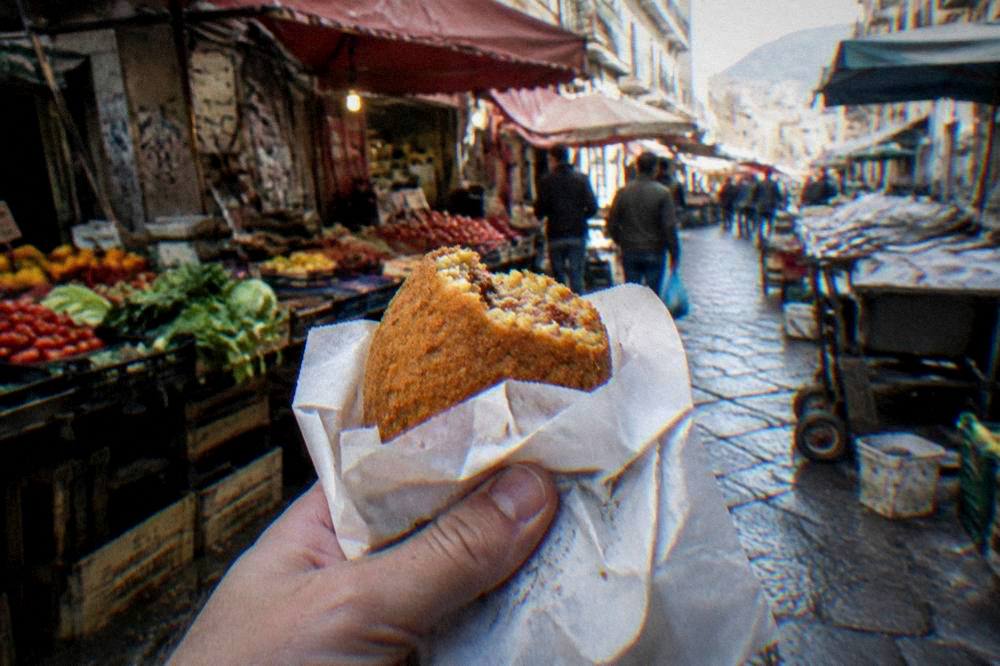
Read the price board before you point, order by filling name rather than by gesture, expect to eat standing or walking, and ask which marker the shop uses to tell fillings apart when buying several. In the peak of summer, eat fried food where it is fried, close to the counter, because the crust softens as it sits, and a hot arancina is the whole point of the exercise.
A few practical notes round this out. Water from the tap is drinkable, per AMAP, so a refill costs nothing. The coperto, where a bar charges one, must be printed on the menu to be legal, and tipping is a round-up rather than a percentage. If a tour or a class has put you in the mood for the kitchen rather than the counter, the cooking options below run in working kitchens around the centre.
Common Questions About The Palermo Arancina
Is it arancina or arancino?
The Accademia della Crusca accepts both forms. Palermo and western Sicily say arancina, the feminine form, for the round version, while Catania and eastern Sicily say arancino for the pointed cone. Order with the local word and you will be understood everywhere.
What is inside a Palermo arancina?
The two classic fillings are meat ragu with peas and bechamel with ham and cheese. Spinach, aubergine, squid ink with seafood, and mozzarella with prosciutto are common additions at fry counters across the city.
How many arancine make a meal?
Two are a standard standing lunch in Palermo and one is a between-sights snack. There is no official portion rule: counters sell by the piece and post their prices where you can read them first.
Where can I buy arancine in Palermo?
The historic markets are the reliable ground: Ballarò trades Monday to Saturday from about 7:30 with Sunday mornings, Capo runs mornings and closes Sundays, and Vucciria shifts from a daytime market to evening food stalls. Ordinary bars and bakeries sell them citywide from late morning.
Can I drink tap water with my arancina in Palermo?
Yes. AMAP, the city's water utility, states that Palermo's distributed water is suitable for human consumption, so tap water is a normal request at bars and restaurants.
The arancina is the cheapest possible introduction to how Palermo eats: hot, hand-held, argued over and available within a short walk of every major sight in the old centre. Order it by its Palermo name, pick the ragu filling first, eat it where it was fried, and let the market counter set the pace of the day.