Palermo Restaurants
Palermo, the coastal capital of Sicily on the Tyrrhenian Sea, eats as much in its markets and on its streets as it does at set tables, and understanding how those three layers fit together is the key to choosing well.
Short answer
Palermo restaurants sit on top of a street-food culture: cover charge (coperto) is legal when printed on the menu, tipping is not obligatory, tap water is drinkable per AMAP, and the historic markets of Ballarò, Capo and Vucciria set the rhythm of the day.
Palermo, the coastal capital of Sicily on the Tyrrhenian Sea, runs one of the most layered food scenes in Italy: formal dining rooms, family trattorie, market counters and street vendors all share the same small historic centre, divided into the four mandamenti of Capo, Albergheria, Kalsa and Loggia around the Quattro Canti. This guide explains how the pieces fit together, what the rules are at the table, and how to build food days that stretch from a morning market to a day trip and back in time for dinner.
What Should You Know About Eating In Palermo?
Three rules frame every restaurant meal in Palermo: the coperto, a cover charge, is legal only when it is printed on the menu beforehand; tipping is not obligatory anywhere in Italy; and the tap water is suitable for drinking, as the municipal water utility AMAP states. Everything else, from portion customs to wine lists, grows out of the city's market culture.
The coperto point matters because it is the one line item that surprises tables arriving from outside Italy. National rules allow a restaurant to charge a per-person cover for bread, tableware and service only when the amount appears on the printed menu or tariff before you order. If it is not printed, the check cannot carry it, and the itemised bill is the place to verify. Tipping sits on top of that as a voluntary gesture, never an obligation.
Around those rules sits a city of about 628,693 residents, per municipal statistics, whose eating day starts early in the markets and ends late at the tables of the Kalsa and the streets around the Vucciria. A restaurant dinner here is the last act of a food day that usually began with a market walk, which is why this guide treats restaurants, markets and street food as one system rather than three separate topics. The Palermo Italy Travel Guide covers each layer in depth, and this page pulls the restaurant layer into focus.
Where Are The Best Areas To Eat In Palermo?
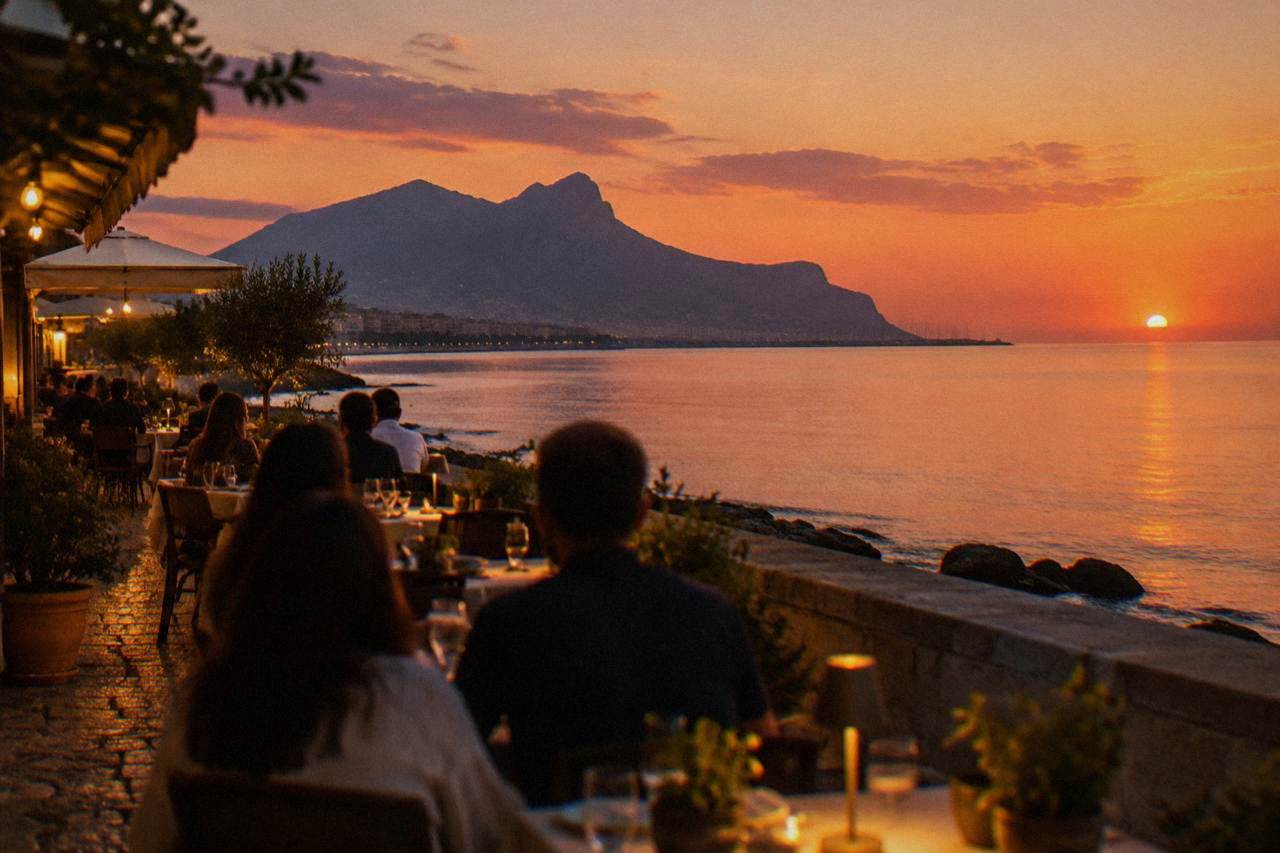
The four historic districts each carry a different dining character: the Capo and its market streets concentrate morning food and snack counters, Albergheria sits between the Ballarò market and the Norman Palace, the Kalsa holds a dense band of trattorie and wine bars around its squares, and the Loggia side, near the old harbour of La Cala, runs later into the night. The Vucciria, historically a market, now anchors the evening street scene.
None of this is zoned or official: it is simply how the mandamenti, the four quarters the municipal tourism page says were created by the crossing of Via Maqueda and Corso Vittorio Emanuele, distribute themselves. The practical consequence is that lunch and dinner live in different parts of the centre. Lunch belongs to the markets and the streets around them, where counters sell fried snacks through the middle of the day. Dinner moves to the Kalsa and the streets running down toward the Foro Italico, the seafront promenade that the same tourism pages list among the city's free public spaces.
| District | Food character | Best time of day |
|---|---|---|
| Capo | Market stalls, fry counters, snack vendors | Morning to early afternoon |
| Albergheria | Market edge of Ballarò, cheap eats near the palace | Morning to afternoon |
| Kalsa | Trattorie, wine bars, sit-down dinners | Evening |
| Loggia and La Cala | Evening bars, late street food around the Vucciria | Night |
| Mondello | Seafront dining in the beach district, 13.9 km from Quattro Canti | Lunch and summer evenings |
The Politeama and Libertà quarter north of the historic centre adds a more polished layer of dining around the theatre, and Mondello, the beach district the municipal page describes as having a 1.5 km stretch of fine sand with equipped lidos, carries its own seafood identity in the warmer months. Reach it on AMAT summer line 806. For where to sleep near each of these, see the where to stay in Palermo guide, and for the evening layer, the Palermo nightlife guide.
What Is The Coperto, And Is Tipping Expected In Palermo?
The coperto is a legal per-person cover charge in Italy, payable only when the amount is clearly listed on the menu before ordering, and Sicily has no regional ban on it; tipping is never obligatory, so anything beyond the printed bill is a choice. The itemised bill, not a verbal mention, is what makes the charge valid.
If the printed menu shows no coperto, the restaurant cannot add one at the register. Sicily, unlike Lazio, has passed no regional prohibition, so expect the line on many menus in the historic centre and simply read it as part of the posted price.
Tipping follows Italian custom rather than American. Rounding up the bill, or leaving a modest amount in cash after a long meal, is appreciated but never required, and service staff are not working from a tip wage. The two checks a reader can always run: confirm the coperto is on the printed menu before ordering, and read the itemised bill against what was ordered. Both checks take seconds and settle any dispute before it starts.
| Table rule | What applies | The check you can make |
|---|---|---|
| Coperto | Legal when printed on the menu beforehand | Look for the line on the printed tariff |
| Service | Included in menu prices by Italian custom | No separate service charge unless printed |
| Tipping | Not obligatory | Optional rounding, cash |
| Tap water | Suitable for drinking per AMAP | Ask for acqua del rubinetto if preferred |
| Itemised bill | Standard on request | Compare items against what was served |
Water deserves its own note. AMAP, the utility that distributes the city's water, states that the supply is suitable for human consumption and monitored for quality, so ordering tap water at the table is a legitimate request even where bottled water is the default offer. The guide to drinking tap water in Palermo covers the utility's statements in detail.
If a restaurant-heavy city day still leaves room for sightseeing beyond the table, a half-day excursion to Monreale and Cefalu covers two of the region's cathedral cities in one organised trip and returns in time for dinner. Check availability on the operator's live listing, or read more on the Monreale and Cefalu excursion page.
Which Dishes Should You Look For On A Palermo Menu?
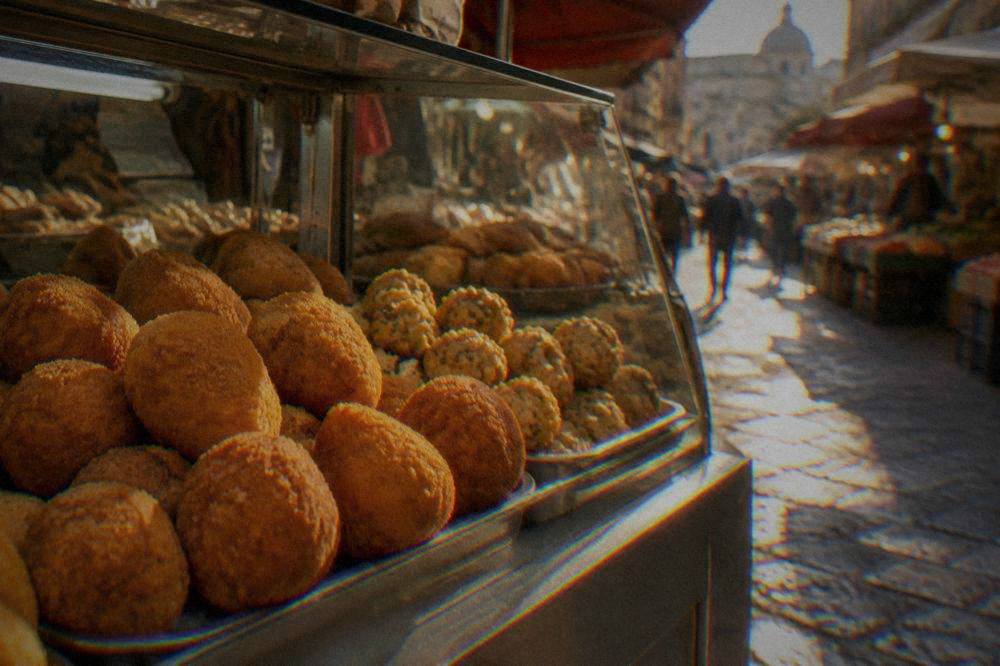
The dishes that define Palermo's tables are arancine, the round rice croquettes whose feminine name Accademia della Crusca confirms as the western Sicilian form, sfincione, a thick spongy pizza-style slice, panelle, chickpea fritters served in bread, and cannoli filled to order, alongside the seafood that a Tyrrhenian port city puts on every serious menu. The markets fry the first three; restaurants plate the rest.
The arancina spelling is not a quirk but a border. The Accademia della Crusca, Italy's reference body on the language, accepts both arancina and arancino, noting that Palermo and western Sicily say arancina, typically round, while Catania and the east say arancino, typically conical. A Palermo menu that prints arancine is writing local standard Italian, and the arancine guide unpacks the whole question.
Sfincione and panelle belong to the same street-to-table pipeline. The sfincione and panelle guide covers both, and the Sicilian desserts guide takes the story through cannoli to the ice creams and pastries that close a Palermo meal. On restaurant menus, look for the seafood layer that comes with a Gulf of Palermo location, and for the couscous tradition that western Sicily shares with North Africa, a legacy visible each year at the Cous Cous Fest held in San Vito Lo Capo in the Trapani province.
| Dish | What it is | Where you meet it |
|---|---|---|
| Arancina | Round fried rice croquette, the Palermo form per Accademia della Crusca | Market counters, bars, starters |
| Sfincione | Thick, spongy pizza-style slice | Bakeries, street carts |
| Panelle | Chickpea fritters, often in a bun | Market fryers, snack counters |
| Cannolo | Pastry tube filled with sweet ricotta | Pasticcerie, dessert menus |
| Couscous | Semolina dish with fish, a western Sicilian tradition | Seafood restaurants, festivals |
None of these dishes carries a fixed price worth printing here: fried snacks are posted at the counter, and restaurant menus state their own figures, which change. The honest planning approach is to read the posted price at each counter, the same discipline the coperto rule teaches at the table.
How Do Palermo's Markets Fit Into Restaurant Life?
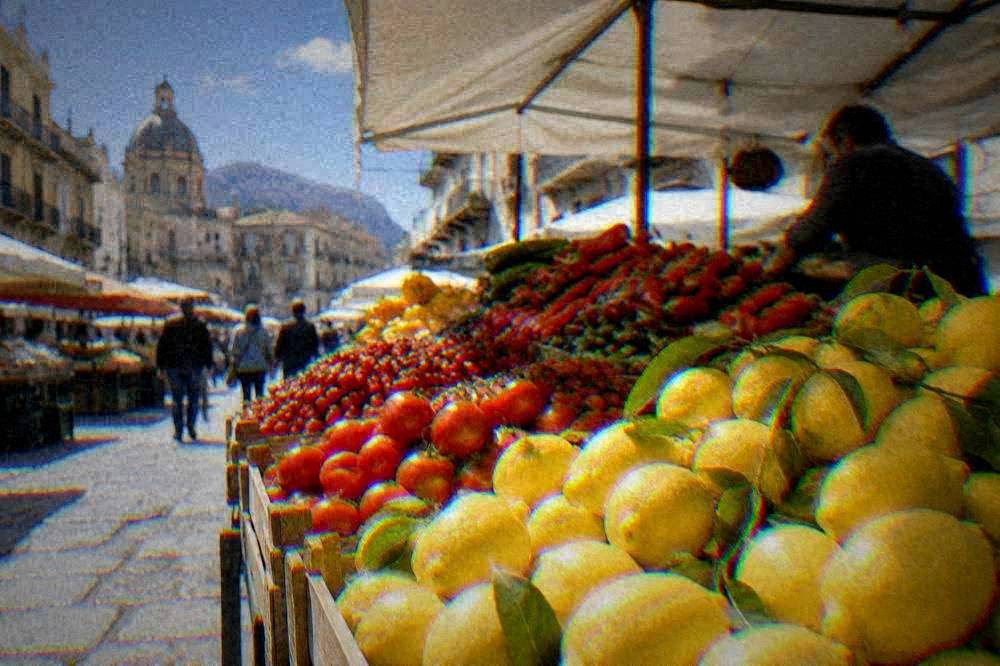
The three historic markets, Ballarò, Capo and Vucciria, supply both the city's kitchens and its street eating: Ballarò runs Monday to Saturday from about 7:30 to about 20:00 with Sunday mornings, the Capo trades mornings and rests on Sundays, and the Vucciria's daytime market has largely given way to an evening bar and street-food scene. The municipal tourism page lists all three among the city's historic markets, free to enter.
Ballarò is the anchor. Its stalls spread through the Albergheria side of the centre, and the hours above are the tourism listing's own pattern, with closing times that shift rather than a fixed shut-off, so treat late evening as approximate. Sunday mornings run in reduced form. The Capo, on the northern side, is a morning market: the streets fill from early and empty by early afternoon, and it does not operate on Sundays.
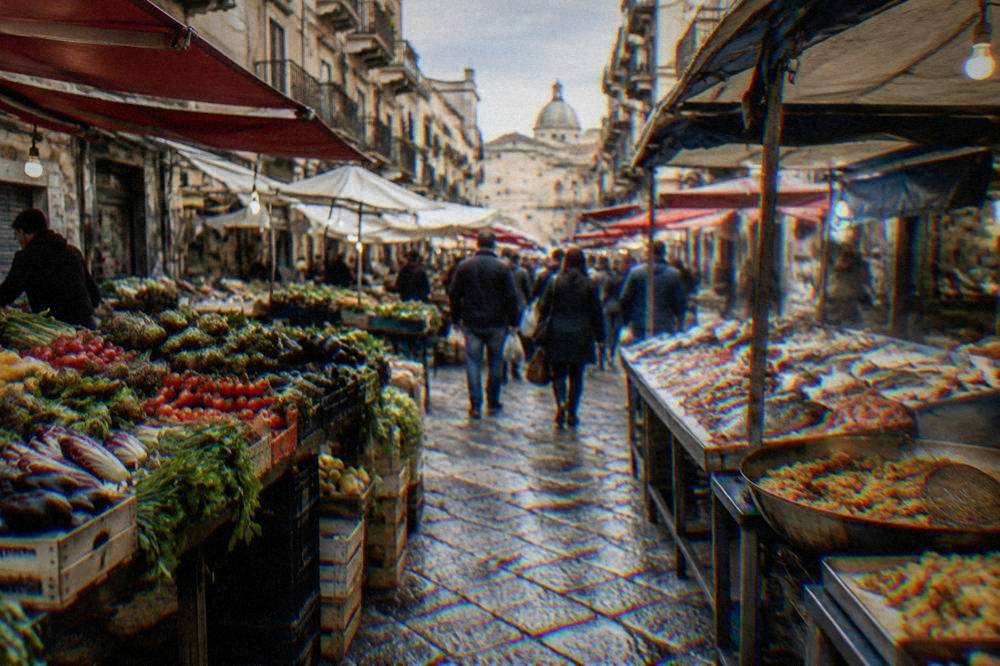
The Vucciria is the one that changed. Its daytime fish-and-produce trading has thinned, and the quarter's Piazza Caracciolo and Garraffello area now works as an evening gathering point of bars and street-food vendors, strongest from Thursday to Saturday and in summer. That makes it a dinner destination more than a shopping one, and the bridge between the two roles is exactly where restaurant and street cultures meet. The Palermo markets guide and the Ballarò market guide carry the detail, while the street food guide follows the fried layer from counter to counter.
| Market | Days and pattern | Hours pattern | Evening character |
|---|---|---|---|
| Ballarò | Monday to Saturday, Sunday mornings | About 7:30 to about 20:00, closing approximate | Quiet |
| Capo | Monday to Saturday, closed Sunday | Mornings | Quiet |
| Vucciria | Daytime trading much reduced | Mornings | Bars and street food, strongest Thursday to Saturday |
Eating inside a market is the cheapest table in the city. Counters fry to order through the morning and early afternoon, prices are posted, and the produce around you is the same produce the restaurants buy. The budget guide builds whole days on this logic.
Is Tap Water Safe To Drink In Palermo Restaurants?
Yes: AMAP, the utility that distributes Palermo's water, states that the supply is suitable for human consumption and subject to ongoing quality monitoring, so tap water at the table is safe and asking for it is a legitimate request. Bottled water remains the default offer in many dining rooms, but that is custom, not a safety verdict.
The utility's public communications confirm potability, which makes the carafe of tap water a normal order in a restaurant as at a bar. For visitors refilling bottles between meals, the same statement covers the public supply citywide. The practical line is simply to ask: acqua del rubinetto is the phrase, and a dining room that only stocks bottled water will say so.
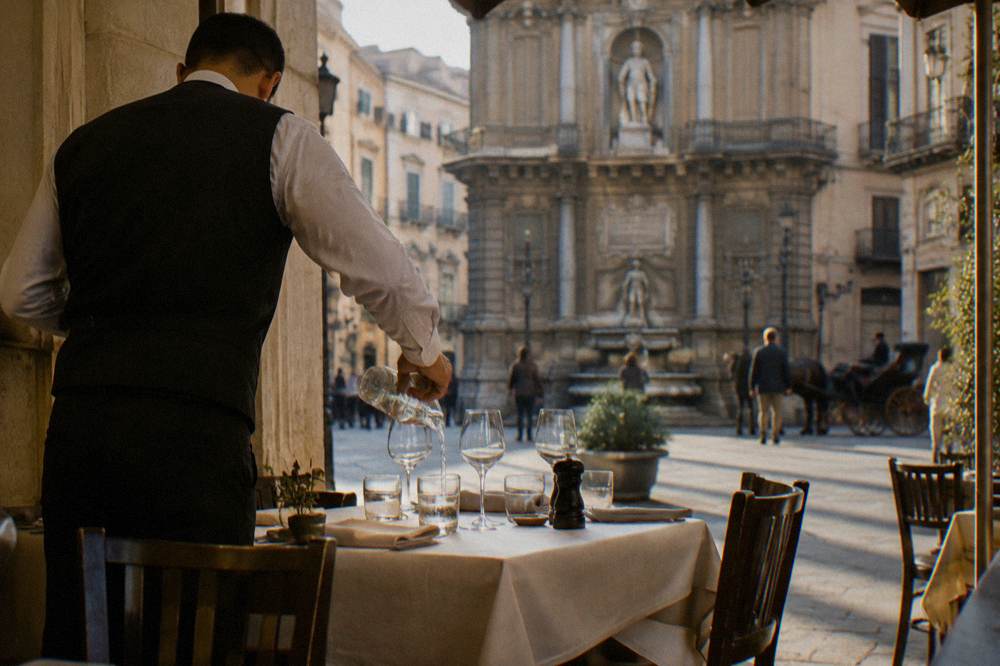
Wine is the other poured question, and Palermo answers it well. Sicilian lists run from the island's reds to the fortified wines of the west, and a growing band of wine bars in the Kalsa and around the Politeama pours by the glass with snacks. A guided tasting is one structured way into that list, and the food tour guide and cooking class guide cover the formats that pair tastings with kitchen time.
How Can A Food Tour Or Cooking Class Round Out Restaurant Meals?
A food tour walks you through the market and street layer with a local guide explaining what each counter sells, a cooking class turns the market's produce into a meal you cook and eat, and a wine tasting maps the island's glass: together they cover the layers of Palermo eating that a restaurant table alone does not reach, and each runs as a bookable, guided product.
The logic is sequencing. Markets reward explanation, because a first-time visitor facing a Ballarò fry counter cannot read which vat holds which snack. A guided street-food walk solves that, and the operators on this site run several, from general history-and-food walks to tastings built around a dozen or more stops. The roster's food listings describe each product's coverage, and prices, ratings and durations render on each product's own page rather than being typed here.
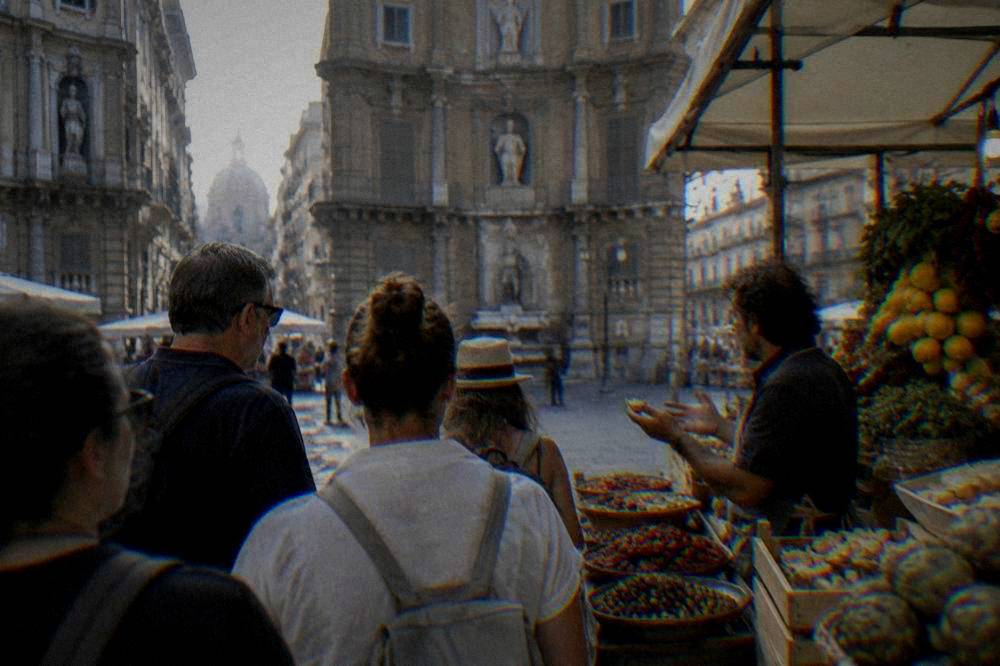
A cooking class closes the loop in the other direction: the class shops or receives market produce, then builds a full meal around pasta, tiramisu, pizza or gelato, with dinner and wine included in several formats. For families this is often the most reliable food outing of a trip, since children can participate. The walking layer is covered in the walking tour guide, and the historical side, including the city's anti-mafia memory, in the mafai and anti-mafia tour guide.
To try the city's recipes at the stove yourself, book a Sicilian cooking class here.
A useful pattern for a short visit: one market morning on your own, one guided food walk for the explanation layer, one cooking class or wine tasting for the table skills, and restaurant dinners in the Kalsa. The how many days in Palermo guide sequences exactly this kind of mix across one, two and three days.
Where Should You Eat On Day Trips From Palermo?
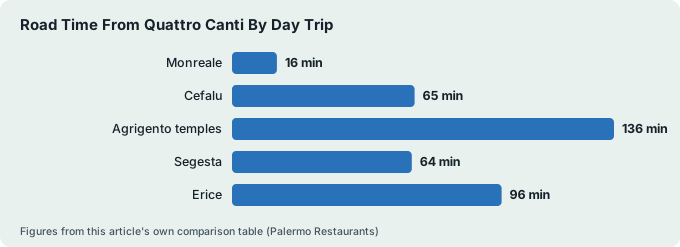
Day-trip dining follows the destination: Monreale, 16 minutes by road from Quattro Canti, pairs a cloister visit with small-town trattorie, Cefalu, 65 minutes away, puts seafood tables along a sandy town beach, and the Agrigento temples, about two hours by road or direct regional train, sit above a city with its own dining tradition. Each trip returns you to Palermo in time for dinner if you plan the last departure.
The road and rail figures come from route calculations and the regional timetable: Cefalu also has 19 to 24 direct trains a day from Palermo Centrale, taking 39 to 60 minutes, and Agrigento has a direct regional train of about two hours. Monreale is the simplest half-day: AMAT line 389 leaves Piazza Indipendenza 47 times a day, roughly every 40 minutes, on a 1.40 EUR city ticket, and the cloister's admission is 8 EUR full and 4 EUR reduced.
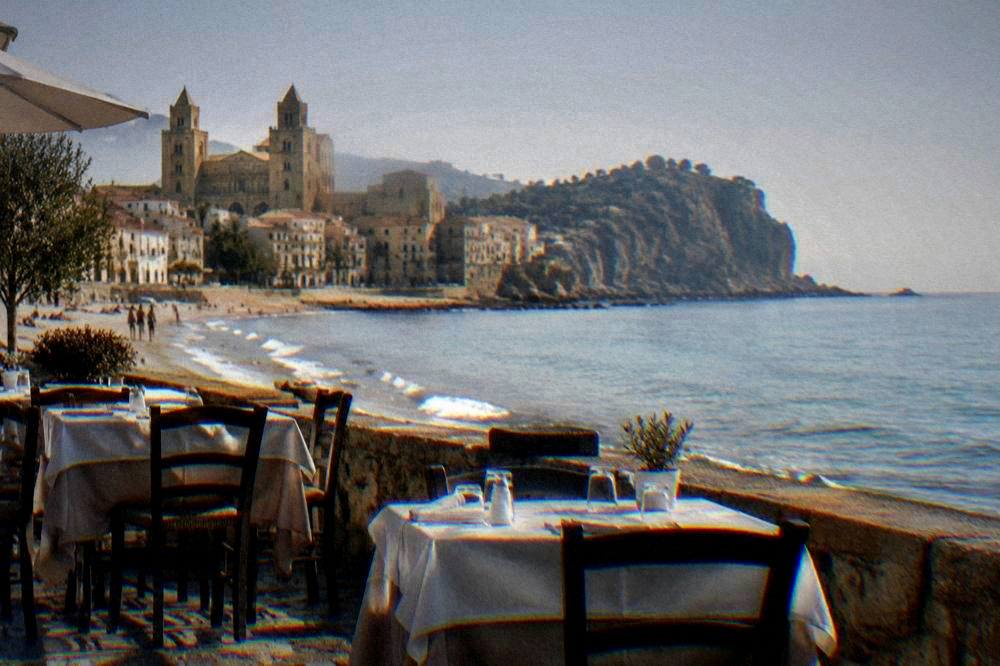
For a dinner-focused calculus, Cefalu rewards the longest stay: its cathedral is free to enter, the paid tower and museum itineraries cost 10 and 13 EUR, La Rocca costs 5 EUR, and the beach runs along the town centre. A guided excursion bundles Monreale and Cefalu into one half-day with transport handled, which suits a trip that wants the coast without a rental car.
The Agrigento options below suit a temples-and-table day further afield, with the Valley of the Temples open 8:30 to 20:00 and admission at 14 EUR full and 7 EUR reduced.
And for a full temples-plus-mosaic itinerary, the combined excursion adds the Villa Romana del Casale to the same day.
| Day trip | Road time from Quattro Canti | Rail alternative | Site admission |
|---|---|---|---|
| Monreale | 16 min | AMAT 389 bus, about every 40 min | Cloister 8 EUR full, 4 EUR reduced |
| Cefalu | 65 min | 39 to 60 min, 19 to 24 direct trains | Cathedral free, itineraries 10 and 13 EUR |
| Agrigento temples | 136 min | Direct train about 2 h | 14 EUR full, 7 EUR reduced |
| Segesta | 64 min | Bus via Segesta Autolinee | 14 EUR full, 7 EUR reduced |
| Erice | 96 min | Via Trapani, cable car 9 EUR one way | Cable car 15 EUR return |
The day trips from the city and the single one day in Palermo pages build fuller itineraries on these same figures.
What Should You Budget For Eating Out In Palermo?
No printed price list governs Palermo's restaurants, so the honest budget method is structural rather than numeric: market counters post their prices at the stall, restaurant menus print theirs before you order, the coperto appears only if printed, and the tourist tax, up to four consecutive nights at about 3 to 5 EUR per night depending on the accommodation's rating, is collected by where you sleep, not where you eat.
The last figure deserves its place on a food page because it lands on the same holiday budget. The municipal regulation caps the tax at four consecutive nights for non-residents, with per-night amounts by star rating, 3 EUR at one star rising to 5 EUR at five stars and 4 EUR for short-term rentals, from 1 July 2025, and the accommodation collects it, so confirm it at booking rather than at the table.
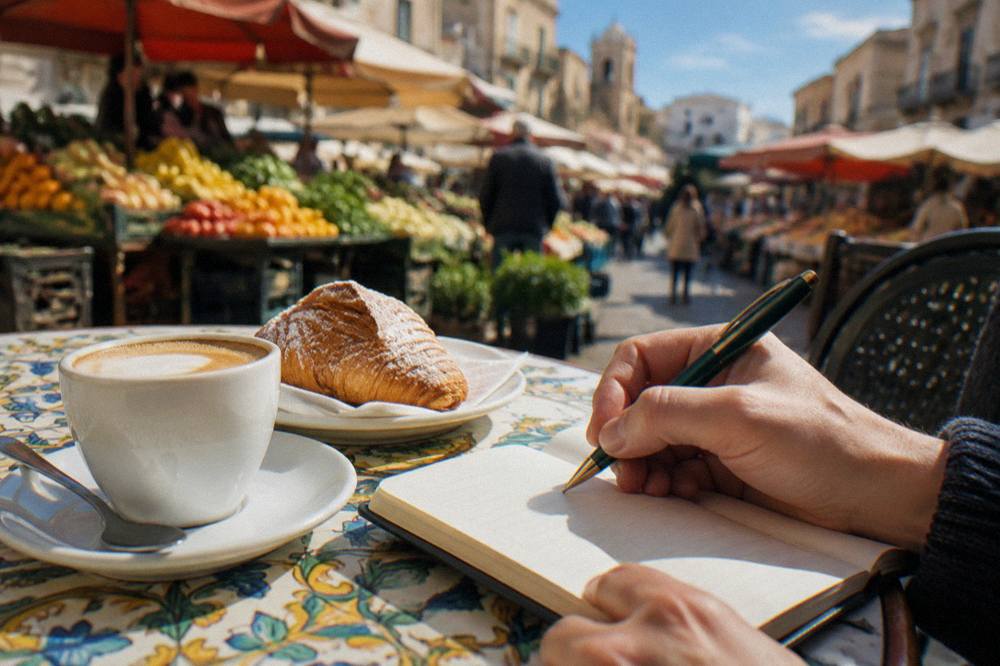
For food spending itself, the structure does the work. A market morning of fried snacks costs whatever the counter posts. A trattoria dinner costs whatever the printed menu says plus the printed coperto, if any, plus anything you choose to leave. A guided food walk or cooking class prices itself on the operator's live listing, where the current figure and cancellation terms are shown before payment. Nothing in that chain requires a guess, and the is Palermo expensive guide applies the same method to the whole trip.
One seasonal note shapes value: July is the driest month at 7 mm of rain in the climate table's modelled 1991 to 2020 normals, and October the wettest at 81 mm, so terrace season runs long, but the Festino of Saint Rosalia, 10 to 15 July with the chariot procession on 14 July and the silver urn procession on 15 July, fills the centre and its tables days in advance. The best time to visit guide weighs food-calendar against crowds.
Common Questions About Palermo Restaurants
Is the coperto legal in Palermo restaurants?
Yes, when the amount is printed on the menu or displayed tariff before you order. Sicily has no regional ban on the cover charge, and the itemised bill should show it as a separate line if charged.
Is tipping expected in Palermo?
No. Tipping is not obligatory in Italy, and service staff do not rely on tips. Rounding up the bill or leaving a small amount in cash after a long meal is a voluntary gesture.
Can you drink tap water in Palermo restaurants?
Yes. AMAP, the municipal water utility, states that Palermo's distributed water is suitable for human consumption, so asking for tap water at the table is a safe and legitimate request.
Is it arancina or arancino in Palermo?
Arancina. Accademia della Crusca accepts both forms, noting that Palermo and western Sicily use the feminine arancina, typically round, while Catania and eastern Sicily use the masculine arancino.
When are Palermo's food markets open?
Ballarò runs Monday to Saturday from about 7:30 to about 20:00 with Sunday mornings, the Capo trades mornings and does not operate on Sundays, and the Vucciria's daytime trading is much reduced, with its bars and street food strongest on Thursday to Saturday evenings.
Do you need to book Palermo restaurants in advance?
Only at peak times. Around the Festino of 10 to 15 July, when the centre fills for the chariot procession on 14 July, and on summer weekends, popular dining rooms fill early, so book ahead then and confirm locally otherwise.
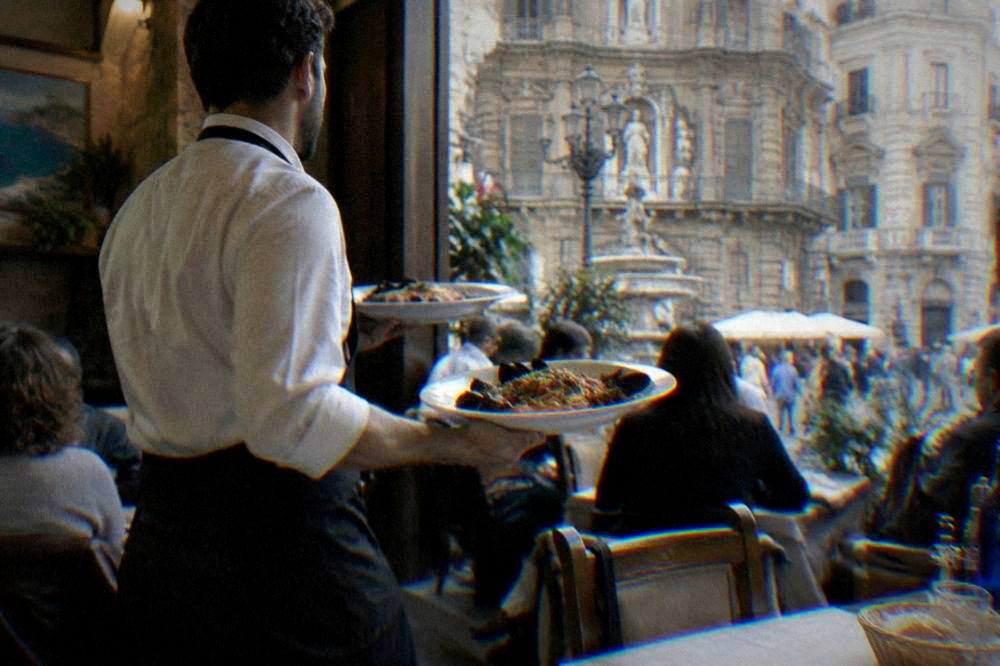
A restaurant plan for Palermo writes itself once the layers are visible: a Ballarò or Capo morning at the posted prices, a guided walk or class for the explanation layer, trattoria evenings in the Kalsa with the coperto read off the printed menu, and a Monreale or Cefalu day trip booked with the evening left free for the table. Build it that way and every figure you need is printed where you can check it, on the menu, at the counter, or on the operator's live listing.