Is Palermo Expensive To Visit?
What a Palermo trip really costs: transport fares, museum tickets, market food, the tourist tax and day trips, with the figures the operators and official pages publish.
Palermo, the coastal capital of Sicily on the Tyrrhenian Sea, has a reputation as a budget-friendly city, and the numbers published by operators and official pages support it. The AMAT fares page sells a 90-minute bus or tram ticket for 1.40 EUR and a whole-day ticket for 3.50 EUR. The Palazzo dei Normanni ticket page lists a full palace ticket at 14.50 EUR. A plate of street food in the markets costs a fraction of a restaurant dinner in northern Europe. None of that makes the city free, and the answers on this Palermo Italy Travel Guide page break the budget down line by line, from the tourist tax to the cost of the big day trips.
Is Palermo Expensive To Visit?
No, Palermo is not expensive by the standards of Western Europe's capital cities, and the published figures show why: city transport runs at 1.40 EUR per ride, the major paid sights charge between 5 and 15 EUR, the tourist tax tops out at about 5 EUR per night for a maximum of four nights, and the street markets sell full meals for the price of a coffee in Paris or Zurich. The costs that can climb are the same ones that climb anywhere: hotels in high summer, long guided day trips, and restaurant dinners with wine. A visitor who sleeps in a modest hotel, eats from the markets and buys individual museum tickets can keep a full day of sightseeing to a modest sum in euros.
The euro is the currency, so everything on this page is priced in EUR. Two cost categories deserve attention before anything else, because they are the ones visitors most often miss when budgeting. The first is the tourist tax, which applies to non-residents for a maximum of four consecutive nights and, from 1 July 2025, runs at about 3 EUR per night in a one-star property up to about 5 EUR in a five-star, with about 4 EUR for short-term rentals; the exact amount is confirmed at booking. The second is the cover charge, the coperto, which is legal in Italy when it is printed on the menu, so the itemised bill is the place to check it.
Beyond those, the city's own price structure is low. The municipal tourism portal lists a large share of the headline sights, from the Quattro Canti to the markets and the public gardens, as free to walk through, and the paid sights cluster in a narrow band. The question is rarely whether Palermo is affordable, but where a visitor chooses to spend.
What Does Getting Around Palermo Cost?
A visitor who uses public transport in Palermo spends very little: the AMAT fares page lists a 90-minute ticket at 1.40 EUR, a day ticket at 3.50 EUR, a two-day ticket at 6.00 EUR and a three-day MultiDay at 8.00 EUR, while the airport bus into town is 6.00 EUR one way or 10.00 EUR return when bought online in advance. Buying from the driver costs more, 1.80 EUR for a single, so tickets bought in advance or through the app are the cheaper route. There is no metro; the city runs buses, four tram lines and a suburban rail passante, and one ticket system covers the buses and trams.
The historic centre is compact enough that walking covers much of it, a point made in detail on can you walk in Palermo, and walking is of course free. For everything else, the fares table below carries the published figures.
| Journey or ticket | Published price |
|---|---|
| AMAT single, 90 minutes, bought in advance | 1.40 EUR |
| AMAT single bought on board | 1.80 EUR |
| AMAT day ticket | 3.50 EUR |
| AMAT three-day MultiDay | 8.00 EUR |
| AMAT 389 bus to Monreale (standard ticket) | 1.40 EUR |
| Airport bus, one way, online | 6.00 EUR |
| Airport bus, return, online | 10.00 EUR |
| Airport bus, on board | 6.50 EUR single, 11.00 EUR return |
| Regional train Palermo to Cefalu | Fare on the Trenitalia ticket page |
Two notes on that table. The Monreale bus uses an ordinary AMAT ticket, so the hill town and its cathedral cloister, at 8 EUR full and 4 EUR reduced, is a cheap half day. And the airport bus figures come from the operator's own published fare sheet; the airport train is a separate regional service whose fare is shown on the Trenitalia ticket page.
How Much Do The Sights And Museums Cost In Palermo?
The headline paid sights in Palermo sit between 5 and 15 EUR: the Palazzo dei Normanni with the Cappella Palatina is 14.50 EUR full and 12.50 EUR reduced, the Teatro Massimo guided tour is 14 EUR full and 7 EUR under 26, the Capuchin Catacombs are 5 EUR, and the Monreale cloister is 8 EUR, while the Quattro Canti, Piazza Pretoria's exterior, the Foro Italico, the markets and the public gardens cost nothing. State and regional museums are free on the first Sunday of the month, a benefit to confirm per site before planning a visit around it.
That spread means a two-day sightseeing budget is predictable. A visitor who takes in the palace, the opera house, the catacombs and one museum spends well under 50 EUR on tickets, and one who times the first Sunday spends less. The table below collects the published admission figures for the main city sights.
| Sight | Full price | Reduced |
|---|---|---|
| Palazzo dei Normanni and Cappella Palatina | 14.50 EUR | 12.50 EUR |
| Teatro Massimo guided tour | 14 EUR | 7 EUR (under 26) |
| Capuchin Catacombs | 5 EUR | 3 EUR |
| Palazzo Steri, guided visit included | 8 EUR | 5 EUR |
| Salinas Archaeological Museum | 7 EUR | 3.50 EUR |
| Galleria d'Arte Moderna | 10 EUR | 8 EUR |
| Marionette Museum | 5 EUR | 3 EUR |
| Monreale cloister | 8 EUR | 4 EUR |
Three caveats belong with those figures. The Palermo Cathedral's monumental area, covering the roof, the royal tombs and the treasury, is ticketed, and the price is shown at the ticket point or on the cathedral's own ticket shop rather than on the visiting page. Palazzo Abatellis is closed or closing for a long climate-control works programme from mid-July 2026, with no reopening date set, so it should not be budgeted as a stop. And the royal apartments at the Palazzo dei Normanni close on Tuesdays and Wednesdays when the regional parliament sits, which matters because the apartments are part of the one ticket.
For visitors who like the look of guided visits around the city's food and history, there is a separate rundown of the best ways to get around Palermo that pairs transport with tour logistics. The full walking and food options, with prices rendered from live listings, sit under things to do in Palermo.
Is Food Expensive In Palermo?
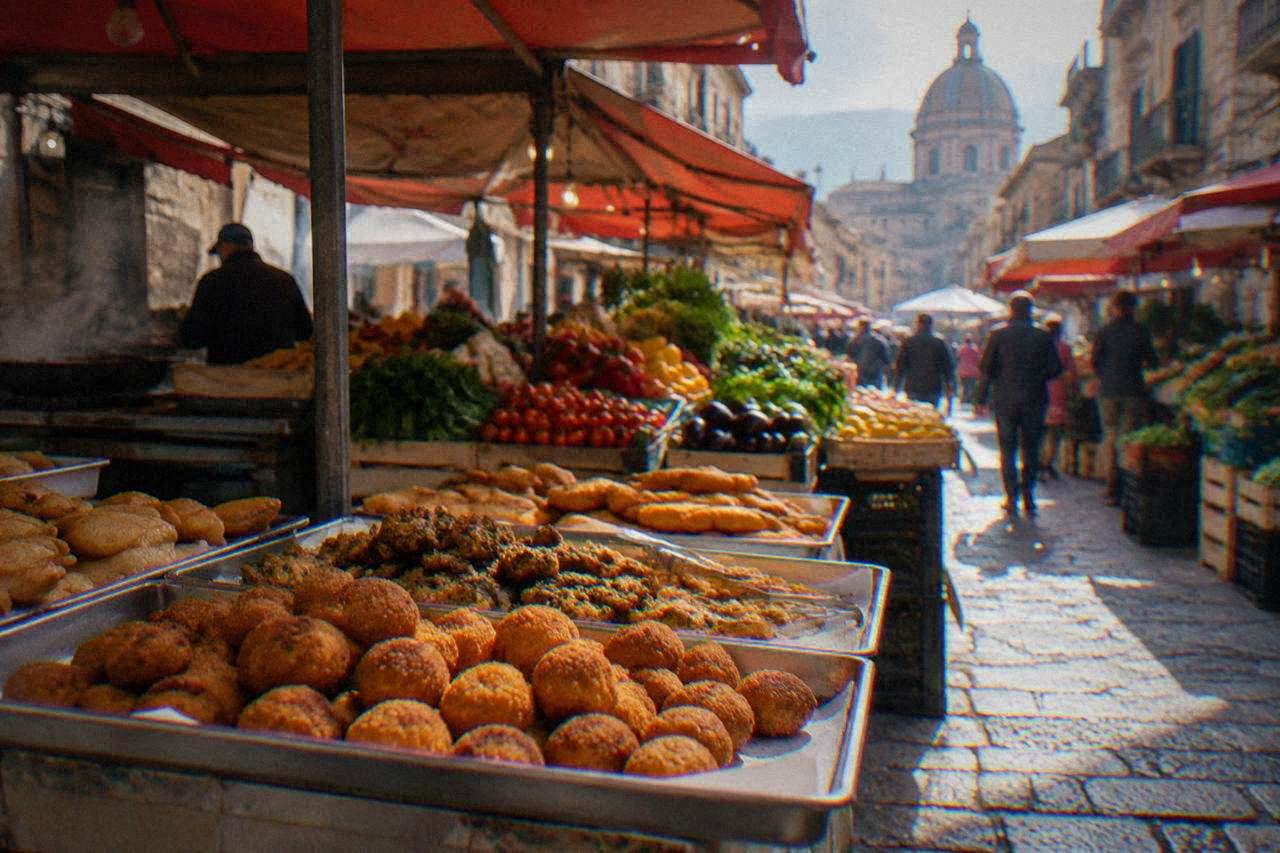
Food is where Palermo is at its cheapest: the street markets sell filled rolls, fried snacks and arancine at prices that make a full lunch cost little more than a museum ticket, restaurant pricing is moderate for a regional capital, and the coperto cover charge, typically one to three euros where it applies, is legal only when printed on the menu. The Accademia della Crusca confirms that both arancina and arancino are accepted forms of the word, with Palermo using the feminine, and a market arancina is one of the cheapest substantial foods in Italy. Tipping is not obligatory anywhere.
The markets structure the whole food budget. Ballarò runs Monday to Saturday from about 7:30 with Sunday mornings, Capo runs mornings and closes on Sundays, and the Vucciria shifts from a daytime market to an evening street scene. A visitor can eat across all three in a day for less than a single dinner at a seated restaurant. What the food is, dish by dish, is covered in what food is Palermo famous for, and the sweet end of it, from cannoli to cassata, has its own page.
Two practical notes keep restaurant bills predictable. Check the menu before sitting down, because prices posted outside are binding, and check the itemised bill for the coperto, which must appear on the menu if it is charged. Tap water is suitable for drinking according to AMAP, the city's water utility, so asking for tap water is a normal, money-saving request rather than a compromise.
What Do Hotels And The Tourist Tax Add To A Palermo Budget?
The tourist tax in Palermo applies to non-residents for a maximum of four consecutive nights, and from 1 July 2025 the per-night amount runs from about 3 EUR in a one-star property to about 5 EUR in a five-star, with about 4 EUR for short-term rentals, amounts that are confirmed at booking and collected by the accommodation. No hotel rate can be quoted here, because room prices move with season and demand; what can be said is that the tax layer on top of any room is small and capped by the four-night rule.
The lodging market itself spans the full range, from hostels and affittacamere to grand hotels, and the municipal tourism portal lists accommodation across those categories. Two rules affect short-term rentals in particular and are worth knowing at booking stage: a rental must display a national CIN identification code, and hosts must register guests through the police Alloggiati Web system within 24 hours, checking identity in person. A listing that shows its CIN code is playing by the rules, and that is a check a visitor can make in seconds.
If a hostel base fits your budget, book a hostel bed here.
Where to base yourself shapes the budget less than in many cities, because the centre is walkable and the transport fares are low. The trade-offs between districts, and between Palermo and the coastal resorts, are laid out in how many days are recommended for a trip to Palermo, which also handles the pacing question that drives how many nights, and therefore how much tax, a trip accrues.
Which Day Trips From Palermo Are Worth The Money?
Day trips are the biggest single line in a Palermo budget, because the headline sites carry their own admissions, Segesta at 14 EUR full and 7 EUR reduced, the Valley of the Temples at Agrigento at 14 EUR and 7 EUR, the Zingaro reserve at 5 EUR and 3 EUR, and the Erice cable car at 9 EUR one way and 15 EUR return, before any transport or guided tour is added. Cefalu is the cheap exception: its cathedral entry is free, with paid tower and museum itineraries at 10 and 13 EUR, and La Rocca is 5 EUR, while the train from Palermo takes between about 40 and 60 minutes with roughly hourly service.
Public transport keeps several of these trips inexpensive. Monreale is an ordinary 1.40 EUR AMAT bus ride from Piazza Indipendenza. Cefalu is a short regional train hop. Agrigento has a direct regional train of about two hours. The western loop of Segesta, Erice and the Trapani salt pans, and the long eastern runs to Etna and Taormina, are harder to stitch together by public transport in one day, which is where guided excursions earn their price.
| Day-trip site | Entry, full | Entry, reduced |
|---|---|---|
| Segesta archaeological park | 14 EUR | 7 EUR |
| Valley of the Temples, Agrigento | 14 EUR | 7 EUR |
| Zingaro nature reserve | 5 EUR | 3 EUR |
| Erice cable car | 9 EUR one way, 15 EUR return | Fare on the operator page |
| Cefalu cathedral | Free entry | Paid itineraries 10 and 13 EUR |
| La Rocca, Cefalu | 5 EUR | 2.50 EUR |
| Saline salt museum, Nubia | Free | Free |
One trip combines the region's heaviest themes in a single booking: the Corleone and Monreale Duomo day trip, which pairs the town whose name became shorthand for the mafia with the anti-mafia documentation centre's guided visits and Monreale's cathedral, where William I and William II are buried. The live price and availability are on Check availability. For context on Corleone's anti-mafia documentation centre, its guided itinerary runs at 10 EUR booked directly.
How To Keep A Palermo Trip Cheap
The cheapest Palermo trip is built on four free layers: walking the four mandamenti that meet at the Quattro Canti, browsing Ballarò, Capo and the Vucciria, resting in the public gardens and the Foro Italico, and timing a visit to the first Sunday of the month when state and regional museums drop their admission, all before a single euro is spent on sights. On top of that, AMAT's day and MultiDay tickets cap transport at small sums, the street markets feed a visitor for the cost of coins, and the tap water is drinkable, per AMAP.
The infogain summary below pulls together the current cost facts worth knowing before booking.
Beyond the free layers, two spending choices move the total more than anything else: the hotel category, which also sets the tourist tax band, and the number of guided day trips. A visitor who takes one long guided excursion and does the rest independently, Monreale by bus, Cefalu by train, the city on foot, gets the full region at close to city prices. A fuller comparison of the city's value against its rivals sits on is Palermo a good travel destination, and the beach question, Mondello versus the east coast, is argued out in is Palermo or Catania better for beaches.
One seasonal note on the calendar rather than the wallet: the Festino of Saint Rosalia runs each July, 10 to 15 July in 2026 with the main events on 14 and 15 July, and the Teatro Massimo season opens 22 November 2026 with Samson et Dalila. Neither changes the base cost of the city, but both change hotel demand, and demand is what moves the one price this page cannot quote.
Common Questions About Palermo Trip Costs
Is Palermo expensive to visit?
No. Published fares and admissions are low for Western Europe: 1.40 EUR city transport, 5 to 15 EUR headline sights, cheap market food and a tourist tax capped at about 5 EUR per night for four nights. Hotels and long guided day trips are where the budget climbs.
How much is the tourist tax in Palermo?
From 1 July 2025 it runs at about 3 EUR per night in a one-star property, rising by category to about 5 EUR in a five-star, with about 4 EUR for short-term rentals. It applies to non-residents for a maximum of four consecutive nights and the amount is confirmed at booking.
Is public transport cheap in Palermo?
Yes. The AMAT fares page lists a 90-minute ticket at 1.40 EUR, a day ticket at 3.50 EUR and a three-day MultiDay at 8.00 EUR. Buying on board costs more, 1.80 EUR for a single, so advance purchase is cheaper.
Are the main sights in Palermo free?
Several are: the Quattro Canti, Piazza Pretoria's exterior, the Foro Italico, Villa Giulia, Parco della Favorita and the markets cost nothing. The big paid sights run from 5 EUR at the Capuchin Catacombs to 14.50 EUR at the Palazzo dei Normanni, and state museums are free the first Sunday of the month.
Is food expensive in Palermo?
No. Market food is among the cheapest substantial eating in Italy, restaurant pricing is moderate, tipping is not obligatory, and the coperto is legal only when printed on the menu. Tap water is suitable for drinking according to AMAP.
What is the most expensive part of a Palermo trip?
Lodging in high season and the long guided day trips. Public transport, city sightseeing and food all stay at low published prices, while multi-hour excursions to Etna, Taormina or the Agrigento temples carry the biggest per-person costs of a stay.
The short answer stands: Palermo is not an expensive city to visit, and a visitor who walks the centre, eats from the markets and rides AMAT can hold daily costs to a level that surprises anyone arriving from northern Europe, leaving room in the budget for the palace, the opera house and one long day trip.