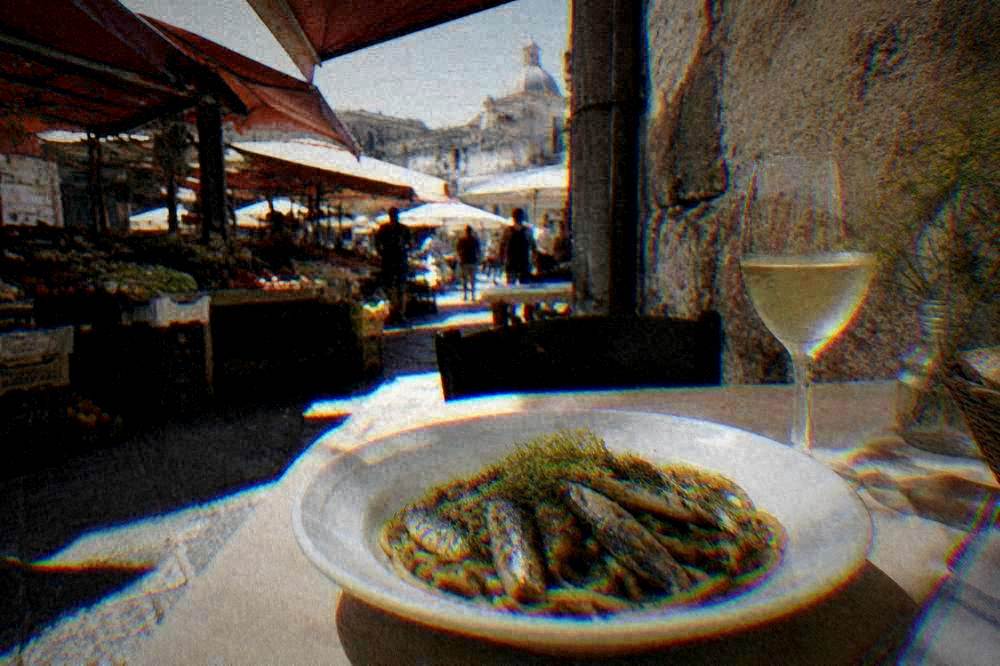
Ballarò Market
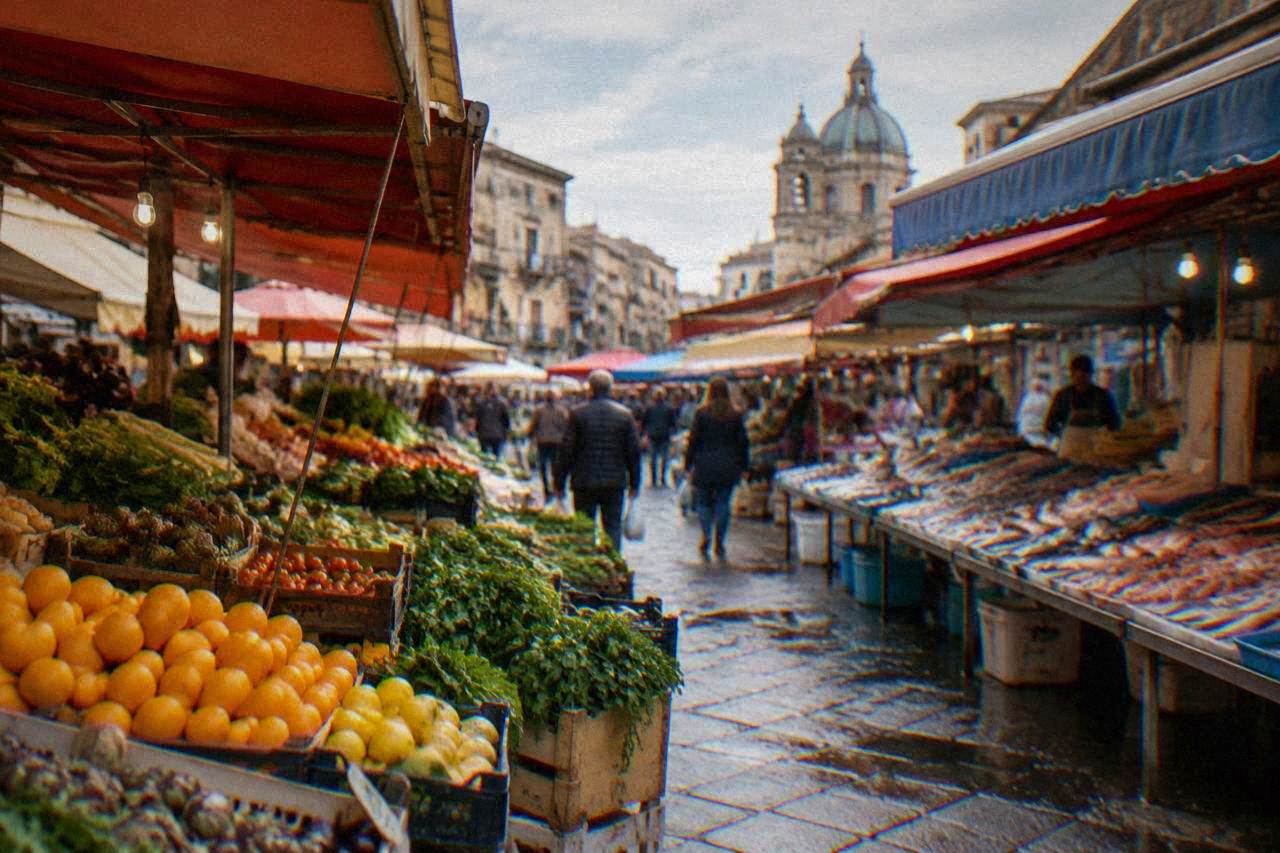
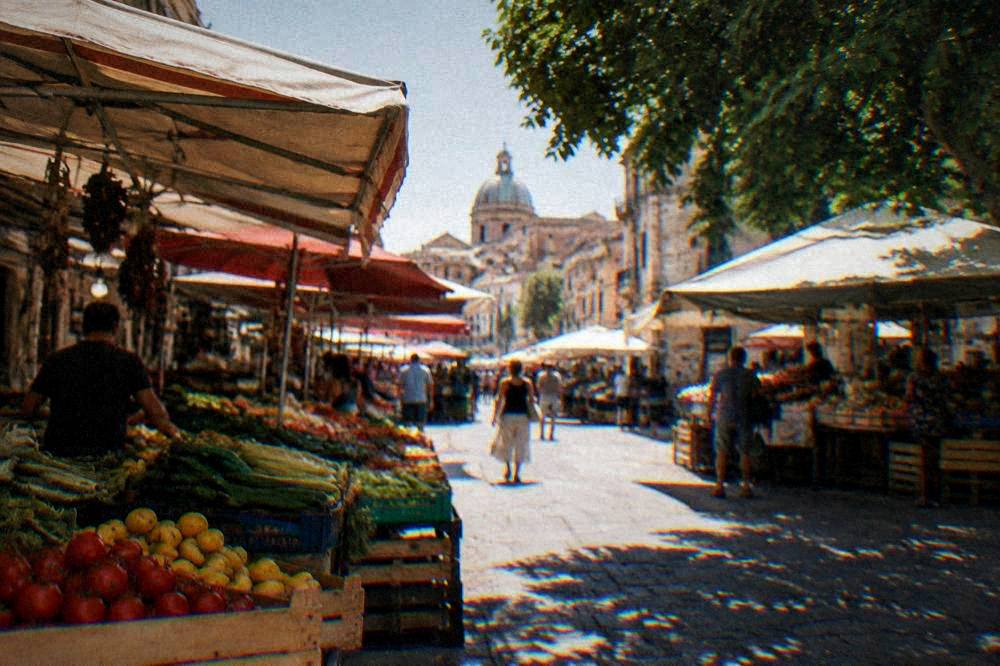
Ballarò Market is Palermo's largest historic street market, a grid of lanes in the Albergheria district where vendors sell fish, produce, cheese and street food a short walk from the cathedral and the Norman Palace.
Short answer
Ballarò Market runs roughly Monday to Saturday from about 7:30 to about 20:00, with Sunday mornings, entry is free, and it sits in the Albergheria district between Via Maqueda and Corso Vittorio Emanuele, about a ten minute walk from the cathedral.
Ballarò Market fills the lanes of the Albergheria district in Palermo, the coastal capital of Sicily on the Tyrrhenian Sea, with stalls of fish, vegetables, cheese and fried street food that spill out between the old buildings a short walk from the city cathedral. The municipal tourism page describes Ballarò as a historic market of Arab origin and one of the city's main markets alongside Capo and Vucciria, and entry costs nothing: it is a working street, not a ticketed attraction.
What Is Ballarò Market And Where Is It In Palermo?
Ballarò Market is a street market of Arab origin in the Albergheria district of Palermo's historic centre, one of the city's main historic markets together with Capo and Vucciria, and it is free to enter. The municipal tourism page lists it as a historic market, and the same page names the Albergheria district, whose mandamento takes its name from the Palazzo Reale, the royal palace at its edge.
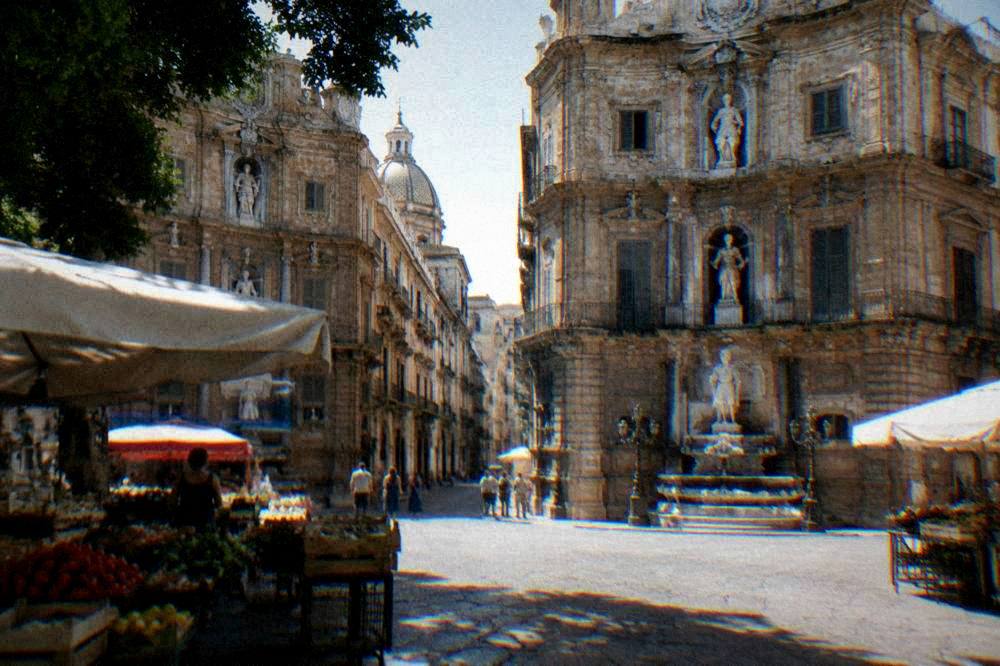
The old centre of Palermo is cut into four districts, the mandamenti, by the crossing of Via Maqueda and Corso Vittorio Emanuele at the Quattro Canti: Capo, Albergheria, Kalsa and Loggia. Ballarò sits inside the Albergheria, the quarter the municipal tourism page associates with the Palazzo Reale, which means the market and the Norman Palace are effectively neighbours. A visitor can walk from the market stalls to the palace complex, where the Palatine Chapel shares one ticket with the royal apartments, in a short walk through the district's lanes.
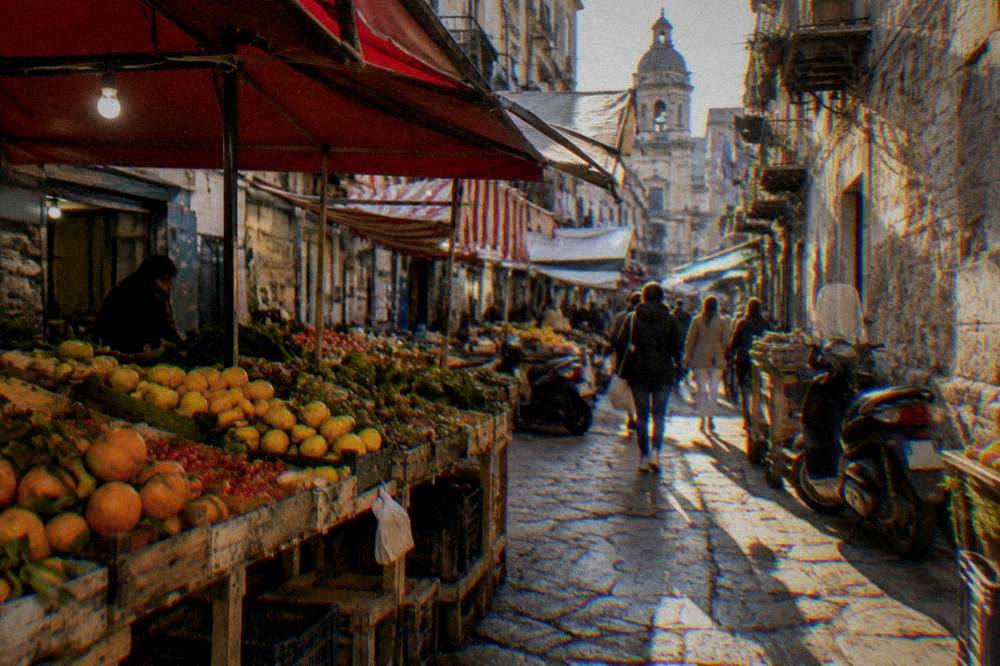
The market is not a single square but a network of streets, with Ballarò itself the spine and the stalls spreading into the side lanes around it. The character is working market rather than curated attraction: delivery vans, scooters and residents shopping for the day share the space with cameras. That mix is the point, and it is also the reason the standard advice about bags applies here, keep valuations zipped and held in front, which is the same everyday precaution the US and UK travel advisories give for any crowded city-centre street.
What Are The Ballarò Market Opening Hours And Days?
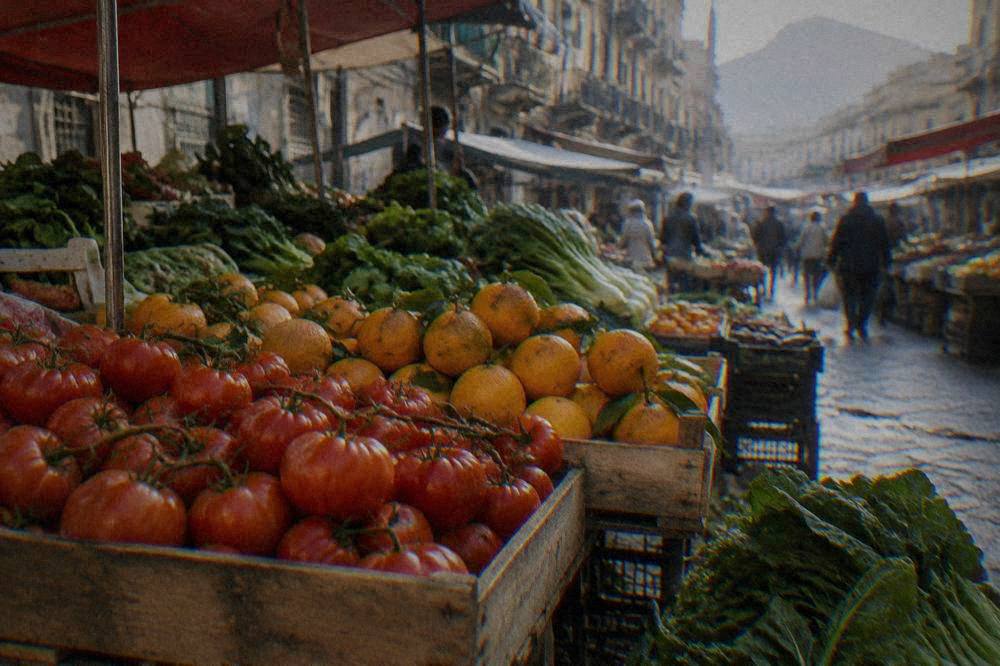
The municipal tourism page gives Ballarò Market hours as roughly Monday to Saturday from about 7:30 in the morning to about 20:00 in the evening, with Sunday mornings as well, and entry is free with no ticket of any kind. No closing hour is fixed: individual stalls shut at different times, so treat any hour as approximate and expect the market to be at its fullest in the morning.
Sunday is a mornings-only affair, and by early afternoon the lanes quieten as the stalls close. The Italia.it tourism listing, which carries the same pattern, notes Monday to Saturday trading with limited Sunday trading, and it is the morning hours that matter for anyone photographing the fish displays or wanting the full spread of produce before the best of it is sold. Anyone planning a Sunday visit should go early and treat the afternoon as closed.
The market does not close for a season. It runs through winter and summer alike, and the Palermo in winter and summer pages on this site cover how the wider city changes around it across the year. What changes at the market is the weather, not the schedule: the July and August means in the climate table run to 26.2 and 26.8 degrees, so the morning hours are also the comfortable ones in high summer.
| Day | Market trading | Notes |
|---|---|---|
| Monday | About 7:30 to about 20:00 | Full trading day |
| Tuesday | About 7:30 to about 20:00 | Full trading day |
| Wednesday | About 7:30 to about 20:00 | Full trading day |
| Thursday | About 7:30 to about 20:00 | Full trading day |
| Friday | About 7:30 to about 20:00 | Full trading day |
| Saturday | About 7:30 to about 20:00 | Full trading day |
| Sunday | Mornings only | Stalls close early afternoon |
A guided walk is one way to see the market with someone who knows which stall does what, and the roster on this site includes a Ballaro-focused food walk among its Palermo picks.
What Should You Eat At Ballarò Market In Palermo?
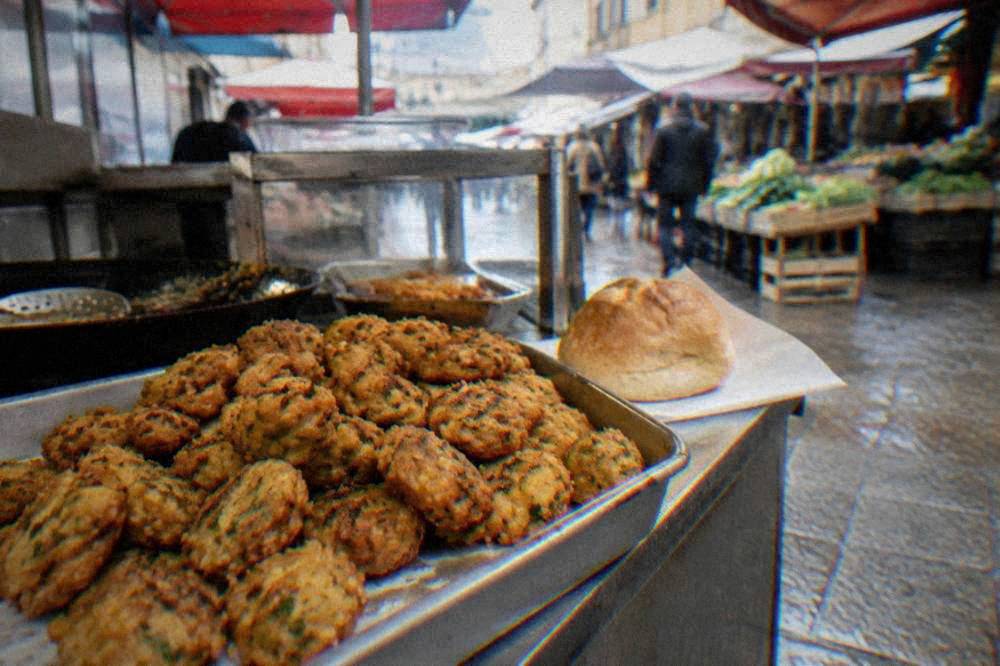
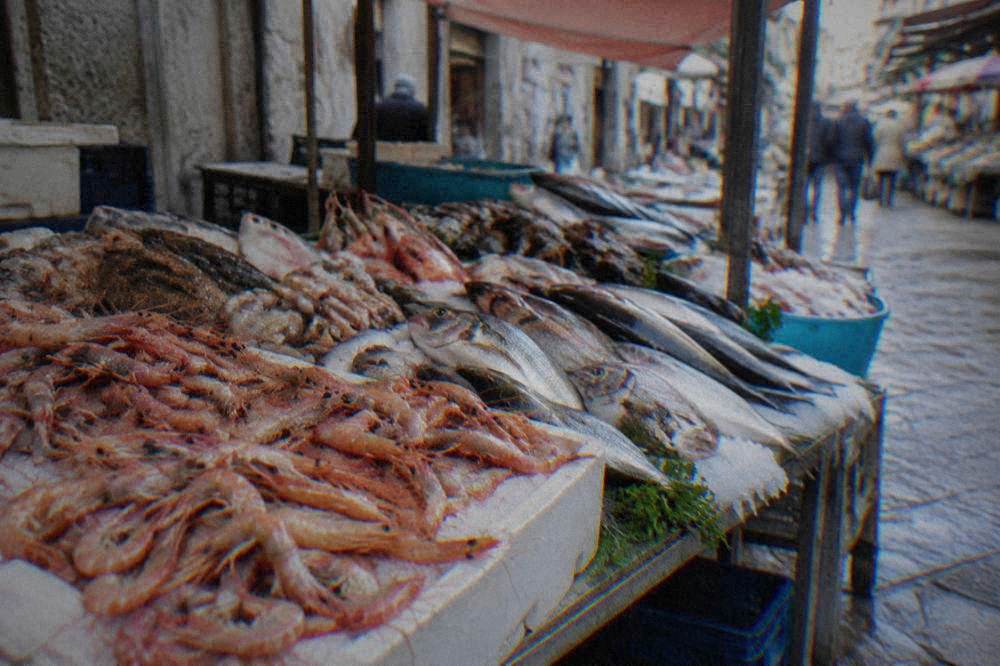
The classic Ballarò Market foods are the Palermo street food staples: arancine, the round fried rice balls the Accademia della Crusca notes as the Palermo and western Sicily form, panelle, chickpea fritters served in a roll, sfincione, a thick spongy pizza, and fresh fish, from stalls selling the catch fried or served raw on the day. Prices at individual stalls are set by the vendor, so check the posted price before ordering rather than expecting a fixed tariff.
The arancina question has a settled answer from Italy's language academy: both arancina and arancino are accepted, Palermo and the west of the island say arancina and the shape tends to be round, while Catania and the east say arancino and shape it as a cone. At Ballarò the feminine form is what the signs say, and the Palermo arancine guide on this site goes deeper into the fillings. Panelle and sfincione have their own page too, in Palermo sfincione and panelle, with what each one is and how it is served.
Eating at the market is standing food. A roll of panelle, an arancina from a fryer and a slice of sfincione from a counter make a full lunch for a few euros, though no figure on this page is a promise: each stall posts its own prices and they move with the season and the catch. Tap water is a different matter, and it is settled: AMAP, the city water utility, states that Palermo's distributed water is suitable for drinking, so a refillable bottle works anywhere in the market.
For anyone who wants the stalls decoded rather than discovered alone, a guided tasting walk covers the market with a local guide.
How Much Should You Budget For A Visit To Ballarò Market?
Entry to Ballarò Market is free, so the only spend is food, and the market itself publishes no tariff: each stall sets its own prices, which is why the honest budgeting answer is to eat where prices are posted and to expect a street lunch to cost a few euro rather than restaurant money. The fixed, printed figures near the market are transport and museum prices, which this site lists from the operators' own pages.
The AMAT fares page gives the printed transport figures for getting there: a single bus or tram ticket is 1.40 EUR bought in advance, 1.80 EUR bought on board, and a day ticket is 3.50 EUR, with a three-day MultiDay at 8.00 EUR.
| Item | Price | Source basis |
|---|---|---|
| AMAT single ticket, bought before boarding | 1.40 EUR, 90 minutes | AMAT fares page |
| AMAT single ticket, bought on board | 1.80 EUR | AMAT fares page |
| AMAT day ticket | 3.50 EUR | AMAT fares page |
| AMAT three-day MultiDay | 8.00 EUR | AMAT fares page |
| Palazzo dei Normanni and Palatine Chapel, full | 14.50 EUR | Official visit page |
| Palazzo dei Normanni and Palatine Chapel, reduced | 12.50 EUR | Official visit page |
| Capuchin Catacombs, full | 5 EUR | Catacombs site |
| Teatro Massimo guided tour, full | 14 EUR | Teatro Massimo page |
Market food itself should be budgeted by reading the stall, not a guide. The coperto, the cover charge, is legal in Italy when it is printed on the menu, and tipping is not obligatory: both facts are worth knowing before any meal in the city, and neither involves a percentage anyone should quote. Where a sit-down restaurant sits at the market's edge, the itemised bill and the printed cover charge are the reader's checks, and the Palermo on a budget page extends the same approach across the city.
How Do You Get To Ballarò Market Without A Car?
Ballarò Market is inside the ZTL, Palermo's camera-enforced limited traffic zone, so the practical answer is public transport or walking: AMAT buses and the four tram lines serve the centre, a single ticket costs 1.40 EUR bought before boarding and stays valid for 90 minutes including transfers, and the market is a short walk from the Quattro Canti crossing that divides the old town.
Palermo has no metro. What exists is the Passante ferroviario, a suburban rail service run by Trenitalia and RFI whose Line A connects Palermo Centrale with the airport, plus the four AMAT tram lines converging from the periphery to the centre. For a visitor staying centrally, none of that is needed for Ballarò: the market sits between Via Maqueda and Corso Vittorio Emanuele, and from the Quattro Canti the walk into the market lanes is a matter of minutes. From Palermo Centrale station, with its bus stops and taxi rank outside, the market is a straightforward walk into the historic centre or a short AMAT ride on a 1.40 EUR ticket.
Buying before boarding matters because the on-board single costs 1.80 EUR, and validation matters just as much: the ticket is valid 90 minutes from validation, and the AMAT page's instruction is to validate at once. The getting around Palermo page on this site lays out the full ticket menu, including the day and MultiDay options in the table above.
| Way in | What it involves | Cost figure |
|---|---|---|
| On foot from Quattro Canti | Short walk down into the Albergheria lanes | Free |
| AMAT bus, ticket bought in advance | 90 minutes of transfers included | 1.40 EUR |
| AMAT bus, ticket bought on board | Same validity, surcharge | 1.80 EUR |
| Suburban rail, Passante | Line A links Centrale and the airport; city-centre use is limited | Fare on the Trenitalia ticket page |
| Car | Market streets are inside the camera-enforced ZTL | Day pass 5 EUR petrol and diesel, 2.50 EUR hybrid, electric free, check the official portal |
Driving to Ballarò is the one option to think twice about. The ZTL is camera-enforced and entering without a permit is fined, with the daily pass figures at 5 EUR for petrol and diesel cars, 2.50 EUR for hybrids and free for electric, all through the official portal. The Palermo driving and parking page covers the rules in full, but for the market itself the simpler answer is the bus ticket and the walk.
How Does Ballarò Market Compare With Capo And Vucciria?
The municipal tourism page names three main historic markets, Ballarò, Capo and Vucciria, and the differences that matter to a visitor are location and rhythm: Ballarò is the large produce and fish market in the Albergheria running Monday to Saturday with Sunday mornings, Capo trades in the mornings near the cathedral, and Vucciria shifts from a daytime market to an evening street scene around Piazza Caracciolo.
Capo sits in the mandamento of the same name at the north of the old centre, close to the cathedral, and its trading day is a morning one, with Sunday closed. Ballarò's longer hours, running to about 20:00 on weekdays per the municipal page, make it the one that still has life in the late afternoon.
Vucciria is the third of the three and the one whose character has moved furthest from plain produce selling. Its daytime market runs Monday to Saturday with Sunday mornings, but the listings describe the evening and night scene, strongest from Thursday to Saturday, when the market area around Piazza Caracciolo and Garraffello fills with bars and street food. The Palermo markets page compares all three at length, and the Palermo nightlife page picks up the Vucciria evening story.
| Market | District | Trading pattern | Character |
|---|---|---|---|
| Ballarò | Albergheria | Roughly Mon-Sat 7:30-20:00, Sunday mornings | Large produce and fish market, Arab origins |
| Capo | Capo | Monday to Saturday mornings, closed Sunday | Food market near the cathedral |
| Vucciria | Loggia | Monday to Saturday daytime, Sunday mornings | Daytime market plus evening bar scene |
Choosing between them is less a contest than a schedule question. All three are free, all three sell food, and a day that takes in the cathedral and the Norman Palace naturally passes Capo on one side and Ballarò on the other. The one day in Palermo itinerary on this site threads them exactly that way.
What Can You See Within Walking Distance Of Ballarò Market?
Within a short walk of Ballarò Market stand the Palazzo dei Normanni with the Palatine Chapel on a shared 14.50 EUR full ticket, Palermo Cathedral whose monumental areas are ticketed at the ticket point, the Capuchin Catacombs at 5 EUR full, and the free sights of the Quattro Canti, Piazza Pretoria's exterior and the Foro Italico, so the market sits at the centre of the densest cluster of sights in the city.
The Norman Palace complex is the headline neighbour. The official visit page lists the full ticket at 14.50 EUR and the reduced at 12.50 EUR with the royal apartments included, open Monday to Saturday with last admission at 16:30 and Sunday and holidays to 12:30, and the royal apartments close on Tuesdays and Wednesdays when the regional parliament sits. The Norman Palace and Cappella Palatina pages carry the details, and both are part of the UNESCO property inscribed in 2015 as Arab-Norman Palermo and the Cathedral Churches of Cefalu and Monreale.
Palermo Cathedral is another few minutes on. Its official page gives hours and no price for the monumental area, the roof, the royal tombs, the treasury and the crypt, so the price is the one shown at the ticket point or on the cathedral's ticket shop, and the nave is a working church where covered shoulders and knees are the expected dress. The cathedral's own history is on this site's Palermo Cathedral page: the Saracens turned the earlier church into a mosque in 831 and the Normans returned it to Christian worship in 1072.
| Sight | Distance character | Entry |
|---|---|---|
| Palazzo dei Normanni and Palatine Chapel | Same district, market's edge | 14.50 EUR full, 12.50 EUR reduced |
| Palermo Cathedral | Short walk north | Monumental area ticketed, price at the ticket point |
| Quattro Canti | Short walk east | Free |
| Piazza Pretoria | Short walk east | Free, exterior |
| Foro Italico | Walk to the seafront | Free |
| Capuchin Catacombs | Beyond the centre | 5 EUR full, 3 EUR reduced |
The free list is long enough to fill a day on its own. The Quattro Canti crossing, the Piazza Pretoria fountain seen from outside, the Foro Italico seafront and Villa Giulia all cost nothing, as does the first Sunday of the month at many state and regional museums, a concession to confirm per site. The Palermo on a budget page assembles the full free list, and the old town centro storico page maps how the districts connect.
For visitors who want the market plus the wider food culture in one booked block, the tasting walks and cooking classes in the picks below all start from the city centre.
To shop the stalls and cook what you find, book a Sicilian cooking class here.
When Is The Best Time Of Day To Visit Ballarò Market?
Morning is the best time to visit Ballarò Market: the municipal page's hours start about 7:30, the fish and produce displays are at their fullest before the late morning sell-down, and in July and August, when the climate table's modelled 1991 to 2020 normals show means of 26.2 and 26.8 degrees, the early hours are also the only comfortable ones for standing in crowded lanes.
The climate table, modelled ERA5 normals for 1991 to 2020, gives the year's shape: July is the driest month at 7 mm of rain and October the wettest at 81 mm, with monthly means climbing from 11.3 degrees in January to 26.8 in August. None of that closes the market, but it argues for morning visits in summer and for accepting the odd shower from September onwards, when rainfall rises again. The Palermo weather page has the full monthly table.
Late afternoon has its own case. Because Ballarò trades to about 20:00 on weekdays, it is the one historic market that still functions after the cathedral and palace have taken their last admissions, which makes it a natural end to a sightseeing day rather than only a start. A morning at the palace, an afternoon at the market and an evening in the Vucciria is a full day built entirely from this page's geography.
Sunday deserves its own warning, again: mornings only, and quiet by early afternoon. Anyone combining a Sunday market visit with the first-Sunday free museum entry should sequence the market first, then the museums, since the market will close long before the museum afternoon ends.
Is Ballarò Market Worth Visiting With A Guide?
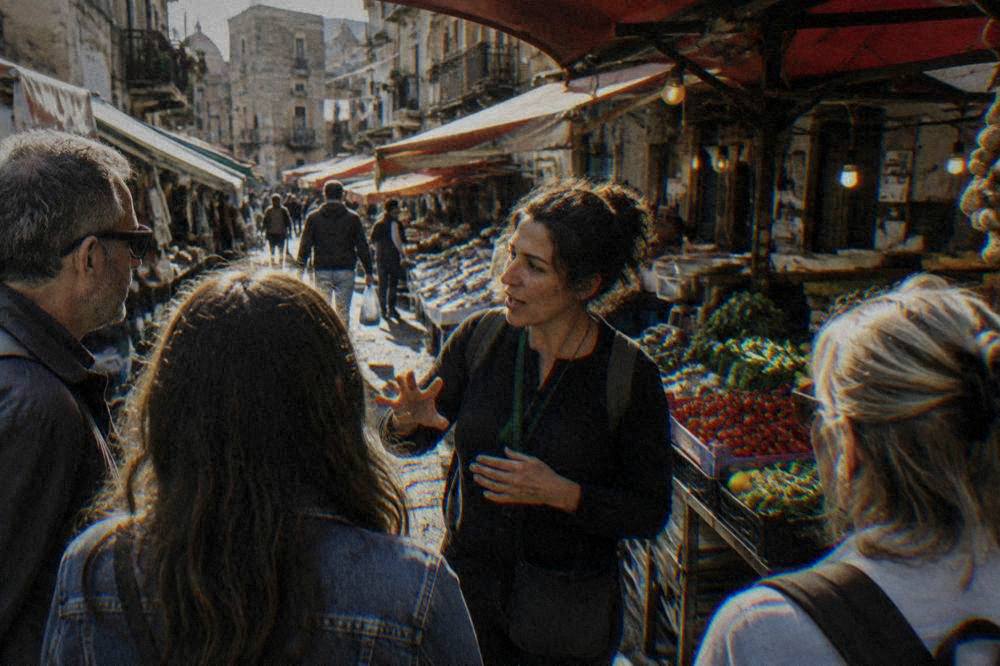
A guided visit is worth it for anyone who wants the market's food decoded rather than discovered by trial, and the site's roster carries several options, including a Ballaro-specific market walk by Eating Europe, a broader ten-tasting food tour across the city and a street food and history walk, so the choice is between a market-focused walk and a city-wide tasting route rather than between guiding and nothing.
The case for a guide at Ballarò is informational. The stalls are unlabeled, the fried foods look alike to a first-time visitor and the differences between panelle, sfincione, arancine and the rest are exactly what a local guide explains while handing them over. The case against is simply confidence: the market is free, public and walkable, and a visitor willing to point at what looks good will eat well without help. Both are legitimate, and price, rating and duration for every option render on the tour pages linked from the picks on this page.
What no guide is needed for is the market's place in the city. It sits in the Albergheria beside the Norman Palace, it trades when the municipal page says it trades, and its food is the same Palermo street food canon this site documents across its food pages. The rest, from the Palermo street food overview to the Palermo restaurants page for sit-down meals, is reading rather than booking.
For a first visit that skips the guesswork entirely, the Ballarò market walk below is the direct match.
Common Questions About Ballarò Market In Palermo
Is Ballarò Market open on Sunday?
Yes, but Sunday mornings only. The municipal tourism page gives the market's full hours as roughly Monday to Saturday from about 7:30 to about 20:00, with Sunday mornings, so a Sunday visit should be early and the afternoon treated as closed.
Do you have to pay to enter Ballarò Market?
No. Entry to Ballarò Market is free, and the municipal tourism page lists it among the historic markets with no ticket of any kind. The only money spent is on food at the stalls, each of which posts its own prices.
Where is Ballarò Market in Palermo?
Ballarò Market is in the Albergheria district of Palermo's historic centre, between Via Maqueda and Corso Vittorio Emanuele, a short walk from the Quattro Canti crossing and from the Palazzo dei Normanni at the district's edge.
What food is Ballarò Market known for?
The Palermo street food canon: arancine in the round Palermo form, panelle in a roll, sfincione and fresh fish from the market's stalls. The Accademia della Crusca accepts both arancina and arancino, with Palermo using the feminine form.
Which is better, Ballarò or Capo Market?
They serve different schedules. Ballarò trades roughly Monday to Saturday to about 20:00 and Sunday mornings, while Capo is a morning market near the cathedral and closed on Sunday. Visitors with only one morning often see both, since they sit on opposite sides of the old centre.
Can you drink the tap water near Ballarò Market?
Yes. AMAP, the city's water utility, states that the water distributed in Palermo is suitable for human consumption, so a refillable bottle works at the market and anywhere else in the city.
Is Ballarò Market walking distance from Palermo Cathedral?
Yes. The market sits in the Albergheria, the same district as the Palazzo dei Normanni, and the cathedral lies a short walk to the north across the top of the old centre, close enough that the market, the palace and the cathedral fit comfortably into one morning's walk.
Ballarò Market rewards exactly the kind of planning this page makes possible: a morning arrival on a 1.40 EUR AMAT ticket, a walk through the stalls with the arancine, panelle and sfincione identified in advance, the Norman Palace or the cathedral afterwards, and a return to the lanes after 18:00 on a weekday when the market is still trading and the day-trippers have gone. For everything else the market connects to, from two days in Palermo to the wider things to do in Palermo, the itineraries and attraction pages on Palermo Italy Travel Guide carry the same figures from the same sources, and the market's own hours are the municipal tourism page's to change.