Palermo Festival
Palermo runs on a festival calendar that stretches from an opera season opening in November to the city's biggest religious celebration each July, and this guide lays out what happens, when, and how to plan around it.
Short answer
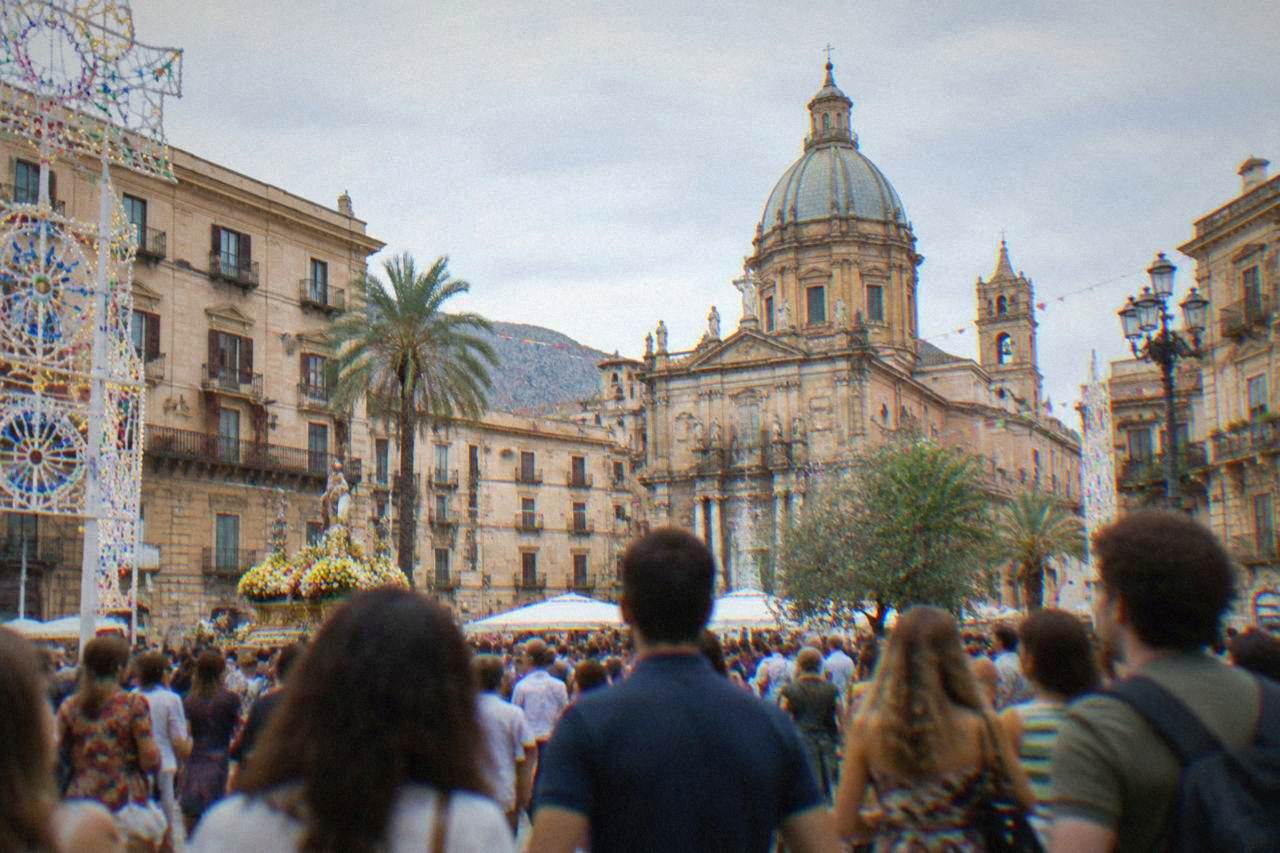
Palermo's festival year is anchored by the Festino of Saint Rosalia each July, the Teatro Massimo opera season that opens on 22 November 2026, Holy Week processions each spring and a street-food culture that fills the historic markets year-round. The city's events are concentrated in summer, but the opera and theatre calendar makes winter a real alternative.
Palermo, the coastal capital of Sicily on the Tyrrhenian Sea, keeps a festival calendar that few Mediterranean cities of its size can match. The municipal tourism portal counts the Festino of Saint Rosalia as the city's defining celebration, held each July, while the Teatro Massimo opens its opera season in late November and fills the winter months with performance. Between those two poles sit Holy Week processions, market feasts and a food culture that behaves like a permanent festival.
What Is The Palermo Festival Year, Month By Month?
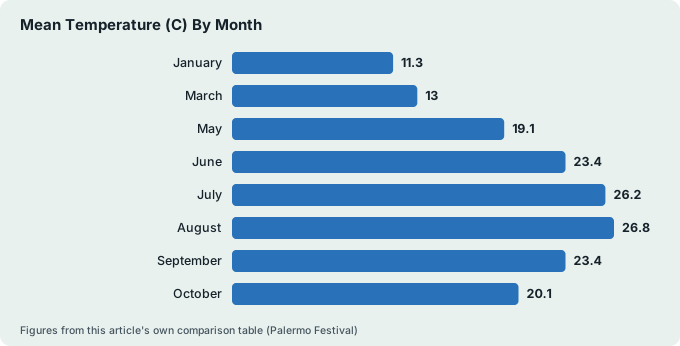
The Palermo festival year runs from an opera season that opens on 22 November 2026 through Holy Week in spring to the Festino of Saint Rosalia each July, with street markets and food events filling the gaps in every season. The Teatro Massimo 2026-27 season is confirmed to December 2027, and the Festino took place over 10 to 15 July in 2026, with its main events on 14 and 15 July.
The shape of the year is simple once you see it. Winter belongs to the opera house: the Teatro Massimo season opens with Samson et Dalila on 22 November 2026 and runs to December 2027, with Falstaff scheduled for May 2027 to mark the theatre's 130th anniversary. Spring brings the religious calendar, culminating in Easter, which falls on 28 March in 2027. Summer belongs to Saint Rosalia, whose Festino fills the Cassaro and the Foro Italico each July. Autumn is the quietest stretch, and it is also when the food markets are at their most relaxed.
The 2027 dates for the Festino, for Palermo Pride and for the Christmas programme have not been announced, so any page selling you a 2027 festival date is guessing. The pattern, however, repeats: the Festino comes each July, and its main events, the triumphal chariot procession and the religious procession with the silver urn, land on the final two days.
| Event | When It Happens | What It Is | Where |
|---|---|---|---|
| Teatro Massimo opera season | Opens 22 November 2026, runs to December 2027 | Opera, ballet and concerts; opens with Samson et Dalila | Teatro Massimo, Piazza Verdi |
| Falstaff anniversary performances | May 2027 | Opera marking the theatre's 130th anniversary | Teatro Massimo |
| Holy Week and Easter | Easter Sunday is 28 March 2027 | Religious services and processions across the historic centre | Churches of the four mandamenti |
| Festino of Saint Rosalia | Each July; 10 to 15 July in 2026 | Chariot procession on 14 July, silver urn procession on 15 July, fireworks | Cassaro (Corso Vittorio Emanuele) to Porta Felice, Foro Italico |
| Historic market life | Year-round | Ballarò, Capo and Vucciria markets with street food day and night | Albergheria, Capo and Loggia districts |
| Cous Cous Fest | Ran 18 to 27 September 2026 | International couscous championship, not in Palermo | San Vito Lo Capo, Trapani province |
One honest caveat: Palermo does not run a single "Palermo Festival" umbrella event. The phrase is a search term people use for the whole calendar, and this page treats it that way. If you are planning around one specific celebration, the sections below give what is confirmed and what is not.
For readers building a longer stay, the three days in Palermo itinerary shows how a festival day fits alongside the Palazzo dei Normanni, the Cathedral and the markets, and the guide to how many days to spend in Palermo covers the trade-offs between a short festival weekend and a full week.
What Happens At The Festino Of Saint Rosalia In Palermo?
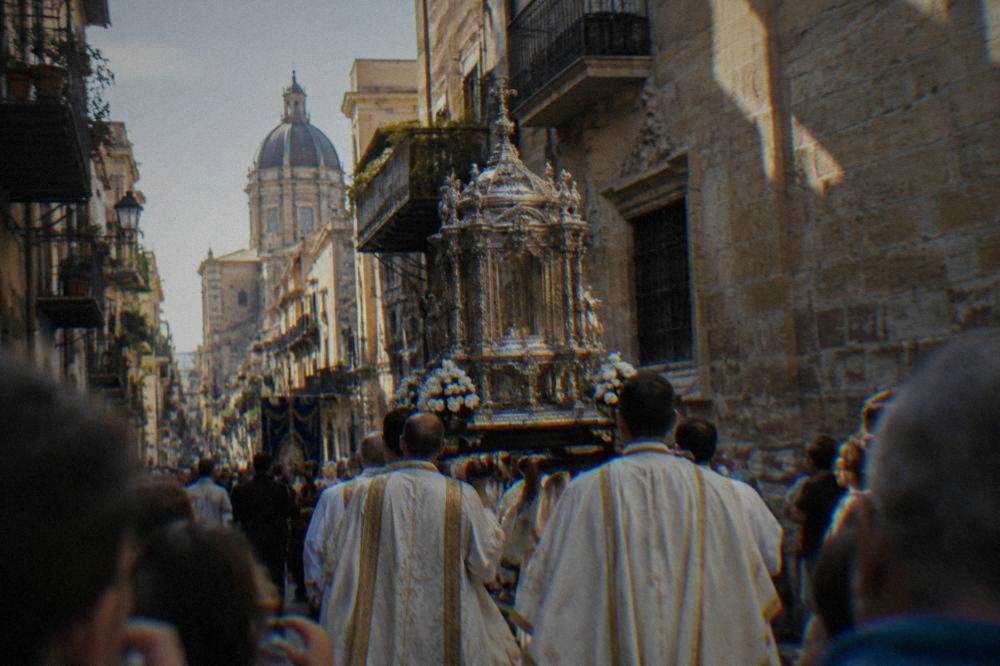
The Festino of Saint Rosalia is Palermo's main festival, held each July over six days, with 10 to 15 July the range in 2026 and the main events on 14 and 15 July: a triumphal chariot procession along the Cassaro to Porta Felice with fireworks on the 14th, and a religious procession of the saint's silver urn with her relics on the 15th. Saint Rosalia is the patron saint of Palermo.
The story behind the festival is stated on the municipal tourism pages. Saint Rosalia's relics were found on Monte Pellegrino in 1624, and she was adopted as the city's patron after a plague ended. The mountain itself sits behind the city, and the sanctuary on it is part of the same story. The Festino is the annual thank-you: the Cassaro, the old straight street now called Corso Vittorio Emanuele, fills with the chariot procession on 14 July, ending at Porta Felice near the sea, with fireworks over the water. On 15 July the religious procession carries the silver urn with the relics.
The 2027 Festino dates are not announced, so plan on "each July" and check the municipal tourism portal before booking flights around it. What is predictable is the geography. The processions run through the heart of the old centre, which the crossing of Via Maqueda and Corso Vittorio Emanuele divides into four districts at the Quattro Canti: Capo, Albergheria, Kalsa and Loggia. The Quattro Canti guide explains that layout, and the old town guide covers the streets the procession passes through.
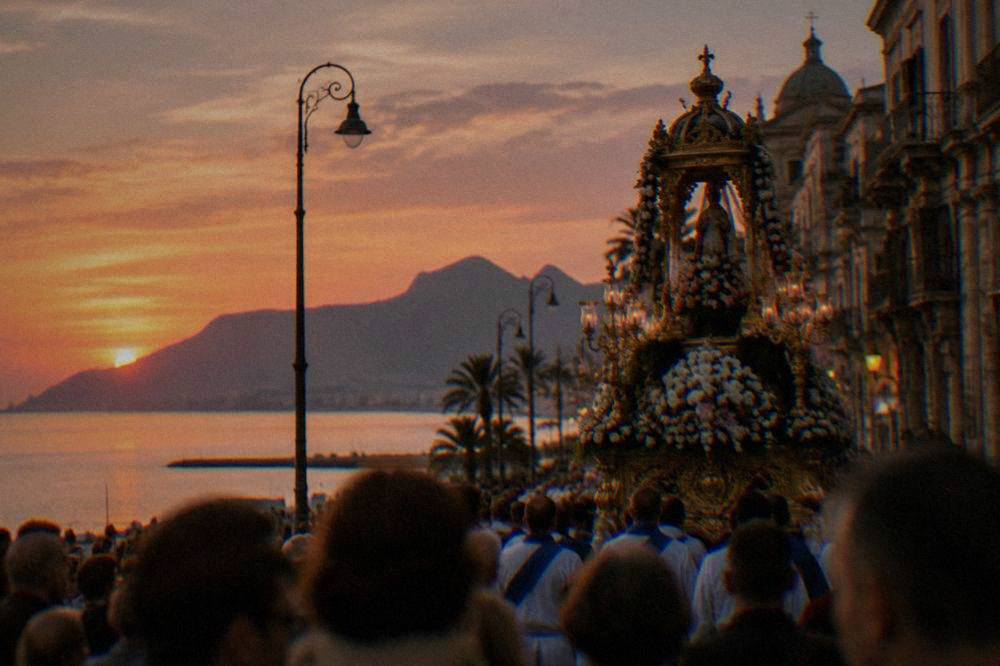
July weather is a real planning factor. The climate table, modelled ERA5 normals for 1991 to 2020, gives July a mean of 26.2 C and marks it the driest month of the year at 7 mm of rain. August is warmer still, at a mean of 26.8 C. Anyone standing for hours along the Cassaro in that heat should plan water, shade and timing around the evening events, which is when the main processions happen.
| Month | Mean Temperature (C) | Precipitation (mm) | Festival Relevance |
|---|---|---|---|
| January | 11.3 | 69 | Opera season in full swing |
| March | 13 | 67 | Holy Week build-up |
| May | 19.1 | 36 | Warm, dry, pre-summer crowds |
| June | 23.4 | 15 | Festino build-up, long evenings |
| July | 26.2 | 7 | Festino month, driest month of the year |
| August | 26.8 | 19 | Warmest month, city at its emptiest in weeks |
| September | 23.4 | 61 | Quieter, markets back to normal rhythm |
| October | 20.1 | 81 | Wettest month of the year, indoor events |
The figures above are modelled 1991 to 2020 normals from the climate table, not a station record, and they describe the month as a whole rather than any festival day. The Palermo weather guide and the best time to visit Palermo guide carry the full monthly table.
A July visit built around the Festino leaves room for more than the processions. The sea is a short bus ride away at Mondello, served by AMAT summer line 806, and a boat trip along the coast is one of the ways the city celebrates the season, which is why the shared and luxury boat options appear in the selection above.
What Does The Teatro Massimo Season Add To A Palermo Winter?
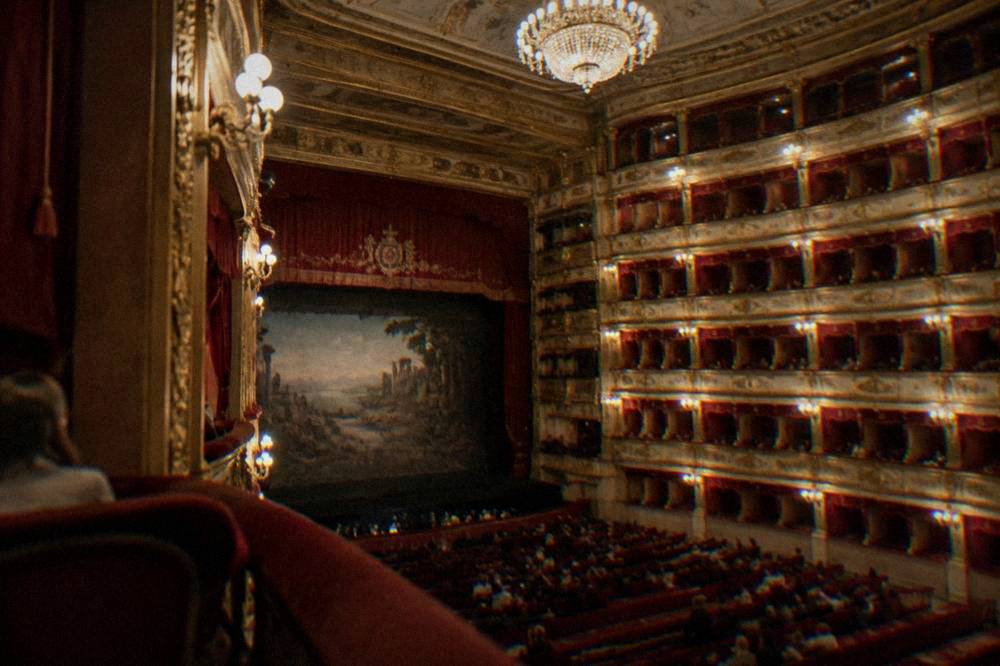
The Teatro Massimo 2026-27 season opens on 22 November 2026 with Samson et Dalila and runs to December 2027, with Falstaff in May 2027 marking the theatre's 130th anniversary, and guided tours of the opera house run daily roughly 9:30 to 19:00 for visitors who want the building without a ticket to a performance.
This is the part of the Palermo calendar that competitors underplay. The theatre's own season page lists the programme, and the guided tour prices are published: 14 EUR full, 7 EUR for under 26s, and a family ticket at 36 EUR, with the price table also listing 10 EUR and 4 EUR categories. Tours run daily through the late morning and afternoon, and groups are asked to book ahead. The Teatro Massimo guide on this site carries the full detail.
A winter festival visit also changes what a day looks like. Rain is more likely from October onward: the climate table gives October 81 mm, the wettest month, and November 67 mm. The rainy day in Palermo guide is built exactly for those days, and the museum cluster, the Salinas Archaeological Museum at 7 EUR full, the Galleria d'Arte Moderna at 10 EUR full, the Palazzo Steri at 8 EUR full with a guided tour included, gives a full indoor itinerary. The Palermo museums guide lists them all with hours.
The CruiserCar option above is the one product on the roster built for event days when you want the city explained between the fixed moments of a programme. It covers the sights in a loop format that suits a schedule anchored on an evening at the opera.
What Food Events And Market Traditions Run Through The Palermo Year?
Palermo's market life is the city's permanent festival: Ballarò runs Monday to Saturday from about 7:30 with Sunday mornings, Capo runs mornings and closes Sunday, and the Vucciria shifts from daytime market to evening street-food scene, while the arancina, the Palermo form of the fried rice ball, anchors the street-food calendar that Accademia della Crusca confirms is correctly named arancina here and arancino in Catania.
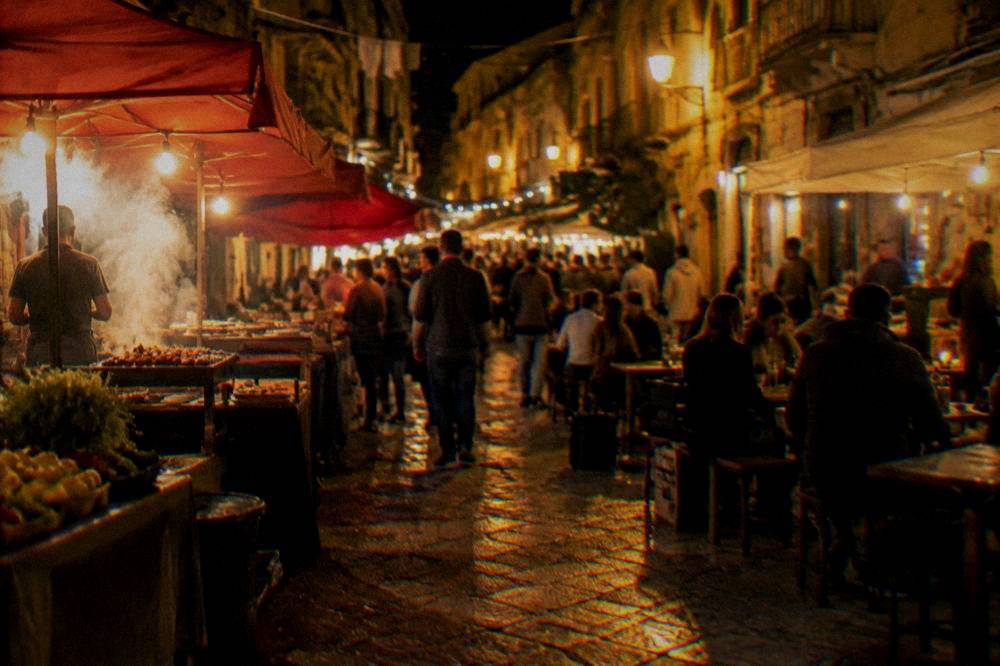
The food calendar in Palermo is less about ticketed events and more about standing traditions. The municipal tourism page names Ballarò, Capo and Vucciria as the main historic markets, all free to enter. The Ballarò market guide and the wider Palermo markets guide carry hours and what each stall area sells. Evening is its own event in the Vucciria, where the market square turns into an open-air street-food and bar scene, strongest toward the weekend; the Palermo nightlife guide covers that shift.
The foods themselves are the festival's substance. The Palermo street food guide, the arancine guide and the sfincione and panelle guide cover what to order, and the Sicilian desserts guide handles the sweet end. One useful, sourced detail: AMAP, the water utility, states that Palermo's tap water is suitable for drinking, which matters on long market days in July heat.
A guided food walk is the simplest way into this side of the city, and the Palermo food tour guide compares the options. For readers who want the cooking rather than the tasting, the Palermo cooking class guide lists classes that start from market shopping and end at the table.
| Market | Days And Hours As Listed | Daytime Or Evening | District |
|---|---|---|---|
| Ballarò | Monday to Saturday from about 7:30, Sunday mornings | Daytime, with stalls to about 20:00 on weekdays | Albergheria |
| Capo | Monday to Saturday mornings, closed Sunday | Daytime | Capo |
| Vucciria | Monday to Saturday daytime, Sunday mornings | Daytime market, evening street-food scene | Loggia |
Hours are listed as approximations on the tourism pages, and stalls close on their own rhythm, so treat the table as a planning range and not a timetable.
What Religious Processions And Traditions Mark The Palermo Calendar?
Beyond the Festino, Palermo's religious calendar centres on Holy Week and Easter, with Easter Sunday falling on 28 March in 2027, and the city's churches, including the Cathedral where the royal tombs of Roger II, Constance of Hauteville, Henry VI, Frederick II and Constance of Aragon are housed, hold services that visitors can attend outside visiting-hour ticketing.
The Chapel of the Royal Tombs in Palermo Cathedral holds the sarcophagi of Roger II, Constance of Hauteville, Henry VI, Frederick II and Constance of Aragon, as the survey of the royal tombs records. The Cathedral's own history page carries the two dates that explain its layers: in 831 the Saracens turned the earlier church into a mosque, and in 1072 the Normans returned it to Christian worship, with a Qur'an verse still visible on a column of the southern porch. The Palermo Cathedral guide tells that story in full.
What can be said is structural: the old centre's four districts each hold churches that anchor services, and the Palermo churches guide maps them. Dress matters at working churches: covered shoulders and knees are the standard expectation, and the monumental areas of the Cathedral, the roof, the royal tombs, the treasury, are ticketed, with prices shown at the ticket point or on the cathedral's ticket shop rather than on the official hours page.
How Do You Get Around Palermo During A Festival?
During festival days Palermo runs on AMAT buses and trams, with a single ticket at 1.40 EUR valid 90 minutes from validation, a day ticket at 3.50 EUR, a two-day ticket at 6 EUR, a three-day ticket at 8 EUR and a seven-day ticket at 16.50 EUR, and buying before boarding saves the 0.40 EUR onboard surcharge that makes the single 1.80 EUR from the driver.
The AMAT fares page is the source for all of those figures, and the rule that matters on a crowded festival night is validation: the 90 minutes start when you validate, and you validate at once on boarding. The getting around Palermo guide explains the tram lines, four of them, converging from the periphery to the centre, and the Palermo train station guide covers arrivals into Palermo Centrale, where the bus stops and taxi rank sit outside.
There is no metro in Palermo. The Passante is a suburban rail line, with Line A running from Centrale to the airport, and a Giachery to Politeama section is planned for service from November 2026, which would link the port and centre to Notarbartolo. Write that down as planned, not running. Shared scooters from Dott, Lime and Bird operate under a five-year concession from late 2025, and the AMAT bike-share service AMIGO ended on 1 April 2025.
| AMAT Ticket | Price | Validity |
|---|---|---|
| Single, bought in advance | 1.40 EUR | 90 minutes from validation |
| Single, from the driver | 1.80 EUR | 90 minutes from validation |
| Day ticket | 3.50 EUR | Until end of service on the day |
| Two-day MultiDay | 6.00 EUR | Until end of service on the second day |
| Three-day MultiDay | 8.00 EUR | Until end of service on the third day |
| Seven-day MultiDay | 16.50 EUR | Until end of service on the seventh day |
| Carnet of 20 singles | 23.50 EUR | App only |
For anyone arriving for a festival, the Palermo airport guide and the airport to city centre guide cover the Prestia e Comande bus at 6 EUR one way online, running every 30 minutes and taking about 50 minutes, and the fixed-rate taxi zones reported for the 2025 tariff: 39 EUR for the port side, 44 EUR for the historic centre and 50 EUR for the Foro Italico side, up to four passengers with luggage, with the advice to confirm with the driver before setting off.
The Etna and Taormina excursion above is this site's featured pick for festival visitors with a spare day, because it pairs a volcano, with its cable car climbing from about 1,920 m to about 2,500 m and a guide required above about 2,500 m, with Sicily's east-coast theatre town. The Mount Etna guide and the Taormina guide carry the site detail; Check availability on the operator's live listing before locking a festival week itinerary.
Where Should You Stay In Palermo For A Festival Visit?
For a festival visit, the historic centre inside the four mandamenti of Capo, Albergheria, Kalsa and Loggia puts you on foot from the Cassaro processions and the evening market scenes, while the Politeama and Libertà area trades a short tram or bus ride for quieter nights, and the tourist tax applies per night for a maximum of four consecutive nights, from 3 EUR at one-star hotels up to 5 EUR at five-star, with 4 EUR for short-term rentals.
Those per-night rates came into force on 1 July 2025 and are collected by the accommodation, so confirm the amount at booking. The where to stay in Palermo guide compares the districts street by street, and the Palermo hotels guide and Palermo apartments guide cover the property types. One rule worth knowing for apartment bookings: short-term rentals must display a CIN national code, and hosts must register guests through Alloggiati Web within 24 hours and check identity in person, so a bare keybox without any identity check is not a compliant check-in.
Festival nights are loud in the centre, especially around the Vucciria and the streets off the Cassaro, and that is a feature rather than a defect of a July visit. Readers sensitive to noise should weigh the Politeama end of town, covered in the Politeama and the new city guide, against the atmospheric Kalsa, covered in the Kalsa guide.
What Day Trips Pair Well With A Palermo Festival Stay?
The day trips that pair best with a Palermo festival stay are Monreale at 16 minutes by road, Mondello at 27, Cefalu at 65 and Segesta at 64, all short enough to leave an evening free for processions or opera, while Agrigento at about 2 hours 16 by road, Etna at about 3 hours 20 and Taormina at about 3 hours 18 are full-day commitments better slotted either side of a festival weekend.
Those times are free-flow road calculations from Quattro Canti. The shorter trips are the flexible ones. Monreale's cloister costs 8 EUR full and 4 EUR reduced and is a separate visit from the cathedral, reachable on AMAT line 389 from Piazza Indipendenza for a 1.40 EUR ticket; the Monreale guide covers it. Cefalu's cathedral entry is free, with paid tower and museum itineraries at 10 and 13 EUR, and the train from Palermo Centrale takes 39 to 60 minutes with 19 to 24 direct trains a day; the Cefalu guide and the Palermo to Cefalu guide have the detail.
| Day Trip | Road Time From Quattro Canti | Entry Cost As Listed | Guide On This Site |
|---|---|---|---|
| Monreale | 16 min | Cloister 8 EUR full, 4 EUR reduced | /guides/monreale/ |
| Mondello | 27 min | Free public stretches, paid lidos | /guides/mondello-beach/ |
| Segesta | 64 min | 14 EUR full, 7 EUR reduced | /guides/segesta/ |
| Cefalu | 65 min | Cathedral free; itineraries 10 and 13 EUR; La Rocca 5 EUR | /guides/cefalu/ |
| Scopello and Zingaro | 77 min | Zingaro 5 EUR, 3 EUR reduced | /guides/scopello-and-zingaro/ |
| Trapani and salt pans | 87 min | Salt museum free | /guides/trapani-and-the-salt-pans/ |
| Erice | 96 min | Cable car 9 EUR one way, 15 EUR return | /guides/erice/ |
| Agrigento | 2 h 16 | Valley of the Temples 14 EUR, 7 EUR reduced | /guides/agrigento-valley-of-the-temples/ |
| Mount Etna | 3 h 20 | Cable car climbs 1,920 m to about 2,500 m | /guides/mount-etna/ |
| Taormina | 3 h 18 | Ticket prices on the operator's page | /guides/taormina/ |
Is A Palermo Festival Visit Safe And Practical?
A Palermo festival visit carries the same precautions as any large Italian city event: the US State Department's September 2026 advisory rates Italy Level 2 and notes petty crime such as pickpocketing and purse-snatching is common in popular tourist locations and on public transport, the UK FCDO says the same about city centres and major attractions, and the emergency numbers are 112 general, 118 medical, 115 fire and 113 police.
Crowds along the Cassaro during the Festino are dense, and the practical checks are ordinary ones: a bag zipped and held in front on a crowded bus or procession route, and a check of the itemised bill at the end of a meal, since the coperto cover charge is legal in Italy when printed on the menu and tipping is not obligatory. The is Palermo safe guide expands on this with the advisory wording in full, and it avoids neighbourhood-avoidance lists because the official advisories do not make them.
Two more practical notes finish the picture. And entry rules: the EES biometric system is fully operational from 10 April 2026, while ETIAS is not live and has no fixed start date, so no ETIAS application is being collected yet.
Common Questions About Palermo Festivals And Events
What is the Palermo Festival?
There is no single event called the Palermo Festival. The phrase usually refers to the city's calendar as a whole, anchored by the Festino of Saint Rosalia each July and the Teatro Massimo opera season that opens on 22 November 2026. This guide covers both plus the market and religious traditions between them.
When is the Festino of Saint Rosalia in Palermo?
The Festino is held each July. In 2026 it ran from 10 to 15 July, with the chariot procession on 14 July and the silver urn procession on 15 July. The 2027 dates had not been announced, so check the municipal tourism portal before booking.
Is the Teatro Massimo open to visitors outside performance nights?
Yes. Guided tours run daily, roughly 9:30 to 19:00, and the published prices are 14 EUR full, 7 EUR for under 26s and a 36 EUR family ticket. Groups are asked to book ahead.
What is the best month to visit Palermo for events?
July for the Festino, if heat is not a concern: the climate table, modelled 1991 to 2020 normals, gives July a mean of 26.2 C and just 7 mm of rain. November through spring suits the opera season, with milder means of 11 to 13 C in the winter months.
Are Palermo's market festivals ticketed?
No. Ballarò, Capo and Vucciria are free to enter and run as working markets, roughly Monday to Saturday with Sunday mornings at Ballarò. You pay only for what you eat, and street-food walks with a guide are the main paid format.
Does Palermo have events in winter?
Yes. The Teatro Massimo season runs from 22 November 2026 to December 2027, the museum calendar continues through winter, and the Christmas programme for 2027 had not been announced.
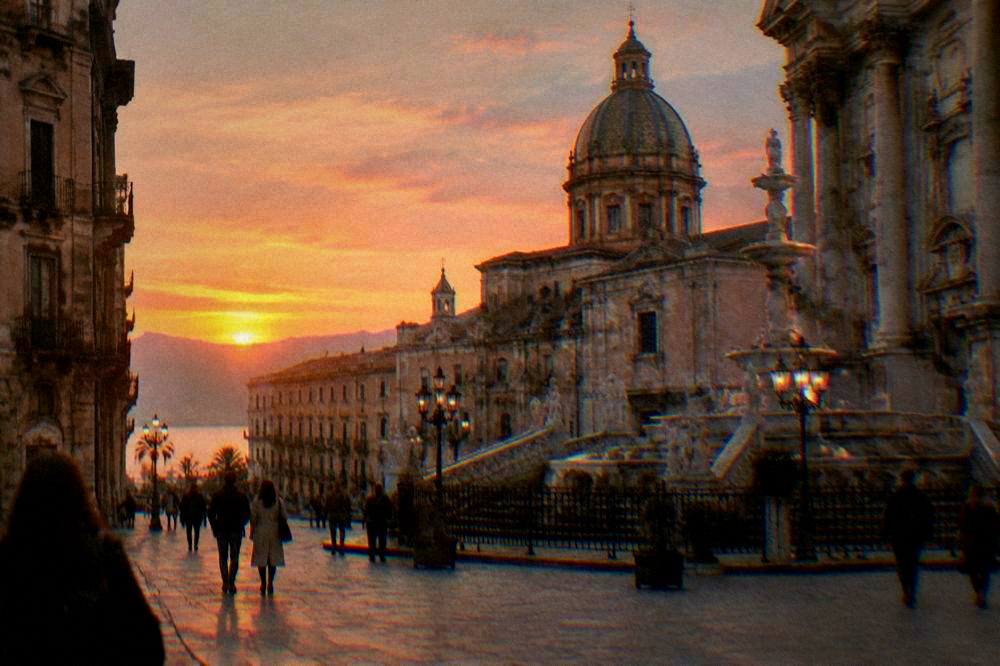
A festival visit to Palermo rewards planning more than it rewards luck. Lock the Festino week or an opera opening into your dates, book the terrace of accommodation you want early because July fills the centre, and leave one day empty for the coast or the volcano. The rest of the calendar, the markets at noon, the Vucciria after dark, the processions that thread the same four districts every year, tends to arrange itself the moment you step outside.
