Mount Etna From Palermo
Mount Etna sits on Sicily's east coast, far from Palermo, yet it is one of the day trips the city's tour desks run all year. This page sets out what the sources actually say about getting there, what the cable car covers, and where a guide becomes compulsory.
Short answer
Yes, Mount Etna works as a day trip from Palermo. Organised excursions run from the city, and independent travellers reach the volcano by train or coach to Catania and onward transport to Rifugio Sapienza. The cable car climbs from about 1,920 m to about 2,500 m, and above about 2,500 m a licensed guide is required under current ordinances.
Mount Etna is the volcano that dominates Sicily's east coast, and from Palermo it is the single longest day trip on the island's menu. The city sits on the Tyrrhenian Sea in the island's north-west; the volcano sits roughly opposite it, above Catania and Taormina. That distance is exactly why the question of how to do Etna from Palermo splits into two parts: the crossing of Sicily, which takes most of the morning, and the volcano itself, which has its own rules about cable cars, guides and altitude limits.
For the wider picture of the island's day trips, start with things to do in Palermo and the Palermo to Taormina day trip guide.
Can You Visit Mount Etna On A Day Trip From Palermo?
Yes, Mount Etna is a standard day trip from Palermo, and the city's excursion desks run it year-round, but it is a long day because the volcano sits on the opposite side of Sicily. An organised excursion collects you in Palermo, crosses the island, and returns in the evening. Independent travel is also possible, with train and coach services to Catania and onward connections toward the volcano's southern flank.
The reason the trip is long is geography. Palermo is the capital of Sicily, a coastal city of 628,693 residents at 31 December 2024 according to municipal statistics, facing the Tyrrhenian Sea. Etna stands behind Catania on the Ionian side.
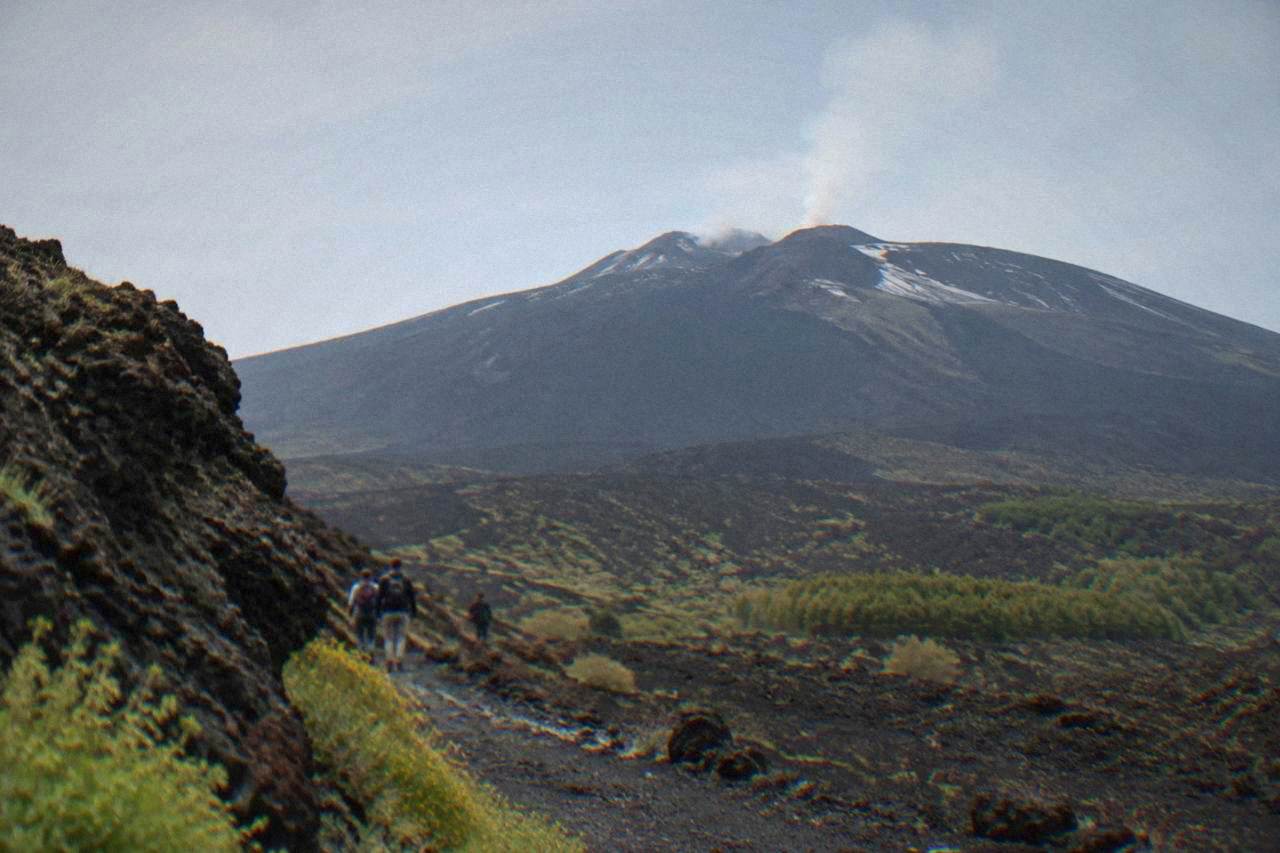
The volcano is not a single viewpoint but a mountain with two main tourist access roads, north and south. Everything above that line changes character, which is covered further down this page.
For planning, the practical choice is between an excursion that handles the whole crossing and the volcano logistics in one booking, and a self-built trip using rail and local transport. The excursion answers are laid out in is there a tour of Mount Etna from Palermo?, and the distance question is treated on its own page at how far is it from Palermo to Mount Etna?.
The comparison that matters is against Palermo's nearer day trips. Monreale and Cefalu are short hops by road or rail, covered on the Monreale and Cefalu pages. Etna is a different proposition: a full day committed to one destination, with the reward of standing on an active volcano's flank. Sicily is Italy, uses the euro, and the single European emergency number 112 applies on the mountain just as it does in the city.
How Do You Get From Palermo To Mount Etna Without A Car?
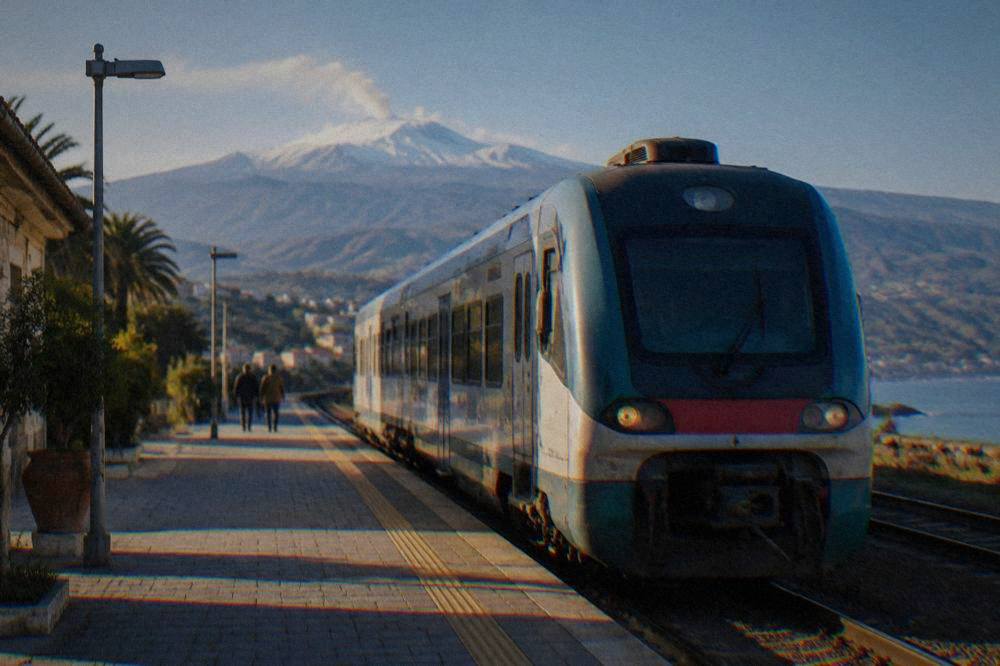
Independent travellers reach Etna from Palermo in stages: a regional train to Catania Centrale takes about 3 hours, a FlixBus coach is listed at 2 h 35 to 3 h 30, and from Catania onward transport runs toward the volcano's southern flank at Rifugio Sapienza. No single public service connects Palermo directly to the cable car base.
There is no rail line up the volcano itself.
The same applies to any shuttle from Catania toward the north-side access road.
| Leg | Service | Figure |
|---|---|---|
| Palermo to Catania | Trenitalia regional train, direct | about 3 hours |
| Palermo to Catania | FlixBus direct coach | 2 h 35 to 3 h 30 |
| Palermo to Taormina | Trenitalia, change required | about 3 h 47 or more |
| Catania to Rifugio Sapienza | Local operator, route only | Timetable and fare on the operator's page |
An organised excursion collapses all of these legs into one vehicle. The featured Etna excursion on this site combines the volcano with Taormina and has its own page at Etna and Taormina full-day excursion from Palermo, where the listing shows what the day covers; availability can be checked with Check availability.
The driving alternative uses the A19 Palermo to Catania motorway, which the sources state is toll-free, managed by Anas. Whether renting a car for this one trip makes sense is a separate question, argued on the Palermo driving and parking page elsewhere on this site.
What Does The Etna Cable Car Cover And Where Does It Stop?
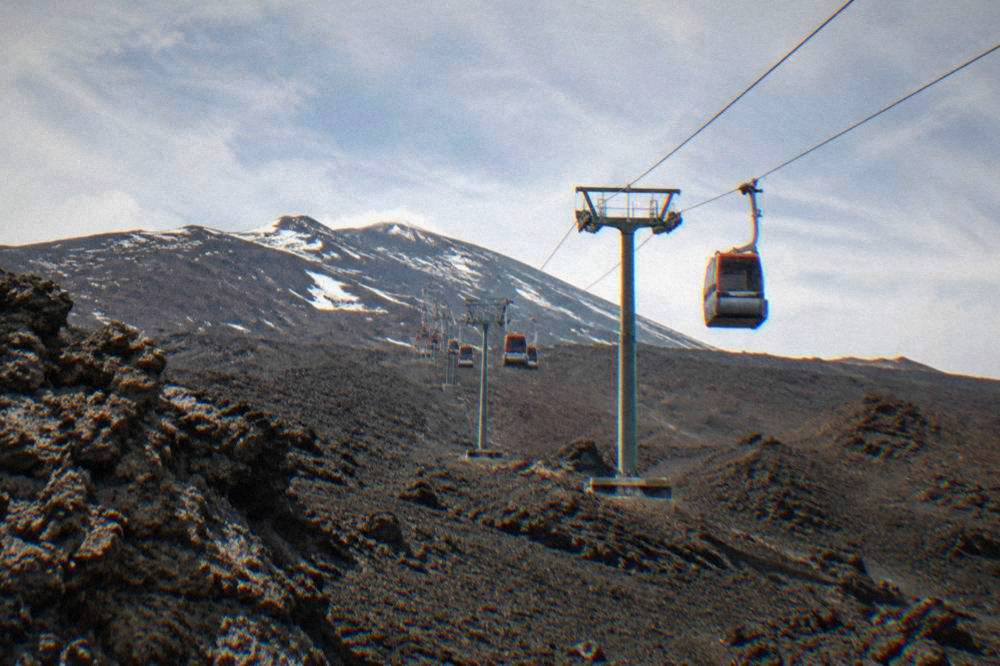
The Funivia dell'Etna cable car on the southern flank climbs from about 1,920 m at Rifugio Sapienza to about 2,500 m at its upper station, and above about 2,500 m a licensed guide is required under current ordinances.
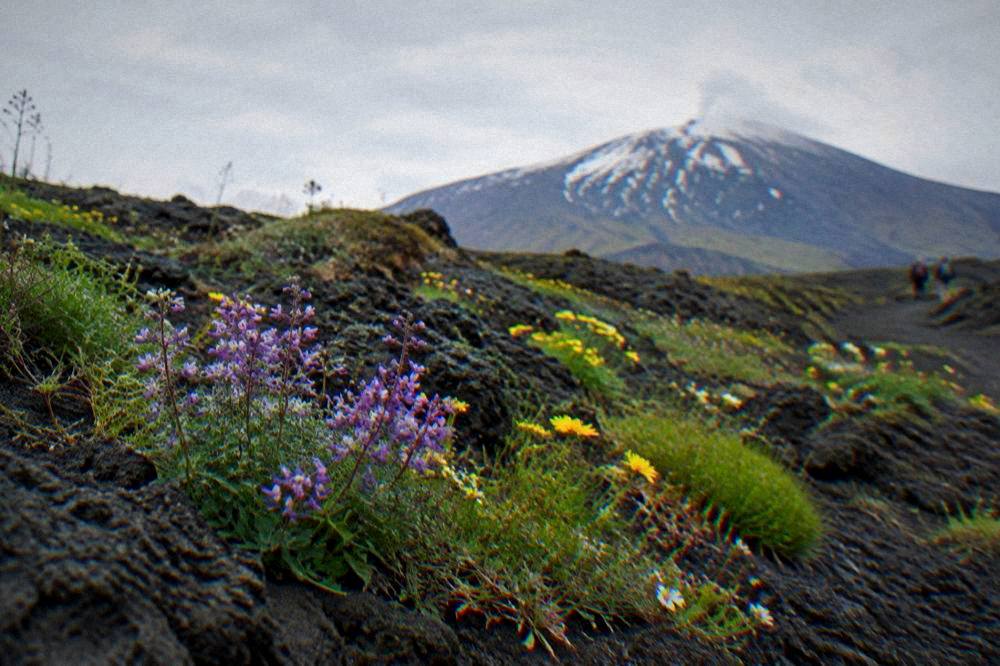
The lower station sits at Rifugio Sapienza, the southern access point, at about 1,920 m. The upper station stands at about 2,500 m. Between those heights the landscape moves from forested slopes onto dark volcanic debris, and the temperature drops as the altitude rises, which is why the packing section below matters even in summer.
Above the upper station the rules change. The sources state that access to the summit craters and the upper areas, generally above about 2,500 m, requires an authorised Alpine or volcanological guide, and that independent hiking is typically allowed only below that line, depending on current ordinances and volcanic activity. The ordinances also set group sizes, safety equipment and radio contact in restricted zones, and they change with the volcano's behaviour. Confirm the current limits with the guide or operator before the day.
| Zone On The Southern Flank | Altitude | Access Rules |
|---|---|---|
| Rifugio Sapienza base | about 1,920 m | Road access, cable car lower station |
| Cable car upper station | about 2,500 m | Reached by Funivia dell'Etna |
| Upper slopes and summit craters | above about 2,500 m | Authorised guide required, limits follow current ordinances |
The cable car operator's page lists the fare and any combined options with 4x4 transport and guides toward higher points, and the reader should read the price there rather than in any article. What can be said here is structural: the cable car is a means of lifting visitors from the base to the upper station, not a summit ride. Guides offering the higher section operate from the upper station, and ordinance rules apply from that line upward.
Do You Need A Guide On Mount Etna Or Can You Walk Alone?
Below about 2,500 m independent walking is typically allowed, and above that line an authorised Alpine or volcanological guide is required, with group sizes, safety equipment and radio contact set by ordinances that change with volcanic activity.
The distinction matters because Etna is an active volcano, not a static park. An eruption, increased degassing or adverse weather can close sections at short notice, and the ordinance in force on the day is the only one that counts.
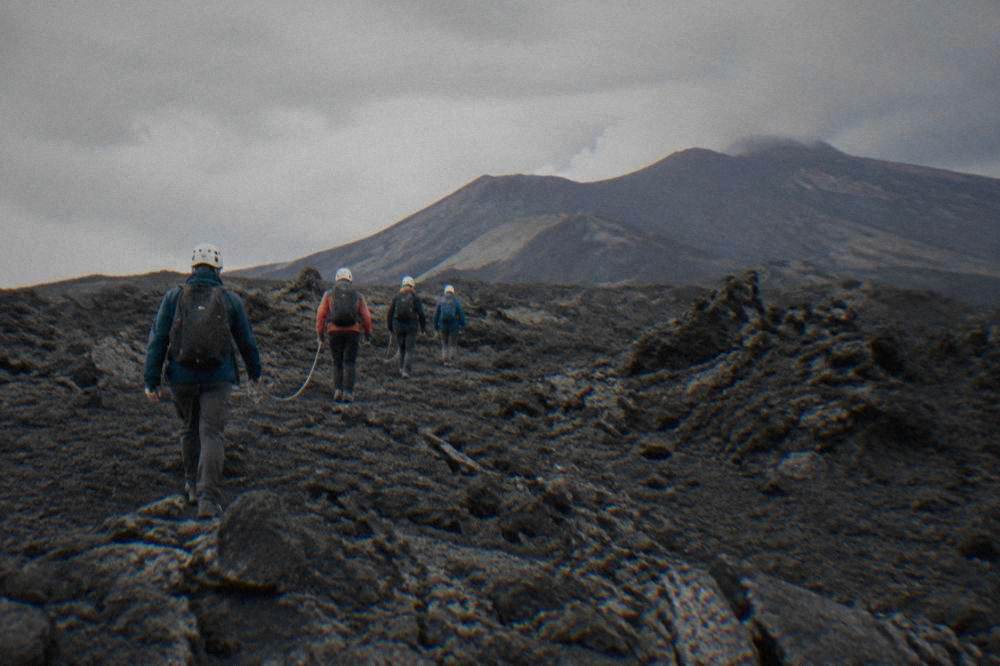
For a Palermo day-tripper this has a simple consequence. A self-guided day gives you the cable car line and the trails below it, with views across Sicily's east coast toward Catania and the sea. A guided day, whether booked standalone at Rifugio Sapienza or inside an excursion, is the only way to stand above 2,500 m. Guides are also the people who carry the radio and read the ordinance, which is the safest way to interpret an unpredictable mountain.
The volcano's own documentation, not a travel article, is the authority on the day's limits. Visitors should confirm the current altitude ceiling with their guide or operator before setting out, exactly as the site advises for every figure that changes with conditions.
What Can You Do On Etna Besides The Cable Car?
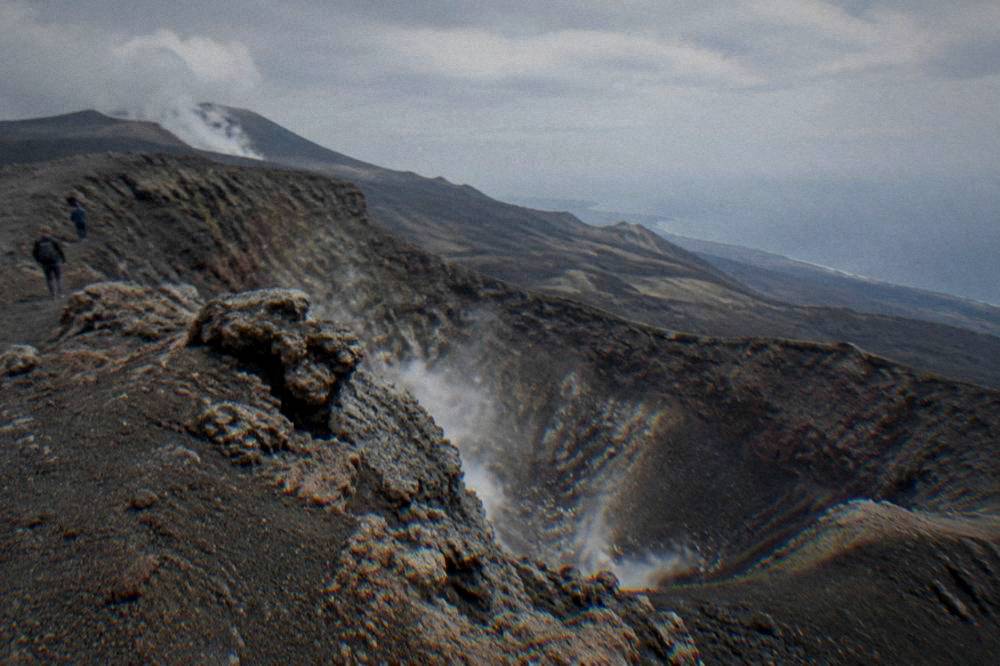
The southern flank offers marked lava fields, crater rims from past eruptions and viewpoints reachable on foot below the 2,500 m line, while the northern access road gives a second, quieter set of trails; the sources describe both roads but carry no entry fee for either, and none is printed here.
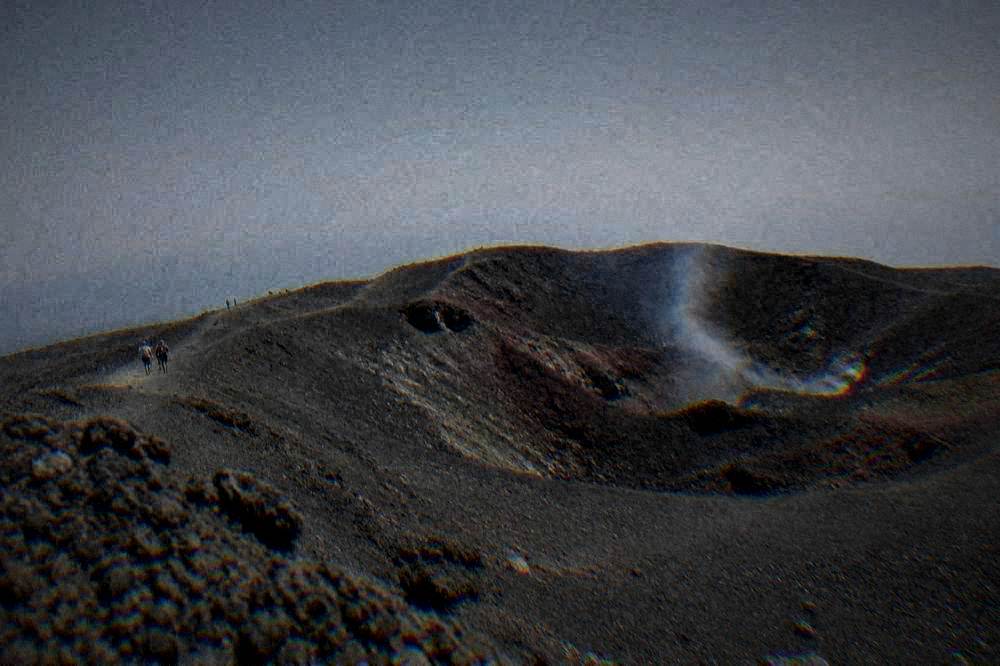
The lava landscape itself is the draw. Walking routes cross debris fields and old flows, and the crater rims below the guide line give the sense of the mountain without technical demands. The wider set of guides lives on Palermo Italy Travel Guide.
Food and wine sit on the lower slopes. The towns around Etna's base are wine country, and excursions from the east coast commonly include a cellar stop; whether a Palermo day trip allows time for one depends on the itinerary, and the listing for each excursion states what it covers. Arancina is the Palermo form of the fried rice ball, and Catania says arancino; the Accademia della Crusca accepts both, a small linguistic marker that the trip crosses from one half of Sicily to the other.
| Layer Of The Mountain | Details | How It Is Reached |
|---|---|---|
| Base towns and wine slopes | Villages and cellars around the volcano's foot | Road, often part of excursions |
| Below 2,500 m | Lava fields, old flows, viewpoint trails | On foot from the cable car stations or access roads |
| 2,500 m and above | Summit craters and upper slopes | Authorised guide only, per current ordinances |
The pairing of volcano and town is Etna's second act, covered next.
Should You Combine Etna With Taormina In One Day From Palermo?
Combining Etna and Taormina in one day from Palermo is the standard pattern for organised excursions, because the two sit on the same side of Sicily and the volcano morning pairs naturally with an afternoon in the hilltown.
Taormina's Greek Theatre is the town's headline sight, and the sources give daily hours of 9:00 to 19:45 with last entry at 19:00, plus occasional evening extensions on specific dates. The theatre's view across the sea toward the volcano is the reason the pairing works so well: the morning mountain becomes the afternoon backdrop.
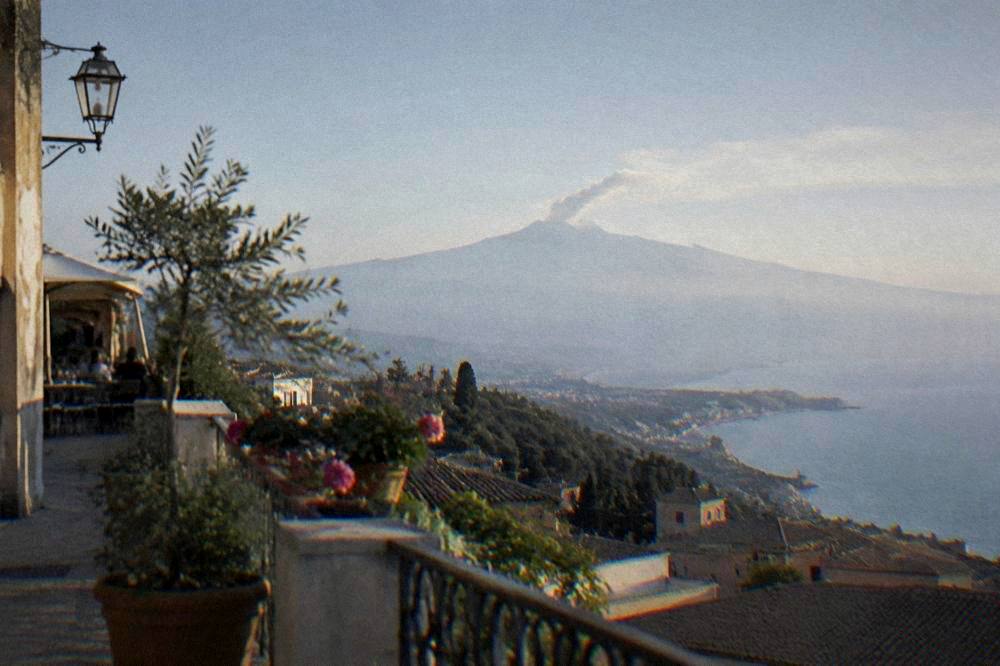
The timing case for the combined excursion is arithmetic. A Palermo departure, the island crossing, the cable car window and the descent already fill the day; adding a second destination only works when one vehicle and one driver absorb the transfers. The Taormina day trip page treats the town on its own, including the train-change reality, for readers weighing the independent route.
The argument against combining is depth. Etna alone rewards a slow morning on the slopes, and Taormina alone rewards the theatre, the lanes and the beach cableway below the town. Readers with two spare days can split them; readers with one can read the one day in Palermo page alongside this one to see what they are trading away in the city itself.
What Should You Wear And Pack For A Mount Etna Day Trip?
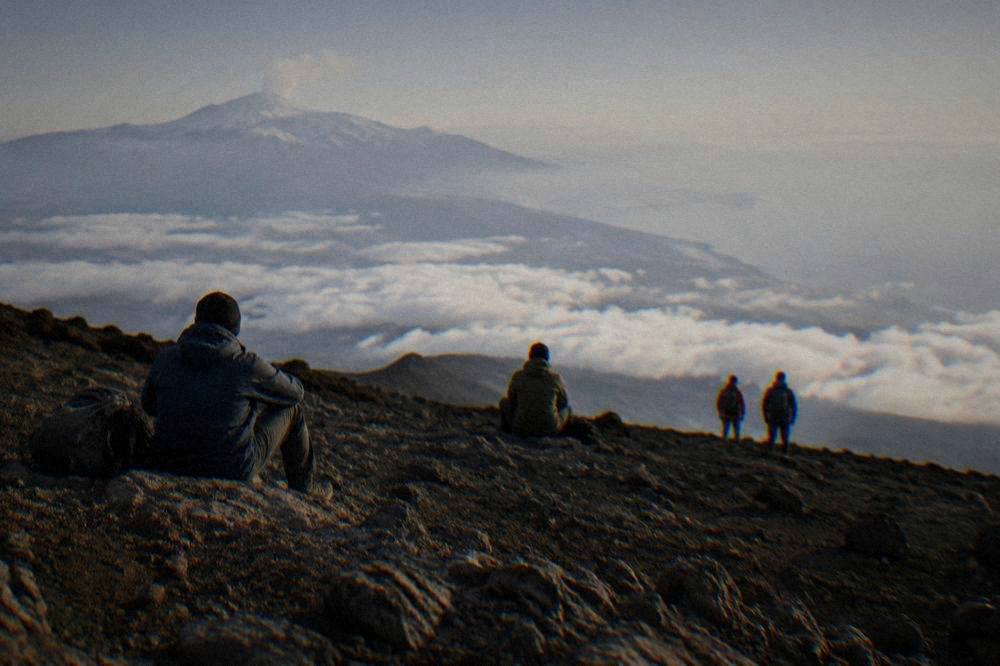
Pack for two climates in one day: the sources describe an altitude gain from about 1,920 m to about 2,500 m where temperature falls with height, so closed walking shoes, windproof layers and sun protection are the baseline, and the ordinance rules add safety equipment in guide-only zones.
The only climate table this site holds is for Palermo itself: modelled ERA5 normals for 1991 to 2020, which show a July mean of 26.2 C and an August mean of 26.8 C at the coast. Those figures say nothing about the summit, and the site prints no sea temperature and no sunshine hours. What can be said is the general rule that a mountain climbed by cable car is colder and windier at the top than at the base, and volcanic ground is loose underfoot.
| Item | Why, Per The Mountain's Structure |
|---|---|
| Closed walking shoes | Lava debris is loose and sharp below the cable car line |
| Windproof and warm layers | The upper station stands at about 2,500 m, well above the departure city |
| Sun protection | High altitude and no shade on the upper slopes |
| Water and food | Services thin out above Rifugio Sapienza |
| Confirmation of the day's ordinance limits | Rules above about 2,500 m change with volcanic activity |
The sunning rule also applies in winter, when snow covers the upper mountain and the cable car serves skiers.
When Is The Best Time Of Year For An Etna Day Trip From Palermo?
The best window follows the coast's own climate pattern: the modelled ERA5 normals 1991 to 2020 show Palermo warm and dry from June through August, with July the driest month at 7 mm of rain, and October the wettest at 81 mm, so late spring through early autumn gives the clearest volcano days, while winter brings snow to the upper mountain and short, cold visits.
The climate table is a Palermo table, and it is labelled as modelled 1991 to 2020 normals rather than a station record. It is still the best seasonal guide a Palermo traveller holds, because the same systems that bring the coast its October rain bring the mountain its cloud. A volcano view is a weather-dependent product; a grey day on Etna is a walk on dark gravel with no panorama.
Festival timing can sharpen the choice. The Teatro Massimo season in Palermo opens 22 November 2026 with Samson et Dalila, and the Festino of Saint Rosalia runs each July, with the 2026 edition held 10 to 15 July and the main events on 14 and 15 July, so a July Etna day can sit inside a full city week. The best time to visit Palermo page lays out the full seasonal argument for the city end of the trip.
Shoulder months carry a quiet advantage: fewer vehicles on the access roads and easier excursion availability, offset by a greater chance of cloud on the summit.
What Does An Organised Etna Excursion From Palermo Actually Include?
An organised excursion includes the round transfer from Palermo across Sicily, time on the volcano's flank, and in the common combined format an afternoon stop in Taormina, with the specific inclusions, price and duration shown on each operator's live listing rather than typed into any article. What this site can state is the structure: one booking absorbs the island crossing, the mountain logistics and the return.
The featured excursion on this site, the Etna and Taormina full-day trip from Palermo, has its own page describing exactly what the day covers, and the listing holds the live price and availability. What a reader can weigh here is the category logic: every hour the excursion saves on transfers is an hour on the mountain or in Taormina.
Readers comparing volcano day trips against western Sicily alternatives will find the Segesta and Erice pages closer to Palermo and gentler on the clock, with entry figures of 14 EUR full and 7 EUR reduced at Segesta per the regional park's page, and the Erice cable car at 9 EUR one way and 15 EUR return. Neither delivers an active volcano; that is the whole trade.
Booking mechanics are simple. Button text on this site always reads Check availability, prices render from live data, and cancellation terms sit on the listing. Emergency cover on the mountain is the Italian single number 112, the same number that serves Palermo.
Common Questions About Visiting Mount Etna From Palermo
Can you do Mount Etna as a day trip from Palermo?
Yes. Organised excursions run from Palermo to the volcano and back in one day, and independent travellers can reach Catania by direct regional train in about 3 hours or by FlixBus in 2 h 35 to 3 h 30, then continue to the volcano with local operators whose timetables should be confirmed with the operator.
How high does the Etna cable car go?
The Funivia dell'Etna climbs from about 1,920 m at Rifugio Sapienza to about 2,500 m at its upper station. The fare is shown on the operator's own page.
Do you need a guide on Mount Etna?
Independent walking is typically allowed below about 2,500 m. Above that line an authorised Alpine or volcanological guide is required, with group sizes, equipment and radio contact set by current ordinances.
Is it better to take a tour or go independently to Etna from Palermo?
The distance makes the case. A tour absorbs the island crossing and mountain logistics in one booking; an independent trip uses the direct train or coach to Catania and onward connections, which costs less but takes longer and needs operator timetables confirmed in advance.
Can you visit Etna and Taormina on the same day from Palermo?
Yes, and it is the standard combined format for organised excursions. Independently it is tight, because the train from Palermo to Taormina needs a change and takes about 3 h 47 or more each way.
What should you wear on Mount Etna?
Closed walking shoes for loose lava ground, windproof and warm layers for the altitude, sun protection, and water. The upper station stands at about 2,500 m, far colder and windier than the Palermo streets the day started on.
Mount Etna from Palermo is a commitment of a day, and it repays the planning: one island crossing, one cable car from about 1,920 m to about 2,500 m, and a guide-only summit above it, with Taormina waiting on the way home for those who book the pair.