Palermo Cathedral
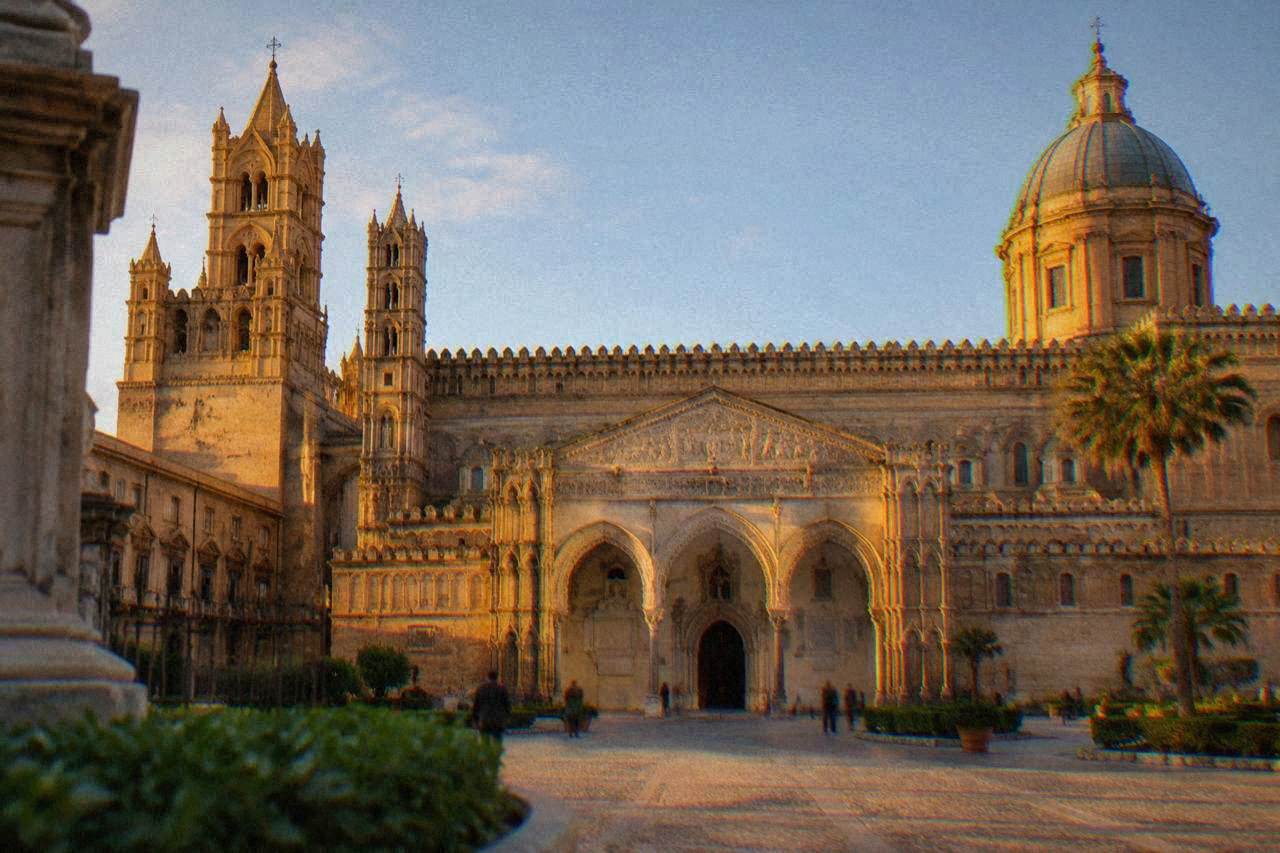
Palermo Cathedral stands on Via Vittorio Emanuele at the heart of the old city, a church layered over a mosque and a late antique basilica, holding the tombs of the kings of Sicily inside the UNESCO-listed Arab-Norman property.
Short answer
Palermo Cathedral is on the Cassaro, Palermo's historic main street, and is one of the nine components of the UNESCO Arab-Norman Palermo inscription of 2015. The monumental area, meaning the roof, the royal tombs, the treasury and the crypt, is ticketed, with the price shown at the ticket point or on the cathedral's ticket shop, and the hours vary by season on the official page.
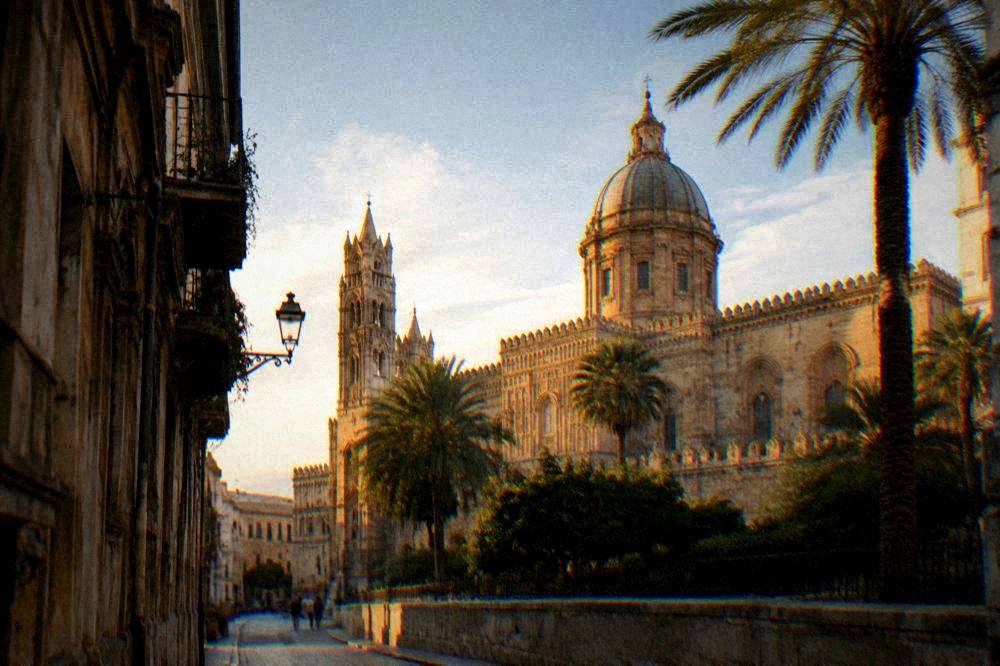
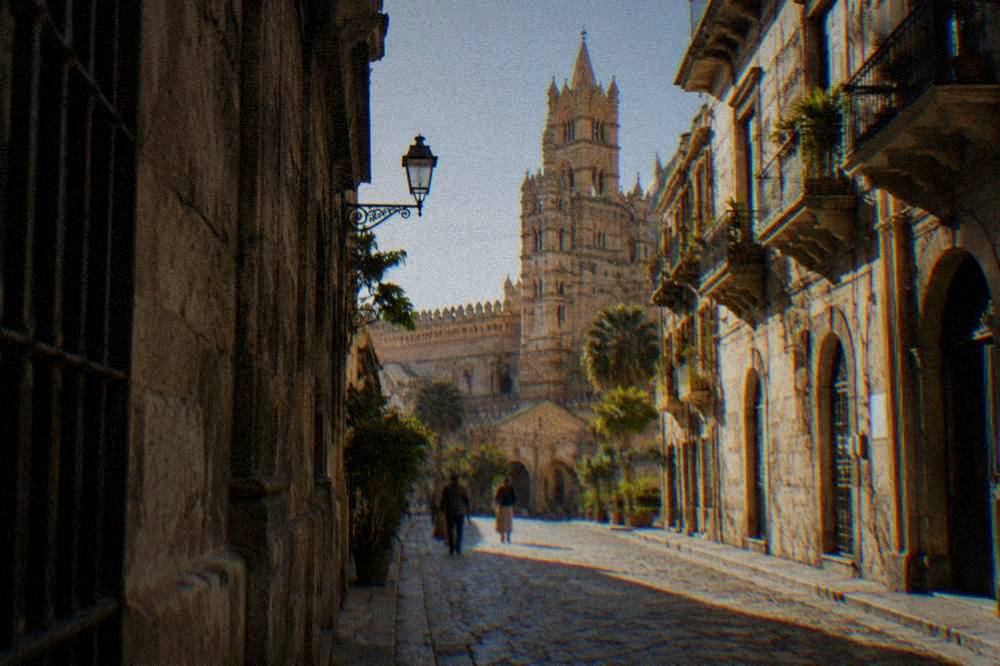
Palermo Cathedral rises on the corner of Via Vittorio Emanuele and Via Bonello, on the street the city still calls the Cassaro, the spine of Palermo's historic centre on Sicily's north-west coast in Italy. The municipal tourism pages place it in the Albergheria mandamento, one of the four quarters the Quattro Canti create, and UNESCO listed it in 2015 as one of the nine components of the Arab-Norman Palermo and the Cathedral Churches of Cefalu and Monreale inscription.
What Is The Palermo Cathedral And Why Is It Famous?
Palermo Cathedral is the metropolitan cathedral of Palermo, the capital of the Sicily region, and its fame rests on three things the sources name directly: it is one of the nine components of the UNESCO Arab-Norman Palermo inscription of 2015, it holds the Chapel of the Royal Tombs with the sarcophagi of Roger II, Henry VI, Frederick II and two Constances, and its own official history records a mosque phase between 831 and 1072. The municipal tourism portal lists it among the city's principal monuments, alongside the Royal Palace and the Zisa.
The cathedral's fame is architectural as much as dynastic. UNESCO's inscription covers nine separate buildings, and Palermo Cathedral is listed with the Zisa, San Giovanni degli Eremiti, La Martorana, San Cataldo, the Admiral's Bridge and the cathedral churches of Cefalu and Monreale, a group the listing credits with a synthesis of Byzantine, Islamic and Latin craft under the Norman kings. No architect and no founding date is published on the official pages, so this guide prints none. What the official cathedral site does publish is a sequence: a church dedicated to the Virgin Mary was turned into a large mosque the sources call the Gami after the Saracen conquest of 831, and the Normans returned it to Christian worship in 1072.
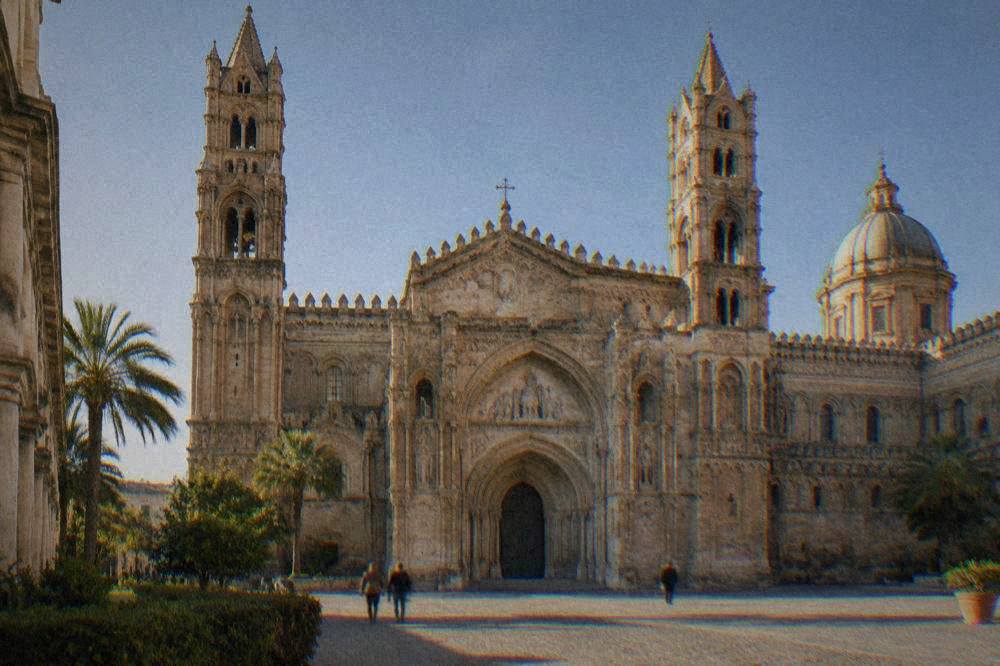
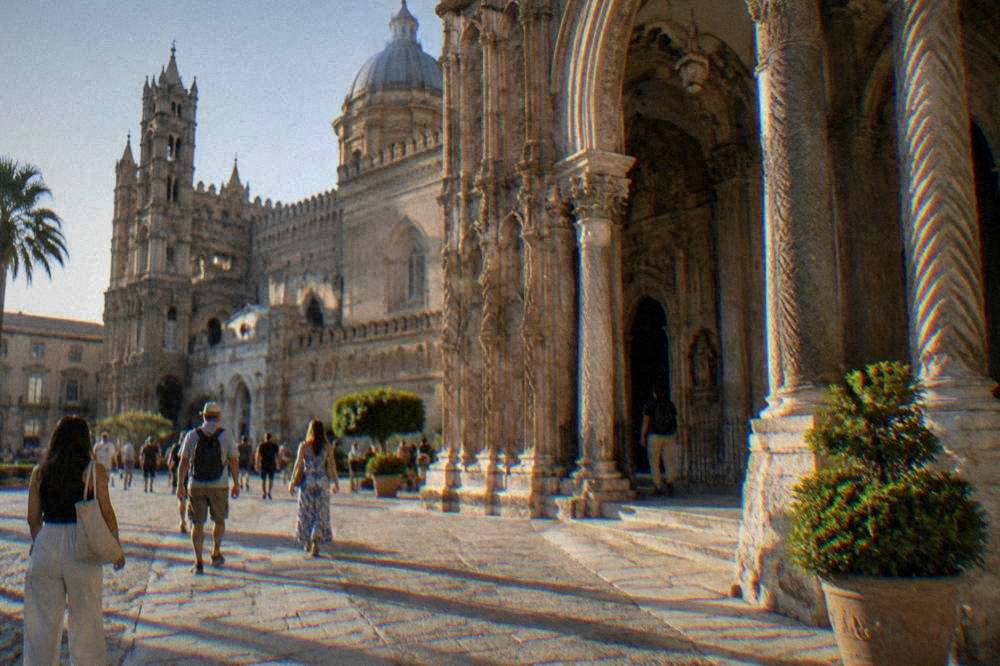
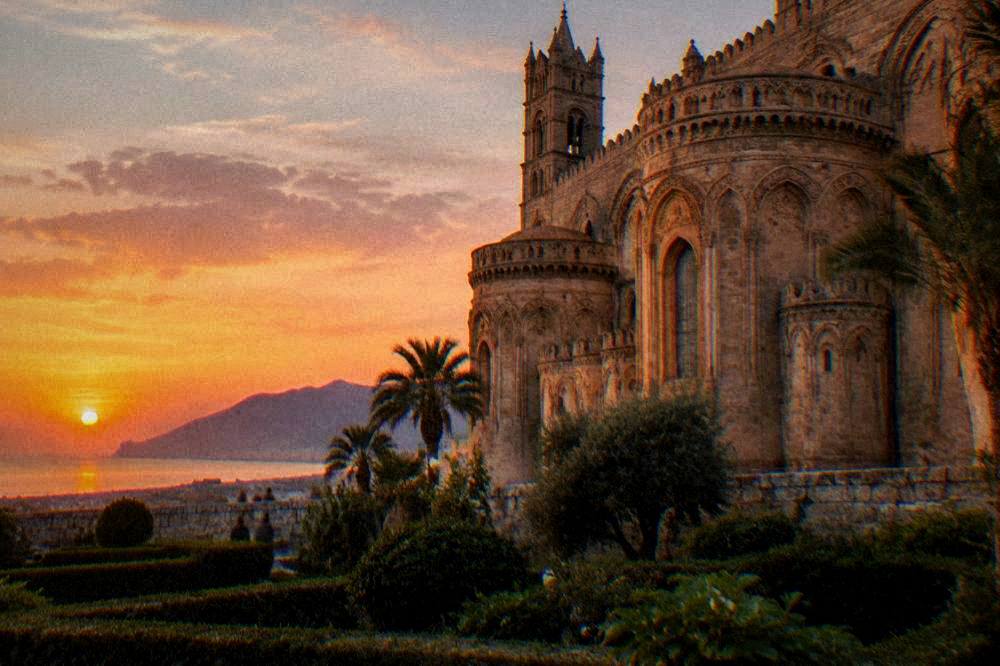
A walk around the exterior explains the listing better than any label. The southern porch rests on columns, and the cathedral's own history page notes that a Qur'an verse is carved on the first column on the left, the visible trace of the mosque phase. The apses facing the archbishop's garden, the tower, the dome and the long south wall each belong to different campaigns of work, and the tourist office's map places the whole complex a short level walk from the Quattro Canti crossing that divides the old town into its four mandamenti.
Was Palermo Cathedral A Mosque?
Yes, for more than two centuries: the cathedral's own chronicle states that in 831 the Saracens conquered Palermo and modified the existing church, itself built between 590 and 602 and dedicated to the Virgin Mary, into a large mosque called the Gami, and that in 1072 the Normans returned it to Christian worship under Bishop Nicodemo. A Qur'an verse carved on the first column on the left of the southern porch is the physical remnant the official page points to.
The earlier layer is a late antique basilica. The cathedral's history page records the authorization given in 604 under Pope Gregory the Great for the original construction, which means the site has carried Christian worship, then Muslim worship, then Christian worship again, all before the building acquired its present shape. That sequence is why the full story has its own page at was Palermo Cathedral a mosque, where the timeline is set out question by question.
| Date | What the official history records |
|---|---|
| 590 to 602 | A church dedicated to the Virgin Mary is built under Bishop Vittore |
| 604 | Papal authorization under Pope Gregory the Great for the original church |
| 831 | Saracens conquer Palermo and modify the church into the mosque called the Gami |
| 1072 | Normans return the ancient cathedral to Christian worship, handed to Bishop Nicodemo |
| 1624 | Saint Rosalia's relics are found on Monte Pellegrino, beginning her patronage of Palermo |
| 2015 | UNESCO inscribes Arab-Norman Palermo and the Cathedral Churches of Cefalu and Monreale |
The mosque legacy is not only in the stone. The pattern of a cathedral close to the royal palace, with a market quarter and a garden city around it, is part of what UNESCO credits to the Arab and Norman period as a whole. Visitors who want that wider story in the company of a guide can read the site's coverage of the no mafia walking tour, which threads the historic centre's history, including the anti-mafia memory at the Falcone tree, into a walk of the same streets.
Do You Need Tickets For Palermo Cathedral?
Yes for the monumental area, no stated price for it: the official visiting page lists hours and modalities but gives no ticket price, and the cathedral's guidance is that the monumental area, meaning the roof, the royal tombs, the treasury and the crypt, is ticketed, with the price shown at the ticket point or on the cathedral's ticket shop, while the nave functions as a church and visits are suspended during liturgies. The dedicated question of tickets for Palermo Cathedral is answered in full on its own page.
The practical reading is straightforward. Anyone wanting only to stand in the nave can do so outside liturgy times, with shoulders and knees covered as in any Italian church, and should confirm locally on the day, because the official page notes that visits are suspended during services and that hours shift with the season. Anyone wanting the roof, the tombs, the treasury or the crypt needs a ticket, and the two places that hold the live price are the ticket point on site and the cathedral's own ticket shop. This guide prints no price because no price is published on the official pages, and the rooftop ticket question has its own answer page at rooftop ticket costs.
The roof has specific warnings the official page does give. The roof visit is not advised for people with heart conditions, claustrophobia or vertigo, and comfortable shoes are required, because the walk crosses slopes and narrow passages above the nave. No reservation is described as required for the interior areas, while the ticket shop handles the monumental area purchases.
| Area | Access | Where the live price and hours sit |
|---|---|---|
| Nave | Open outside liturgies, dress with shoulders and knees covered | Official hours page on the cathedral site |
| Roof | Ticketed, comfortable shoes required, not advised with vertigo or claustrophobia | Ticket point or the cathedral's ticket shop |
| Chapel of the Royal Tombs | Inside the ticketed monumental area | Ticket point or the cathedral's ticket shop |
| Treasury | Inside the ticketed monumental area | Ticket point or the cathedral's ticket shop |
| Crypt | Inside the ticketed monumental area | Ticket point or the cathedral's ticket shop |
Who Is Buried In The Palermo Cathedral?
The Chapel of the Royal Tombs holds the sarcophagi of Roger II, the first king of Sicily, who died in 1154, Constance of Hauteville, Henry VI of Swabia who died in 1197, Frederick II who died in 1250, and Constance of Aragon, Frederick II's first wife, with later surveys also noting Pietro d'Aragona and an unidentified woman in Frederick II's porphyry sarcophagus. The chapel sits inside the ticketed monumental area, so the burials are part of the paid visit.
The tombs are the reason many itineraries put the cathedral ahead of every other church in the city. Roger II was the king under whom the Norman court gathered craftsmen from the Greek, Arabic and Latin worlds, and the UNESCO listing describes the artistic result across the whole nine-component property. His porphyry sarcophagus stands in the same small chapel as the emperor his granddaughter married, Henry VI, and the emperor his line produced, Frederick II, one of the most written-about rulers of medieval Europe. The full burial list, with the survey details, is laid out on the dedicated page answering who is buried in the Palermo Cathedral.
| Person | Status recorded in the sources |
|---|---|
| Roger II | First king of Sicily, died 1154 |
| Constance of Hauteville | Romanorum imperatrix, semper augusta et regina Siciliae |
| Henry VI of Swabia | Holy Roman emperor, died 1197 |
| Frederick II | Holy Roman emperor, died 1250, sarcophagus also holds Pietro d'Aragona and an unidentified woman per later surveys |
| Constance of Aragon | First wife of Frederick II |
The contrast with Monreale is worth planning around. Monreale Cathedral, a 16-minute drive or the AMAT 389 bus from Piazza Indipendenza, holds the tombs of William I, William II and Margaret of Navarre, and the two cathedral visits are separate in every sense, separate towns, separate tickets and separate cloisters. The site's Monreale guide covers the cloister ticket, at 8 EUR full and 4 EUR reduced as listed by the ticket operator, and the two burial pages, who is buried in Monreale Cathedral and the Monreale Cathedral worth visiting question, complete the dynastic picture.
Can You Walk On The Roof Of Palermo Cathedral?
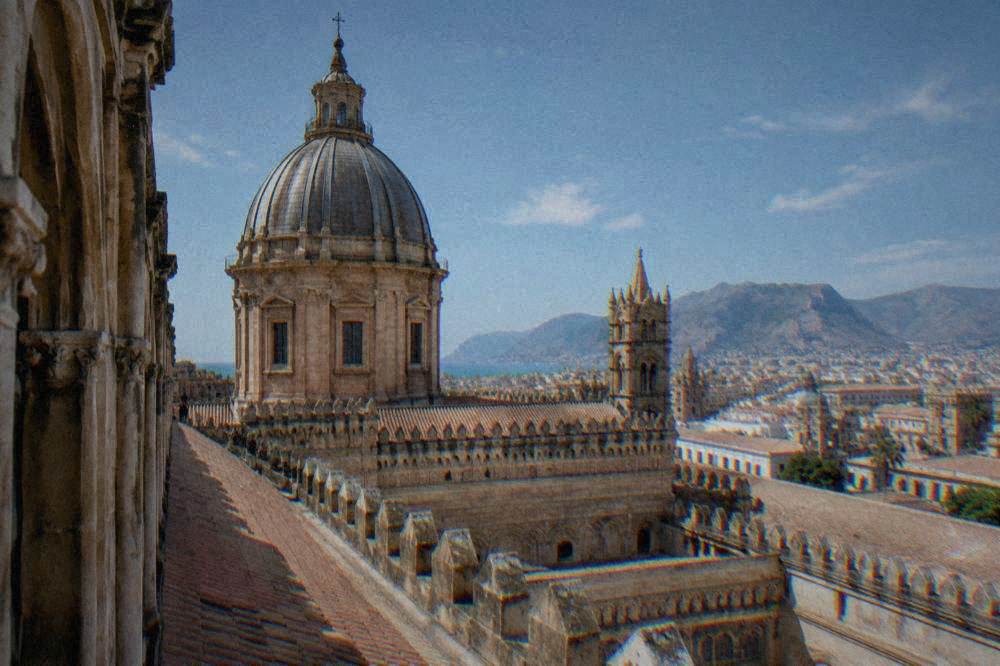
Yes, the roof is part of the ticketed monumental area and the official page describes a walk over the terraces above the nave, with three conditions attached: comfortable shoes are required, the visit is not advised for anyone with heart conditions, claustrophobia or vertigo, and visits are suspended during liturgies, while the ticket price is shown only at the ticket point or on the cathedral's ticket shop. No online price is published on the official page.
The roof is the one part of the visit that changes how the whole city reads. From the terraces the Cassaro runs straight to the sea, the dome of San Cataldo and the tower of La Martorana sit a few streets away, and the mass of Monte Pellegrino closes the view to the north-west over the Gulf of Palermo. The question of cost is answered, with all the caveats about where the price lives, on the page covering rooftop ticket costs for Palermo Cathedral, and the practical advice is to buy at the ticket point for the same day once the sky is known, since the walk has no shelter.
Timing matters for the light. The climate table for Palermo, modelled ERA5 normals for 1991 to 2020, shows July means of 26.2 C and August means of 26.8 C with an August mean maximum of 30.4 C, which makes the uncovered terraces an early-morning or late-afternoon proposition in summer. October, the wettest month in the table at 81 mm, is cooler and often bright between showers. The site's Palermo weather coverage prints the full table.
How Much Time Do You Need At Palermo Cathedral?
A nave-only visit is a short call of perhaps twenty to thirty minutes at an unhurried pace, while a visit that includes the monumental area, the roof, the royal tombs, the treasury and the crypt, is closer to an hour to ninety minutes, and a first visit that pairs the cathedral with the nearby Royal Palace and Palatine Chapel fills a half day, since the palace ticket at 14.50 EUR full and 12.50 EUR reduced covers the chapel and the royal apartments together. These are planning ranges, not operator figures.
The block around the cathedral rewards the slower plan. The Norman Palace and the Cappella Palatina sit at the other end of the Albergheria quarter, roughly ten minutes on foot along level streets, and the palace hours run Monday to Saturday 8:30 to 16:30 last admission, Sunday and holidays 8:30 to 12:30, with the royal apartments closed Tuesday and Wednesday when parliament sits. The Ballarò market lies south of the Cassaro, running Monday to Saturday from about 7:30 and Sunday mornings, so a market breakfast, the cathedral at opening and the palace before the afternoon queues is a sequence many itineraries on this site suggest.
| Visit plan | What it includes | Realistic time |
|---|---|---|
| Nave only | The interior outside liturgies | 20 to 30 minutes |
| Nave plus monumental area | Roof, royal tombs, treasury, crypt | 60 to 90 minutes |
| Full Albergheria circuit | Cathedral, Royal Palace and Palatine Chapel | Half a day |
| Cathedral plus market morning | Ballarò stalls from about 7:30, then the cathedral | 3 hours |
Visitors covering the whole centre in a day or two may prefer wheels for the outer stops. The hop-on hop-off bus circles the outer sights, and the site's review of the hop-on hop-off bus tour explains which stops serve the cathedral street and the Politeama side.
What Can You See Inside Palermo Cathedral?
Inside, the sources name four draws: the Chapel of the Royal Tombs with its five dynastic sarcophagi, the treasury and the crypt within the monumental area, the Qur'an verse carved on the first left-hand column of the southern porch, and the silver urn of Saint Rosalia's tradition, whose relics were found on Monte Pellegrino in 1624 and whose Festino fills the city each 10 to 15 July. The official page adds that the monumental areas are reached by ticket and the nave is a working church.
The Rosalia connection gives the cathedral its place in the city's calendar. The municipal tourism pages describe the Festino, with the triumphal chariot procession on 14 July along the Cassaro, the very street outside the cathedral door, and the religious procession of the silver urn on 15 July. Anyone in Palermo on those two days will find the cathedral at the centre of the route, and the site's festivals coverage prints the detail, including the note that the 2027 dates are not yet announced.
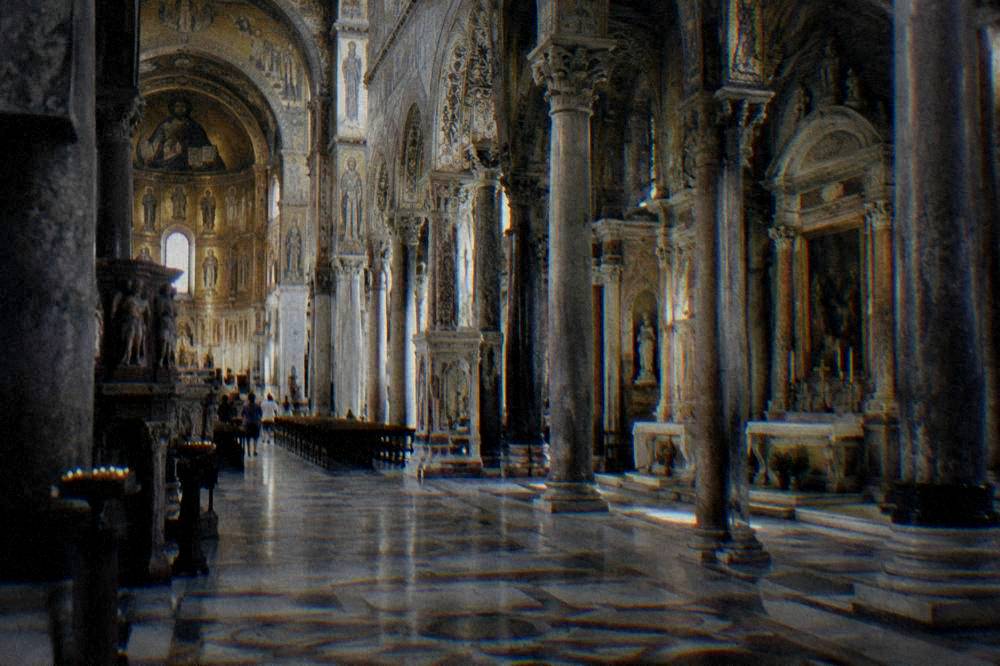
The treasury and crypt complete the monumental area. The official page groups them with the roof and the tombs as the ticketed part of the visit, and the modality notes say purchases work on site or through the cathedral's ticket shop without a reservation for the interior areas. Photography rules are posted at the entrances, and the same covered-shoulders and covered-knees expectation applies to the nave as to any Italian cathedral.
How Does Palermo Cathedral Compare With Monreale Cathedral?
Palermo Cathedral is a city church at the centre of the four mandamenti with the royal tombs as its draw, while Monreale Cathedral, 16 minutes by road or the AMAT 389 bus from Piazza Indipendenza at a 1.40 EUR fare, is a hilltop basilica whose cloister, 8 EUR full and 4 EUR reduced per the ticket operator, and whose walls of gold-ground glass mosaic are the reason to go, with no official area or gold tonnage published, so none is printed here. The two are separate visits and separate tickets.
The comparison matters because both belong to the same UNESCO inscription, the Arab-Norman Palermo property listed in 2015, and travellers with two days in Palermo routinely ask whether Monreale can be skipped. The site's answer pages handle both halves: how do I get from Palermo to Monreale Cathedral covers the 47 daily runs of line 389, about every 40 minutes from Piazza Indipendenza, and the how much gold is in Monreale Cathedral page explains why no tonnage exists to quote. Monreale's walls are covered in gold-ground glass mosaic, and that is the honest description.
| Palermo Cathedral | Monreale Cathedral | |
|---|---|---|
| Position | On the Cassaro in the Albergheria mandamento | Hilltown above Palermo, 16 min by road |
| Public transport | Central, walkable from Quattro Canti | AMAT 389 from Piazza Indipendenza, 1.40 EUR |
| Main draw | Chapel of the Royal Tombs, roof walk | Gold-ground glass mosaic walls, cloister |
| Ticket situation | Monumental area ticketed, price at the ticket point or ticket shop | Cloister 8 EUR full, 4 EUR reduced, cathedral a separate visit |
| Burials | Roger II, Constance of Hauteville, Henry VI, Frederick II, Constance of Aragon | William I, William II, Margaret of Navarre |
What Sits Within A Short Walk Of Palermo Cathedral?
Four of the city's principal monuments sit within a level walk of the cathedral doors: the Palazzo dei Normanni with the Cappella Palatina at the far end of the Albergheria, the San Cataldo church and La Martorana on Piazza Bellini, the Quattro Canti crossing and Piazza Pretoria on the Cassaro's continuation, and the Ballarò market to the south, all of them free to see from the outside except the palace, whose combined ticket at 14.50 EUR full and 12.50 EUR reduced includes the chapel and the royal apartments.
The circuit works in either direction and needs no transport. East along the Cassaro, the Quattro Canti octagon and the Piazza Pretoria fountain sit a few minutes apart, both free to see from outside at any hour, and the municipal tourism pages describe the crossing as the point where Via Maqueda divides the old city into its four mandamenti. North from Piazza Bellini, the domed San Cataldo church and La Martorana stand side by side, both also components of the same UNESCO inscription, so a single morning's walk can cover four of the nine listed buildings.
For a local guide to walk it with you, book a free walking tour here.
Further out but still walkable, the Capuchin Catacombs lie north of the centre with a 5 EUR full and 3 EUR reduced ticket sold only at the office and photography prohibited, and the Palazzo Abatellis gallery in the Kalsa was reported in July 2026 to be closing for about 18 months of climate-control works with no reopening date, so its collection should be confirmed on the regional museums site before a visit. The botanical garden and the seafront Foro Italico extend the same walk toward the water, both open spaces without a ticket.
Common Questions About The Palermo Cathedral
Do I need tickets for Palermo Cathedral?
The nave is a working church visited outside liturgies, while the monumental area, the roof, the royal tombs, the treasury and the crypt, is ticketed, with the price shown at the ticket point or on the cathedral's ticket shop. The full answer sits on the dedicated tickets page.
Was Palermo Cathedral a mosque?
Yes, from 831, when the Saracens turned the existing church into the mosque called the Gami, until 1072, when the Normans returned it to Christian worship. A Qur'an verse carved on a southern porch column survives from that phase.
Who is buried in the Palermo Cathedral?
Roger II, Constance of Hauteville, Henry VI, Frederick II and Constance of Aragon lie in the Chapel of the Royal Tombs, inside the ticketed monumental area.
How much do tickets cost to visit the rooftop of Palermo Cathedral?
The official visiting page publishes hours but no price, so the live figure is shown at the ticket point or on the cathedral's ticket shop. Comfortable shoes are required and the walk is not advised with vertigo or claustrophobia.
How much gold is in Monreale Cathedral?
No official tonnage or area figure is published for Monreale's mosaics. The walls are covered in gold-ground glass mosaic, which is the honest description, and the dedicated answer page explains the detail.
Who is buried in Monreale Cathedral?
William I and William II, the kings who built and completed Monreale, with Margaret of Navarre, in a separate cathedral that is a 389 bus ride from Piazza Indipendenza.
Palermo Cathedral rewards a slow reading: a porch column carrying a Qur'an verse, five royal sarcophagi in one chapel, a roof walk above the Cassaro and a UNESCO story that continues at Monreale and Cefalu. Planning the wider visit is easiest through the Palermo Italy Travel Guide root page and the full things to do in Palermo index, and the practical rule for the cathedral itself never changes: the nave welcomes you outside liturgies with shoulders and knees covered, and the ticket point on site holds the live price and the seasonal hours for everything above and below it.
