La Cala Palermo
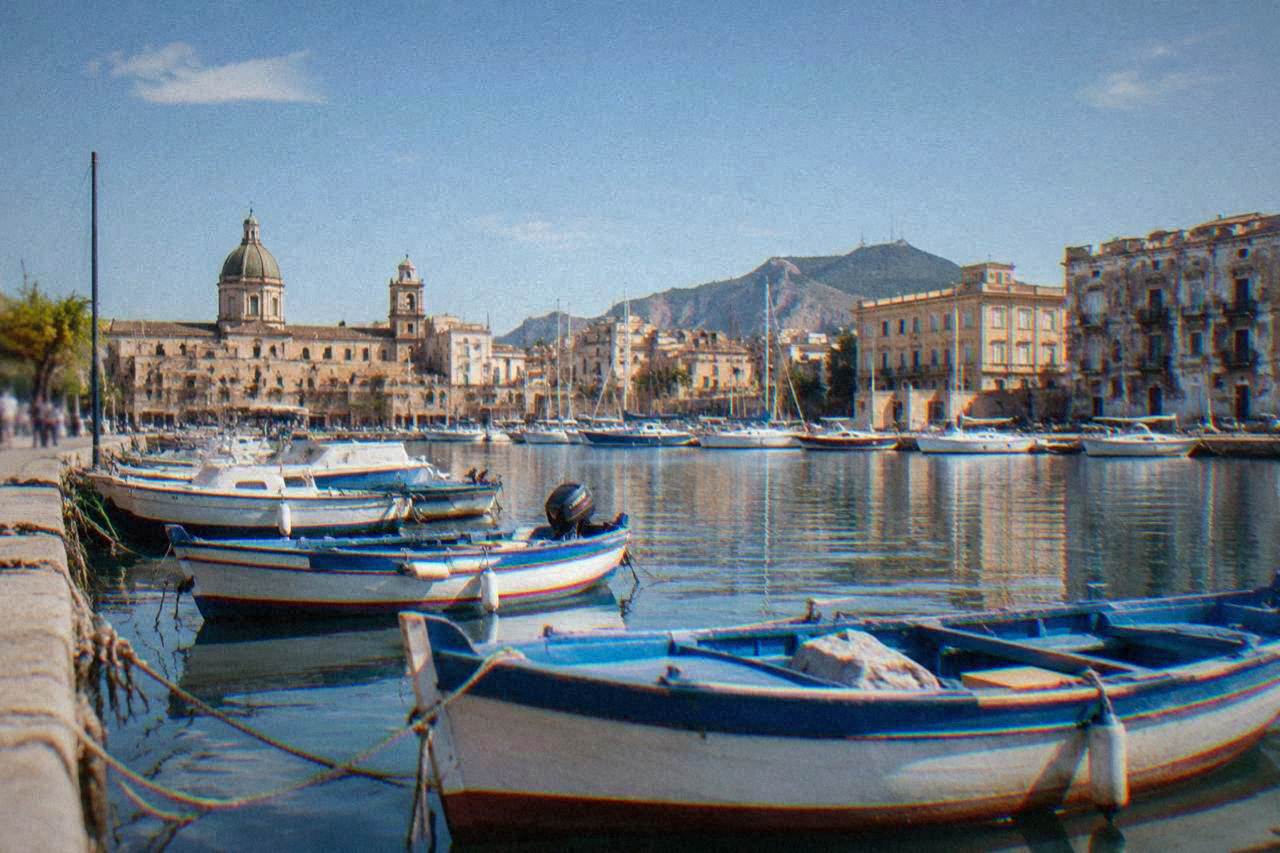
La Cala is the historic harbour basin of Palermo, the coastal capital of Sicily on the Tyrrhenian Sea, squeezed between the old centre and the modern port. This page covers what the area holds, how it connects to the rest of the city, and what sits within a short walk of the water.
Short answer
La Cala is the old harbour of Palermo, a walk of roughly 15 to 20 minutes from the Quattro Canti crossroads, beside the Foro Italico seafront and the Kalsa district, with ferry terminals, museums, markets and nightlife within easy reach.
La Cala is the historic harbour of Palermo, the coastal capital of Sicily on the Tyrrhenian Sea, sitting in the Gulf of Palermo where the old city meets the working waterfront. The basin sits directly beside the historic centre: the port authority lists its offices on the central waterfront near the Via Francesco Crispi area, and the municipal tourism pages treat the harbour and the seafront promenades as one continuous walk from the port gates to the old harbour. This guide from the Palermo Italy Travel Guide covers what the area holds, how close it sits to the main sights, and how the ferries, museums, markets and nightlife of the city cluster around this stretch of coast.
What Is La Cala In Palermo?
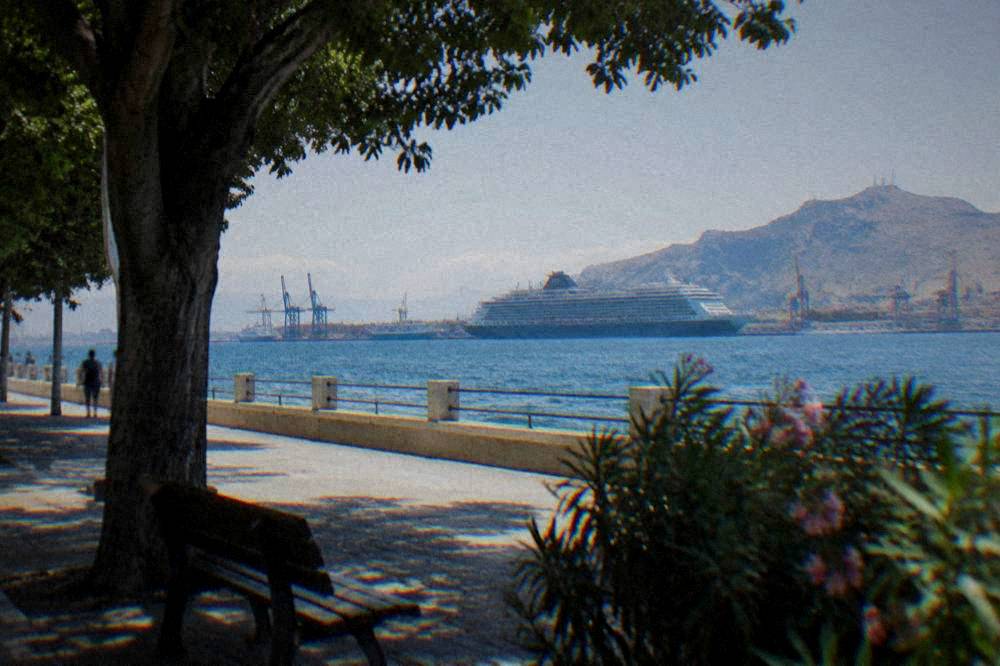
La Cala is the old harbour basin of Palermo, the small historic anchorage that sits between the modern cruise and ferry port and the streets of the old centre. The port authority's own contact page places the port operations on the central waterfront along the Via Francesco Crispi side, and the Stazione Marittima and Sammuzzo terminals sit at the seaward end of the same stretch. The basin is a public, free-to-walk area of quays and moored boats, not a ticketed site.
The name refers to the historic harbour itself, the sheltered water where the city's sea life has always centred. Today the cruise terminals carry the large-scale port traffic, while La Cala remains the smaller, older basin immediately south of them. The geography matters for visitors: the port authority groups Stazione Marittima at Molo Vittorio Veneto and Sammuzzo at Via Francesco Crispi as the two passenger gateways, and La Cala is the historic water beside them.
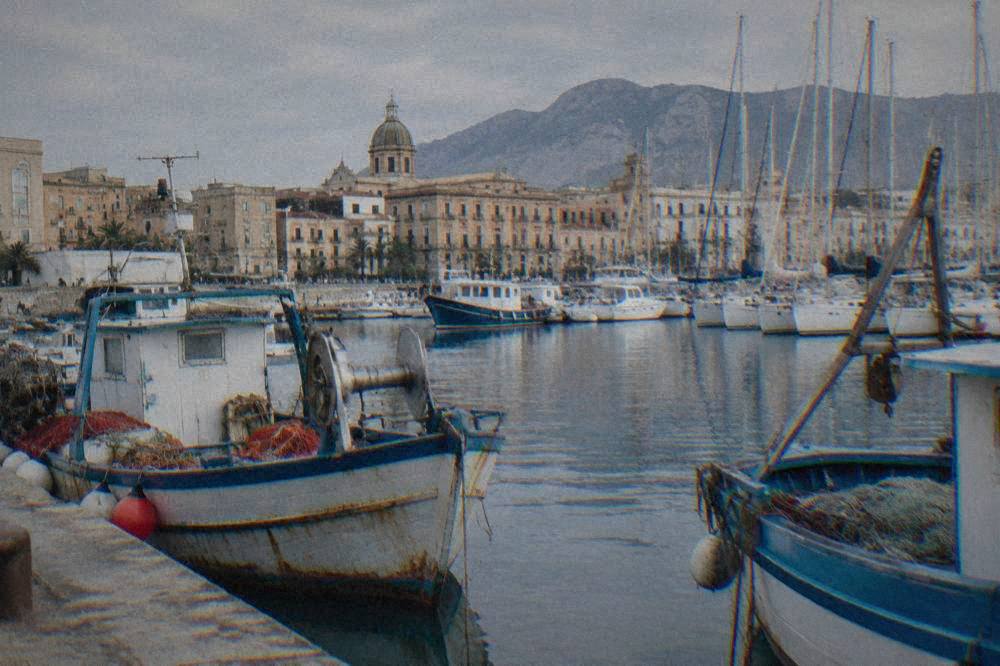
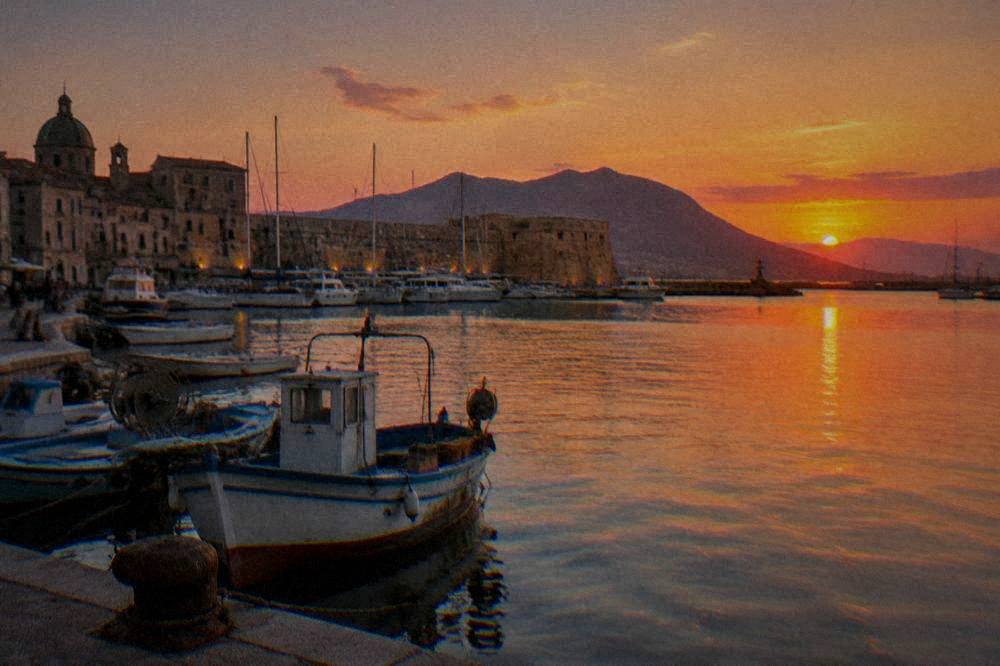
The harbour also works as an orientation tool. Stand at the water facing the city and Monte Pellegrino rises to the north-west, the old centre fills the view ahead, and the Kalsa district, one of the four mandamenti the municipal tourism page says the city was divided into at the crossing of Via Maqueda and Corso Vittorio Emanuele, starts a few streets in. For a fuller picture of that crossing point, see the guide to Quattro Canti in the old centre.
What Can You See Around La Cala Harbour?
The immediate La Cala stretch holds the harbour basin itself, the adjoining Foro Italico seafront park, and the gates of the passenger port, and all three are free to walk. Within 15 to 20 minutes on foot sit the Quattro Canti crossroads, the Kalsa district, Piazza Pretoria and Palermo Cathedral. The nearby ticketed sights include Palazzo dei Normanni with the Cappella Palatina at 14.50 EUR full and 12.50 EUR reduced, and the Teatro Massimo guided tour at 14 EUR full and 7 EUR under 26.
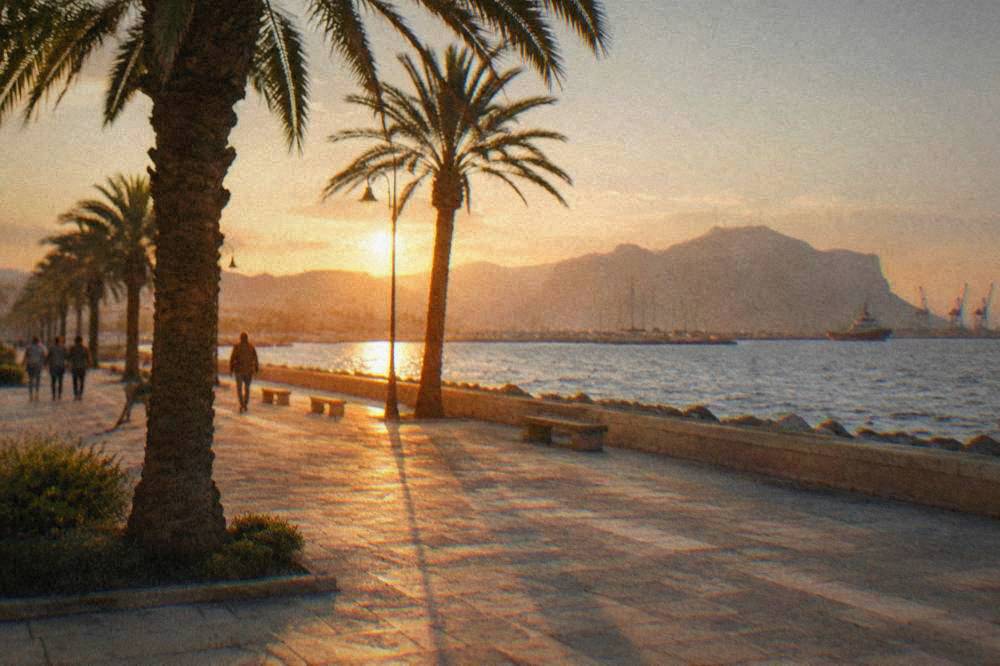
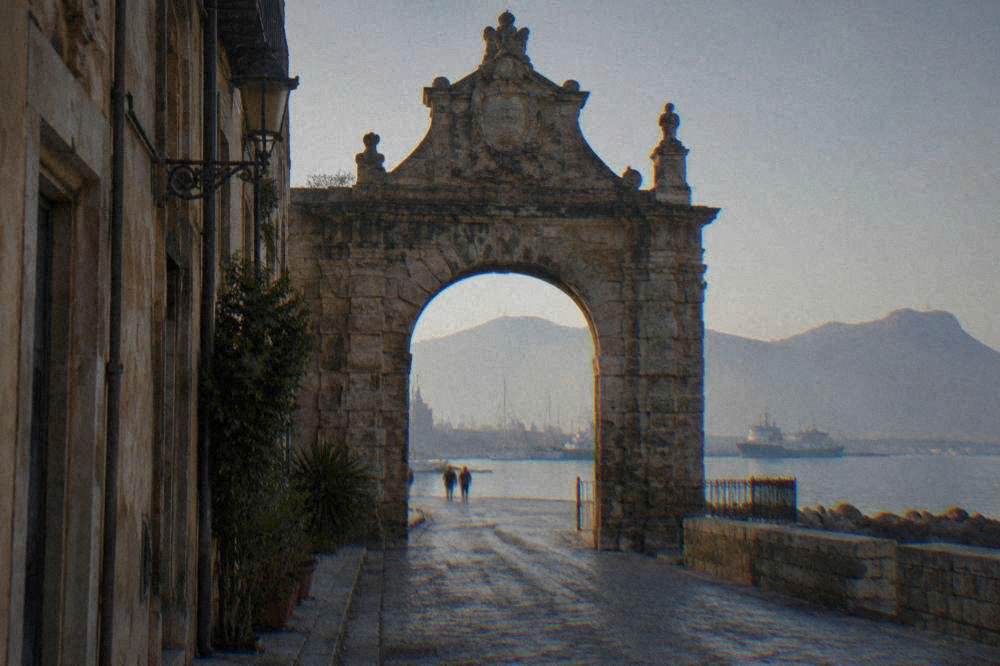
The Foro Italico is the natural first stop: a broad open seafront beside the harbour, listed among the city's free spaces, where the municipal events calendar stages open-air concerts and the July Festino procession of Saint Rosalia ends its route toward the sea at Porta Felice. The Festino runs each July, 10 to 15 July in 2026 with the main events on 14 and 15 July, when the triumphal chariot travels the Cassaro to Porta Felice and fireworks close the evening, and the silver urn with the relics is carried in procession on the 15th. Porta Felice itself stands at the seaward end of the Cassaro, the straight old axis that runs from the harbour deep into the historic centre.
The Kalsa district begins directly behind the harbour streets. The municipal tourism pages describe it as a historic quarter holding Palazzo Abatellis and the Spasimo among its landmarks, though note that Palazzo Abatellis is closed or closing: a planned closure of about 18 months for climate-control works began around mid-July 2026, with no reopening date confirmed, so check the regional museums site before planning a visit. The dedicated Kalsa district guide covers the quarter street by street.
| Sight near La Cala | Distance character | Entry |
|---|---|---|
| Foro Italico seafront | Adjoins the harbour | Free |
| Porta Felice | Sea end of the Cassaro | Free, public |
| Palermo Cathedral, nave area | Short walk into the old centre | Dress code applies; monumental area ticketed |
| Palazzo dei Normanni and Cappella Palatina | Deeper into the Albergheria side | 14.50 EUR full, 12.50 EUR reduced |
| Teatro Massimo | North of the old centre | Guided tour 14 EUR full, 7 EUR under 26 |
| Palazzo Abatellis | Kalsa, behind the harbour | Closed for works from about mid-July 2026 |
For a compact route that stitches the harbour, the Cassaro and the crossing streets together, the one day in Palermo itinerary starts from the waterfront side and works inward.
How Far Is La Cala From Palermo's Old Centre?
La Cala sits at the edge of the old centre rather than apart from it: secondary port guides consistently put the walk from the cruise terminals and gates to Quattro Canti at about 1.5 to 1.8 km, or 15 to 20 minutes, on a flat route that runs from the Via Emerico Amari side and then along Via Maqueda. The Kalsa streets begin even closer, within a few minutes of the harbour. Nothing between the basin and the centre requires transport.
That flatness is the practical point. The route from the terminals runs through the Politeama and Via Maqueda side of the city, which keeps the walk simple for anyone arriving by ferry or cruise ship and heading for the historic centre. Along the way the walk passes the politeama-and-new-city quarter, covered in the Politeama and the new city guide, before dropping into the old town at the Quattro Canti, where the municipal tourism page says the crossing of Via Maqueda and Corso Vittorio Emanuele divides the old city into the four mandamenti of Capo, Albergheria, Kalsa and Loggia.
The harbour side also connects west along the water. A coastal walk or a short bus ride carries you toward the Foro Italico and the streets that run down to the sea, and the whole waterfront strip between the port gates and the old harbour reads as one continuous public space. Anyone planning a longer stay can chain the harbour morning with an old-centre afternoon using the two days in Palermo itinerary.
Happy to swap the seafront walk for the sea itself? Book a boat tour with snorkelling here.
Where Do The Ferries From Palermo Sail To?
From the Palermo port beside La Cala, GNV lists ferries to Naples in about 11 hours overnight, to Genoa in about 20 hours 30, to Civitavecchia in about 13 hours 30 and to Tunis in about 9 hours 30, with Grimaldi and Tirrenia also sailing the Naples route. Liberty Lines runs hydrofoils to the island of Ustica in about 1.5 hours, foot passengers only. Sailing times and days vary by season, so the operator pages hold the live schedules.
The ferry port and the old harbour share the same central waterfront, which makes La Cala a natural landmark for anyone arriving or departing by sea. The GNV route pages carry the durations above; the Naples run generally leaves in the evening and arrives early morning, which suits an overnight crossing with a cabin. For Ustica, the Liberty Lines hydrofoils leave from the Marina Yachting and Molo Trapezoidale side of the waterfront and carry foot passengers only, with several sailings a day depending on the season.
| Route from Palermo | Operator named in the sources | Typical duration |
|---|---|---|
| Naples | GNV, Grimaldi, Tirrenia | About 11 hours overnight |
| Genoa | GNV | About 20 h 30 |
| Civitavecchia | GNV | About 13 h 30 |
| Tunis | GNV | About 9 h 30 |
| Ustica | Liberty Lines hydrofoil | About 1.5 hours |
Cruise passengers land at the Stazione Marittima and Sammuzzo terminals, and the walk into the old centre follows the flat route described above. The dedicated Palermo cruise port day guide explains how to use a single day from the terminal gates, and the Foro Italico guide covers the seafront park that opens directly beside the harbour.
Is La Cala A Good Place To Eat And Go Out In Palermo?
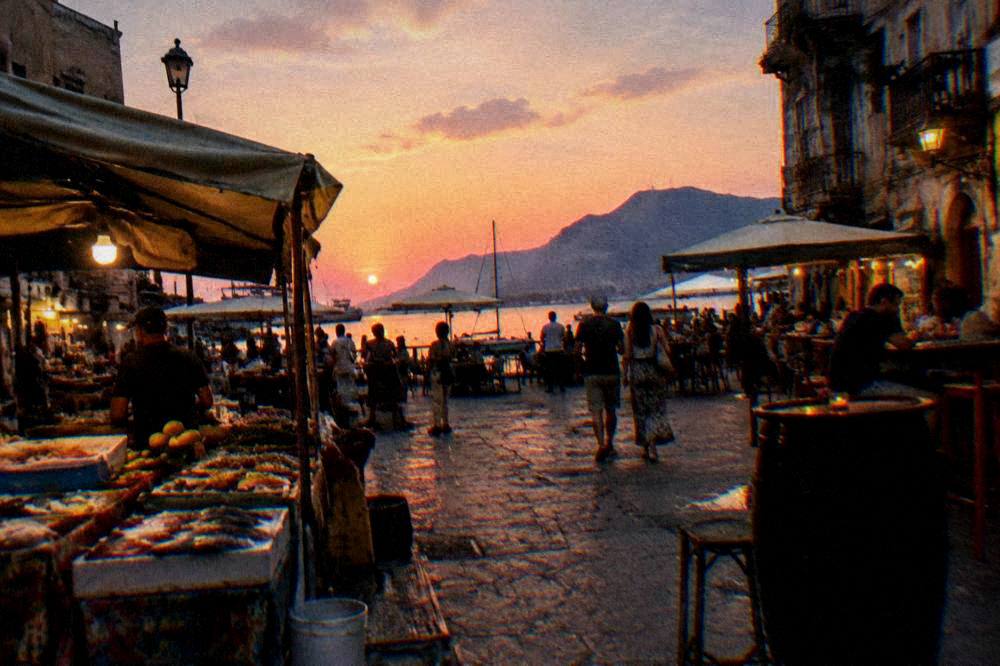
The streets behind La Cala run into the Vucciria, the historic market quarter whose daytime market runs Monday to Saturday from about 7:30 and whose evening scene, strongest Thursday to Saturday and in summer, fills the Piazza Caracciolo and Garraffello area with street food and bars. Guides also list Piazza Marina, Via Maqueda, the Politeama side and Mondello as the city's other nightlife strips, with Politeama the more elegant bar quarter.
The Vucciria is the closest of the historic markets to the harbour, and its after-dark character is the reason the area draws evening crowds. The other two historic markets sit slightly further out: Ballarò, which the municipal tourism page describes as a main historic market running roughly Monday to Saturday from about 7:30 with Sunday mornings, lies inland toward the Albergheria side, and the Capo market runs mornings and rests on Sundays. The Ballarò market guide covers that market in detail, and the Palermo street food guide tradition of panelle, sfincione and arancine, the Palermo form that the Accademia della Crusca accepts alongside Catania's arancino, runs through all three.
For a guided version of the same food culture, a market and street food walk in the Eating Europe style runs in the old centre a short walk from the harbour:
Eating out comes with two local customs worth knowing. The coperto, a cover charge, is legal in Italy when it is printed on the menu, and tipping is not obligatory, so the itemised bill is the check to read. Tap water is a non-issue: AMAP, the city water utility, states that the water distributed in Palermo is suitable for drinking.
Which Museums Sit Within Reach Of La Cala?
Within the old centre behind La Cala, the Palazzo Steri with its Inquisition prisons charges 8 EUR full and 5 EUR reduced with a guided tour included, the Galleria d'Arte Moderna charges 10 EUR full and 8 EUR reduced and opens daily 9:30 to 18:30, the Salinas Archaeological Museum charges 7 EUR and 3.50 EUR and closes Monday, and the Marionette Museum charges 5 EUR and 3 EUR, or 10 EUR and 8 EUR with a puppet show.
The Steri is the harbour-side quarter's own monument: the CoopCulture listing gives daily hours of 9:00 to 20:00 from March to October and 9:00 to 18:00 from November to February, guided visits only, with the 40-minute tour built into the ticket. The Galleria d'Arte Moderna sits a short walk north-west toward the new city, and the Salinas museum sits on the Via Maqueda axis. The Marionette Museum, in the Kalsa side of the old centre, stages its puppet shows Tuesday to Saturday at 17:00, a reliable indoor option with children.
| Museum | Full ticket | Reduced | Key hours |
|---|---|---|---|
| Palazzo Steri, Inquisition prisons | 8 EUR | 5 EUR | Guided tour included; daily 9:00 to 20:00 Mar to Oct |
| Galleria d'Arte Moderna | 10 EUR | 8 EUR | Daily 9:30 to 18:30 |
| Salinas Archaeological Museum | 7 EUR | 3.50 EUR | Closed Monday |
| Marionette Museum | 5 EUR | 3 EUR | Tue to Sat 10:00 to 18:00; shows 17:00 |
| Marionette Museum with show | 10 EUR | 8 EUR | Show ticket includes museum entry |
| Diocesan Museum | 7 EUR | Over 65: 6 EUR | Mon to Sat 9:30 to 18:00 |
Two planning notes apply. Many state and regional museums are free on the first Sunday of the month, though this should be confirmed per site before you build a day around it. And Palazzo Abatellis, the Kalsa gallery closest to the harbour, is closed or closing for about 18 months of climate-control works from mid-July 2026, so its collection should not be counted on until the regional museums site confirms a reopening.
How Do You Get To La Cala From The Rest Of Palermo?
AMAT buses and the four tram lines serve the city, with a single ticket at 1.40 EUR valid 90 minutes from validation, a day ticket at 3.50 EUR, a three-day MultiDay at 8 EUR and the onboard single at 1.80 EUR; tickets are bought before boarding and validated at once, through the MyAMAT or Palermobilita apps or at sales points. There is no metro: the Passante is a suburban rail service, whose Line A runs from Palermo Centrale to the airport.
The harbour sits on the flat coastal edge of the centre, so most journeys toward La Cala are short. Buses stop along the waterfront streets and the adjoining avenues, and the tram network, four lines converging from the periphery toward the centre per the AMAT page, interchanges with the rail stations at Notarbartolo. The approved Giachery to Politeama rail section, planned to open from November 2026, will put a passenger link on the port side itself, connecting toward Notarbartolo and the airport line; until then the nearest rail points are Centrale and Notarbartolo. Shared scooters from Dott, Lime and Bird have operated since late 2025 under a five-year concession, and the old AMIGO bike-share service ended on 1 April 2025.
| AMAT ticket | Price | Validity |
|---|---|---|
| Single, bought in advance | 1.40 EUR | 90 minutes from validation |
| Single, onboard | 1.80 EUR | 90 minutes from validation |
| Day ticket | 3.50 EUR | Until end of service on the day |
| Two-day MultiDay | 6.00 EUR | Until end of service on day two |
| Three-day MultiDay | 8.00 EUR | Until end of service on day three |
| Seven-day MultiDay | 16.50 EUR | Until end of service on day seven |
For arrivals from the airport, the Prestia e Comande bus runs every 30 minutes and takes about 50 minutes to the Politeama, Via Roma and Centrale station stops, at 6 EUR one way or 10 EUR return bought online, 6.50 and 11 EUR onboard, and the regional train on the airport line reaches Palermo Centrale in about an hour. From Centrale the harbour is a short bus or taxi ride across the centre. The full detail sits in the Palermo airport to city centre guide style routes covered elsewhere on this site, including the fixed airport taxi zones reported at 39 EUR for the port side, 44 EUR for the historic centre and 50 EUR for the Foro Italico side, up to four passengers with luggage, for the 2025 tariff, to be confirmed with the driver before setting off.
What Is The Best Time Of Day To Visit La Cala?
The climate table for Palermo, modelled ERA5 normals for 1991 to 2020, shows July and August as the warm months, with July at a 26.2 C mean and August at 26.8 C, and October as the wettest month at 81 mm against July's 7 mm, so the harbour walk is most comfortable in the cooler hours of a summer day and the seafront is at its liveliest in the evening, when the Vucciria side fills the streets behind the basin.
Morning suits the harbour itself: the light comes off the Tyrrhenian Sea from the east, the boats are in and the market streets behind the water run at full pitch before the afternoon pause. Evening belongs to the seafront and the streets behind it, above all in summer, when the Festino in July brings the chariot down the Cassaro to Porta Felice on the 14th and the fireworks over the water close the night. Winter remains workable, with January at an 11.3 C mean on the modelled normals, and the harbour-side museums give a rainy-day fallback; the rainy day in Palermo guide collects those indoor options.
Safety needs one practical line, drawn from the official advisories: the US State Department and the UK FCDO both note that petty crime such as pickpocketing and bag-snatching is common around tourist sites and on public transport, so a bag zipped and held in front is the standard precaution on a crowded evening street. The emergency number is 112.
Can You Combine La Cala With A Day Trip From Palermo?
Yes, and the harbour side is a practical base for it, because the day-trip territory of western and southern Sicily starts from Palermo: Segesta lies 64 minutes away by road, Monreale 16, Cefalu 65 and Agrigento's Valley of the Temples about 2 h 16, with direct regional trains to Agrigento taking about 2 hours and the Cefalu train 39 to 60 minutes. An organised excursion collects the transfer, the tickets logic and the timing in one booking, which matters on the longer runs.
The classic pairing from this side of the city is the Valley of the Temples at Agrigento, a UNESCO site inscribed in 1997, where the entry is 14 EUR full and 7 EUR reduced and the park opens 8:30 to 20:00. The fuller version adds the Villa Romana del Casale, the Roman villa near Piazza Armerina famed for its floor mosaics, on a combined day that runs long but covers two of Sicily's headline ancient sites in one loop from Palermo. A guided version of the temples day looks like this:
The villa-plus-temples combination suits anyone who wants the mosaic floors as well as the Greek columns, and the walk covers far more ground than public transport manages in a single day:
Closer day trips work too. Monreale, 16 minutes by road or the AMAT 389 bus from Piazza Indipendenza at 1.40 EUR with 47 runs a day, holds the cathedral whose cloister costs 8 EUR full and 4 EUR reduced, and William I and William II are buried in the cathedral itself. The three-day and four-to-five-day itineraries on this site sequence the harbour, the old centre and these outward runs in a workable order.
Common Questions About La Cala Palermo
Is La Cala Palermo free to visit?
Yes. The harbour basin, the quays and the adjoining Foro Italico seafront are public spaces with free access at any hour. Only the museums and ticketed monuments around the harbour charge entry, and their prices are listed in the tables above.
How far is La Cala from Quattro Canti in Palermo?
Where do the ferries from La Cala Palermo go?
From the Palermo port, GNV lists Naples at about 11 hours overnight, Genoa at about 20 h 30, Civitavecchia at about 13 h 30 and Tunis at about 9 h 30, with Grimaldi and Tirrenia also sailing to Naples. Liberty Lines runs hydrofoils to Ustica in about 1.5 hours.
Is La Cala Palermo a good area for nightlife?
The Vucciria quarter behind the harbour turns into the city's best-known evening street-food and bar scene, strongest Thursday to Saturday nights and in summer. Piazza Marina, Via Maqueda, the Politeama side and Mondello in summer are the other nightlife strips named in local guides.
Which museums are closest to La Cala Palermo?
The Palazzo Steri with its Inquisition prisons sits in the old centre near the harbour, the Marionette Museum lies in the Kalsa, and the Galleria d'Arte Moderna and the Salinas Archaeological Museum sit a short walk north-west. Palazzo Abatellis, the nearest gallery to the harbour, is closed for about 18 months of climate-control works from mid-July 2026.
When is the Festino di Santa Rosalia near La Cala?
The Festino runs each July, 10 to 15 July in 2026. The triumphal chariot procession travels the Cassaro to Porta Felice, at the harbour end of the old street, on 14 July with fireworks, and the silver urn with the saint's relics is carried in procession on 15 July. Dates for 2027 are not yet announced.
La Cala holds its place in Palermo because it joins the pieces: the port gates and ferry decks on one side, the Foro Italico and the Cassaro on the other, and the Kalsa, the Vucciria and the old markets within a flat walk. Plan the harbour for a morning or an evening, keep the museums for the hot or wet hours, and the waterfront repays every hour spent on it.
