Palermo Shopping
Palermo shopping runs from street markets that open at dawn to a market square lined with jewellery stores and a coastal village full of summer boutiques, and this guide maps all of it with the hours, fares and day trips that shape a shopping day.
Short answer
The main shopping areas in Palermo are the historic markets of Ballarò, Capo and Vucciria for food and street life, Via Maqueda and Via Libertà around the Politeama for shops, and Mondello for beach-season boutiques. Markets open early and slow after lunch, museums sell puppets and books, and a Monreale or Cefalu trip adds ceramics and cloister views to the same day.
Palermo, the coastal capital of Sicily on the Tyrrhenian Sea, is a city where shopping still means shouting distance between buyer and seller. The street markets of Ballarò, Capo and Vucciria have run for centuries inside the four old districts that meet at the Quattro Canti, and the shops of Via Maqueda and the Politeama quarter sit a short walk from them. This guide from the Palermo Italy Travel Guide desk covers where to shop, what to buy, what things cost, and which day trips pair naturally with a day of spending, using the hours, fares and entry prices the official pages publish.
Where To Shop In Palermo: Markets, Streets And Quarters
The three main shopping areas of Palermo are the historic street markets of Ballarò, Capo and Vucciria for food and atmosphere, the Via Maqueda and Via Roma corridor through the centre for high street shops, and the Politeama and Via Libertà quarter north of the old town for the grander stores, with Mondello as the summer beach-shopping add-on. Each sits in a different one of the old mandamenti, and the municipal tourism page names them Capo, Albergheria, Kalsa and Loggia, divided by the crossing of Via Maqueda and Corso Vittorio Emanuele at the Quattro Canti.
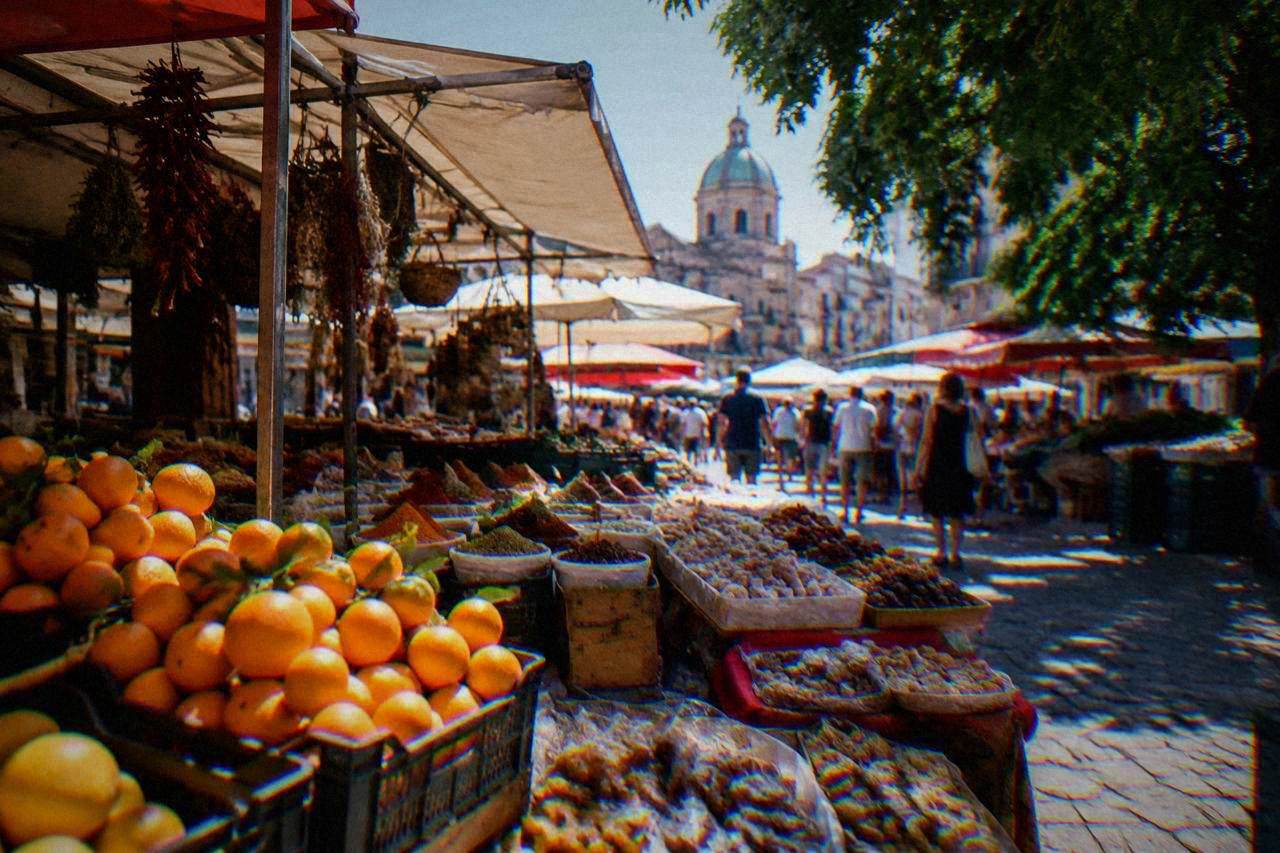
Ballarò sits in the Albergheria side and is the food market, the one to walk with a bag rather than a plan. Italia.it, the official national tourism site, lists it open Monday to Saturday from about 7:00 in the morning, with Sunday trading limited to the morning. The Capo market on the north side runs mornings, Monday to Saturday, and does not operate on Sundays. Vucciria, in the Loggia district near the harbour, trades by day and turns into the loudest of the city's evening street scenes, as the nightlife listings describe. Read more in the dedicated Palermo markets guide.
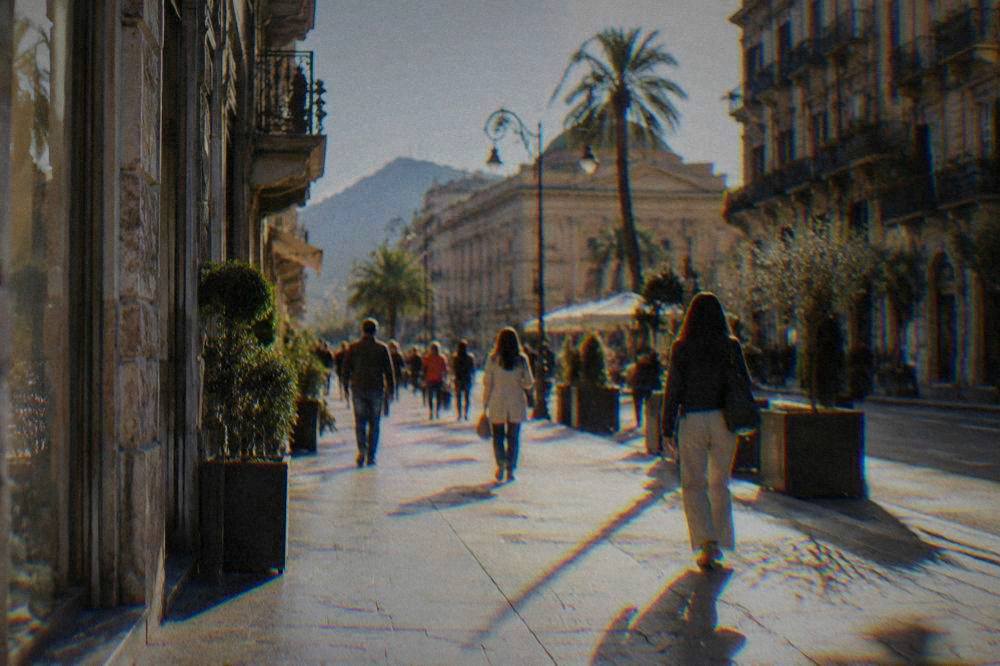
Via Maqueda is the spine that connects them all, running from the railway station at Palermo Centrale up to the Teatro Politeama. The municipal tourism portal lists shops, cafes and civic buildings along its whole length, and the pedestrian stretches make it the natural route for a shop-to-shop walk. North of the theatre, Via Libertà and the streets around Piazza Castelnuovo hold the more formal stores and the area the tourism portal labels Politeama. For how the districts differ at street level, see where to stay in Palermo, which maps the same quarters for sleeping as for spending.
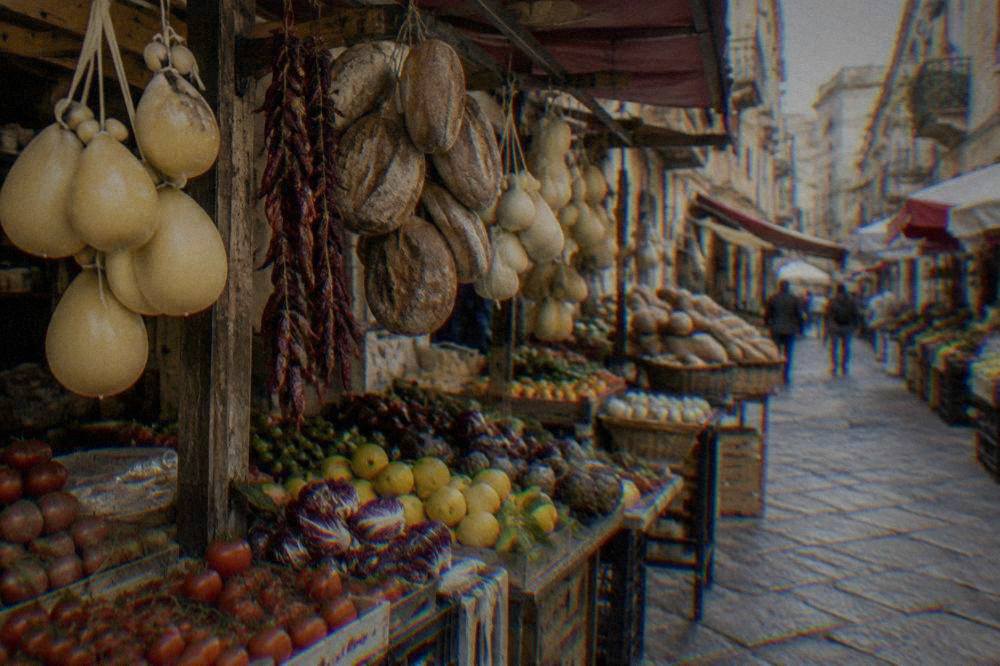
The official market hours, as the tourism and Italia.it pages give them:
| Market | District | Days | Hours as listed |
|---|---|---|---|
| Ballarò | Albergheria | Monday to Saturday | from about 7:00, listings vary on the close |
| Ballarò | Albergheria | Sunday | morning only, from about 7:00 |
| Capo | Capo | Monday to Saturday | mornings, from about 7:00 |
| Capo | Capo | Sunday | not operating |
| Vucciria | Loggia | Monday to Saturday | daytime market, evening food and bar scene |
A market walk with a guide is the easiest way to buy with confidence, since the guide names the stalls and the produce. The Palermo markets guide lists what to expect at each one, and a guided tasting walk covers the same lanes with food included.
What To Buy In Palermo: Sicilian Souvenirs Worth Carrying Home
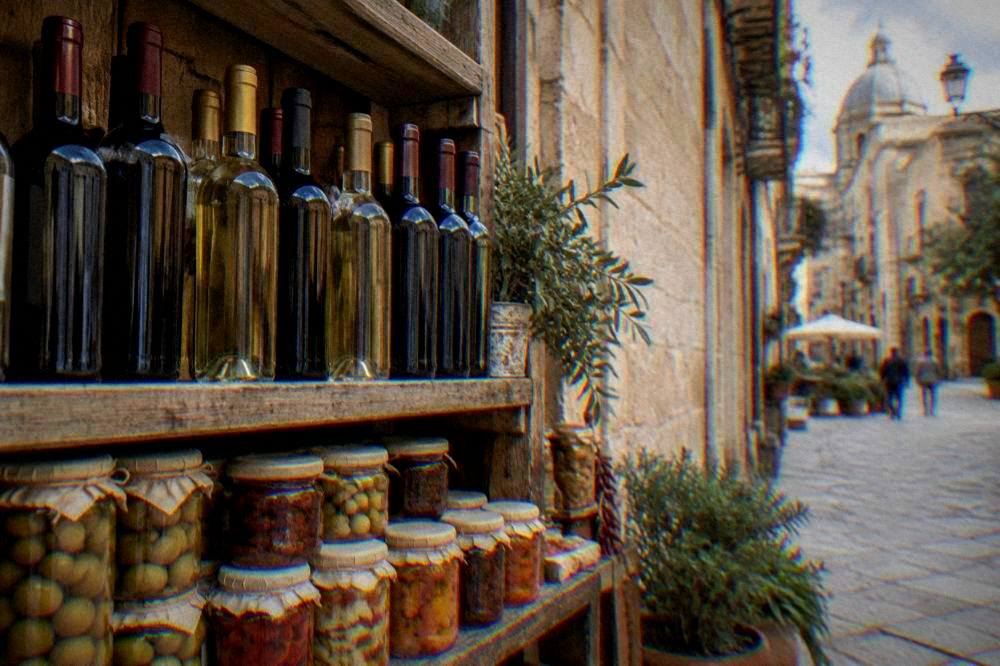
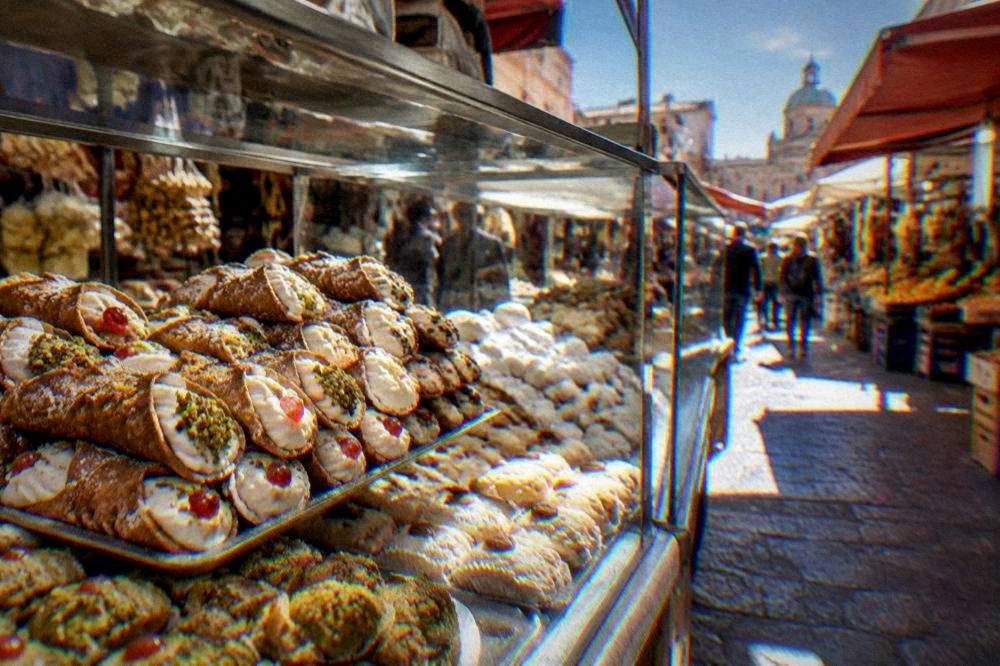
The souvenirs that genuinely come from Palermo and its region are Sicilian puppet theatre marionettes and related crafts sold at the International Puppet Museum, Sicilian wines and olive oils from the city's wine shops, almond sweets and cannoli from the pastry counters, pistachio products of every kind, and the ceramics and mosaics sold around Monreale and Cefalu on a day trip. The Puppet Museum on Piazzetta Antonio Pasqualino, a short walk from the Quattro Canti, is the reference point for the island's puppet tradition, and its own pages list museum entry at 5 EUR full and 3 EUR reduced, with combined show and museum tickets at 10 EUR and 8 EUR.
Wine is the other serious buy. Sicily bottles Nero d'Avola, Etna reds and Marsala within driving distance of the city, and a tasting before buying is the honest way to choose. A guided tasting at a Bottega in the old town pours Sicilian wines with snacks and gives a working vocabulary before a purchase, and the same producers' bottles then travel home in checked luggage. The Palermo restaurants guide covers the same products as they appear on the plate.
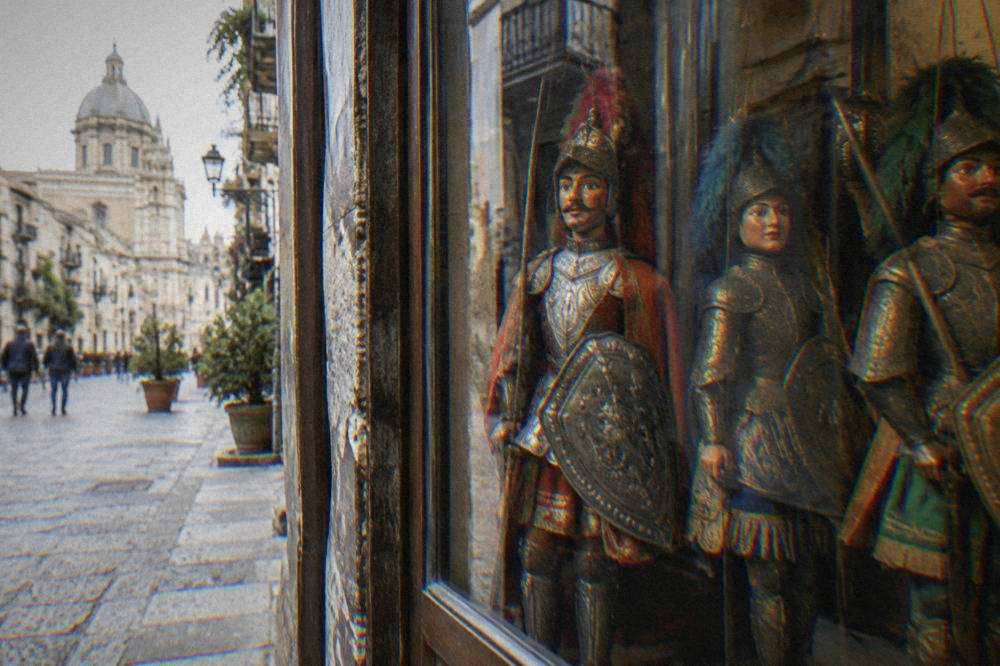
Food souvenirs need a language note. The Accademia della Crusca, Italy's reference body for the language, accepts both arancina and arancino, with Palermo and western Sicily using the feminine arancina, typically round, while Catania and the east use the masculine form. A sign in Palermo that reads arancina is the local spelling, not an error. Sfincione, panelle and cannoli belong to the same counter culture, and the street food guide on this site lists where each is sold. Tap water in the city is drinkable, which AMAP, the water utility, states outright, so a bottle refilled at the hotel pairs with a day of market walking.
Books, prints and museum gifts cluster where the museums do. The Salinas Archaeological Museum, the Galleria d'Arte Moderna and Palazzo Steri all sit within the old centre or one mandamento away, and each runs its own bookshop on the Italian museum pattern. Entry prices from the official pages: Salinas 7 EUR full and 3.50 reduced, closed Monday; GAM 10 EUR full and 8 reduced, daily 9:30 to 18:30; Steri 8 EUR full with a guided tour included. Palazzo Abatellis, the regional gallery in the Kalsa, is closed or closing for about eighteen months of climate-control works from mid-July 2026, with no reopening date announced, so its shop is not part of a current shopping plan.
The Teatro Massimo, whose guided tour costs 14 EUR full and 7 EUR under 26 with a 36 EUR family ticket on the opera house's own page, keeps a shop aimed at opera and theatre gifts, and the building itself is one of the city's reference sights. A tour ticket is the natural way in, and the listing gives the current hours.
A private palazzo visit adds the antique-and-craft dimension that street shopping cannot. Palazzo Conte Federico, one of the city's lived-in family palaces, opens to visitors and shows the kind of furnished interiors and collection pieces that explain what the antiques in Palermo's shops are imitating.
How Much Does Shopping In Palermo Cost?
A realistic daily shopping budget in Palermo is 3.50 EUR for a day of AMAT buses and trams to reach the markets and Mondello, about 5 to 10 EUR per person for a market lunch of street food, 5 EUR for the Puppet Museum, 14.50 EUR for the combined Palazzo dei Normanni and Palatine Chapel ticket if the palace shop is on the list, and whatever the wine budget allows, since a bottle from a city shop is a purchase to check against the shop's own shelf price. The fixed, published figures are the transport and entry ones; goods prices are set by each stall and shop and are always worth reading on the tag or the posted list.
The city's transport and entry figures that a shopping day actually uses:
| Item | Price | Source |
|---|---|---|
| AMAT single ticket, 90 minutes | 1.40 EUR | AMAT fares page |
| AMAT ticket bought onboard | 1.80 EUR | AMAT fares page |
| AMAT day ticket | 3.50 EUR | AMAT fares page |
| AMAT three-day ticket | 8.00 EUR | AMAT fares page |
| Puppet Museum entry | 5 EUR, 3 EUR reduced | museum page |
| Teatro Massimo guided tour | 14 EUR, 7 EUR under 26 | opera house page |
| Palazzo dei Normanni and Palatine Chapel | 14.50 EUR, 12.50 reduced | official visit page |
Two costs sit behind every purchase decision. The tourist tax applies to non-residents for a maximum of four consecutive nights, and the municipal regulation sets it per night by accommodation rating, collected by the hotel or host, so the amount appears on the booking rather than in a shop. And the coperto, the cover charge, is legal in Italy when it is printed on the menu, which makes the printed menu the reference document in any cafe where a shopping break turns into a full meal. Tipping on top is not obligatory.
| Accommodation type | Tourist tax per night, from 1 July 2025 |
|---|---|
| 1 star | 3 EUR |
| 2 star | 3.50 EUR |
| 3 star | 4 EUR |
| 4 star | 4.50 EUR |
| 5 star | 5 EUR |
| Short-term rental | 4 EUR |
The amounts are reported figures for the 2025 tariff and should be confirmed at booking. Note that the tax is capped at four consecutive nights, a limit the municipal regulation states directly.
A market with a guide costs money and saves mistakes, and the Ballarò tasting walk pairs the shopping street with the food in one outing.
When Is The Best Time Of Year To Shop In Palermo?
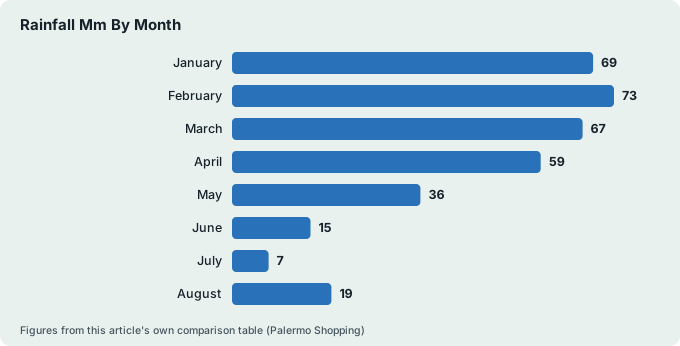
The best months for shopping in Palermo are April, May, October and November, when the climate table's modelled 1991 to 2020 normals show monthly means of 15.3, 19.1, 20.1 and 16.1 C, comfortable for long market walks, while July at 26.2 C and August at 26.8 C push the serious shopping into the mornings and the evenings, exactly when the markets themselves trade. October is the wettest month in the table at 81 mm and July the driest at 7 mm, so a shoulder-season day trades a little rain for empty lanes.
The full table, from the modelled ERA5 normals for 1991 to 2020:
| Month | Mean C | Rainfall mm |
|---|---|---|
| January | 11.3 | 69 |
| February | 11.2 | 73 |
| March | 13.0 | 67 |
| April | 15.3 | 59 |
| May | 19.1 | 36 |
| June | 23.4 | 15 |
| July | 26.2 | 7 |
| August | 26.8 | 19 |
| September | 23.4 | 61 |
| October | 20.1 | 81 |
| November | 16.1 | 67 |
| December | 12.8 | 72 |
The calendar also matters. The Festino of Saint Rosalia, the patron saint whose relics were found on Monte Pellegrino in 1624, runs each July, 10 to 15 July in 2026 with the chariot procession on the 14th and the silver urn procession on the 15th, and it fills the Cassaro with stalls and crowds. Christmas shopping runs against the calendar of the churches, and Easter Sunday falls on 28 March in 2027. For the timing question in full, the best time to visit Palermo guide carries the detail.
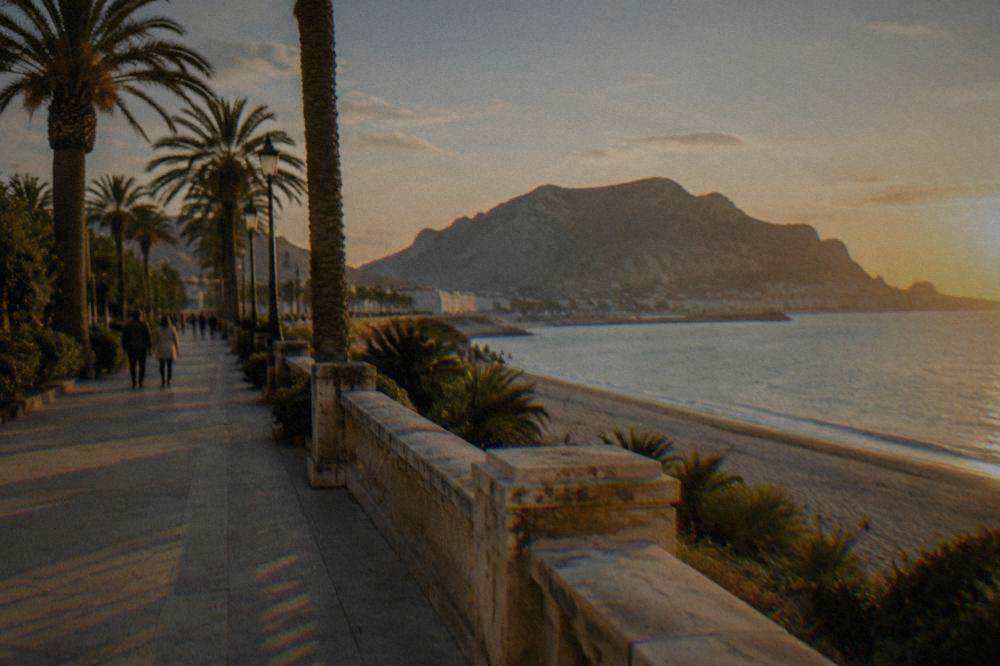
Mondello, the beach district the municipal page describes as a fishing village with a 1.5 km beach of fine white sand and villas in Liberty style, is a summer shopping destination by nature: its boutiques and beach concessions run with the season. The 2026 season there ran a low-cost beach access at 6 EUR for basic services, but the concession area's contract is in a court dispute, so check locally before planning a beach-and-shopping day around it. No Palermo-area beach holds a 2026 Blue Flag, a fact worth knowing before any beach marketing is taken at face value.
How To Get Around Palermo For A Shopping Day
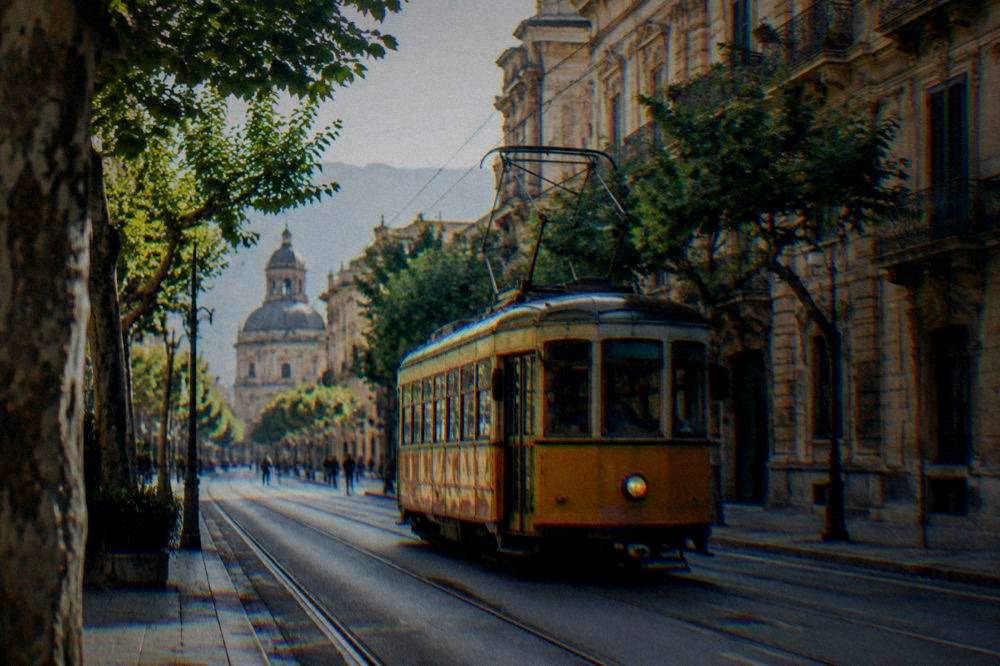
The AMAT network is the shopping-day transport in Palermo, with a 1.40 EUR single ticket valid 90 minutes from validation, a 3.50 EUR day ticket and an 8.00 EUR three-day ticket covering buses and the four tram lines, while the Prestia e Comande airport bus costs 6 EUR one way bought online and runs every 30 minutes to the Politeama, Via Roma and Palermo Centrale, so an arrival day can carry shopping bags straight from the airport corridor. The AMAT fares page publishes all of these, and the rule that matters is procedural: buy before boarding where possible, because the onboard single costs 1.80 EUR, and validate at once on the first vehicle.
There is no metro in Palermo. What exists is the Passante ferroviario, a suburban rail service run by Trenitalia, whose Line A connects Palermo Centrale to the airport, and a Giachery to Politeama section is planned to open from November 2026, which would put a rail stop beside the main shopping quarter. Until it opens, the buses, trams and the airport coach do the work. The getting around Palermo guide carries the full picture.
| Journey | Service | Frequency and time | Fare |
|---|---|---|---|
| Airport to city centre | Prestia e Comande bus | every 30 min, about 50 min | 6 EUR online, 6.50 EUR onboard |
| Airport return | Prestia e Comande bus | 10 EUR online, 11 EUR onboard | same ticket pair |
| Airport to Palermo Centrale | regional train, Line A | about an hour | fare on the Trenitalia ticket page |
| Centre to Mondello | AMAT summer line 806 | frequent in the summer season | 1.40 EUR, day ticket valid |
| Centre to Monreale | AMAT 389 from Piazza Indipendenza | about every 40 minutes, 47 runs a day | 1.40 EUR |
Arriving by air with shopping in mind has its own arithmetic, and the Palermo airport guide covers the terminals, the United seasonal nonstop from Newark extended to 17 December 2026, and the arrival-buffer advice of two hours for Schengen flights and three for non-Schengen. The airport-to-centre options, including the reported fixed taxi zone rates, are laid out in Palermo airport to city centre.
Shopping Day Trips From Palermo: Monreale, Cefalu And The West
The shopping day trips that work from Palermo are Monreale, 16 minutes away by road and served by the 1.40 EUR AMAT 389 bus for its cloister and cathedral quarter, Cefalu, 65 minutes by road or 39 to 60 minutes by train with 19 to 24 direct services a day, for its seafront tourist lanes, and the Trapani and Erice pair, 87 and 96 minutes by road, for salt, almond wares and the cable-car ride at 9 EUR one way and 15 EUR return. The cloister at Monreale costs 8 EUR full and 4 EUR reduced, and its cathedral is a separate visit.
| Destination | Road time from Quattro Canti | Rail alternative | Entry figures |
|---|---|---|---|
| Monreale | 16 min | AMAT 389 bus, about every 40 min | cloister 8 EUR, 4 EUR reduced |
| Cefalu | 65 min | train, 39 to 60 min | cathedral free, towers and museum 10 and 13 EUR |
| Mondello | 27 min | AMAT line 806 in summer | free public beach stretches |
| Segesta | 64 min | Segesta Autolinee bus routes | park 14 EUR, 7 EUR reduced |
| Trapani | 87 min | Segesta Autolinee and FlixBus | salt museum free |
| Erice | 96 min | bus to Trapani, then cable car | cable car 9 EUR one way, 15 EUR return |
| Agrigento | 2 h 16 | direct regional train, about 2 h | temples 14 EUR, 7 EUR reduced |
Monreale rewards the shopper twice over: the cloister bookshop and the town's craft workshops sit beside one of the sites of the UNESCO Arab-Norman Palermo inscription of 2015, and the 389 bus back to Piazza Indipendenza runs late enough for a full afternoon. A transfer-and-free-time option handles the journey while leaving the browsing unstructured.
Cefalu adds the sea to the same formula. Its cathedral entry is free, the paid tower and museum itineraries cost 10 and 13 EUR, and the La Rocca climb costs 5 EUR, so a shopping day there can carry a walk as well. The Palermo to Cefalu guide covers the trains and the town in detail, and the Mondello area page does the same for the city's own beach shops.
Practical Rules For Buying: Receipts, Refunds And Street Sense
The rules that protect a shopper in Palermo are Italian and national: a receipt must be issued for a purchase and the shop must give it, the coperto cover charge is legal only when printed on the menu, goods bought in shops carry the consumer's statutory return rights while market stall purchases are a cash-and-agreement matter between buyer and seller, and the emergency number is 112. Paying by card is normal in shops and rarer at the smallest stalls, so a day of market buying runs partly on cash.
The US State Department's September 2026 advisory for Italy notes that petty crime, including pickpocketing and bag-snatching, is common in popular tourist locations and on public transport, and the UK FCDO says the same about city centres and major attractions. A crowded market is exactly that setting, so the practical checks are a zipped bag held in front, a wallet not in a back pocket, and a phone not on a cafe table. The is Palermo safe guide carries the full advisory wording.
Short-term rental rules matter to shoppers who cook. A legal rental must display a CIN national code, hosts must register guests through the Alloggiati Web system within 24 hours, and identity is checked in person, so a keybox with no host contact is a warning sign for anyone booking a market-flat stay. The Palermo apartments page works through what that means for a self-catering shopping trip.
For luggage, the arithmetic of souvenirs is weight. Wine bottles, ceramics and marionettes all travel better in hold luggage than in a cabin bag, and the airport buffer advice, two hours before a Schengen flight and three before a non-Schengen one, comes from the airport operator's own advisory and gives the time to repack at check-in. A private transfer from the airport, bookable in advance, removes the bus-and-bags calculation on the way in, and the same service runs on the way out.
Common Questions About Shopping In Palermo
What should I buy in Palermo?
Sicilian puppet marionettes from the International Puppet Museum quarter, Sicilian wine and olive oil after a tasting, almond sweets and cannoli from the pastry counters, pistachio products, and ceramics bought on a Monreale or Cefalu day trip. The Accademia della Crusca accepts both arancina and arancino, and Palermo uses arancina, so food labels follow the local spelling.
What time do Palermo markets open?
Italia.it lists Ballarò from about 7:00 in the morning, Monday to Saturday, with Sunday mornings only. The Capo market runs Monday to Saturday mornings and does not operate on Sundays. Vucciria trades by day and turns into an evening street scene. Never treat a closing hour as fixed; listings vary.
Is shopping in Palermo expensive?
Fixed published costs are low: a 3.50 EUR AMAT day ticket covers transport, a Puppet Museum entry is 5 EUR, and street food at the markets is a modest per-person lunch compared with a restaurant. Goods prices are set by each stall and shop, so the shelf tag or posted list is the reference. The coperto is legal when printed on the menu, and tipping is not obligatory.
Can I shop and go to the beach on the same day in Palermo?
Yes. Mondello is 27 minutes by road from the Quattro Canti and the AMAT summer line 806 serves it, with free public stretches and paid lidos side by side. The 2026 season ran a low-cost access at 6 EUR, but the concession area's contract is in a court dispute, so check locally before planning around it.
Do shops in Palermo take credit cards?
Shops and museums do. The smallest market stalls may prefer cash, so a shopping day at Ballarò or the Capo runs partly on notes and coins. Always take the receipt, which the shop must issue.
How To Plan A Full Palermo Shopping Trip
A shopping-focused Palermo trip works well across two or three days: one morning at Ballarò and the Capo with an afternoon on Via Maqueda, one day pairing the museum shops of the centre with a Monreale afternoon by the 1.40 EUR 389 bus, and one summer option at Mondello, with an 8.00 EUR three-day AMAT ticket covering every non-airport journey. The how many days in Palermo question has its own guide, and the answer scales with how many day trips join the shopping.
The practical order of reading on this site: the Palermo markets page for the stalls, the Palermo street food page for what to eat between buys, the Palermo Sicilian desserts page for the pastry counters, and the day trip pages for Monreale, Cefalu and Trapani. Between them, they cover every purchase this guide names, from a round arancina eaten on the spot to a marionette carried home in hold luggage.
The second set of picks below rounds up the three services a shopping trip uses most: the Monreale transfer, the guided Ballarò market walk and the private airport transfer that starts and ends the whole thing without a bus timetable.
However the days are arranged, the habit that serves a Palermo shopper best is reading the posted price: the tag on the stall, the menu with the printed coperto, the fares page of the operator, the ticket page of the site. Every figure in this guide comes from one of those pages, and every purchase worth making in this city has one behind it.