Palermo Apartments
An apartment in Palermo puts a kitchen, a market around the corner and the four old mandamenti outside the door. Here is how the districts compare, what the law requires of hosts, and what the tourist tax adds per night.
Short answer
The historic centre's four districts, Capo, Albergheria, Kalsa and Loggia, hold most short-stay apartments; the tourist tax for a short-term rental is about EUR 4 per night for a maximum of 4 nights; and a legal listing must show a CIN code and check your passport in person at check-in.
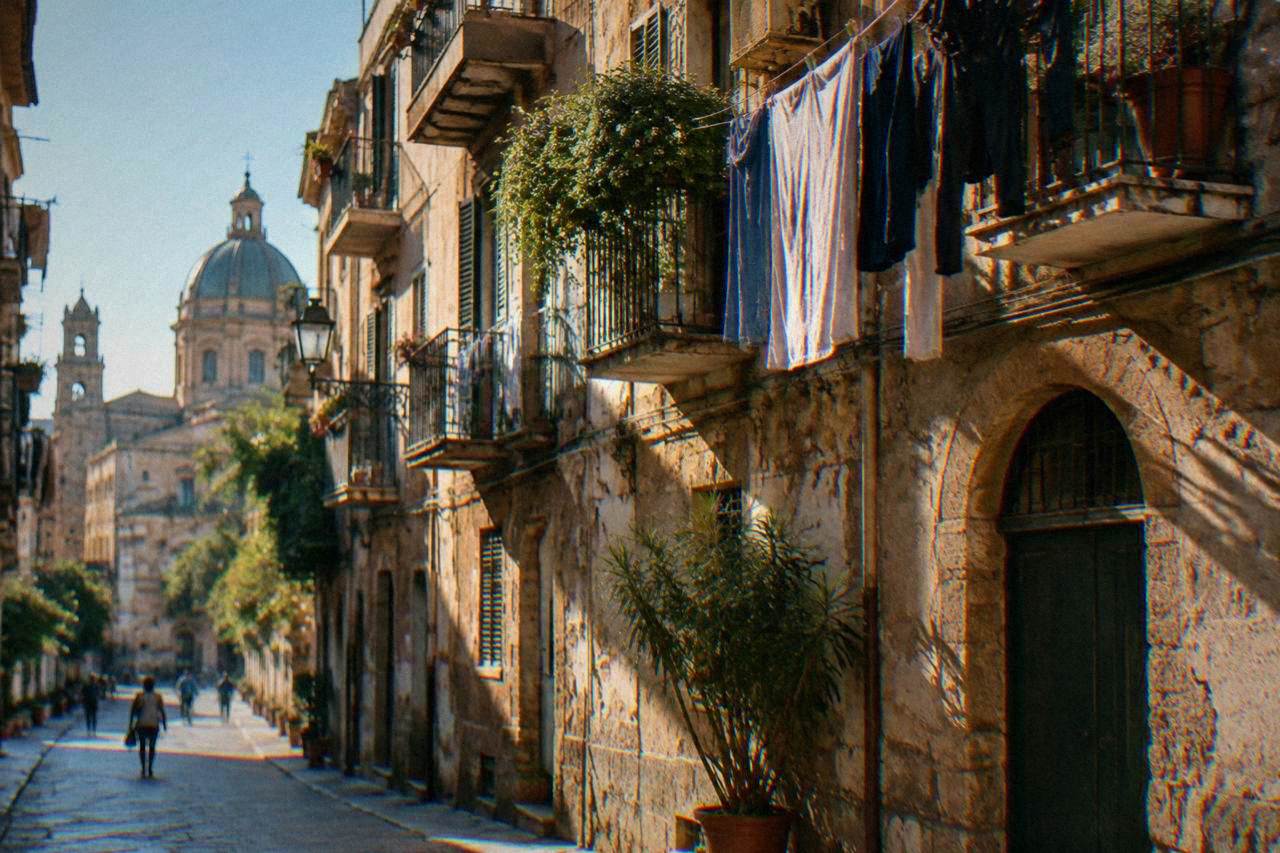
Palermo, the coastal capital of Sicily on the Tyrrhenian Sea, has a rental stock concentrated in one of the most walkable historic centres in Italy. The crossing of Via Maqueda and Corso Vittorio Emanuele at the Quattro Canti cuts the old town into four mandamenti, Capo, Albergheria, Kalsa and Loggia, and it is inside these four districts, plus the Politeama belt to the north-west, that nearly every short-stay apartment in the city sits. A self-catering base here means a market within a short walk, a kitchen for the things you buy at it, and the UNESCO-listed Arab-Norman monuments, inscribed in 2015, close enough to reach without a bus. This guide, from the editorial desk behind Palermo Italy Travel Guide, covers how the districts compare, what the law requires of a legal listing, what the tourist tax adds, and how a Palermo apartment works as a base for the island's west.
Which Area Of Palermo Is Best For An Apartment?
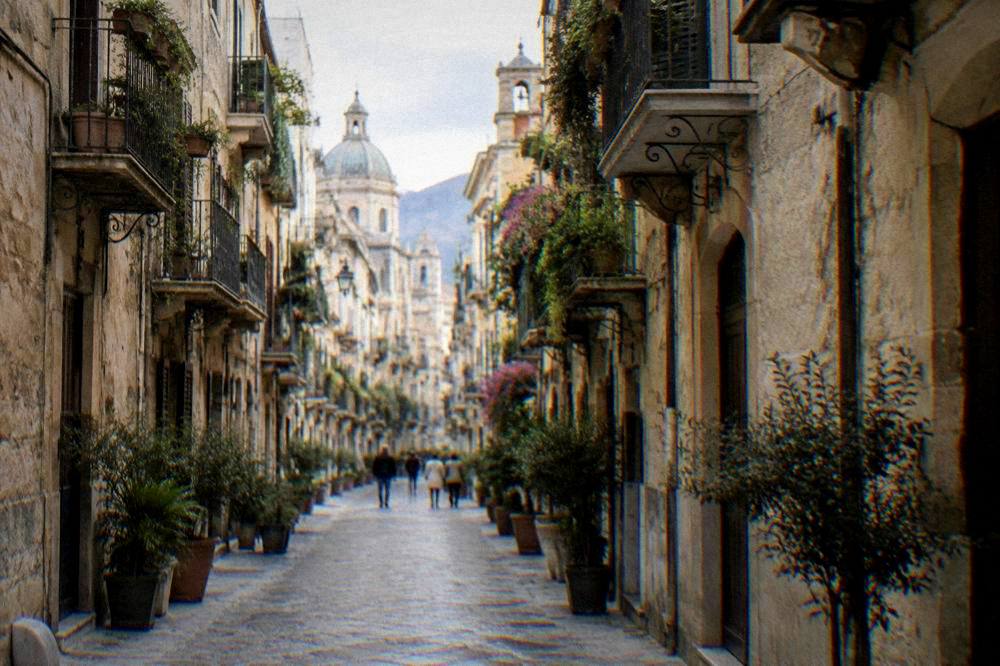
The Kalsa suits visitors who want galleries, squares and a quieter night, Albergheria and the Capo side put you beside the street markets and the Cathedral, the Loggia district sits between the port and the centre, and the Politeama belt to the north-west offers later streets, wider pavements and faster airport-bus access. All four mandamenti are inside the ZTL, the camera-enforced limited-traffic zone, so a car is a liability rather than an asset in any of them, and the same tram and bus fares apply everywhere. The municipal tourism portal describes each mandamento by its most important civil building, which is why the names appear on listings: Capo or Monte di Pietà, Albergheria or Palazzo Reale, Kalsa or Tribunali, and Loggia or Castellammare.
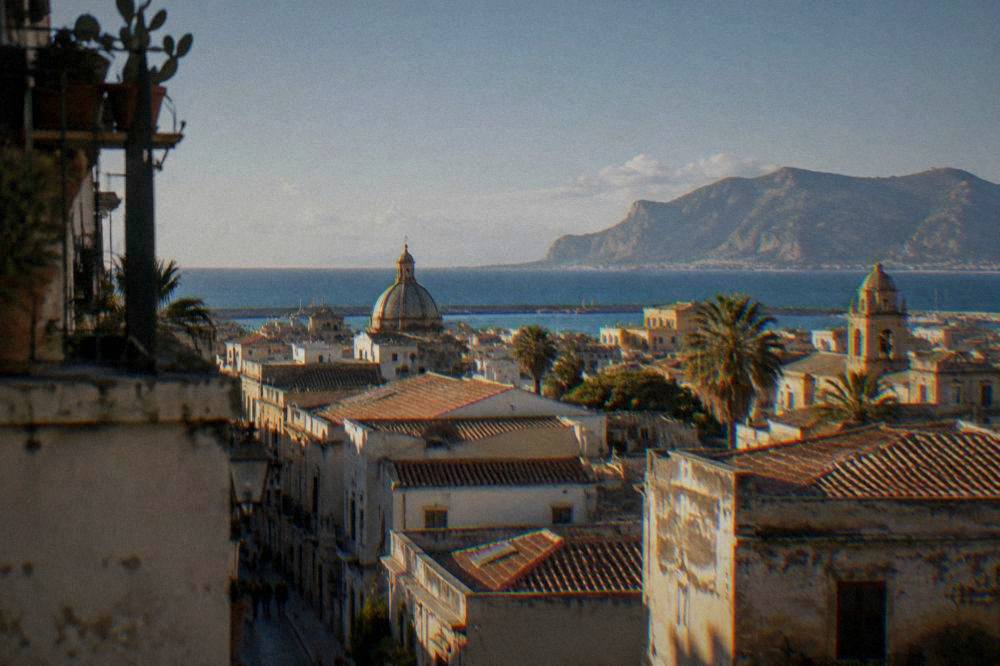
The Kalsa, in the south-east of the old town, carries the Arabic name Al Halisah in the municipal listings and holds Palazzo Abatellis, which is closing for about 18 months of climate-control works from mid-July 2026 with no reopening date announced, so treat that quarter's museum draw as paused. What remains is a district of small squares and workshops a short walk from the Foro Italico waterfront. Albergheria, running from the Quattro Canti toward the Palazzo dei Normanni, is the palace district, and its ticket page lists a full price of 14.50 EUR with the royal apartments included. The Capo side clusters around its market street, open in the mornings and closed on Sundays, with the Cathedral at its edge; the Loggia district, toward La Cala harbour, is the flattest walk to the cruise terminals and the evening life of the Vucciria.
Deciding between a hotel room and a whole flat is a different question, covered in detail on where to stay in Palermo and the hotel-focused Palermo hotels guide; an apartment wins on kitchen, length of stay and market access, a hotel wins on daily service and a front desk that holds bags.
What Does A Palermo Apartment Cost Per Night, And What Extra Costs Apply?
Nightly rates vary by season, size and district, and no single figure describes the market, but the fixed extra is the tourist tax: for a short-term rental it is about 4 EUR per person per night, capped at a maximum of 4 consecutive nights, with the amount collected by the accommodation and confirmed at booking. The municipal regulation sets exemptions in its article 7, so children and some other categories may not pay, and the per-night scale for hotels runs from about 3 EUR at one star to about 5 EUR at five stars, which matters if you weigh an apartment against a hotel of known class. Print no rate as fact for any listing: the price on the listing is the only price.
The rule about the cap deserves a line of its own. The tax applies to a maximum of 4 consecutive nights, so a five-night stay pays four and the fifth is exempt; the collection happens through the host, not at a municipal office, and the amount is confirmed at booking rather than on arrival.
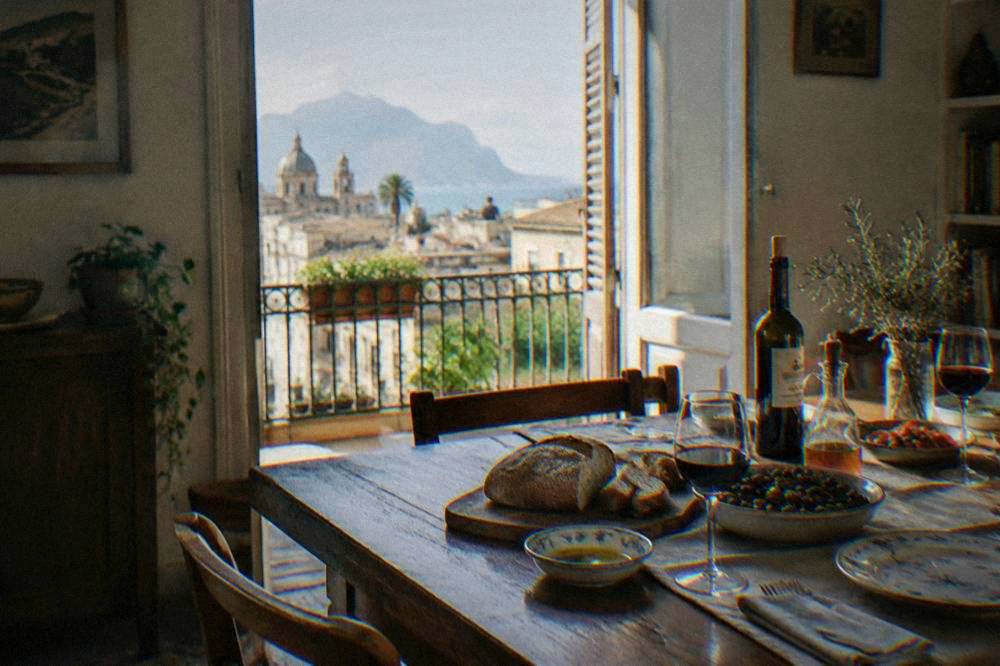
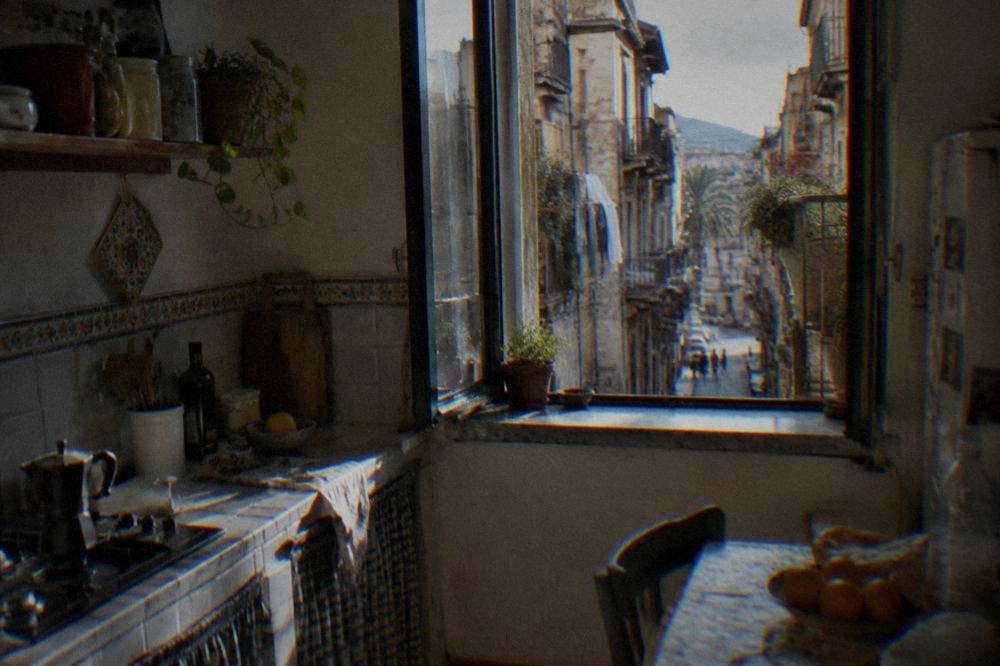
One practical saving an apartment unlocks is the kitchen. The street-food economy of Palermo, from arancine to sfincione to panelle, is cheap by any standard, and the Accademia della Crusca accepts both arancina, the Palermo form, and arancino, the Catania form; a market run plus a kitchen covers more meals for less than any restaurant plan. The Palermo street food guide and the market guide list what to buy and where.
| Cost item | What applies | Where to confirm |
|---|---|---|
| Tourist tax, short-term rental | About 4 EUR per person per night, max 4 consecutive nights | Host, at booking |
| Tourist tax, hotels | About 3 EUR (1 star) to about 5 EUR (5 star) per night | Hotel, at booking |
| Tap water | Suitable for drinking, per AMAP | No cost, no confirm needed |
| Coperto in restaurants | Legal when printed on the menu; tipping is not obligatory | The printed menu |
| Airport bus to the centre | 6 EUR one way online, 10 EUR return, 6.50 EUR and 11 EUR onboard | Prestia e Comande timetable |
How Do You Book Legally, And What Happens At Check-In In Palermo?
Every legal short-term rental in Italy must display a CIN, the national identification code, on the building and in every advertisement, and the host must register you through the police Alloggiati Web system within 24 hours of arrival, after checking your identity in person against a physical document. A listing without a CIN is a listing without a national code, and the tourism ministry's rules made the code mandatory from 2 November 2024. The in-person identity check matters for how you plan arrival: a bare keybox with no host present is not compliant with the rules, so expect to meet someone, which is a scheduling detail worth confirming before you book a late landing.
The CIN is requested through the national tourism database with a digital identity, and it must appear in the announcement you are reading. When you compare listings, checking for the code is the single fastest legality test available to a visitor. The second test is the registration: a compliant host will ask for passport details and meet you. None of this is unusual in Italy, and none of it costs extra; it is paperwork the host carries, not you.
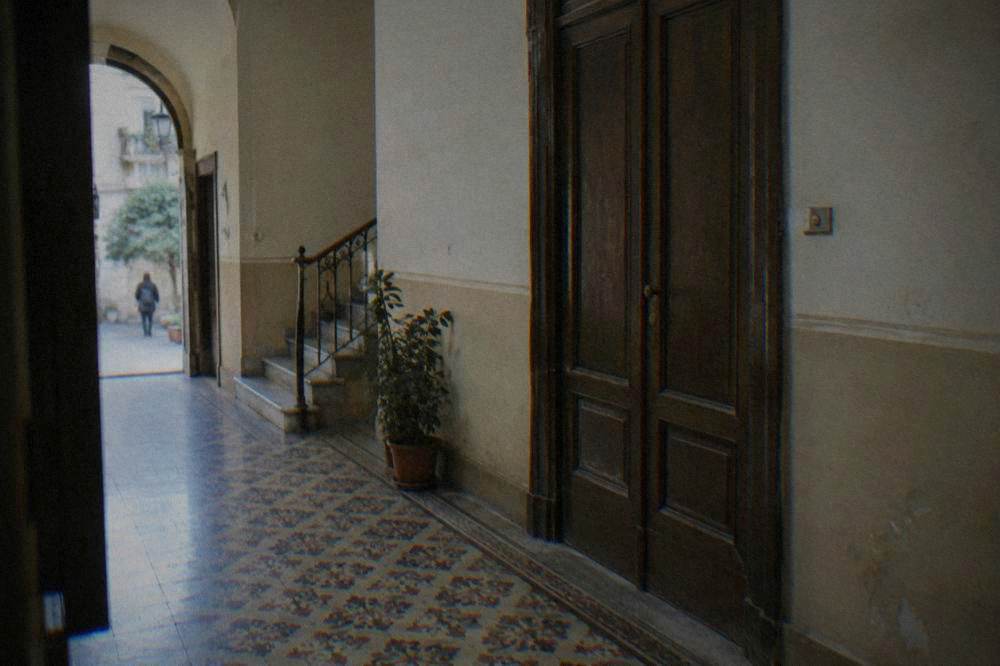
Booking an apartment also changes how you should plan the first day. There is no front desk holding luggage while the flat is cleaned, so a morning arrival usually means storing bags or timing the flight against check-in; the airport logistics are covered in the next section, and the wider question of how long to stay is answered in how many days in Palermo.
To find your feet on arrival day, book a free welcome walking tour here.
| Rule or check | What it means for you |
|---|---|
| CIN code | Must appear on the listing and on the building; a listing without it has no national code |
| Alloggiati Web registration | Host files your details within 24 hours of arrival |
| Identity check in person | Host checks your document against a physical ID; keybox-only check-in is not compliant |
| Tourist tax | Collected by the host, about 4 EUR per night for a rental, max 4 nights |
How Do You Get From Palermo Airport To An Apartment In The Centre?
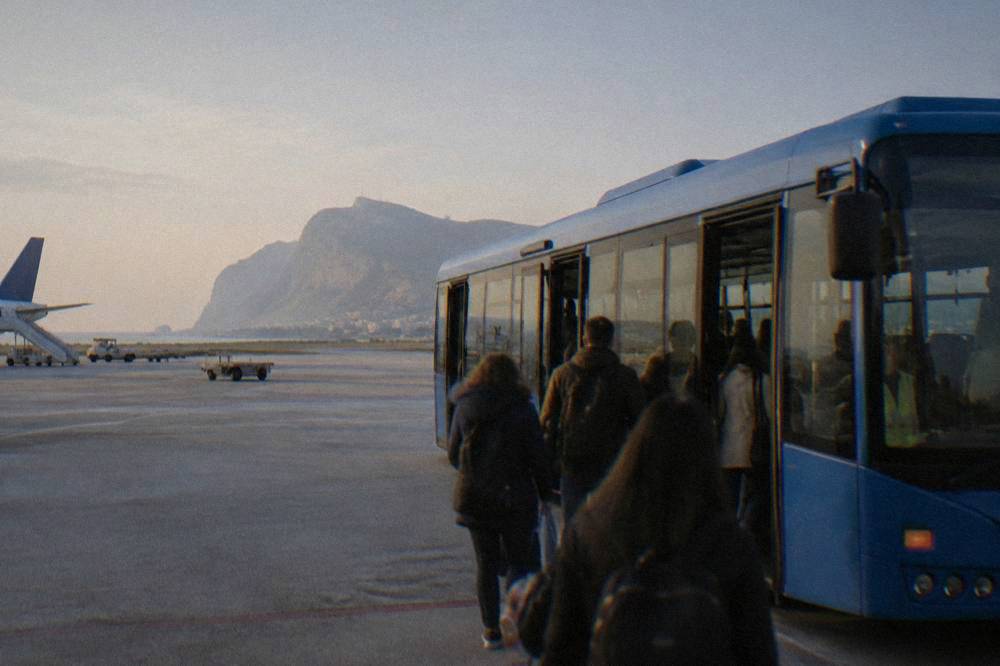
The Prestia e Comande airport bus runs every 30 minutes, takes about 50 minutes to the centre, and costs 6 EUR one way or 10 EUR return online, with stops at Politeama, Via Roma and the Palermo Centrale station area, which covers every apartment district in this guide. Onboard the fare is 6.50 EUR one way and 11 EUR return, and children from 3 to 12 pay 4 EUR one way. Falcone Borsellino airport sits about 35 km by road from the centre, and the airport-to-city journey in full detail is covered in Palermo airport to city centre.
The stops map neatly onto the districts. Politeama serves the Politeama and Libertà belt; Via Roma drops you on the edge of the Albergheria and Loggia sides; the Centrale stop serves everything east of the station, including the Kalsa within a flat walk. If your apartment sits deep in the old town, where the streets are narrow and a taxi cannot always reach the door, plan the last stretch as a walk with luggage on the first trip, and ask the host which stop they recommend before you fly.
A regulated white taxi is the alternative, with fixed zone rates reported for the 2025 tariff at 39 EUR for the port side, 44 EUR for the historic centre and 50 EUR for the Foro Italico side, each up to four passengers with luggage; confirm the zone rate with the driver before you set off. A regional train also runs from the airport to Palermo Centrale in about an hour, with the fare shown on the Trenitalia ticket page. The GESAP advisory asks passengers to arrive 2 hours before Schengen flights and 3 hours before non-Schengen flights on the way out, which sets the alarm clock on departure day.
Do You Need A Car With A Palermo Apartment?
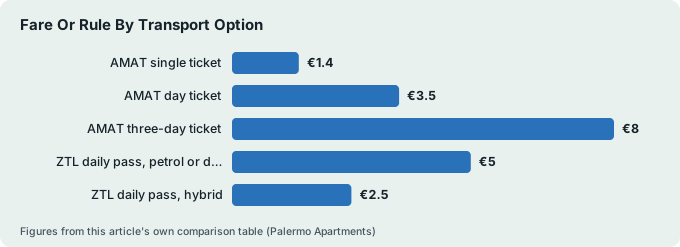
No, and in the four historic districts a car is an active cost: the ZTL central zone is camera-enforced, access without a permit is fined, and a daytime pass costs 5 EUR per day for petrol and diesel cars, 2.50 EUR for hybrids and nothing for electric, bought through the municipal ZTL portal. The zone runs weekday daytime hours with extra Friday and Saturday evening hours that change by season, so check the official portal for the days you are there. Parking on blue lines is paid by app. The A19 to Catania and the A29 west are toll-free, which matters only once you have decided to drive out of the city at all.
The alternative to a hire car is the transit network, and it is cheap. AMAT sells a single ticket for 1.40 EUR valid 90 minutes, a day ticket for 3.50 EUR, a two-day for 6 EUR, a three-day for 8 EUR and a seven-day for 16.50 EUR; buying before boarding saves the onboard surcharge, and tickets validate on first use. Four tram lines converge on the centre, there is no underground metro, and a suburban rail line, the Passante, runs from Centrale to the airport, with a new Giachery to Politeama section planned for service from November 2026. The full picture, including the Mondello bus, is in getting around Palermo.
For a day or two of touring beyond the transit net, a transfer-inclusive excursion can replace a rental entirely. The Monreale, Catacombs and Mondello experience covers three of the classic half-day escapes in one booked trip, and it starts from the city, so no ZTL pass and no parking search: Check availability.
| Transport option | Fare or rule | Note |
|---|---|---|
| AMAT single ticket | 1.40 EUR, 90 minutes | 1.80 EUR onboard |
| AMAT day ticket | 3.50 EUR | Whole network, day of validation |
| AMAT three-day ticket | 8.00 EUR | Whole network, to end of third day |
| ZTL daily pass, petrol or diesel | 5 EUR per day | Via the municipal portal |
| ZTL daily pass, hybrid | 2.50 EUR | Electric vehicles free |
Which Month Is Best For Renting An Apartment In Palermo?
The climate table, modelled ERA5 normals for 1991 to 2020, puts July at a mean of 26.2 C and August at 26.8 C with only 7 and 19 mm of rain, and October as the wettest month at 81 mm, so spring and early summer pair warm weather with a working kitchen and market scene while July and August lean hot for an un-airconditioned flat. Confirm air conditioning for any summer booking: the table describes the city, not the apartment. February is the coldest month at a mean of 11.2 C, and the same months that are quiet for visitors are the months when heating, not cooling, is the question to ask a host.
An apartment rental changes the seasonal calculus more than a hotel does. In the July Festino of Saint Rosalia, held each July from the 10th to the 15th with the chariot procession on the 14th and the silver urn procession on the 15th, the old centre fills in the evenings, and a flat in the Capo or Loggia districts puts you above the festivities rather than commuting into them. Whether that is a feature or a bug is a matter of taste; ask the host which the street is. The seasonal question in full, month by month, is covered in the best time to visit Palermo and Palermo weather.
| Month | Mean C | Rain mm | Apartment note |
|---|---|---|---|
| February | 11.2 | 73 | Coldest mean; ask about heating |
| April | 15.3 | 59 | Mild, market season in full swing |
| July | 26.2 | 7 | Festino mid-month; confirm air conditioning |
| August | 26.8 | 19 | Warmest mean of the year |
| October | 20.1 | 81 | Wettest month; wet-weather plans useful |
Which Day Trips Work From A Palermo Apartment Base?
Palermo works as a base for Monreale, Cefalu, Mondello, Segesta, Erice, Trapani and Agrigento, with free-flow driving times from the Quattro Canti of 16 minutes to Monreale, 27 to Mondello, 65 to Cefalu, 64 to Segesta and just over two hours to the Valley of the Temples, while trains reach Cefalu in 39 to 60 minutes and Agrigento direct in about two hours. That spread is exactly what a kitchen-equipped base is for: long days out, dinners in. Each destination has its own guide on this site, starting with Monreale and Cefalu.
Monreale is the closest and the easiest by transit: AMAT line 389 leaves Piazza Indipendenza about every 40 minutes on a 1.40 EUR city ticket, and the cloister there costs 8 EUR full and 4 EUR reduced, separate from the cathedral. Cefalu combines a free-entry cathedral, a sandy town beach and the La Rocca climb at 5 EUR, with hourly trains. Segesta costs 14 EUR full and 7 EUR reduced; the Valley of the Temples at Agrigento, a UNESCO inscription of 1997, costs the same and opens 8:30 to 20:00.
The guided options save the parking question entirely. A food-and-history walk through the markets works as a first-day orientation from an apartment door, and the west-coast classics run as booked excursions from the city centre.
| Day trip | From Quattro Canti by road | Entry cost |
|---|---|---|
| Monreale | 16 min | Cloister 8 EUR, 4 EUR reduced |
| Mondello | 27 min | Free stretches and paid lidos |
| Segesta | 64 min | 14 EUR, 7 EUR reduced |
| Cefalu | 65 min | Cathedral free; itineraries 10 and 13 EUR |
| Agrigento, Valley of the Temples | 2 h 16 | 14 EUR, 7 EUR reduced |
Is An Apartment In Palermo Safe, And What Should You Check?
The official advisories describe normal urban precautions: the US State Department places Italy at Level 2 and notes that petty crime such as pickpocketing and purse snatching is common in popular tourist locations and on public transport, and the UK FCDO says the same about city centres and major attractions, so for an apartment the practical checks are a solid door, a host who meets you in person, and a bag zipped on crowded buses. The emergency number is 112, with 118 for medical, 115 for fire and 113 for police. The safety picture for the city as a whole, district by district and without stereotypes, is covered in is Palermo safe.
An apartment adds two checks a hotel does not need. The first is the legality stack already described, the CIN code and the in-person check-in, which doubles as a real human being who knows the flat and the street. The second is the neighborhood preview: listings show the view from the windows, and a street market below the window is a morning sound as well as a breakfast source, which the Ballarò hours, Monday to Saturday from about 7:30 with Sunday mornings, describe better than any review.
Common Questions About Palermo Apartments
Which district should I rent an apartment in, in Palermo?
The Kalsa for galleries and quieter nights, Albergheria for the palace and market side, the Capo side for the market and the Cathedral, the Loggia for the port and evening streets, and the Politeama belt for wider streets and the first airport-bus stop. All four mandamenti are inside the limited-traffic zone, so none of them suits a car.
How much is the tourist tax for a Palermo apartment?
About 4 EUR per person per night for a short-term rental, for a maximum of 4 consecutive nights, collected by the host and confirmed at booking. Exemptions are set in the municipal regulation, and children may fall under them.
What is a CIN code and why must my Palermo listing have one?
The CIN is the national identification code that Italian rules require on every short-term rental, shown on the building and in every advertisement. A listing without it has no national code, and the fastest legality check you can make is to look for it.
Can I check in to a Palermo apartment with just a keybox?
A keybox alone is not compliant with the rules: hosts must check guest identity in person against a physical document and register guests through the Alloggiati Web system within 24 hours. Expect to meet the host, and time a late arrival with them in advance.
Do I need a car if I stay in a Palermo apartment?
No. The historic centre is a limited-traffic zone with camera enforcement, AMAT tickets run from 1.40 EUR for 90 minutes, four tram lines serve the centre, and a regional train links the airport to Palermo Centrale. A car adds a 5 EUR daily ZTL pass for petrol and diesel, or 2.50 EUR for hybrids, plus blue-line parking paid by app.
When is the best month for an apartment stay in Palermo?
The modelled 1991 to 2020 normals put July at a 26.2 C mean and August at 26.8 C, with October the wettest month at 81 mm. Spring and early summer are mild and the markets are in full swing; for a July or August booking, confirm air conditioning with the host before you pay.
A Palermo apartment, chosen in the right mandamento, booked against the CIN and check-in rules, and priced with the tourist tax counted at about 4 EUR a night for up to four nights, gives you a kitchen beside one of the great market cultures of Europe and a base from which Monreale is a 16-minute drive and Cefalu an hourly train. Book the flat, learn the market hours, and let the city do the rest.