Who Is Buried In The Palermo Cathedral?
The royal tombs of Palermo Cathedral hold the Norman and Hohenstaufen rulers of Sicily, from Roger II to Frederick II, in carved porphyry sarcophagi. Here is who lies there and how to see them.
Palermo, the coastal capital of Sicily on the Tyrrhenian Sea, keeps its royal dead in the middle of the city. Inside the Cathedral of Palermo, in a side chapel reached from the southern aisle, stands a group of porphyry sarcophagi holding the rulers of the medieval Kingdom of Sicily: Roger II, the first king of Sicily, Henry VI, Frederick II, and the two Constances, of Hauteville and of Aragon. The cathedral's own history pages and the UNESCO listing for Arab-Norman Palermo both record these tombs as one of the defining features of the building.
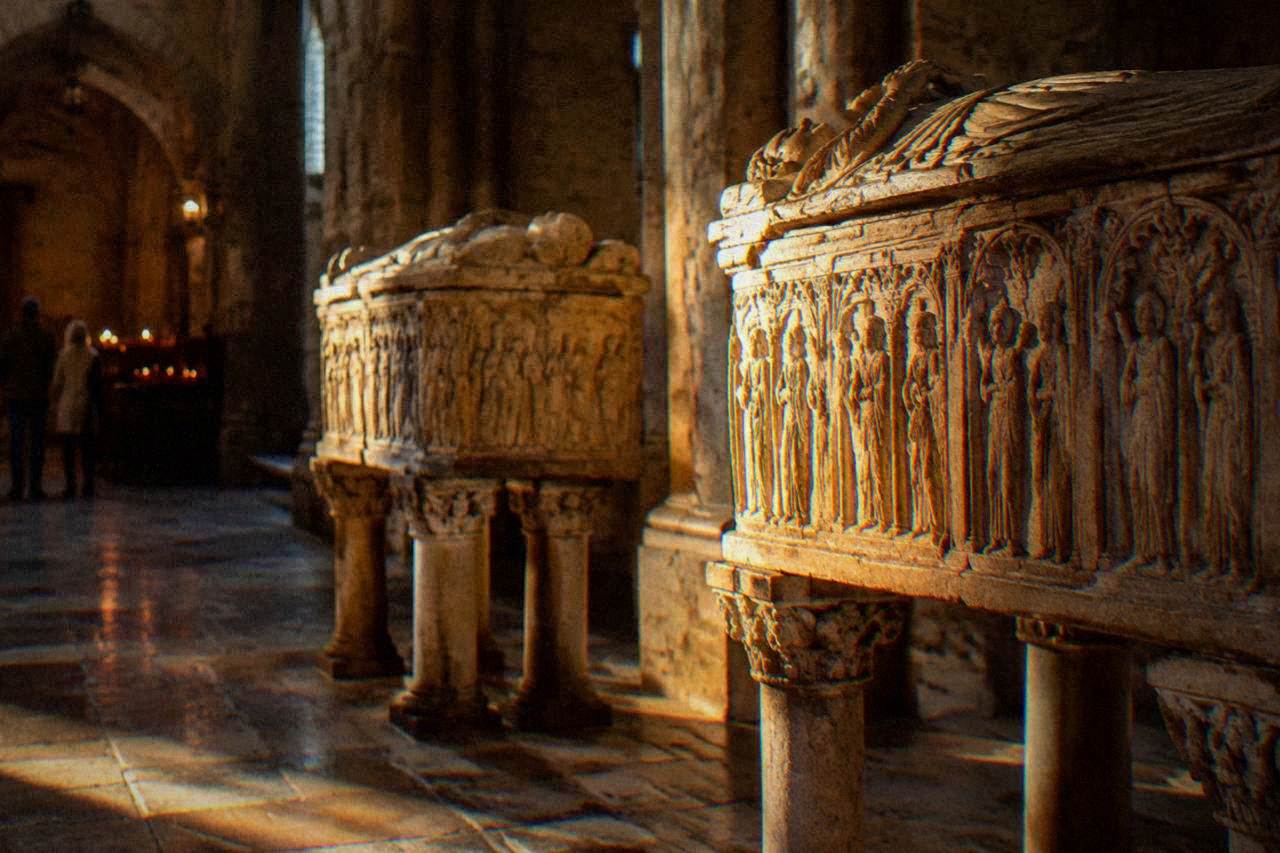
Who Is Buried In The Palermo Cathedral?
The Chapel of the Royal Tombs in Palermo Cathedral holds the sarcophagi of Roger II, the first king of Sicily, who died in 1154; Constance of Hauteville; Henry VI of Swabia, who died in 1197; Frederick II, who died in 1250; and Constance of Aragon, Frederick II's first wife. Surveys in the 1990s also identified the remains of Pietro d'Aragona and of an unidentified woman in the same space, so the chapel holds more than the five famous names.
The chapel sits on the south side of the cathedral, and the tombs are arranged rather than scattered: the sarcophagi rest on columns, each one a block of porphyry, the purple stone that late Roman emperors had reserved for themselves. The effect is deliberate. A royal court that wanted to be read as the heir of empire buried its rulers in the material of empire.
The two Constances deserve their own mention, because they anchor the whole dynastic story. Constance of Hauteville was the daughter of Roger II and the inheritor of the Norman line; her marriage to Henry VI carried the kingdom from the Norman dynasty to the Hohenstaufen. Constance of Aragon, in turn, was Frederick II's first wife. Between them, the women buried here connect every dynasty the chapel commemorates.
The surveys of the 1990s, reported in the scholarly documentation of the tombs, added detail that the older guidebooks lack. The sarcophagus of Frederick II also contained Pietro d'Aragona, and one burial in the chapel remains an unidentified woman. The chapel is therefore not a sealed snapshot of five rulers but a layered burial space that was used, reopened and added to over centuries.
| Buried in Palermo Cathedral | Who they were | Notes |
|---|---|---|
| Roger II | First king of Sicily, died 1154 | Porphyry sarcophagus, the centrepiece of the chapel |
| Constance of Hauteville | Daughter of Roger II, mother of Frederick II | Her marriage transferred the kingdom to the Hohenstaufen |
| Henry VI of Swabia | Holy Roman Emperor, died 1197 | Husband of Constance of Hauteville |
| Frederick II | King of Sicily and Holy Roman Emperor, died 1250 | Sarcophagus also held Pietro d'Aragona per 1990s surveys |
| Constance of Aragon | First wife of Frederick II | Buried in the same chapel |
| An unidentified woman | Unknown | Recorded in the 1990s surveys |
Where The Royal Tombs Sit And What Else The Building Holds
The royal tombs occupy a chapel on the southern side of Palermo Cathedral, inside the monumental area that also includes the roof, the treasury and the crypt, all reached on a ticketed visit. The nave of the building is a working church, while the monumental area around and beneath it is ticketed, and the price is shown at the ticket point and on the cathedral's own ticket shop rather than on the main visiting page.
The setting matters as much as the stones. The cathedral stands just off the old Cassaro, the main east-west street of the historic centre, a short walk from the Quattro Canti crossing that divides the old town into its four districts. The building's exterior, with its towers and its arcaded wall, is visible from much of the surrounding street grid, and the roof terrace forms part of the same ticketed itinerary.
Visitors planning a cathedral visit should also know the layered history recorded on the cathedral's own pages: in 831 the Saracens, having taken the city, converted the earlier church on the site into a large mosque, and in 1072 the Normans returned it to Christian worship. A verse from the Qur'an is still carved on the first column on the left of the southern porch, a physical trace of the mosque phase that survives in the fabric visitors walk past today.
The monumental area has season-dependent hours, and visits are suspended during liturgies, so the official visiting page is the place to check before setting out. The cathedral's ticket shop handles the paid itineraries. Readers weighing the cost of the different parts of the visit can read the dedicated page on cathedral rooftop tickets, and the wider question of whether tickets are needed for Palermo Cathedral is answered separately.
A guided walk is one way to place the tombs in context, because the story of the rulers buried here runs through the streets outside. The Street Food and History Walking Tour moves through the same historic centre, and its live listing covers current availability; readers can also Check availability directly.
Want the royal story told on a walk? Book a free walking tour here.
Why The Kings Of Sicily Were Buried In Porphyry
The rulers buried in Palermo Cathedral chose porphyry, the purple imperial stone quarried in Egypt, because it stated a political claim: the kings of Sicily were presenting themselves as successors of the Roman emperors, not merely as regional monarchs. Roger II, Henry VI and Frederick II all ruled with imperial titles, and burying them in the stone reserved for late Roman emperors made that ambition visible to every visitor who entered the chapel.
Porphyry was not a decorative choice. The stone had not been quarried in quantity for centuries by the time these sarcophagi were carved, which made each existing block a scarce relic of empire rather than a fresh commission from a quarry. Working it is punishing: the stone blunts tools, and the carved figures on the sarcophagi, notably the draped royal forms on Roger II's tomb, show a workshop working at the edge of what the material allowed.
The chapel arrangement also borrows from imperial precedent. Sarcophagi raised on columns, set apart from the floor, echo the display of imperial tombs rather than the crypt burials of ordinary medieval rulers. A visitor standing in the chapel is looking at a piece of political theatre in stone: a dynasty announcing, in material and placement, that it stood in the line of Rome.
For contrast, the same royal family distributed its dead across the island. Monreale Cathedral, on the hill above Palermo, holds the tombs of William I and William II, the rulers who built and completed that church, together with Margaret of Navarre. The question who is buried in Monreale Cathedral is answered in its own page, and the comparison shows a family deliberately splitting its burials between two great churches it controlled.
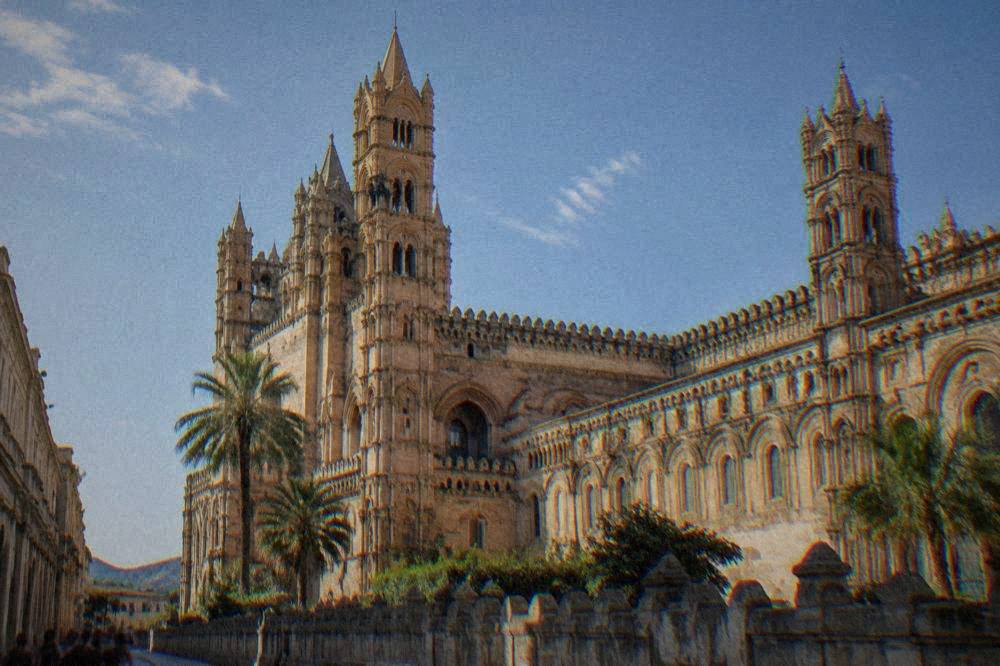
How The Cathedral's Earlier Layers Shaped What You See
The building that holds the royal tombs was a mosque before it was a cathedral: the Saracens converted the earlier church into a mosque in 831, and the Normans returned it to Christian worship in 1072, as the cathedral's own chronicle records. Those two dates explain the building's unusual plan and its layered decoration, and they frame the tombs, which were placed by a dynasty ruling a city where Arab, Greek and Latin cultures all left marks.
The cathedral is one component of the UNESCO property inscribed in 2015 under the name Arab-Norman Palermo and the Cathedral Churches of Cefalu and Monreale, a listing that ties the building to eight other monuments across the city and the two cathedral towns. Within that property sit the Royal Palace and Palatine Chapel, the Zisa, San Giovanni degli Eremiti, La Martorana, San Cataldo and the Admiral's Bridge, a set of buildings that share the same layered artistic inheritance. The full story of the mosque phase is covered in the page was Palermo Cathedral a mosque.
The question of how much gold covers Monreale's walls, and why no official figure exists for it, is a separate matter; readers can check how much gold is in Monreale Cathedral for that answer. What links the two cathedrals here is the dynasty: the rulers buried in Palermo and the rulers buried in Monreale were one family, and their two churches face each other across the valley that separates the cities.
| Palermo Cathedral | Monreale Cathedral | |
|---|---|---|
| Royal burials | Roger II, Constance of Hauteville, Henry VI, Frederick II, Constance of Aragon | William I, William II, Margaret of Navarre |
| Burial setting | Chapel of the Royal Tombs, porphyry sarcophagi on columns | Tombs within the cathedral, including a porphyry sarcophagus for William I |
| UNESCO status | Part of the Arab-Norman Palermo inscription of 2015 | Part of the same inscription of 2015 |
| Relationship to Palermo | In the historic centre, off the Cassaro | On the hill above Palermo, reached by AMAT line 389 from Piazza Indipendenza |
Reaching Monreale for the comparison visit is straightforward: the AMAT 389 bus runs from Piazza Indipendenza with 47 departures a day, roughly every 40 minutes, on the ordinary city ticket. The cloister at Monreale and the cathedral interior are separate visits, and the practical details are in the guide to getting from Palermo to Monreale Cathedral and the overview of the Monreale day trip.
Planning A Visit Around The Tombs
A visit built around the royal tombs needs the monumental-area ticket rather than the nave alone, comfortable shoes for the roof itinerary, and a check of the official visiting page before travelling, because hours shift with the season and visits pause during liturgies. The tombs themselves sit inside the cathedral, so a short walk from anywhere in the historic centre, and the whole ticketed circuit can anchor a morning that continues to the other Arab-Norman monuments nearby.
The cathedral sits in a part of the centre where several of the other listed monuments cluster within walking distance. A route that starts at the royal tombs can continue toward the Royal Palace and Palatine Chapel, where a combined ticket at 14.50 EUR full and 12.50 EUR reduced covers both the palace and the chapel, with the royal apartments closed on Tuesdays and Wednesdays when the regional parliament sits. The broader sightseeing picture, including the free squares and markets that sit between the ticketed monuments, is laid out in what Palermo is best known for.
Visitors with limited time should read the guidance on how many days are recommended for a trip to Palermo before committing to an itinerary, because the cathedral and the surrounding monuments compete with Monreale, Mondello and the markets for a short stay. Those arriving on foot from the cruise terminals or the station will find the walk to the cathedral flat and direct; the question can you walk in Palermo covers the city's walkability in detail.
Dress matters inside a working church: covered shoulders and knees are the standard expectation, and the roof itinerary requires comfortable shoes. Photography rules differ between the nave and the ticketed areas, so check the posted notices at the entrance rather than assuming one rule applies everywhere. As this Palermo Italy Travel Guide records across its pages, the practical details of each monument change with the season, and the official pages hold the live hours.
The tombs also reward a guide's context, and the city's food-and-history walks exist precisely for visitors who want the dynastic story told alongside the market stops. Between the sarcophagi of Roger II and Frederick II and the street food of the surrounding alleys, the medieval kingdom and the living city sit within a few minutes of each other, which is the real argument for seeing both in one visit.
Common Questions About The Palermo Cathedral Tombs
Who is buried in the Palermo Cathedral?
Roger II, the first king of Sicily; Constance of Hauteville; Henry VI of Swabia; Frederick II; and Constance of Aragon. Surveys in the 1990s also identified Pietro d'Aragona and an unidentified woman among the burials in the chapel.
Where are the royal tombs inside the cathedral?
They sit in the Chapel of the Royal Tombs on the southern side of the cathedral, within the ticketed monumental area that also includes the roof, the treasury and the crypt.
Why are the tombs made of porphyry?
Porphyry was the purple stone of the late Roman emperors, and burying the kings of Sicily in it presented them as imperial successors. The stone was scarce and extremely hard to carve, which made the sarcophagi statements of power as well as burials.
Do I need a ticket to see the royal tombs?
Yes. The tombs are part of the monumental area, which is ticketed. The price is shown at the ticket point and on the cathedral's ticket shop; the main official page lists hours but no price.
Who is buried in Monreale Cathedral instead?
William I and William II, the rulers associated with Monreale, together with Margaret of Navarre. The two cathedrals split the burials of one royal family across the valley between them.
Was Palermo Cathedral a mosque?
Yes, between 831 and 1072. The Saracens converted the earlier church into a mosque, and the Normans returned it to Christian worship; a Qur'an verse survives on a column of the southern porch.
