How Much Gold Is In Monreale Cathedral?
No official figure exists for the gold in Monreale Cathedral's mosaics. This page explains what the walls are actually covered in, how the cloister is ticketed and how to reach Monreale from Palermo.
Monreale Cathedral sits on a hillside above Palermo, the coastal capital of Sicily on the Tyrrhenian Sea, and its interior is one of the largest surfaces of gold mosaic anywhere in Europe. The question people ask before visiting is simple: how much gold is in it? The honest answer is that nobody has published an official weight. The cathedral authorities state no tonnage, the UNESCO listing for Arab-Norman Palermo and the Cathedral Churches of Cefalu and Monreale gives no figure, and repeated numbers circulating in guidebooks have no citable source behind them. What can be described precisely is what the decoration actually is, how it was made, and how to plan a visit, which is what this page from the Palermo Italy Travel Guide sets out to do.
How Much Gold Is In Monreale Cathedral?
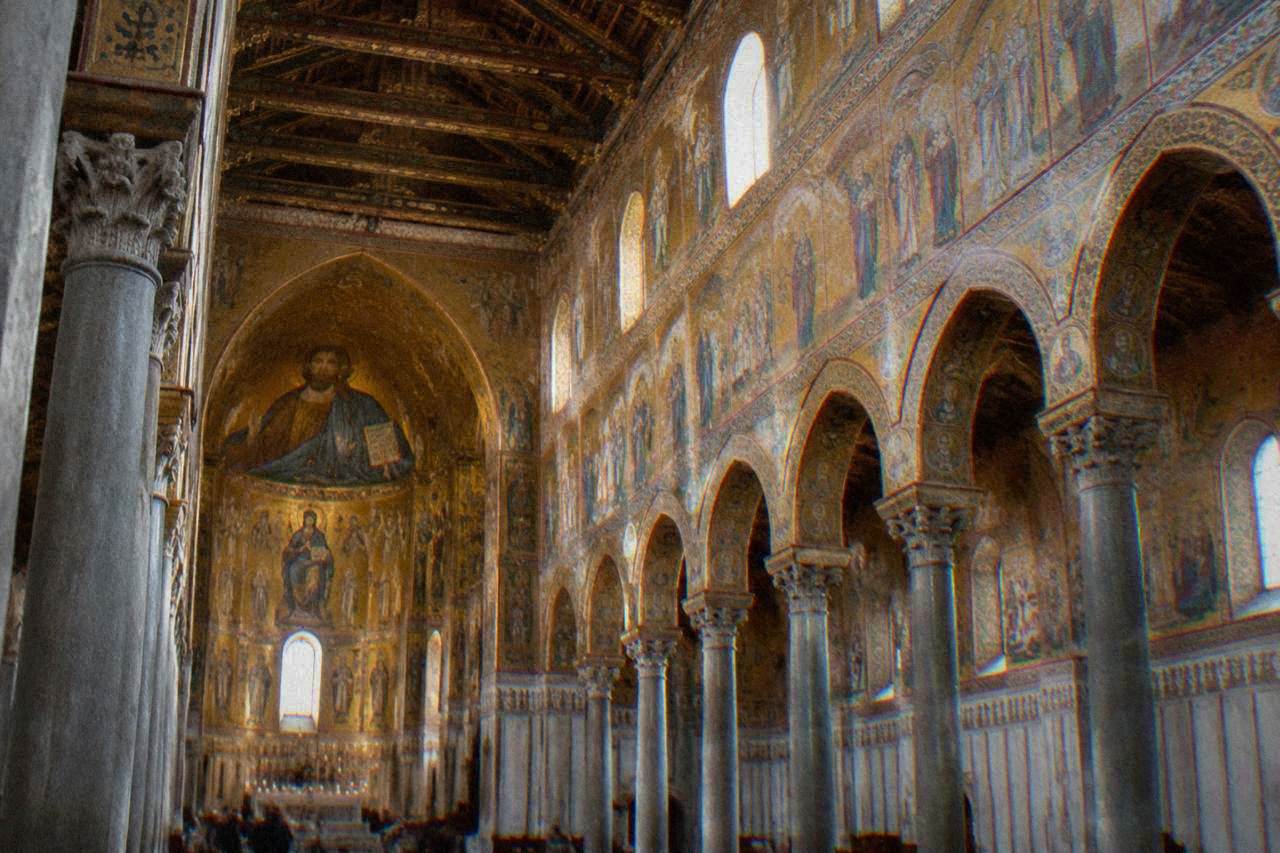
No official figure exists for the amount of gold in Monreale Cathedral. The walls and vaults are covered in gold-ground glass mosaic, in which thin leaf of gold is sealed between layers of glass, and neither the cathedral nor the UNESCO listing, which inscribed the building in 2015, publishes a tonnage, a weight or a covered area in square metres. Any specific number of kilos a guidebook or tour blurb prints should be treated as an estimate with no citable source. What is documented is the technique itself: the shimmering surface is not solid gold but thousands of glass tiles, each carrying a film of the metal, laid over plaster across the nave, apse and transepts. The effect, seen from the floor, is of a continuous golden shell around the worshipper, and that effect, rather than a weighable quantity, is what the decoration was designed to produce.
The reason no tonnage can be stated honestly is structural. Gold-ground mosaic, the technique used here and at the Cappella Palatina inside the Palazzo dei Normanni in Palermo, embeds the metal as leaf inside each glass cube rather than applying it as a coating to the wall. Nobody can weigh that gold without destroying the tiles that contain it, so any total is a reconstruction from assumptions about tile count and leaf thickness, not a measurement. Estimates built that way vary widely depending on the assumptions, which is exactly why the cathedral publishes none.
That does not make the question unanswerable in a useful way. A visitor can be told what is verifiable: the mosaic cycle covers the interior of a building that UNESCO inscribed in 2015 as one of nine components of Arab-Norman Palermo and the Cathedral Churches of Cefalu and Monreale, and the golden ground of those mosaics is the single feature the site is celebrated for. For a fuller treatment of the building's value as a visit, the companion page asks whether Monreale Cathedral is worth visiting and weighs ticketing, travel time and what the cloister adds.
What Is The Gold Mosaic Actually Made Of?
The decoration is glass mosaic on a gold ground: each cube, or tessera, sandwiches a thin sheet of gold between a supporting layer of glass beneath and a wafer-thin protective layer above it. The gold sits inside the glass, not on its surface, and the tesserae were set at slightly varied angles in the plaster bed, so light moves across the walls. The gold is therefore inside the glass, not on its surface, which is why the walls still catch light after centuries and why the surface reads as a shimmering field rather than a flat gilding. Tesserae were set at slightly varied angles in the plaster bed, so light from windows and candles moves across the walls as the viewer walks. This is a craft description of what the visitor sees, and it is the most accurate answer available to the gold question, because the technique, unlike a weight, is documented and visible.
The same technique appears in Palermo itself, at the Cappella Palatina inside the Palazzo dei Normanni, and at Cefalu Cathedral on the coast east of Palermo. All three belong to the single UNESCO property inscribed in 2015. The Palatine Chapel is reached on one combined ticket with the palace, listed by the official ticket page at 14.50 EUR full and 12.50 EUR reduced, with the royal apartments included. Monreale's cloister is a separate visit with its own ticket, described further down this page. A useful comparison of the three golden interiors sits in the guide to Monreale as a day trip from Palermo.
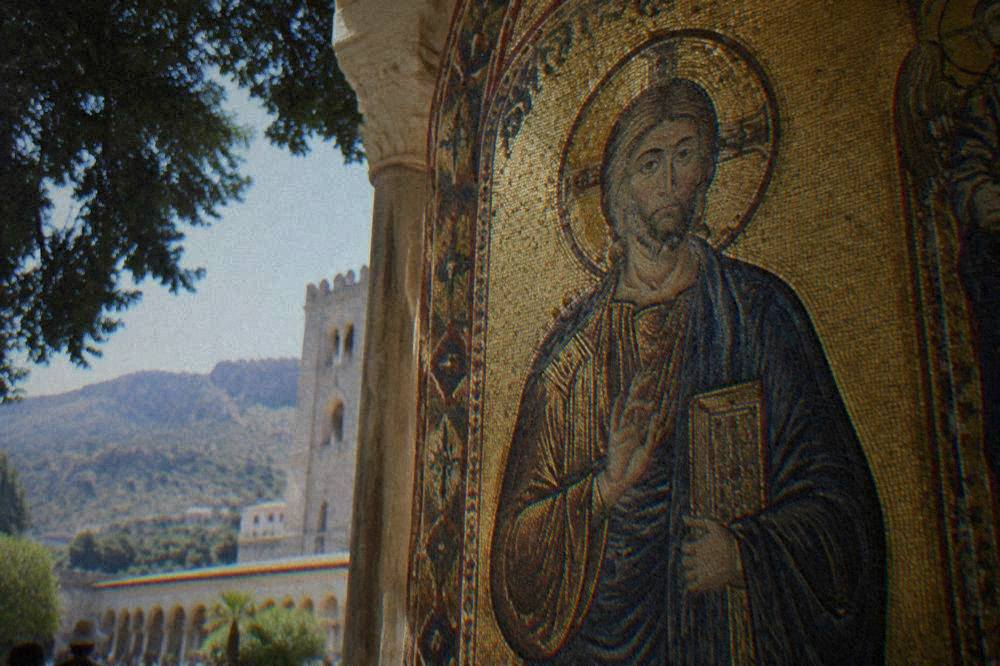
What the mosaics depict is as documented as how they were made. The interior presents a cycle of Old and New Testament scenes arranged in registers rising up the nave, with a monumental Christ in the apse dominating the east end. Angels, prophets and apostles fill the intermediate zones. Visitors who want the figures and scenes laid out before arrival get more from the interior by reading the sequence in advance, because the registers sit far above eye level and time inside is better spent looking up than decoding.
How Do You Get From Palermo To Monreale Cathedral?
Monreale is 10.4 km from the Quattro Canti crossroads in central Palermo, about 16 minutes by road in free-flowing traffic, and the public option is AMAT bus line 389 from Piazza Indipendenza, running 47 times a day in each direction, roughly every 40 minutes, on a standard 1.40 EUR city ticket valid 90 minutes. The distance and driving time come from a route calculation rather than an operator figure, so treat them as planning numbers. The bus details come from the AMAT service page, and the fare from the AMAT fares page. Piazza Indipendenza sits at the edge of the historic centre, a short walk uphill from the Norman palace, and the 389 climbs to Monreale's centre in a journey the timetable schedules in minutes rather than hours.
The alternative is an organised excursion, which removes the connection question entirely. Several day trips from Palermo bundle Monreale with other western Sicily stops, and one pairs the cathedral with Corleone's anti-mafia history, a combination that suits visitors who want both the gold interior and the story of the region's recent past in one day. The full logistics, including a comparison of bus, tour and private transfer options, are laid out in how to get from Palermo to Monreale Cathedral.
Visitors combining Monreale with Cefalu should note the geography: Cefalu lies 71.5 km and about 65 minutes by road east of Palermo, on the opposite side of the city from Monreale, and its cathedral is another UNESCO component with free entry to the nave. Doing both in one self-drive day is feasible; doing both by public transport in one day is tight, because the 389 returns to Palermo before any Cefalu connection.
To see both cathedrals in a single day, book a Monreale and Cefalu day trip here.
How Much Do Monreale Tickets Cost?
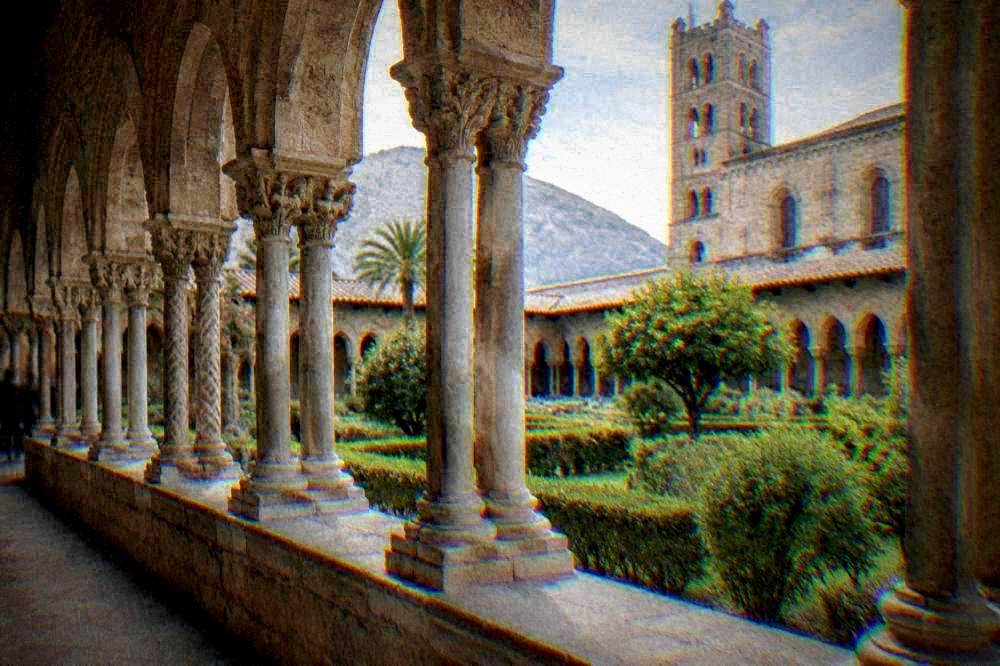
The cloister of Santa Maria Nuova at Monreale costs 8 EUR full and 4 EUR reduced, open Monday to Saturday 9:00 to 19:00 with last entry 30 minutes before, and Sunday about 9:00 to 13:30, according to the ticket operator's page. The cloister and the cathedral are separate visits: the cloister is the ticketed monument with its columns and carved capitals, while the cathedral interior has its own access arrangements, and any current charge or combined option is shown at the ticket point or on the operator's page before travel. First Sunday of the month can bring free entry at state-managed sites, so confirm Monreale's own arrangement for that day locally.
A practical budget for the visit, using only published figures:
| Item | Figure | Source |
|---|---|---|
| Monreale cloister, full ticket | 8 EUR | Ticket operator's page |
| Monreale cloister, reduced | 4 EUR | Ticket operator's page |
| Cloister hours, Mon to Sat | 9:00 to 19:00 | Ticket operator's page |
| Cloister hours, Sunday | About 9:00 to 13:30 | Ticket operator's page |
| AMAT 389 bus fare each way | 1.40 EUR | AMAT fares page |
| AMAT 3-day network ticket | 8.00 EUR | AMAT fares page |
Two planning notes sit behind the table. First, the AMAT fares page prices the ordinary ticket at 1.40 EUR bought in advance and 1.80 EUR bought on board, so buying before boarding saves money on every leg. Second, the 3-day MultiDay at 8.00 EUR covers the whole AMAT network, including the 389, and pays for itself on a stay that mixes Monreale with city tram and bus rides.
Why Does The Gold Question Keep Getting A Number?
Guidebooks and tour descriptions repeatedly print a weight of gold for Monreale because a concrete number is easier to quote than an explanation of gold-ground mosaic: a plausible tonnage appears in a mid-century guide, later writers repeat it, and eventually the number reads as fact even though no cathedral document, no UNESCO text and no measured study supports it. The pattern is familiar from other unverifiable figures: a plausible tonnage appears in a mid-century guide, later writers repeat it, and eventually the number reads as fact even though no cathedral document, no UNESCO text and no measured study supports it. The responsible answer stays the same: the interior is covered in gold-ground glass mosaic, no official tonnage is published, and any specific weight a reader encounters should be checked against a source that names one.
This matters for planning more than it might seem. Visitors who arrive expecting a measurable hoard of bullion sometimes leave disappointed, while those who arrive expecting a hall of image and light, built from thousands of gold-sandwiched glass cubes set at angles to catch moving light, understand what they are standing under. The decoration was an argument in glass about heaven, not a treasury, and the royal tombs of William I and William II, covered on the page about who is buried in Monreale Cathedral, sit inside the same argument.
The same honesty rule applies to Monreale's history. The dated history available for the building is its 2015 UNESCO inscription and the burials of the two kings. Everything else belongs to the cathedral's own published material, which the visitor can read on site.
For travellers building the visit into a wider Sicily plan, Monreale pairs naturally with a morning in Palermo's markets and an afternoon on the hillside, since the 389 runs from late morning as well as early. The excursion that includes the cathedral with Corleone also fits this shape, and its live listing carries the current schedule and price:
Common Questions About Monreale Cathedral Gold
How much gold is in Monreale Cathedral?
No official figure exists. The walls are covered in gold-ground glass mosaic, with gold leaf sealed inside each glass tessera, and neither the cathedral nor UNESCO publishes a tonnage or a covered area. Any specific weight in print is an unsourced estimate.
Is the gold in Monreale real gold?
Yes, in the sense that the mosaic ground uses gold leaf, but it is not applied as solid metal. Each tessera sandwiches a thin sheet of gold between layers of glass, which protects the metal and gives the walls their reflective surface.
Do you need tickets for Monreale Cathedral?
The cloister of Santa Maria Nuova is ticketed at 8 EUR full and 4 EUR reduced. The cathedral interior is a separate visit, and current access arrangements and any charge are shown at the ticket point or on the operator's page.
How do you get to Monreale from Palermo?
AMAT bus 389 runs from Piazza Indipendenza to Monreale 47 times a day, about every 40 minutes, on the standard 1.40 EUR ticket valid 90 minutes. By road the trip is 10.4 km and about 16 minutes from the Quattro Canti in free-flowing traffic.
Who is buried in Monreale Cathedral?
William I and William II of Sicily are buried in the cathedral, part of the same royal story as the Norman kings interred at Palermo Cathedral.
Monreale's golden interior rewards a visitor who arrives knowing what it is: glass and leaf, image and light, with no weighable answer to the gold question and none needed. Plan the bus from Piazza Indipendenza, budget the cloister's 8 EUR full ticket, leave the invented tonnages where they belong, and look up.