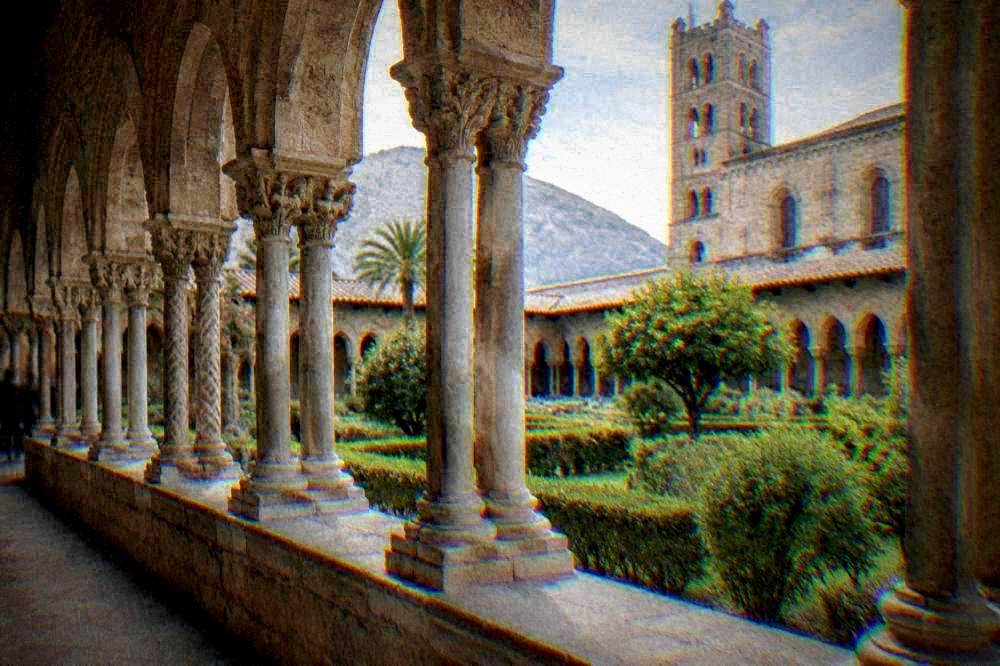
Who Is Buried In Monreale Cathedral?
A guide to the royal tombs of Monreale Cathedral near Palermo: which kings and queens are buried there, how the burials differ from Palermo Cathedral, and how to visit from the city.
Monreale Cathedral sits on a hill about 16 minutes by road from the Quattro Canti in Palermo, and its floor holds the burials of the royal family that commissioned it. The listing of who lies there comes from cross-referenced historical accounts of the cathedral, and the names matter for a simple reason: visitors often confuse these tombs with the royal tombs inside Palermo Cathedral, which hold a different set of rulers entirely.
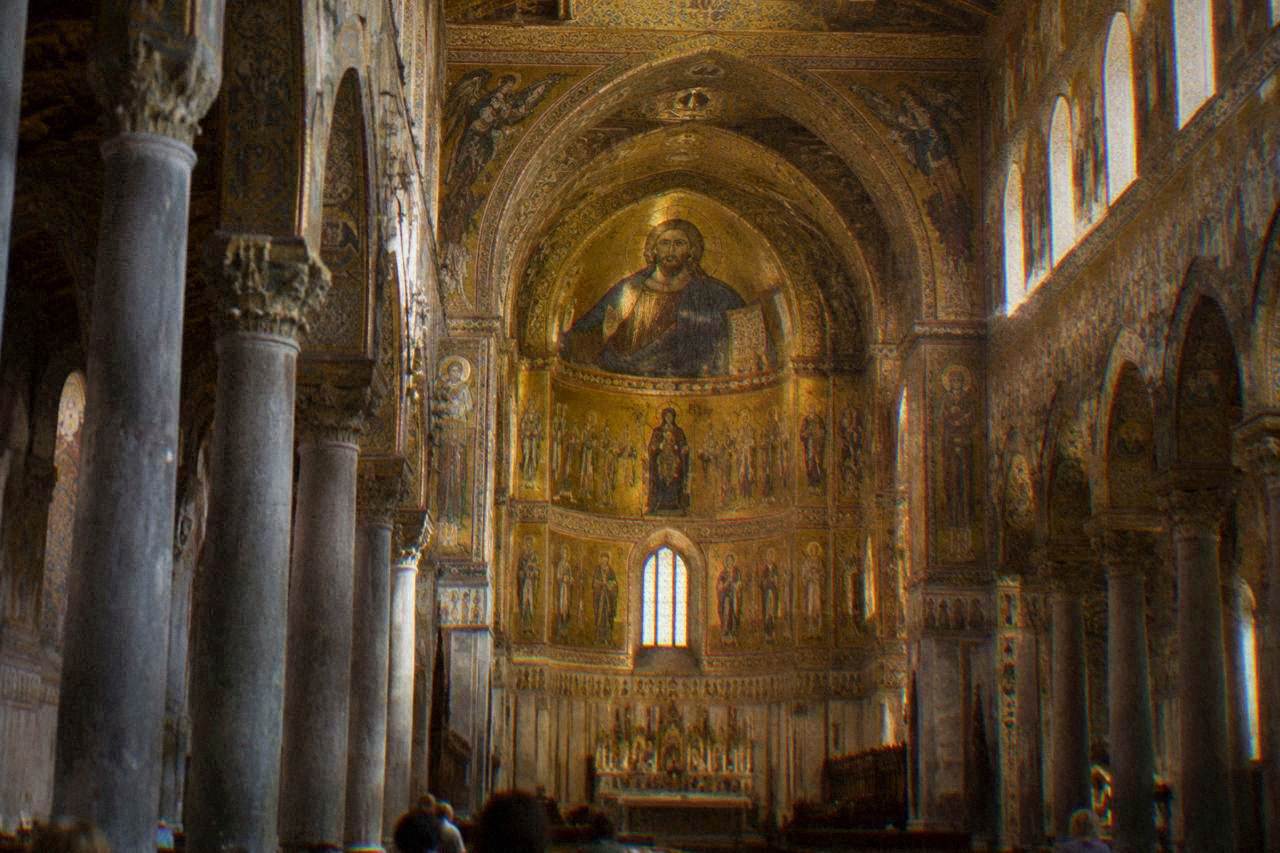
Who Is Buried In Monreale Cathedral?
Monreale Cathedral holds the tombs of William I of Sicily in a porphyry sarcophagus, William II in a marble sarcophagus erected in 1575, and Margaret of Navarre, wife of William I, together with her sons Roger and Henry. The cathedral also keeps an urn containing the viscera and heart of Saint Louis IX of France, who died in 1270. These are the burials named in the historical accounts of the building.
The two Williams are the essential names. William I commissioned the great building campaign that made Monreale what a visitor sees today, and his son William II completed and enriched it, so their presence in the cathedral is a dynastic statement: this was a royal church, founded by kings, for kings. The marble tomb of William II was placed long after his death, in 1575, at the order of Archbishop Ludovico de Torres, according to the historical record of the cathedral.
Margaret of Navarre is buried with two of her sons, Roger and Henry. The French connection is the detail that surprises people. Saint Louis IX of France, canonised after his death, is represented at Monreale only by an urn holding his viscera and heart, not a full burial, and the historical accounts note it as such.
The Royal Tombs Of Monreale, Person By Person
The burials at Monreale are four in the main group plus one memorial urn: William I, William II, Margaret of Navarre with her sons Roger and Henry, and the urn of Saint Louis IX. Each is recorded in the historical accounts of the cathedral, and two of the tombs, the porphyry sarcophagus of William I and the marble sarcophagus of William II, are the visual centrepieces a visitor looks for.
| Person | Who They Were | Tomb At Monreale |
|---|---|---|
| William I | King of Sicily, father of William II | Porphyry sarcophagus, moved by his son, rebuilt after an 1811 fire |
| William II | King of Sicily, who completed the great building campaign | Marble sarcophagus erected in 1575 by Archbishop Ludovico de Torres |
| Margaret of Navarre | Wife of William I | Buried with her sons Roger and Henry |
| Saint Louis IX | King of France, died 1270 | Urn containing his viscera and heart |
Two practical notes attach to the table. First, the porphyry sarcophagus of William I was moved by William II himself and rebuilt after the fire of 1811, so the tomb as seen today is not in its original state. Second, sources also note additional burials or later transfers connected to the royal family, so the list above covers the names the accounts state with confidence rather than every body ever laid in the building.
For readers weighing whether the trip up the hill rewards the effort, the fuller case for the visit, mosaics, cloister and all, is set out in is Monreale Cathedral worth visiting, and the question of how much gold is in Monreale Cathedral is answered separately, since no official figure exists for it.
Monreale Versus Palermo Cathedral: Two Sets Of Royal Tombs
The royal tombs inside Palermo Cathedral hold Roger II, Constance of Hauteville, Henry VI, Frederick II and Constance of Aragon, while Monreale Cathedral holds William I, William II and their immediate family. The two cathedrals are separate visits, about 16 minutes apart by road, and each keeps its own dynasty: Palermo has the earlier emperors and kings, Monreale the family that built the hill church.
The split confuses plenty of trip planning. A reader who asks about "the royal tombs" without naming the building can end up at the wrong cathedral. Palermo Cathedral's Chapel of the Royal Tombs, described on the Palermo Italy Travel Guide pages covering the cathedral, holds Roger II, the first king of Sicily, who died in 1154, together with Constance of Hauteville, Henry VI of Swabia, who died in 1197, Frederick II, who died in 1250, and Constance of Aragon, first wife of Frederick II. Monreale, by contrast, belongs to the William line.
| Cathedral | Who Is Buried There | Relationship |
|---|---|---|
| Palermo Cathedral | Roger II, Constance of Hauteville, Henry VI, Frederick II, Constance of Aragon | The earlier kings and the imperial line |
| Monreale Cathedral | William I, William II, Margaret of Navarre, Roger and Henry, urn of Saint Louis IX | The family that built Monreale |
The connection between the two sets is dynastic: William I was the son of Roger II, so the tombs at Monreale are, in effect, the next generation after the rulers buried in Palermo. A visitor who sees both chapels in one day gets the whole sequence of the family in stone. Readers who want the Palermo side of the family tree in detail can read who is buried in the Palermo Cathedral, which covers that chapel separately.
How To Get From Palermo To Monreale Cathedral
AMAT bus line 389 runs from Piazza Indipendenza in Palermo to Monreale with 47 runs a day, about every 40 minutes, on an ordinary city ticket of 1.40 EUR valid for 90 minutes. The first departure from Piazza Indipendenza is at 5:25 and the first from Monreale at 6:00, per the renewed service agreement for 2026, so the connection is frequent and cheap for a day visit.
Piazza Indipendenza sits at the edge of the historic centre, a short walk from the Palazzo dei Normanni, which makes the sequence easy: the palace and its Palatine Chapel in the morning, then the 389 up the hill to Monreale. By road the run from the Quattro Canti to Monreale is about 10.4 km and 16 minutes free-flow, so a taxi or a transfer also works where the schedule matters.
The dedicated page on getting from Palermo to Monreale Cathedral covers the options in more depth, and the wider guide to the town is at Monreale day trips from Palermo.
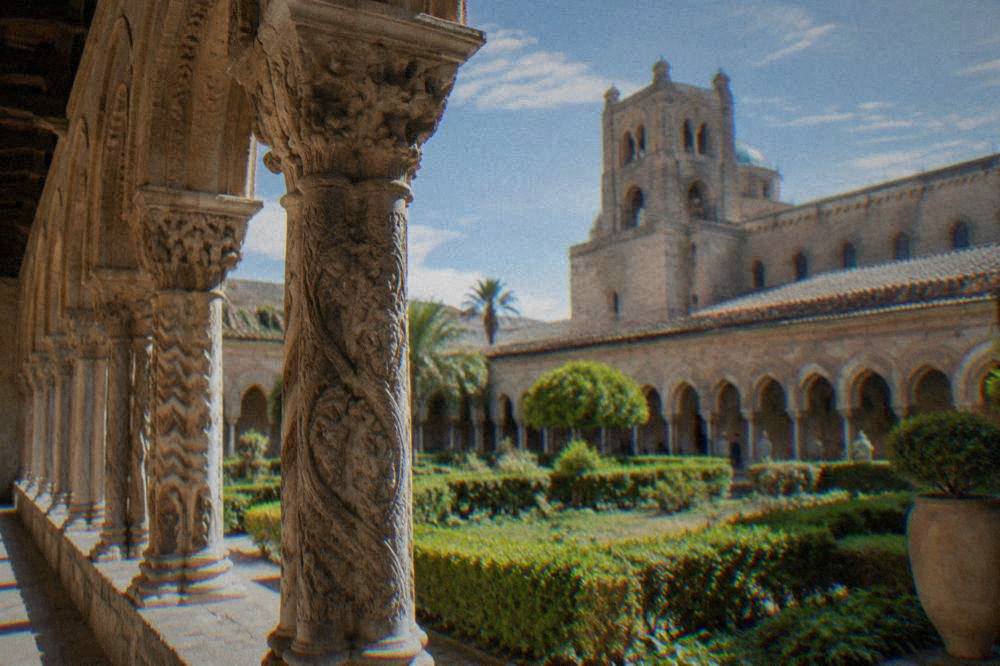
What Tickets And Hours Apply At Monreale Cathedral?
The cloister of Santa Maria Nuova at Monreale costs 8 EUR full and 4 EUR reduced, open Monday to Saturday 9:00 to 19:00 and Sunday about 9:00 to 13:30, with the last entry half an hour before closing. The cathedral and the cloister are separate visits with separate arrangements, and the visitor should confirm current cathedral arrangements on site, as hours shift with the liturgical calendar.
That cloister figure is the one solid, published price for the Monreale complex, and it covers the twinned courtyards of carved columns that sit beside the church. For the cathedral itself, the historical accounts describe the interior as generally open to visitors with paid itineraries for extra areas, but the sensible habit on this point is simple: check locally for the day's arrangements, because services and events close areas of the church without a fixed published pattern.
A practical pattern for a half day: arrive in Monreale in the morning, see the cathedral interior and locate the royal tombs, then take the cloister with its 8 EUR ticket before the last entry at 18:30 in the summer schedule. The return bus runs into the evening, so the timing is generous even with a long lunch on the hill.
Can You See The Tombs On A Day Trip From Palermo?
Yes, the Monreale tombs fit comfortably into a half day from Palermo, whether by the 389 bus from Piazza Indipendenza, by taxi, or by an organised transfer. The road run is about 16 minutes free-flow from the Quattro Canti, the cloister ticket is 8 EUR, and the cathedral interior is the part that holds the tombs, so a single morning covers the burials, the mosaics and the cloister with time to spare for lunch on the hill.
To have the half day planned for you, book a Monreale and Cefalù half-day trip here.
Travellers who prefer the logistics handled can look at the Monreale self-guided option with a return van transfer, which pairs the ride up the hill with free time in the town, and the same decision moment is covered by Check availability. The listing describes what the transfer covers and what is left open for the visitor to arrange.
For those combining the hill town with more of the region, Monreale also anchors one of the classic western Sicily circuits, pairing naturally with Segesta, Erice and the Trapani salt pans on a longer day, or standing alone as the gentlest day trip from the Palermo base.
Common Questions About The Monreale Cathedral Tombs
Who is buried in Monreale Cathedral?
William I of Sicily, William II, Margaret of Navarre and her sons Roger and Henry are buried there, together with an urn holding the viscera and heart of Saint Louis IX of France, who died in 1270. The two royal sarcophagi, porphyry for William I and marble for William II, are the tombs a visitor sees.
Is Frederick II buried in Monreale or in Palermo?
Frederick II is buried in Palermo Cathedral, in the Chapel of the Royal Tombs, alongside Roger II, Constance of Hauteville, Henry VI and Constance of Aragon. Monreale Cathedral holds the William line: William I, William II and their immediate family.
Why is a French king's heart in Monreale?
The historical accounts of the cathedral record an urn containing the viscera and heart of Saint Louis IX of France, who died in 1270. It is a memorial burial of the organs rather than a full tomb, and it is the French royal connection at Monreale.
How much does it cost to see the Monreale cloister?
The cloister of Santa Maria Nuova costs 8 EUR full and 4 EUR reduced, open Monday to Saturday 9:00 to 19:00 and Sunday about 9:00 to 13:30, with the last entry half an hour before closing. The cathedral and the cloister are separate visits.
How do I get to Monreale from Palermo?
AMAT bus line 389 runs from Piazza Indipendenza with 47 runs a day, about every 40 minutes, on a 1.40 EUR city ticket valid for 90 minutes. The road run from the Quattro Canti is about 10.4 km and 16 minutes free-flow, so taxis and transfers are also practical.