San Cataldo Church Palermo
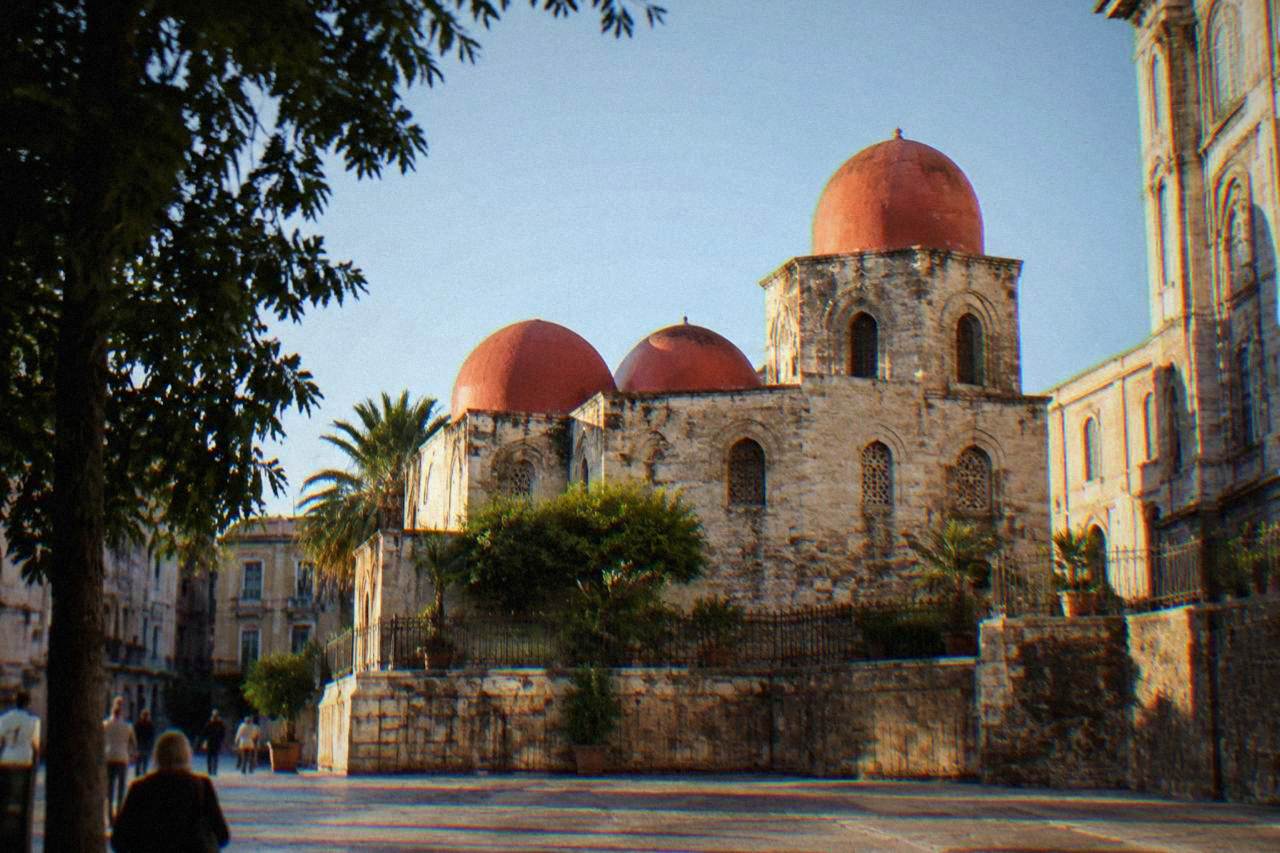
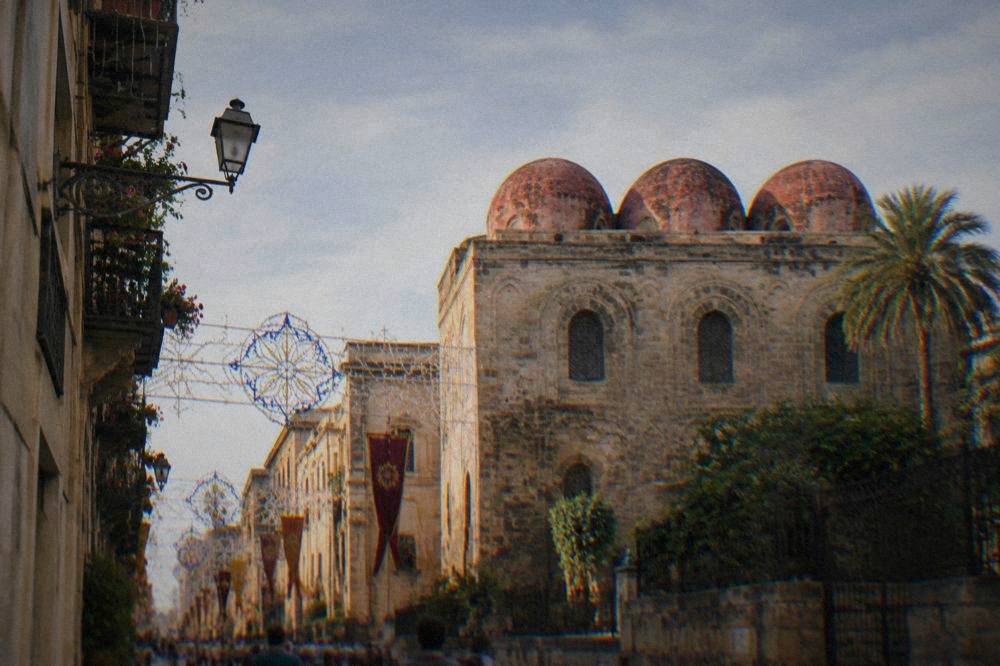
San Cataldo Church stands on Piazza Bellini in the historic centre of Palermo, its three reddish domes making it one of the most recognisable silhouettes in the city, next door to La Martorana and a short walk from the Quattro Canti.
Short answer
San Cataldo Church stands on Piazza Bellini in central Palermo, beside La Martorana. It is one of the nine components of the UNESCO Arab-Norman Palermo inscription of 2015, known for its three red domes and its spare stone interior. Entry conditions are shown locally; the church sits at the heart of the old centre, minutes from Piazza Pretoria and the Ballarò market.
San Cataldo Church stands on Piazza Bellini in Palermo, the coastal capital of Sicily on the Tyrrhenian Sea, and its three reddish domes are among the most photographed shapes in the old centre. The church is one of the nine components of the UNESCO World Heritage property "Arab-Norman Palermo and the Cathedral Churches of Cefalu and Monreale", inscribed in 2015, and it sits directly beside La Martorana, so the two churches are usually visited together.
What Is San Cataldo Church In Palermo?
San Cataldo Church is a small stone church on Piazza Bellini in the historic centre of Palermo, immediately next to La Martorana, and it is listed by UNESCO as one of the nine components of the Arab-Norman Palermo property inscribed in 2015. It is known above all for its three red domes set in a row along its roof, a profile that appears on postcards, murals and souvenirs across the city.
The UNESCO listing names the nine components together: the Royal Palace and Palatine Chapel, the Zisa, Palermo Cathedral, Monreale Cathedral, Cefalu Cathedral, San Giovanni degli Eremiti, Santa Maria dell'Ammiraglio (La Martorana), San Cataldo, and the Admiral's Bridge. San Cataldo and La Martorana are the only two components that stand on the same square, which is why Piazza Bellini carries more World Heritage per square metre than anywhere else in the city.
The site's writing conventions stop short of the claims many guides make. What the listing and the city's own tourism pages give is simpler and in some ways better: a building whose exterior decoration is almost entirely its cube-like walls and its domes, sitting in a corner of the old centre where Arab, Norman and later Palermo layer together within a few streets.
The church is small. Visitors who arrive expecting a cathedral-scale interior are sometimes surprised by how quickly the space is taken in, and that compactness is part of why it pairs so naturally with La Martorana next door, with Piazza Pretoria two streets away, and with the old town walking routes that cross the historic mandamenti of Capo, Albergheria, Kalsa and Loggia.
Where Is San Cataldo Church And How Do You Get There?
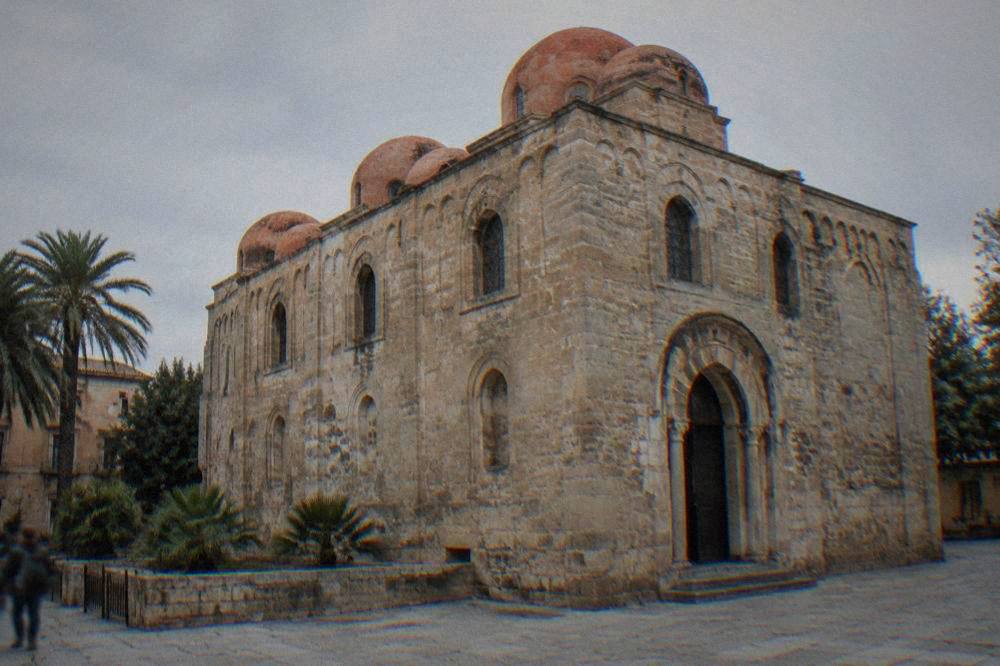
San Cataldo Church stands on Piazza Bellini in central Palermo, at the edge of the Kalsa district where it meets the Cassaro, the historic main axis of Corso Vittorio Emanuele. It is a short walk from the Quattro Canti crossroads, from Piazza Pretoria and from the Ballarò market, and the AMAT network serves the surrounding streets with a 1.40 EUR ticket valid for 90 minutes.
Walking is the normal way to arrive. The Quattro Canti, the crossroads of Via Maqueda and Corso Vittorio Emanuele that divides the old centre into its four districts, sits a short walk to the north-west, and the municipal tourism page describes the mandamenti layout around it. Piazza Pretoria with its fountain lies between the two squares, so a route from the Quattro Canti down to San Cataldo naturally passes the fountain, the Pretoria square and then Piazza Bellini in one straight sequence.
For anyone starting further out, the AMAT fares page gives the figures that matter: 1.40 EUR for a single ticket valid 90 minutes from validation, 1.80 EUR if bought onboard, 3.50 EUR for a day ticket, and 8.00 EUR for a three-day MultiDay. There are four tram lines run by AMAT converging from the periphery towards the centre, and Palermo Centrale station sits at the edge of the old centre with bus stops and a taxi rank outside. Buy tickets before boarding and validate at once, as the AMAT page states.
There is no metro in Palermo. The rail service in the city is the Passante ferroviario, suburban lines run by Trenitalia, with Line A running from Palermo Centrale towards the airport, and a Giachery to Politeama section approved for service from November 2026, which should be written of as planned rather than running. For a church visit in the old centre, none of this matters much: the location rewards arriving on foot.
| Transport option | Details | Cost figure |
|---|---|---|
| AMAT single ticket | Valid 90 minutes from validation, buy before boarding | 1.40 EUR |
| AMAT ticket onboard | Bought from the driver, same 90-minute validity | 1.80 EUR |
| AMAT day ticket | Valid to end of service on the day of validation | 3.50 EUR |
| AMAT three-day MultiDay | Whole network, to end of service on the third day | 8.00 EUR |
| On foot from Quattro Canti | A short walk along the historic axis via Piazza Pretoria | Free |
A guided circuit is another way to reach the square with context attached. The operator's listings cover the old centre's UNESCO sites with a guide, and the bike option adds street-food stops between the churches.
Do You Need Tickets For San Cataldo Church In Palermo?
No entry price for San Cataldo Church is published, so the figure to trust is the one posted at the door or on the church's own information at the time of your visit. Churches in Palermo sometimes admit visitors freely and sometimes run a small charge or a donation box, and the posted notice at each door is the deciding source.
What can be said with confidence is the pattern around the square. The first Sunday of the month brings free entry at many state and regional museums in Italy, as the regional museums network states, and visitors should confirm per site. San Cataldo is a church rather than a state museum, so that scheme does not automatically apply, but the same principle holds: read the notice at the entrance.
Dress matters in any working church. Covered shoulders and knees are the standard expectation in Sicilian churches, and the Palermo Cathedral page makes that explicit for its own building. San Cataldo is small and often quiet, and visits are short, which makes the dress point the main practical thing to know before arriving in summer clothes.
If a longer ticketed visit is on the agenda for the same day, the nearby paid sights with figures this site can print are the Palazzo dei Normanni with the Palatine Chapel at 14.50 EUR full and 12.50 EUR reduced, royal apartments included, and the Teatro Massimo guided tour at 14 EUR full and 7 EUR under 26. Both are covered in the site's Norman Palace guide and Teatro Massimo guide.
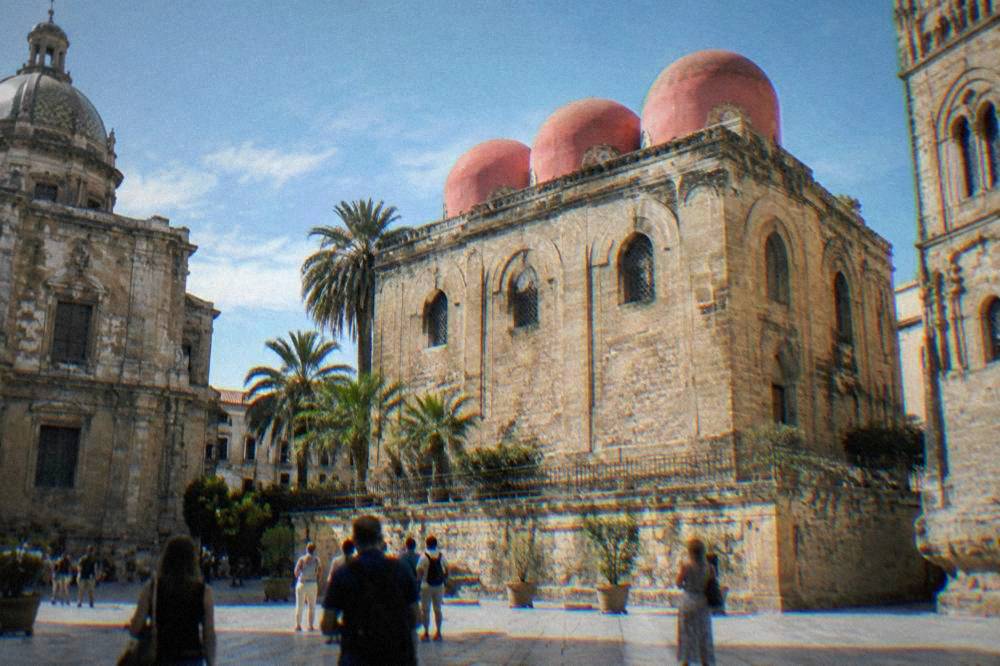
For readers who want the square and its churches unpacked by a local guide rather than read off a noticeboard, a themed walk is the natural fit, and the tour below covers the UNESCO core of the city.
What Can You See Inside San Cataldo Church In Palermo?
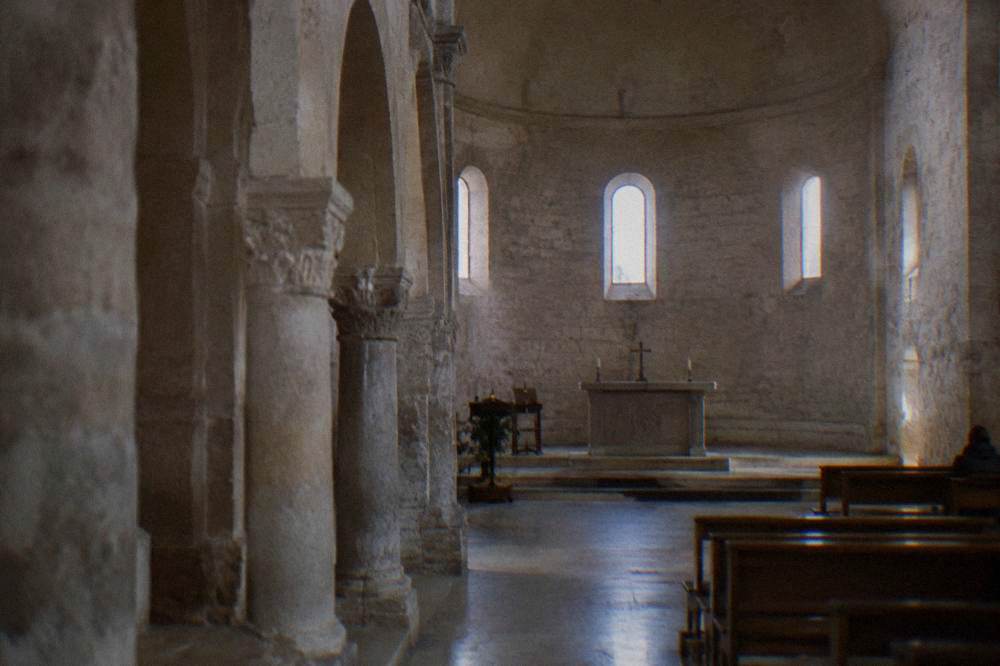
The interior of San Cataldo is a single compact stone space, far plainer than La Martorana's mosaic interior next door, with bare walls, a stone floor and an atmosphere that rewards a slow minute rather than a long hour. The building's decorative richness is concentrated on the outside, in the three red domes and the severe wall surfaces, so the visit itself is short and quiet.
The contrast with the neighbour is the point. La Martorana, listed by UNESCO as Santa Maria dell'Ammiraglio, carries the decorated interior of the pair, while San Cataldo keeps its walls almost bare. Visitors who step from one to the other across Piazza Bellini get the clearest possible lesson in how differently two churches of the same UNESCO property can treat their interiors. The site's La Martorana guide covers the mosaic interior in detail.
Because the space is small, photography etiquette and quiet behaviour count for more than route-planning. The practical advice is simply to arrive outside mass times, which are posted locally, and to treat the visit as a pause between the bigger sights of the old centre.
How Does San Cataldo Fit Into The UNESCO Arab-Norman Palermo List?
San Cataldo is one of the nine components of the UNESCO World Heritage property "Arab-Norman Palermo and the Cathedral Churches of Cefalu and Monreale", inscribed in 2015. The full list covers two royal buildings in Palermo, four churches in the city, one church each in Cefalu and Monreale, and the Admiral's Bridge, and San Cataldo shares its square with one other component, La Martorana.
The nine components are the clearest framework for a heritage-focused trip to Palermo, because they spread across the city and pull the day trips to Monreale and Cefalu into the same story. Five of the nine sit within the old centre or its edges, which makes a single day enough to see them from the outside and a two-day stay enough to enter all of them at a reasonable pace.
| UNESCO component | Location | Notes |
|---|---|---|
| Royal Palace and Palatine Chapel | Palermo, Piazza Indipendenza | One shared ticket, 14.50 EUR full, royal apartments included |
| Zisa | Palermo, western centre | Hours Tue to Sat 09:00 to 19:00, Sun 09:00 to 13:30, closed Mon |
| Palermo Cathedral | Palermo, Corso Vittorio Emanuele | Monumental area ticketed, price shown at the ticket point |
| San Giovanni degli Eremiti | Palermo, near the palace | No entry price printed by this site |
| Santa Maria dell'Ammiraglio (La Martorana) | Palermo, Piazza Bellini | Shares its square with San Cataldo |
| San Cataldo | Palermo, Piazza Bellini | Red domes, compact interior, entry notice at the door |
| Admiral's Bridge | Palermo, south of the centre | Outside the old centre, reachable on foot or by bus |
| Cefalu Cathedral | Cefalu, day trip by train | Entry free, paid tower and museum itineraries 10 and 13 EUR |
| Monreale Cathedral | Monreale, day trip by bus | Cloister 8 EUR full, 4 EUR reduced, cathedral visit separate |
Two of the city components sit close together on the hill above the centre: the Royal Palace with the Palatine Chapel and San Giovanni degli Eremiti. The Palazzo dei Normanni hours run Monday to Saturday 8:30 to 16:30 last admission, Sunday and holidays 8:30 to 12:30, with the royal apartments closed Tuesday and Wednesday when parliament sits, and the whole complex closed 25 December and 1 January. Planning the Piazza Bellini pair and the palace pair on different halves of one day is the pattern the geography suggests.
The bridge component, the Admiral's Bridge, is the one visitors without a map tend to miss, since it lies south of the old centre away from the church cluster. Its inclusion in the same inscription is a reminder that the World Heritage story of Palermo is as much about the city's water and roads as about its domes.
What Else Is Within A Short Walk Of San Cataldo?
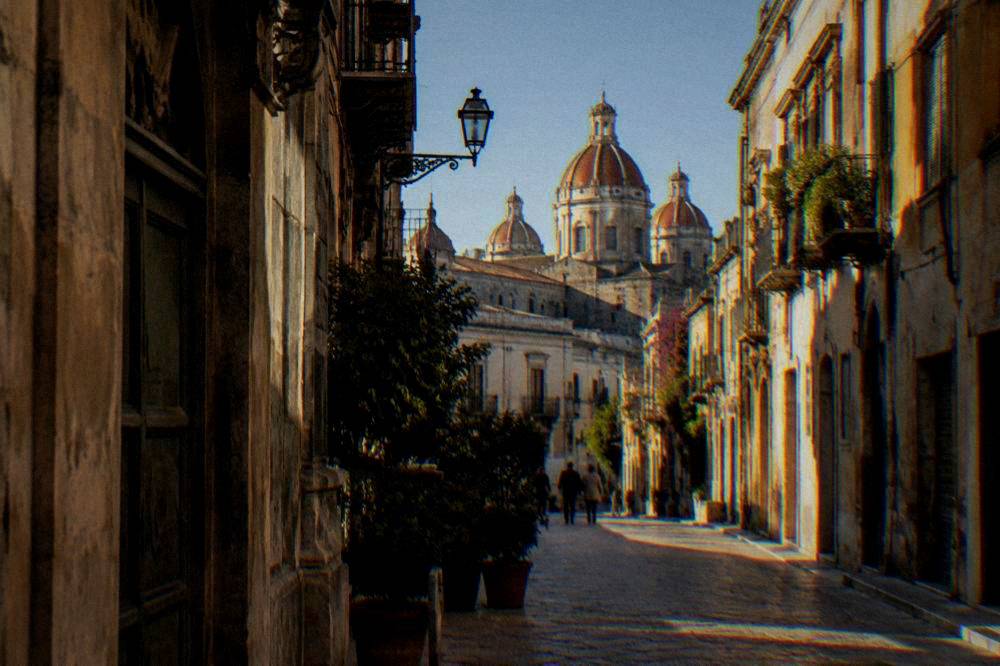
Piazza Pretoria and its fountain, the Quattro Canti crossroads, the Ballarò market and the Cassaro axis of Corso Vittorio Emanuele all sit within a short walk of San Cataldo Church, which makes the square one of the best staging points for a walking day in Palermo. The Foro Italico waterfront and the Kalsa district's museums lie a little further on, still walkable for anyone happy covering the old centre on foot.
If you'd like a local to lead you through them, book a free welcome walking tour here.
The nearest pairing is Piazza Pretoria, whose fountain fills the square between Piazza Bellini and the Quattro Canti. From there the Quattro Canti, the crossroads that named the four mandamenti, is a short walk north-west.
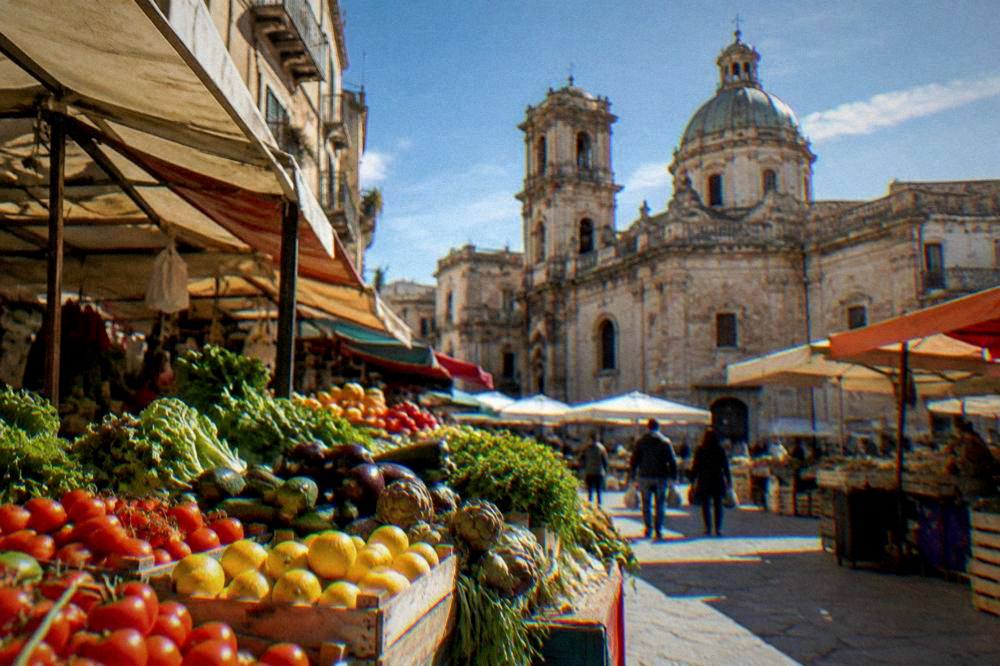
Ballarò, the market, spreads through the Albergheria side of the centre. The municipal page describes it as a historic market with free entry, running roughly Monday to Saturday from about 7:30 to about 20:00 and Sunday mornings, though closing hours are never fixed and stalls wind down earlier. The Capo market runs mornings and closes on Sundays, and the Vucciria keeps a daytime market plus an evening street scene that the city's nightlife guides place around Piazza Caracciolo.
| Sight near Piazza Bellini | What To Know | Entry figure this site prints |
|---|---|---|
| La Martorana | UNESCO component beside San Cataldo, mosaic interior | No entry price printed |
| Piazza Pretoria fountain | Free exterior viewing, principal sight of the centre | Free |
| Quattro Canti | Crossroads dividing the four mandamenti, free | Free |
| Ballarò market | Historic market, free entry, Mon to Sat from about 7:30, Sunday mornings | Free |
| Palermo Cathedral | Ticketed monumental area: roof, royal tombs, treasury, crypt | Price shown at the ticket point |
| Capuchin Catacombs | 5 EUR full, 3 EUR reduced, tickets at the office only, no photography | 5 EUR / 3 EUR |
The Capuchin Catacombs sit further out beyond the old centre, and their rules are strict: tickets are sold at the office only, and photography is prohibited inside. The catacombs guide covers the practicalities. For readers building a full day around Piazza Bellini, the site's one day in Palermo itinerary sequences these sights in a workable order, and the longer two-day and three-day versions add the palace hill and Mondello.
A food-focused walk is the other natural companion to this cluster, since Ballarò and the Cassaro's street-food stands sit minutes from the church steps. The tour below pairs the old centre with tastings.
When Is The Best Time To Visit San Cataldo And Piazza Bellini?
The climate table for Palermo, modelled ERA5 normals for 1991 to 2020, shows July the driest month at 7 mm of rain and October the wettest at 81 mm, with July averaging 26.2 C and August 26.8 C as the warmest months. For a walking visit built around Piazza Bellini, the spring and autumn months combine mild means with fewer rain days than the October-to-February stretch.
The monthly picture matters because San Cataldo is a walking sight. Whatever the season, the visit happens outdoors between the Quattro Canti, the square and the market streets, and the table below shows the swings.
| Month | Mean temperature (C) | Precipitation (mm) |
|---|---|---|
| January | 11.3 | 69 |
| February | 11.2 | 73 |
| March | 13.0 | 67 |
| April | 15.3 | 59 |
| May | 19.1 | 36 |
| June | 23.4 | 15 |
| July | 26.2 | 7 |
| August | 26.8 | 19 |
| September | 23.4 | 61 |
| October | 20.1 | 81 |
| November | 16.1 | 67 |
| December | 12.8 | 72 |
What they support is planning advice: mornings in July and August are cooler than midday for the walk between squares, and an umbrella is a reasonable packing item from late September onwards.
The church calendar also shapes the square. Saint Rosalia is the patron saint of Palermo, and her Festino runs each July from 10 to 15 July, with the chariot procession on 14 July along the Cassaro to Porta Felice and the silver urn procession on 15 July, according to the municipal tourism page. The Cassaro is the very street that meets Piazza Bellini, so a July visit places you beside the route of the city's biggest celebration. The 2027 dates are not announced, so plan on "each July" rather than a fixed calendar.
How Does San Cataldo Compare With La Martorana Next Door?
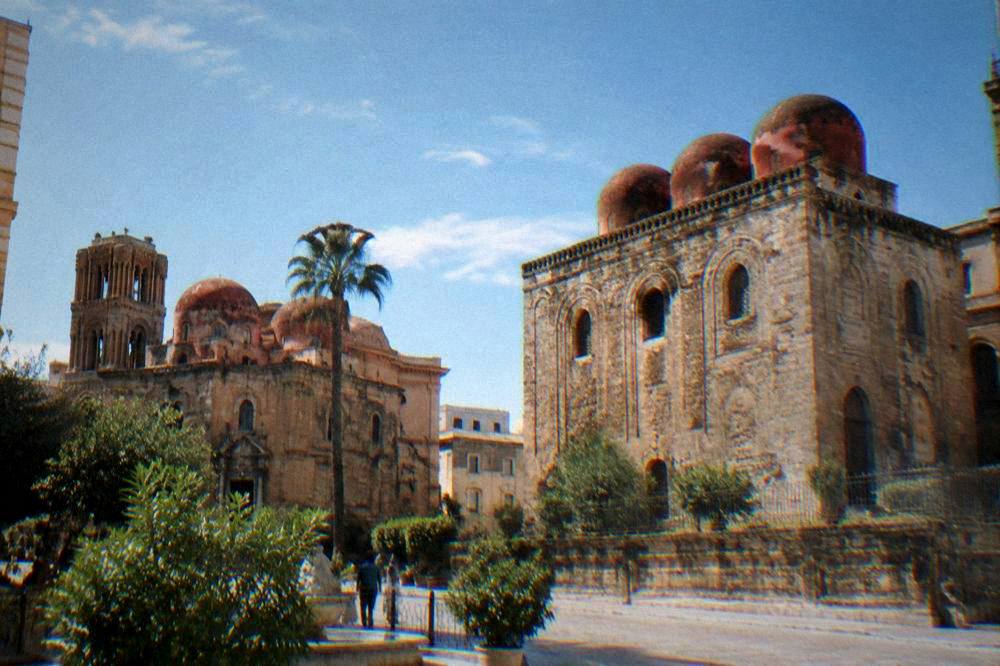
San Cataldo and La Martorana stand side by side on Piazza Bellini and form the tightest pair in the UNESCO list: San Cataldo is the compact, bare-walled building crowned with three red domes, while La Martorana is the larger, richer church with the decorated interior.
The practical difference is time. San Cataldo is absorbed in minutes: the domes from the square, the interior in one slow circuit. La Martorana asks for longer, because its decorated surfaces reward standing and looking. A visitor with one hour for Piazza Bellini does not need to choose; the two doors are steps apart.
The pairing also sets up the wider comparison across the city's churches. The Palermo Cathedral, a short walk west along the Cassaro, is a third register again: a monumental building whose roof, royal tombs, treasury and crypt form a ticketed monumental area, with the price shown at the ticket point or on the cathedral's ticket shop, since the official page lists hours but no price. The royal tombs there hold the sarcophagi of Roger II, Constance of Hauteville, Henry VI, Frederick II and Constance of Aragon, as the cathedral's own chronicle records.
For travellers deciding how deep to go into Palermo's church heritage in a single stay, the honest framing is scale: one day covers the old centre's churches from the outside with time inside two or three of them, two days add the palace hill and the San Giovanni degli Eremiti garden cloister, and three or more bring Monreale and Cefalu into the same World Heritage story by bus and train.
For many readers, the easiest way to hold all of this together is a guided circuit, and the bike-and-tastings option below is this site's featured pick for the area.
Readers comparing the whole city against a short stay can start from the site's overview of things to do in Palermo, and the Palermo Italy Travel Guide homepage indexes every church, market and day trip covered here. Whatever the length of the visit, Piazza Bellini repays the walk: two World Heritage churches, one fountain square away, in the middle of a city that keeps its grandest sights within a short walk of each other.
Common Questions About San Cataldo Church In Palermo
What Are The Red Domes Of San Cataldo?
The three reddish domes in a row along the roof are the feature the church is known by, and they appear throughout the city on postcards and souvenirs.
Is San Cataldo Part Of The UNESCO World Heritage List?
Yes. San Cataldo is one of the nine components of "Arab-Norman Palermo and the Cathedral Churches of Cefalu and Monreale", inscribed by UNESCO in 2015. Its neighbour La Martorana, listed as Santa Maria dell'Ammiraglio, is another component on the same square.
How Long Does A Visit To San Cataldo Take?
The church is small and the interior is bare, so the visit itself is short. The time goes into the square and the surroundings: La Martorana next door, Piazza Pretoria a short walk away and the Quattro Canti beyond it.
What Is The Best Way To Reach Piazza Bellini?
On foot from the Quattro Canti or from Palermo Centrale, both within the old centre's walking scale. An AMAT single ticket costs 1.40 EUR and is valid 90 minutes from validation, with day and multi-day tickets also published on the AMAT fares page.
Can You Visit San Cataldo And La Martorana Together?
Yes, and that is the normal pattern, since the two churches face each other across Piazza Bellini. San Cataldo is the quieter, plainer visit of the pair, while La Martorana holds the decorated interior.
