Is Palermo A Good Travel Destination?
A clear answer to whether Palermo is worth a trip, with what the city offers, what it costs to enter its sights, how it compares as a base, and who it suits best.
Palermo is the capital of Sicily, a coastal city on the Tyrrhenian Sea with about 628,693 residents at the end of 2024 according to municipal statistics, and the question of whether it deserves a trip has a short answer: it does, for a specific kind of traveller. The UNESCO property "Arab-Norman Palermo and the Cathedral Churches of Cefalu and Monreale", inscribed in 2015, spreads nine components across the city and its two cathedral neighbours, and that single inscription anchors more sightseeing than several Italian regional capitals can offer. Set against that, the city carries real urban friction, from a camera-enforced traffic zone to crowded buses, and the US State Department's September 2026 advisory notes that petty crime such as pickpocketing and bag-snatching is common around tourist sites and on public transport in Italy generally.
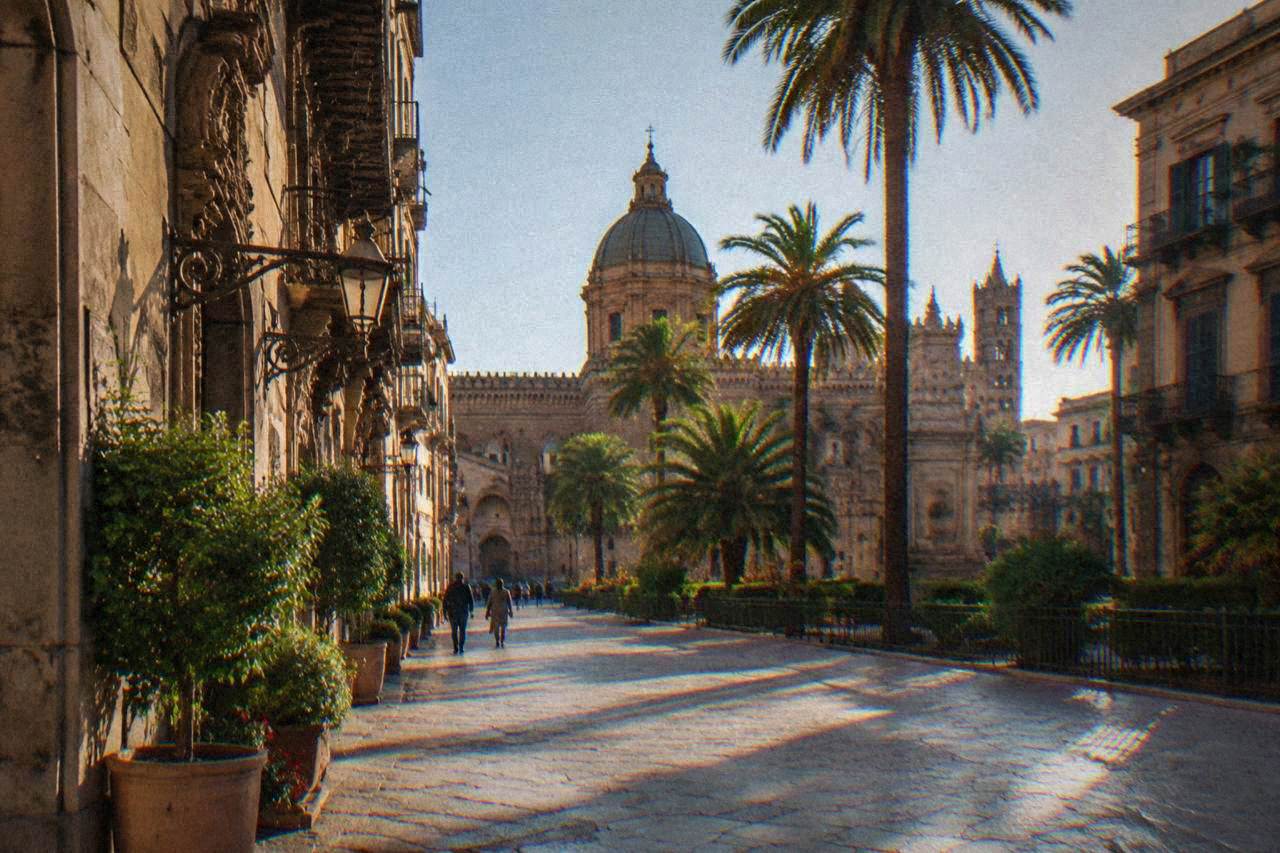
This page weighs the two sides using what official and operator pages actually publish: ticket prices, transport fares, climate data and day-trip timings. For a broader checklist of activities, the site's things to do in Palermo page is the root guide, and questions such as how many days are recommended for a trip to Palermo and what Palermo is best known for go deeper on each thread. The short version: the city rewards walkers and eaters, punishes drivers, and works as a base for half of western Sicily.
Is Palermo A Good Travel Destination?
Yes, Palermo is a good travel destination for anyone whose priorities are architecture, street food, markets and day trips, and the published record backs that up: one UNESCO inscription covering nine monuments, museum tickets from about 5 EUR, an AMAT day ticket at 3.50 EUR, and free sights including the Quattro Canti, the Foro Italico and the historic markets. It is a weaker choice for anyone seeking resort-style polish, easy driving or nightlife-centred beach holidays.
The case starts with density. The Quattro Canti crossroads divides the old centre into four districts, Capo, Albergheria, Kalsa and Loggia, and each holds market streets, churches and palaces within a walkable grid. The municipal tourism page describes Ballarò as one of the historic Arab-origin markets, running roughly Monday to Saturday from about 7:30 with Sunday mornings, and entry to it costs nothing.
To get your bearings in the old centre, book a free walking tour here.
The food reputation is not marketing talk. The Accademia della Crusca itself has weighed in on the arancina question, confirming both arancina and arancino are accepted, with Palermo and western Sicily using the feminine form. AMAP, the water utility, states the city's tap water is suitable for drinking, which matters on a market-and-street-food day.
Then come the day trips. Monreale sits about 16 minutes away by road, Mondello about 27, Cefalu about 65, Segesta about 64, and Agrigento's Valley of the Temples about 2 h 16 in free-flow traffic. Few cities of this size place a UNESCO cathedral cloister, a Greek temple site and a sandy beach within a single day's radius.
The honest counterweights: the historic centre's limited-traffic zone is camera-enforced, blue-line parking is paid by app, and public buses fill up. The UK FCDO notes bag-snatching and pickpocketing are more common in Italian city centres and at major attractions. None of this is disqualifying, but it shapes how the city should be visited, on foot and with a bag zipped and held in front on crowded transport.
What Makes Palermo Worth The Trip?
The core draw is the UNESCO Arab-Norman circuit and the food culture around it: the Palazzo dei Normanni with the Palatine Chapel costs 14.50 EUR full and 12.50 EUR reduced with the royal apartments included, the Capuchin Catacombs cost 5 EUR, and the three historic markets, Ballarò, Capo and Vucciria, cost nothing to enter. The city layers a working street-food scene onto monuments of international rank.
The Palazzo dei Normanni ticket page lists Monday to Saturday admission from 8:30 to 16:30 and Sunday hours to 12:30, with the royal apartments closed Tuesday and Wednesday when the regional parliament sits. The Palatine Chapel is inside the same complex, so one ticket covers both. The Teatro Massimo guided tour costs 14 EUR full, 7 EUR for under 26s, with a 36 EUR family ticket, and the theatre's 2026-27 season opens 22 November 2026 with Samson et Dalila.
Beyond the headline monuments, the mid-priced museums hold up well. The regional archaeological museum Salinas charges 7 EUR, the Galleria d'Arte Moderna 10 EUR, the puppet museum 5 EUR, and Palazzo Steri's Inquisition prisons 8 EUR with a guided tour included. Many state and regional museums are free on the first Sunday of the month, to be confirmed per site.
| Sight | Full ticket | Reduced | Notes |
|---|---|---|---|
| Palazzo dei Normanni and Palatine Chapel | 14.50 EUR | 12.50 EUR | Royal apartments included, closed Tue-Wed |
| Teatro Massimo guided tour | 14 EUR | 7 EUR under 26 | Family ticket 36 EUR |
| Capuchin Catacombs | 5 EUR | 3 EUR | Tickets at the office only, no photos |
| Palazzo Steri | 8 EUR | 5 EUR | Guided tour included |
| Salinas Archaeological Museum | 7 EUR | 3.50 EUR | Closed Monday |
| Quattro Canti, Foro Italico, markets | Free | Free | Open public spaces |
One closure to plan around: Palazzo Abatellis began a planned closure of about 18 months from mid-July 2026 for climate-control works, with no reopening date, so its collection should not be counted on for a visit. The Zisa palace keeps hours Tuesday to Saturday from 09:00 to 19:00 and Sunday mornings.
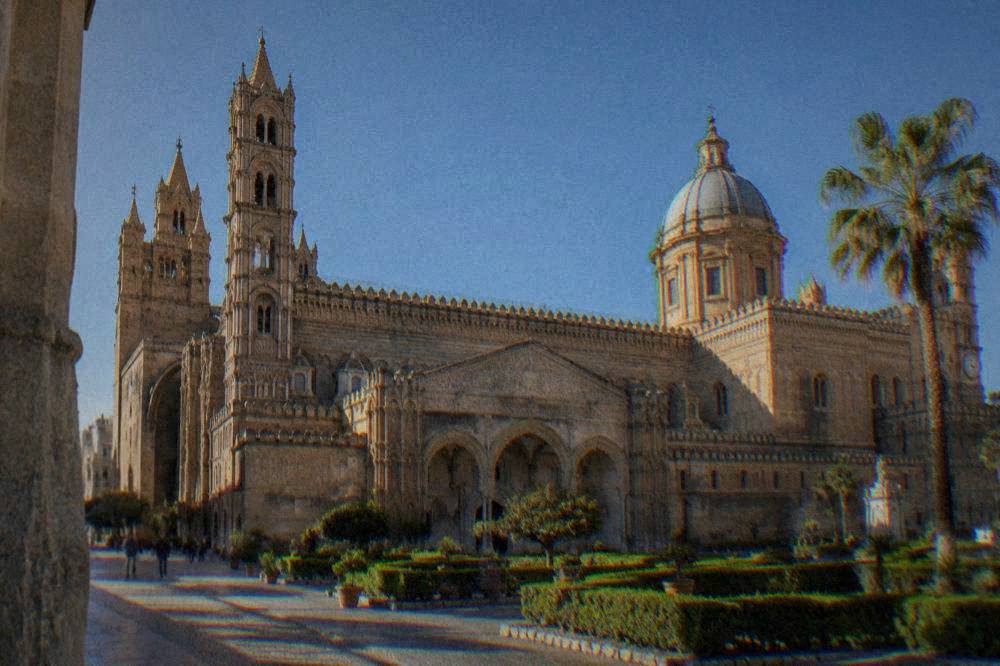
The cathedral is a special case. The official page gives hours for the monumental area, meaning the roof, the royal tombs, the treasury and the crypt, but no price; the fare is shown at the ticket point or on the cathedral's own ticket shop. The Chapel of the Royal Tombs inside holds the sarcophagi of Roger II, Constance of Hauteville, Henry VI, Frederick II and Constance of Aragon, and the cathedral's own history page records that Saracens turned the earlier church into a mosque in 831 and the Normans returned it to Christian worship in 1072, with a Qur'an verse still carved on a column of the southern porch.
For travellers who want the story unpacked on arrival, a guided walk with tastings does both jobs at once. The Palermo street food and history walking tour pairs the old centre's monuments with market stalls, and Check availability shows the current dates and price. Tip-based walks also run locally; confirm arrangements with the guide directly.
Is Palermo Easy To Get Around Without A Car?
Yes, and a car is a liability in the centre: AMAT tickets cost 1.40 EUR for 90 minutes, 3.50 EUR for a day and 8.00 EUR for three days, four tram lines converge on the centre, and the airport bus runs every 30 minutes for 6 EUR one way bought online. The historic centre is walkable, and the ZTL camera zone plus paid blue-line parking make driving inside it expensive.
The airport bus, Prestia e Comande, connects Falcone Borsellino airport with Politeama, Via Roma and the Centrale station area in about 50 minutes, with airport departures from 05:05 to 01:05; the operator's page lists 6 EUR one way and 10 EUR return online, 6.50 EUR and 11 EUR onboard, and children 3 to 12 at 4 EUR one way. A regional train also runs from the airport to Palermo Centrale in about an hour, with the fare shown on the Trenitalia ticket page. The full airport-to-town comparison covers the choices in detail.
Inside the city, buy AMAT tickets before boarding and validate at once; the onboard single costs 1.80 EUR. There is no metro. What exists is a suburban rail passante, with Line A running from Centrale to the airport, and a new Giachery to Politeama section approved for service from November 2026, so treat that city-centre link as planned rather than running. Shared scooters from Dott, Lime and Bird operate under a five-year concession from late 2025; AMAT's own bike-sharing service ended in April 2025.
For day trips the bus and rail network does the heavy lifting. AMAT line 389 runs from Piazza Indipendenza to Monreale about every 40 minutes on a 1.40 EUR city ticket, and the train to Cefalu takes 39 to 60 minutes with 19 to 24 direct services a day. Whether the city is walkable in itself is covered in can you walk in Palermo, and the short answer is yes for the four mandamenti.
When Is The Best Time To Visit Palermo?
The climate table, modelled ERA5 normals for 1991 to 2020, puts August as the warmest month at a mean of 26.8 C and a mean maximum of 30.4 C, February the coldest at 11.2 C, October the wettest at 81 mm and July the driest at 7 mm. Spring and early autumn combine means in the high teens with fewer rain days than winter.
Concretely, the monthly means run 11.3 C in January, 13 C in March, 19.1 C in May, 23.4 C in June, 26.2 C in July, 23.4 C in September, 20.1 C in October and 12.8 C in December. The Festino of Saint Rosalia, the city's patron whose relics were found on Monte Pellegrino in 1624, runs each July from 10 to 15 July, with the chariot procession on 14 July and the silver urn procession on 15 July; a visit built around it is hot but unlike any other week in the city's calendar. Other pages covering the same trip are gathered on Palermo Italy Travel Guide.
| Month | Mean temperature | Rainfall |
|---|---|---|
| January | 11.3 C | 69 mm |
| April | 15.3 C | 59 mm |
| July | 26.2 C | 7 mm |
| August | 26.8 C | 19 mm |
| October | 20.1 C | 81 mm |
| December | 12.8 C | 72 mm |
The 2026-27 Teatro Massimo season runs from November 2026 to December 2027, so a winter visit trades beach weather for opera. Easter Sunday falls on 28 March 2027, and the 2027 Festino and Christmas programmes have not been announced.
What Are The Downsides, And Who Should Skip Palermo?
Palermo's real downsides are an ageing, crowded bus network, a historic centre where driving triggers a camera-enforced paid zone costing 5 EUR a day for petrol and diesel cars, summer heat with an August mean maximum of 30.4 C, and pickpocketing around tourist sites noted in both the US and UK official advisories. Travellers wanting a resort beach holiday or a car-based circuit will chafe here.
The ZTL is the detail that catches self-drivers. Entering without a permit is camera-enforced and fined, with weekday daytime hours plus extra Friday and Saturday evening hours that change by season; permits cost 5 EUR a day for petrol and diesel cars, 2.50 EUR for hybrids, and electric cars enter free, all via the official portal. Outside the zone, the A19 to Catania and the A29 westward are toll-free motorways, which softens the arithmetic for day trips by car.
Safety deserves honest framing rather than stereotype. The US State Department rates Italy Level 2 and says petty crime, including pickpocketing and purse-snatching, is common in popular tourist locations and on public transport. The UK FCDO says the same about Italian city centres generally. Practical checks work better than fear: keep a bag zipped and held in front on a crowded bus, check the itemised bill, and note that the coperto cover charge is legal when printed on the menu. The site's safety question page covers the advisories in full.
Budget matters too. The tourist tax applies to non-residents for a maximum of four consecutive nights, at rates per night by hotel star rating from about 3 EUR to 5 EUR and 4 EUR for short-term rentals, collected by the accommodation and worth confirming at booking. Sightseeing itself is cheap: the table above shows a full day of monuments can cost less than a single museum ticket in northern Europe, and is Palermo expensive to visit breaks down the rest.
Who should skip it? A traveller whose holiday is a sun-lounger with waiter service will find Mondello's mix of free public stretches and paid lidos modest compared with dedicated resorts, and no Palermo-area beach holds a 2026 Blue Flag. Anyone unwilling to walk or use buses will fight the ZTL daily. Everyone else gets one of the densest heritage-and-food packages in the Mediterranean.
How Does Palermo Compare With Other Sicilian Bases?
Palermo suits western Sicily: Monreale is 16 minutes away by road, Cefalu 65, Segesta 64, Erice 96 and Agrigento about 2 h 16, while Catania is about 3 hours by direct regional train and Taormina needs a change and about 3 h 47 or more. The rule of thumb from the routes themselves is simple, fly into Palermo for the west and north, into Catania for Etna, Taormina and the southeast.
The beach comparison follows the same split. Mondello, about 27 minutes from the centre and served by AMAT's summer line 806, is the city's own long sandy beach, and the question is Mondello beach worth visiting answers it in detail. For the east-coast rivalry, Palermo or Taormina and Palermo versus Catania for beaches lay out the trade-offs.
For a first trip that mixes city and coast, the site's itinerary pages, from one day in Palermo through four and five days, sequence the sights day by day, and the western Sicily week page stretches the plan to Monreale, Segesta and Erice. Two or three days in the city plus two or three on day trips is the pattern the geography rewards.
Common Questions About Palermo As A Destination
Is Palermo a good travel destination?
Yes, for travellers focused on architecture, street food and day trips. The UNESCO Arab-Norman inscription, market food culture, museum tickets from about 5 EUR and a public transport day ticket at 3.50 EUR make it strong value. It suits walkers and eaters far better than drivers or resort seekers.
Is Palermo worth visiting for a short trip?
Yes. One day covers the Quattro Canti, the markets and one headline monument; two or three days add the Palazzo dei Normanni, the Teatro Massimo tour and a Monreale or Cefalu day trip, with Monreale just 16 minutes away by road.
Is Palermo safe for tourists?
Official advisories for Italy, from the US State Department and UK FCDO in 2026, flag petty crime such as pickpocketing and bag-snatching around tourist sites and on public transport, with no advice against travel. Standard precautions, a zipped bag on crowded buses and an eye on the itemised bill, are the practical response.
Is Palermo expensive?
Sightseeing is inexpensive: the Palazzo dei Normanni and Palatine Chapel cost 14.50 EUR full, the Capuchin Catacombs 5 EUR, and the Quattro Canti, Foro Italico and markets are free. An AMAT day ticket costs 3.50 EUR. The tourist tax runs about 3 to 5 EUR per night by hotel category for up to four nights, to confirm at booking.
How many days does Palermo need?
Two days for the city itself and four or five to add Monreale, Cefalu, Segesta and Mondello. The train to Cefalu takes 39 to 60 minutes and Monreale's bus 389 runs about every 40 minutes, so day trips need no car.
Do you need a car in Palermo?
No. The historic centre is walkable, trams and buses cover the city, and the main day trips work by train or bus. The centre's camera-enforced limited-traffic zone, at 5 EUR a day for petrol and diesel cars, plus paid blue-line parking, make a car more burden than help inside the city.
Palermo earns its place on a Sicily itinerary precisely because it is a working city with world-rank monuments inside it, and the published prices and timetables, not slogans, are what make that case. Plan it on foot, eat in the markets, budget a couple of days for the countryside cathedrals and temples around it, and the question answers itself.
