Can You Walk In Palermo?
A practical answer to whether Palermo can be explored on foot, with the walkable historic centre, the four districts, distances, and when to switch to a bus or tram.
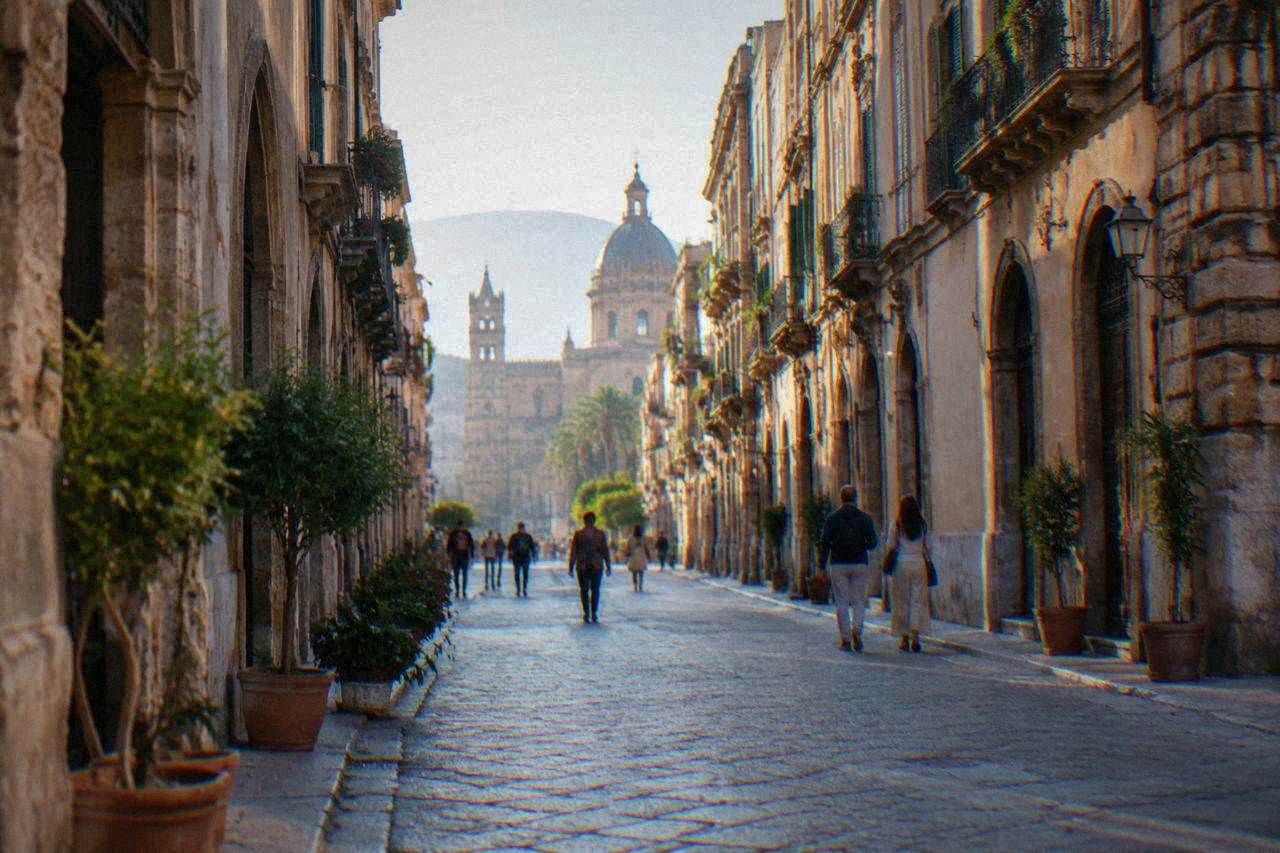
Palermo, the coastal capital of Sicily on the Tyrrhenian Sea, is a city whose historic centre was laid out long before cars, and that geography answers this question almost by itself. The old town is a compact grid crossed by two main streets, Via Maqueda and Corso Vittorio Emanuele, which meet at the Quattro Canti and cut the centre into four districts: Capo, Albergheria, Kalsa and Loggia. Nearly everything a first visit covers, the markets, the churches, the palace, the seafront, sits inside or on the edge of that square, and the municipal tourism pages describe the mandamenti as the city's walking heart. The short answer is yes, you can walk in Palermo, and for the centre you mostly should.
Can You Walk In Palermo?
Yes, Palermo is a walking city for its historic centre. The four old districts of Capo, Albergheria, Kalsa and Loggia sit between the Quattro Canti and the sea, the main markets and squares are a short walk from one another, and the municipal tourism page lists the Quattro Canti, Piazza Pretoria, the Foro Italico seafront and the markets as free, walkable sights. Beyond the centre, Mondello and Monreale need a bus.
That bold answer comes with a shape. Palermo's centre slopes gently from the mountainside parks down to the water, and the two crossing streets give it a coordinate system a visitor can hold in mind in a single afternoon. Via Maqueda runs north to south, Corso Vittorio Emanuele runs east to west toward the harbour at La Cala, and the Quattro Canti, the four-cornered square where they meet, is the reference point for nearly every direction a local will give you.
The walkability has limits, and they are spatial, not linguistic or cultural. Monte Pellegrino and the Parco della Favorita sit north-west of the centre, Mondello is 13.9 km away by road, and Monreale is a separate hilltown above the city reached by the AMAT 389 bus from Piazza Indipendenza. Those are the moments to switch from shoes to a ticket. For the rest, see what is the best way to get around Palermo for the fuller transport picture.
Walking is also how the city's texture reaches you. The markets are street theatre, the church facades sit inches from café tables, and the Arab-Norman UNESCO property, inscribed in 2015, spreads its nine components across streets you cross on foot between the palace and the harbour. A guided walk is one way to hold that history together, and the picks below cover the walk-based options.
What Can You Cover On Foot In The Historic Centre?
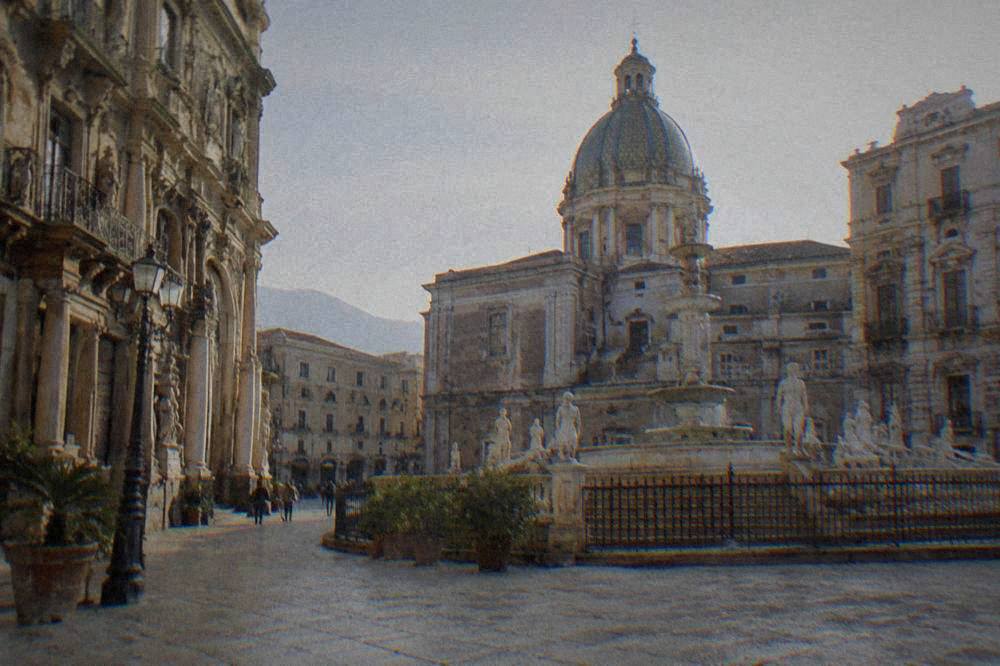
The Quattro Canti, Piazza Pretoria, Palermo Cathedral, the Ballarò and Capo markets, the Kalsa district, the Foro Italico seafront and Villa Giulia are all within walking range of one another, and every one of them is free to enter or free to see from the street. The municipal tourism page lists all of these as open public spaces, and the cathedral's monumental area aside, none needs a ticket to walk past or through.
The natural spine of a walking day is Corso Vittorio Emanuele, the Cassaro, which runs from the cathedral end down toward the sea at the Foro Italico. Start at the cathedral, whose southern porch carries a Qur'an verse on a column from its years as a mosque under Saracen rule from 831 until the Normans returned it to Christian worship in 1072, then walk east. The Cassaro passes the Quattro Canti within minutes, continues into the Kalsa, and finishes at the Foro Italico, the long seafront lawn facing the Gulf of Palermo. This is a flat walk on pavements the whole way.
Cross-cut it with Via Maqueda and you pick up the Ballarò market to the south-east and the Capo market to the north. The markets run on their own clocks: Ballarò trades Monday to Saturday from about 7:30, with Sunday mornings, and Capo runs mornings and closes on Sundays. Neither needs a plan beyond arriving hungry. For the food angle in depth, see what food is Palermo famous for.
The table below collects the free walkable sights the municipal tourism pages list, with the district each sits in.
| Sight | District | Entry |
|---|---|---|
| Quattro Canti | On the boundary of all four districts | Free, public square |
| Piazza Pretoria fountain | Albergheria side | Free to view from the square |
| Foro Italico seafront | Loggia side, on the water | Free, open lawn |
| Villa Giulia | Adjacent to the Foro Italico | Free public garden |
| Ballarò market | Albergheria | Free to enter |
| Capo market | Capo | Free to enter |
| Palermo Cathedral exterior and porch | Albergheria | Free to view; monumental area ticketed |
Ticketed interiors cluster on the same footprint, so a walking day can absorb them without breaking stride. The Palazzo dei Normanni with the Cappella Palatina sits at the top of the Cassaro, the Teatro Massimo stands a short walk north of the Quattro Canti, and the Palazzo Steri's Inquisition prisons face the Marina in the Kalsa. Each has its own hours and the royal apartments close on Tuesdays and Wednesdays when the regional parliament sits, so check the relevant official pages before planning a day around an interior.
How Far Is Palermo's Centre From The Sea And The Cruise Port?
The cruise terminals at the Stazione Marittima and Sammuzzo sit about 1.5 to 1.8 km from the Quattro Canti, a flat 15 to 20 minute walk along Via Emerico Amari and Via Maqueda, according to port guides that track the terminals. Cruise passengers can therefore walk into the centre and cover a full day of sights on foot, with La Cala, the old harbour, en route.
That walk matters because Palermo is a significant cruise port: the port authority's figures reported by PortsEurope count 996,484 passengers across 284 calls in 2025. A caller stepping ashore reaches the Cassaro within half an hour on foot and the Foro Italico soon after, so a ship day in Palermo is genuinely a walking day. The route is flat and signposted through the city streets, and La Cala's marina makes a natural first stop.
For passengers who prefer structure over self-navigation, a walk-based tour that starts near the port converts the same geography into a guided loop. The city's walking tours, including the UNESCO-route walks, cover exactly this ground, and a themed walk with tastings along the way answers both the sightseeing and the lunch question in one move.
If a guided introduction to the streets appeals, book a free walking tour here.
Is A Guided Walk Or A Guided Ride Better For First-Time Visitors?
A guided walk suits a first day centred on the four old districts, the markets and the UNESCO streets, because the sights are dense and the lanes reward slow passage. A guided bike ride suits visitors who want the centre plus the seafront parks in one outing, and the related tour on this page pairs a guided ride with street food tastings, covering ground and lunch together.
The editorial desk points to one practical test: how much of your day belongs to interiors. If the Palazzo dei Normanni, the cathedral's monumental area and a theatre tour are on the list, a walking day wins, since the queues and the ticket points are all close together. If the day is about streets, markets and the sea, wheels extend the range toward the Parco della Favorita without costing the atmosphere. The Palermo Italy Travel Guide covers both styles across its tour pages, and the related bike-and-food tour below is the pick that bridges them.
When Does Walking In Palermo Stop Working?
Walking stops being the right tool for Mondello, Monreale, the Parco della Favorita and Monte Pellegrino, all of which sit outside the historic centre and are served by AMAT buses. Mondello is 13.9 km from the Quattro Canti by road, Monreale is reached by the AMAT 389 from Piazza Indipendenza, and the AMAT fares page lists 1.40 EUR for a 90-minute ticket and 3.50 EUR for a day ticket.
The transition point is honest about scale. The centre is a couple of kilometres across; the day trips are not. Mondello, the beach district on the coast to the north, is a bus ride on the summer line 806, and Monreale's cloister, a separate ticketed visit at 8 EUR full and 4 EUR reduced per the operator's listing, sits on a hill the 389 climbs about every 40 minutes. None of these is a walk in the sense this page is about.
Inside the centre, two frictions are worth naming. First, scooter traffic is a constant on the narrow lanes, so the standard urban habit of checking both directions, even on streets that feel pedestrian, applies. Second, the ZTL, the camera-enforced limited traffic zone, keeps the historic centre quieter than most Italian city cores, which is part of why walking it is pleasant; it does not restrict pedestrians at all.
The bus fares that matter for a walker who occasionally rides:
| AMAT ticket | Price | Validity |
|---|---|---|
| Single, bought in advance | 1.40 EUR | 90 minutes from validation |
| Single, bought onboard | 1.80 EUR | 90 minutes from validation |
| Day ticket | 3.50 EUR | Until end of service |
| Three-day MultiDay | 8.00 EUR | Whole network, 3 days |
Buy before boarding and validate at once; the AMAT fares page states both rules plainly. The same tickets cover the four tram lines and the 389 toward Monreale's stop, so one day ticket can carry a walking-plus-Monreale plan.
Is Walking In Palermo Safe And Comfortable?
Official advisories treat Palermo under the same heading as the rest of Italy: the US State Department's September 2026 note and the UK FCDO both describe petty crime such as pickpocketing and bag-snatching as more common in city centres and at major tourist attractions, and neither advises against travel. On foot this means a zipped bag held in front on crowded buses and busy market lanes, not an avoidance of any district.
The climate table shapes comfort more than crime does. The modelled ERA5 normals for 1991 to 2020 put July at a mean of 26.2 C and August at 26.8 C, with August's mean maximum at 30.4 C, while October is the wettest month at 81 mm and July the driest at 7 mm. A walking plan in high summer does better early and late in the day, with the middle hours spent in a museum or the cathedral's cool interior. From late autumn to spring the same streets are mild, with January at a mean of 11.3 C.
For the wider safety picture, see is Palermo safe to travel to right now.
Should You Take A Walking Tour Or Walk Alone In Palermo?
Walking alone works well in Palermo because the centre is compact, free to enter at street level and arranged around two crossing streets, but a guided walk adds the layer the streets do not explain themselves: the Arab-Norman UNESCO story, the anti-mafia memory and the market food culture. A first day on a guided walk followed by independent days on foot is the pattern the geography supports.
The desk's reporting basis for that: the UNESCO property's nine components, from the royal palace to the Admiral's Bridge, are scattered across the centre, and a guide stitches them into one narrative; the anti-mafia story lives at specific places such as the Albero Falcone on Via Notarbartolo, tied to the Capaci attack of 23 May 1992, which a themed walk connects; and the markets reward a local's ordering instincts. Tip-based walks also run locally, and the reader should confirm arrangements and meeting points with the guide directly.
For travellers weighing Palermo against other Sicilian bases, walking is one of its strongest cards: the question is Palermo a good travel destination covers the rest of the case, and how many days are recommended for a trip to Palermo sizes a visit that leaves room for both the centre on foot and one bus-backed excursion.
Common Questions About Walking In Palermo
Can you walk in Palermo?
Yes. The historic centre's four districts, the markets, the cathedral, the Quattro Canti and the Foro Italico seafront all sit within walking range of one another, and the municipal tourism page lists these as free public spaces. Only Mondello, Monreale and the northern parks need a bus.
How walkable is central Palermo for a full day?
A full day on foot covers the cathedral, the Quattro Canti, the Ballarò or Capo market, the Kalsa district and the Foro Italico without rushing, since the crossing of Via Maqueda and Corso Vittorio Emanuele keeps the whole loop within a couple of kilometres. Ticketed interiors such as the Palazzo dei Normanni sit on the same footprint.
Can you walk from the Palermo cruise port into the centre?
Yes. The Stazione Marittima and Sammuzzo terminals are about 1.5 to 1.8 km from the Quattro Canti, a flat 15 to 20 minute walk, so a cruise day in Palermo can be done entirely on foot.
Do you need a car to see Palermo?
No. The centre is a walking district, AMAT buses and trams cover the city with a 1.40 EUR single ticket, and the main day trips such as Monreale and Cefalu are served by bus or train. A car mainly adds the ZTL permit question and paid blue-line parking.
Is it safe to walk around Palermo at night?
Official advisories for Italy describe petty crime such as pickpocketing and bag-snatching as more common in city centres and at major tourist attractions, and advise standard urban care rather than avoiding any area. Keep bags closed and in front on busy streets, as in any large city.
What should you wear for walking in Palermo?
Comfortable shoes for cobbled lanes, and covered shoulders and knees for church visits including the cathedral's nave. In July and August, with means of 26.2 C and 26.8 C, an early start and a refillable bottle matter, since AMAP states the tap water is suitable for drinking.
