Naples To Palermo Ferry
The overnight ferry from Naples lands you in the heart of Palermo, the coastal capital of Sicily, within walking distance of the historic centre. Here is what the operators publish, what the port looks like on arrival, and how to plan the Sicilian days that follow.
Short answer
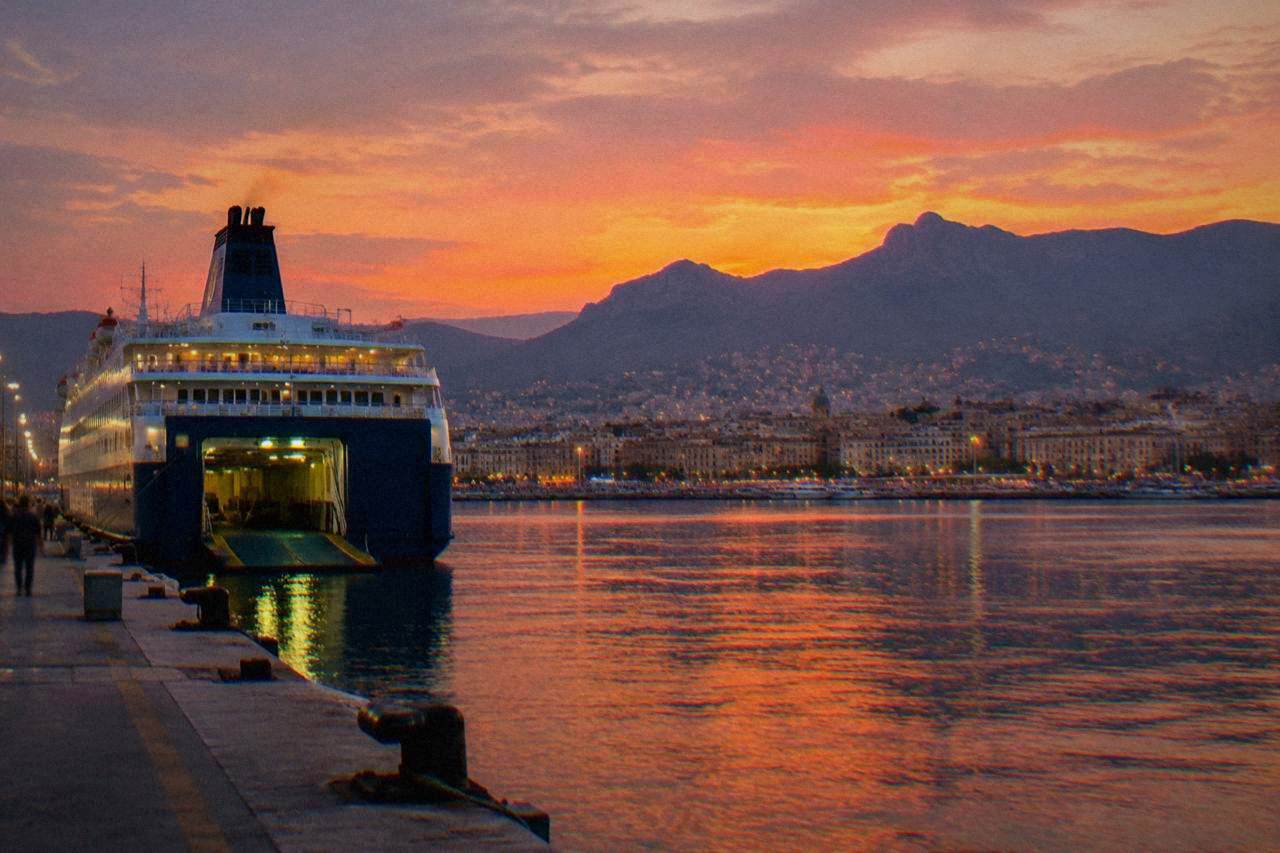
The Naples to Palermo ferry is an overnight crossing of about 11 hours with GNV, which sails the route daily year-round with evening departures arriving early in the morning. Grimaldi Lines and Tirrenia also serve the route. Ships dock at the central waterfront terminals, roughly 15 to 20 minutes on foot from the Quattro Canti.
The overnight ferry from Naples to Palermo is one of the most practical ways to bring a car into Sicily, and one of the most pleasant ways to arrive in the island's capital without one. Palermo sits on the north-west coast of Sicily on the Tyrrhenian Sea, and its ferry terminals sit on the central waterfront, a flat walk from the streets of the historic centre. The Palermo Italy Travel Guide covers every stage of that plan, from the port to the beaches at Mondello.
How Long Is The Ferry From Naples To Palermo?
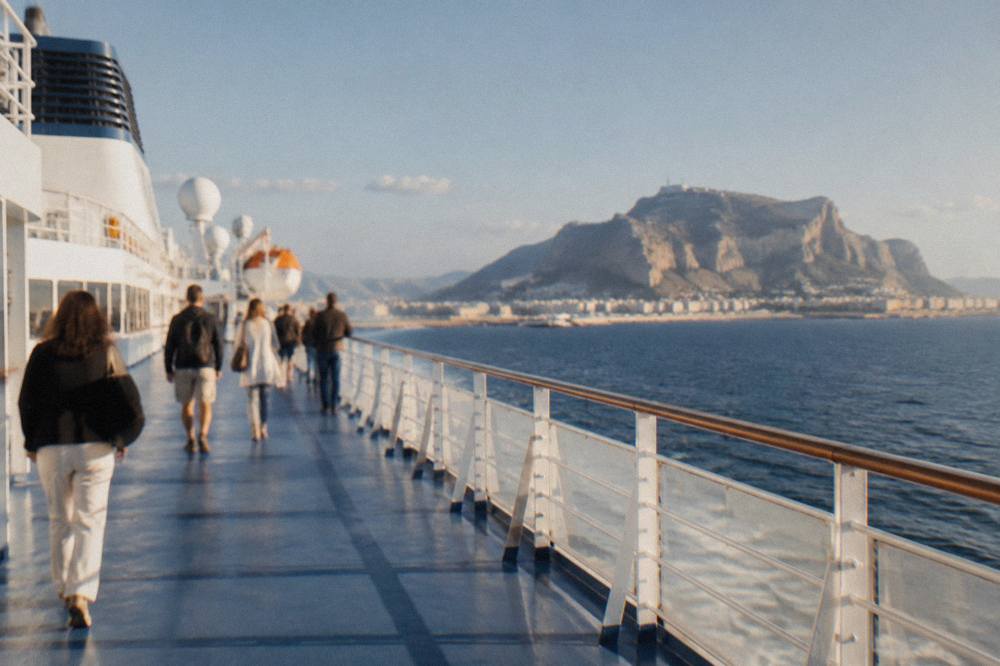
The GNV ferry from Naples to Palermo takes about 11 hours and sails overnight, generally departing in the evening and arriving early the next morning, with daily service year-round. GNV's own route page lists the Naples to Palermo crossing alongside its other Sicily sailings, and it accepts both foot passengers and vehicles, including cars, motorcycles and campers.
That timing is the whole appeal of the route. You board in Naples after dinner, sleep through the crossing, and step off the ship in Palermo with a full day ahead of you. GNV operates the route daily through the year according to its route page, so the sailing is not limited to a summer season, though exact departure times shift with the timetable and should be read on the operator's own listing before you commit to connecting travel in Naples.
Foot passengers and vehicles travel on the same ship. That matters for planning: a traveller without a car boards with a cabin or a pullman seat, while a driver brings the vehicle into the hold and walks up to the passenger decks. The sea between Naples and Palermo is open water for most of the crossing, so an overnight cabin is the option the schedule is built around.
Which Operators Sail From Naples To Palermo?
Three operators serve the Naples to Palermo route: GNV sails daily year-round with crossings of about 11 hours, while Grimaldi Lines and Tirrenia also run the route with their own weekly frequencies, evening departures and overnight arrivals. All three accept foot passengers and vehicles. The right choice usually comes down to which departure time fits your plans in Naples and which arrival time suits your first day in Palermo, and both are read on each operator's live listing rather than assumed from a guide.
GNV is the anchor operator, with the daily frequency and the published 11-hour crossing time. Grimaldi Lines runs multiple sailings per week on the route with evening departures, and Tirrenia sails year-round with both day and night timings. Because the three operators run from Naples on different evenings, a traveller with flexible dates can often find a departure within a day or two of the preferred one.
Palermo is also a ferry hub for routes beyond Naples, and GNV's port page lists the full set. If the Naples sailing is full or badly timed, the same terminals serve other mainland and international routes.
| Route from Palermo | Operator | Typical crossing |
|---|---|---|
| Naples | GNV (daily), Grimaldi Lines, Tirrenia | about 11 hours, overnight |
| Genoa | GNV | about 20 h 30 |
| Civitavecchia | GNV | about 13 h 30 |
| Tunis | GNV | about 9 h 30 |
| Ustica | Liberty Lines hydrofoil | about 1.5 hours |
The Ustica hydrofoil is a different kind of service entirely: it carries foot passengers only, no cars, and runs from a separate small-craft terminal on the waterfront. For a day on a quiet island after a few days in Palermo, it is the shortest hop on the board.
If you are landing without a car, the question of how to see Sicily beyond the city answers itself quickly. A guided excursion such as the Segesta, Erice and salt pans day trip covers three of western Sicily's headline sights in one structured day, with the driving handled for you: Check availability.
Where Does The Ferry Dock In Palermo And How Far Is The Centre?
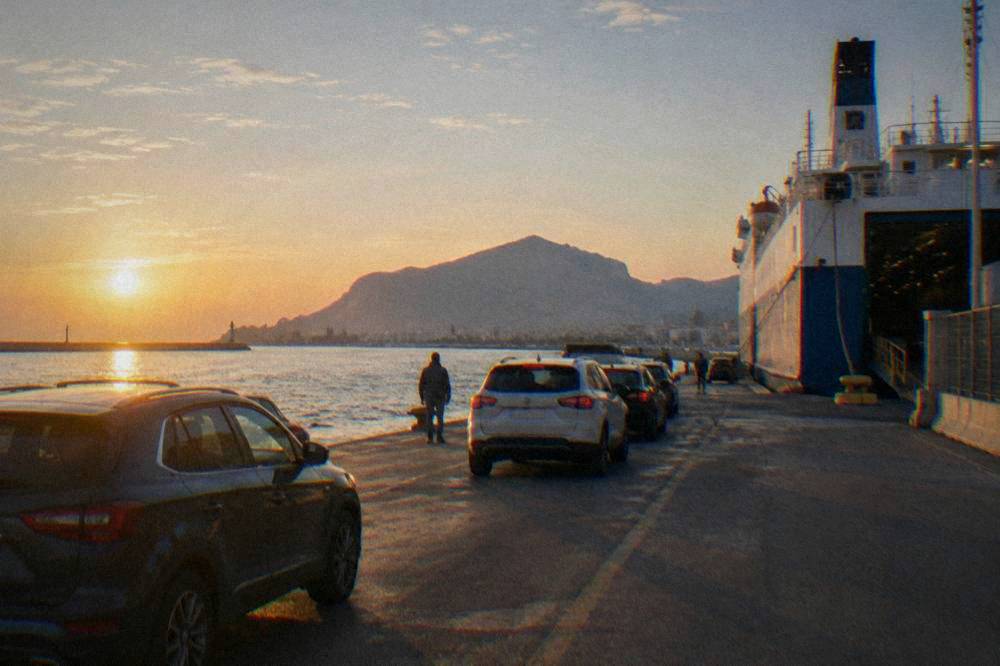
Ferries arrive at Palermo's central waterfront terminals, the Stazione Marittima on Molo Vittorio Veneto and the Sammuzzo terminal on Via Francesco Crispi, both directly adjacent to the city rather than in an outlying industrial port. The walk from the terminals to the Quattro Canti, the crossroads at the heart of the historic centre, is about 1.5 to 1.8 km on flat streets, roughly 15 to 20 minutes on foot.
That distance is the single most useful fact about arriving by ferry in Palermo. There is no transfer to plan and no shuttle to wait for. The route runs from the harbour area through Via Emerico Amari toward Via Maqueda, and it is flat the whole way, with luggage trolleys and taxis available at the terminal for anyone who prefers not to walk.
La Cala, the historic harbour basin, sits beside the terminals and is itself one of the city's pleasant waterfront spaces. The municipal tourism portal describes the terminals' position on the central waterfront, and the port authority's contact page confirms the Via Francesco Crispi address for the Sammuzzo gate. Cruise ships use the same Stazione Marittima and Sammuzzo terminals, which tells you how central the berths are.
| Place | Relation to the ferry terminals |
|---|---|
| La Cala historic harbour | Immediately adjacent to the terminals |
| Quattro Canti | About 1.5 to 1.8 km, 15 to 20 minutes on foot |
| Palermo Centrale station | A short taxi or bus ride south of the port |
| Politeama theatre | West along the waterfront side of the centre |
| Foro Italico seafront | A level walk east along the water |
Do You Need To Bring A Car On The Ferry?
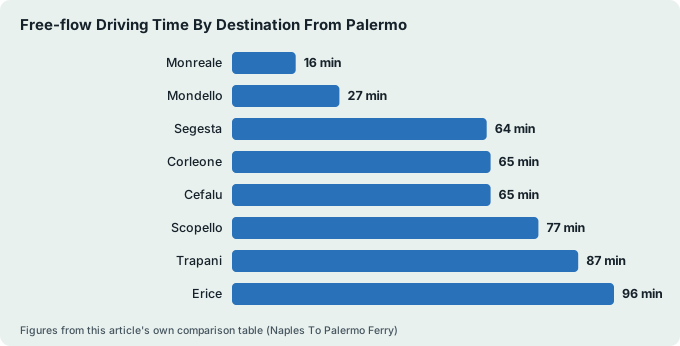
No, foot passengers travel on the Naples to Palermo ferries just as vehicles do, and arriving on foot is often the better choice, because Palermo's historic centre is compact, walkable and partly restricted to traffic, and the city's buses and trams cover the distances beyond it. The case for bringing a car is not the city itself but the island beyond it: Monreale, Segesta, Erice, Scopello and the interior are easier with your own wheels, and the A19 and A29 motorways that fan out from Palermo are toll-free according to Anas.
What the car buys you, in minutes of free-flow driving from the Quattro Canti, is a wide ring of day trips. What it costs you is parking and the limited-traffic zone in the centre, where camera-enforced gates control access and a paid daily pass is required for a petrol or diesel car, at 5 EUR per day, 2.50 EUR for hybrids and free for electric vehicles, via the municipal ZTL portal. Many ferry travellers compromise: arrive on foot, stay in the centre, and rent a car only for the days that need one, or take guided day trips instead.
| Destination from Palermo | Free-flow driving time |
|---|---|
| Monreale | 16 minutes |
| Mondello | 27 minutes |
| Segesta | 64 minutes |
| Corleone | 65 minutes |
| Cefalu | 65 minutes |
| Scopello | 77 minutes |
| Trapani | 87 minutes |
| Erice | 96 minutes |
| Agrigento, Valley of the Temples | 2 h 16 |
| Catania | 2 h 42 |
The trains cover part of that list too. Cefalu is 39 to 60 minutes from Palermo Centrale with 19 to 24 direct trains a day, Agrigento about 2 hours direct, and Catania about 3 hours, while Taormina needs a change en route. For the hill towns and archaeological parks off the rail lines, a guided excursion or a hire car fills the gap.
What Should You Do With Your First Hours After Docking?
Walk straight into the historic centre and let the four districts do the work: the Quattro Canti crossroads, the Palermo Cathedral, the markets of Ballarò and Capo, and the Palatine Chapel inside the Palazzo dei Normanni are all within a compact area, and the municipal tourism portal describes the old centre as divided into the four mandamenti of Capo, Albergheria, Kalsa and Loggia by the crossing of Via Maqueda and Corso Vittorio Emanuele. Disembarking early in the morning means you reach these streets before the day heats up and before the queues build at the ticketed sights.
The Palazzo dei Normanni and the Palatine Chapel share one ticket, 14.50 EUR full and 12.50 EUR reduced, with the royal apartments included, open Monday to Saturday with last admission at 16:30 and Sunday mornings only. The royal apartments close on Tuesdays and Wednesdays when the regional parliament sits, so check that against your arrival day. The Cappella Palatina guide covers what the chapel holds, and a timed guided tour of the palace and chapel skips the ordinary ticket line: Check availability.
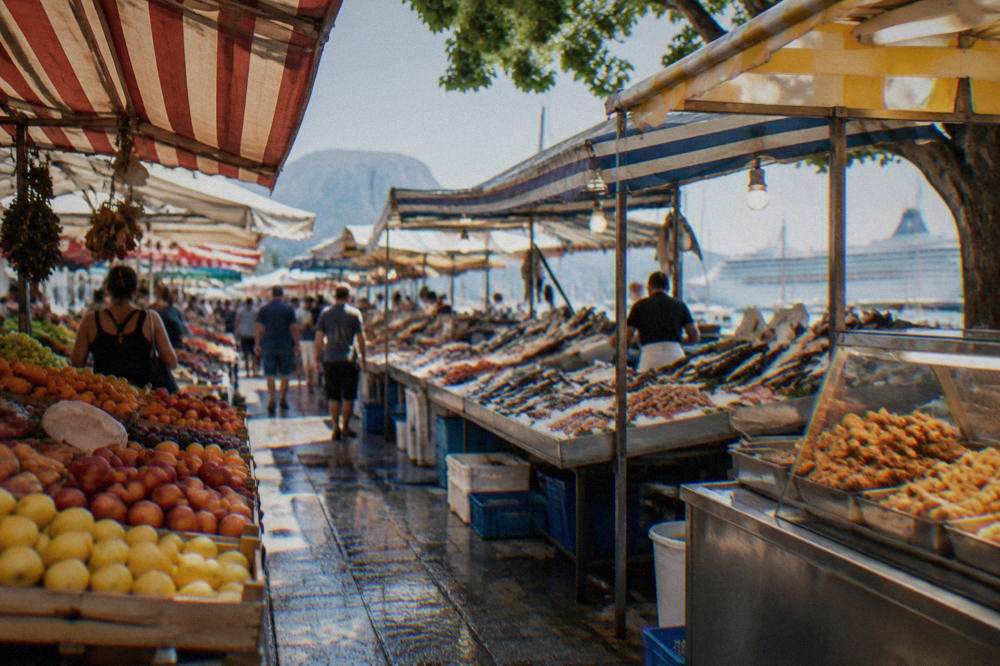
From the palace it is a short walk downhill to the Cathedral, whose official page gives hours for the monumental area, the roof, the royal tombs and the treasury, with the ticket price shown at the ticket point or on the cathedral's ticket shop rather than on the hours page. The markets then feed you. Ballarò runs Monday to Saturday from about 7:30, with Sunday mornings, and the Capo market works mornings and rests on Sundays, so an early ferry arrival lands you in the middle of the loudest hours of both.
How Do You Get Around Palermo Once You Are Off The Ship?
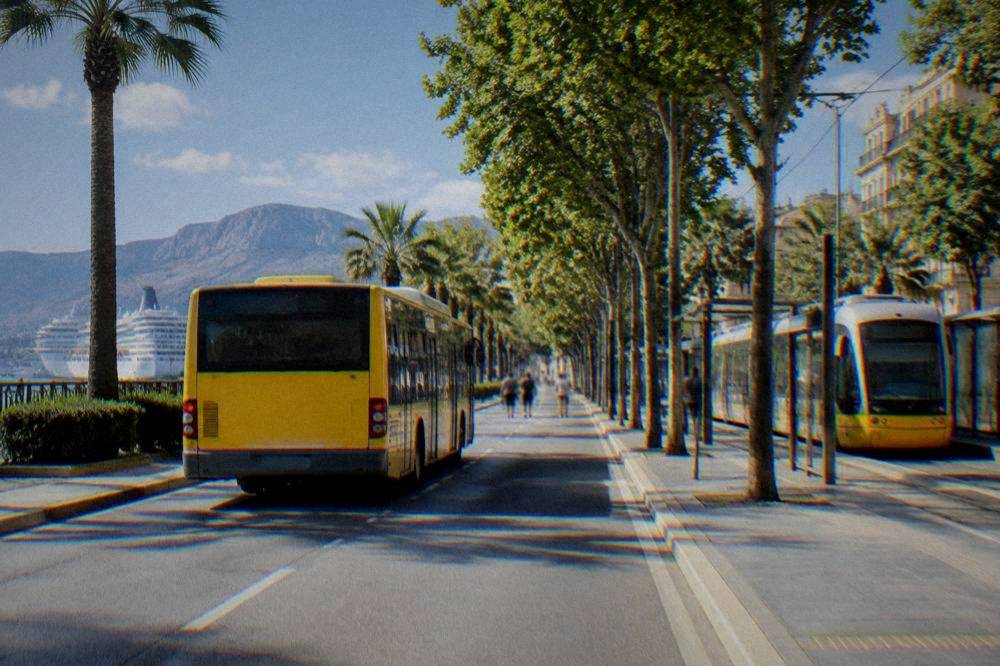
Palermo has no metro: city transport is the AMAT bus and tram network, whose fares page lists a 1.40 EUR single ticket valid 90 minutes from validation, 1.80 EUR bought onboard, a 3.50 EUR day ticket and an 8.00 EUR three-day MultiDay, with tickets bought before boarding and validated at once. Four tram lines converge from the periphery toward the centre, and a suburban rail service, the Passante ferroviario, connects Palermo Centrale with the airport on Line A.
For a ferry traveller staying two or three days, the three-day MultiDay at 8.00 EUR is usually the whole transport budget, especially combined with the fact that the centre itself is walkable end to end. The buses also reach the beach: the summer line 806 runs to Mondello, which the municipal tourism page describes as a 1.5 km stretch of fine pale sand with equipped lidos, about 27 minutes by road from the centre.
| AMAT ticket | Price | Validity |
|---|---|---|
| Single, bought in advance | 1.40 EUR | 90 minutes from validation |
| Single, bought onboard | 1.80 EUR | 90 minutes from validation |
| Day ticket | 3.50 EUR | Until end of service on the day |
| Two-day MultiDay | 6.00 EUR | Until end of service on the 2nd day |
| Three-day MultiDay | 8.00 EUR | Until end of service on the 3rd day |
| Seven-day MultiDay | 16.50 EUR | Until end of service on the 7th day |
The airport connection matters if your ferry return leaves from Naples and your flight leaves from Palermo. The Prestia e Comande airport bus runs every 30 minutes, takes about 50 minutes, costs 6 EUR one way bought online or 6.50 EUR onboard, and stops at Politeama, Via Roma and the Centrale station area, as the operator's timetable shows. The airport to city centre guide compares every option in detail.
Can You Build A Sicily Trip Around The Ferry Arrival?
Yes, and the ferry makes a natural loop: arrive overnight from Naples, spend three or four days in Palermo with day trips west and east, and either sail back or continue by train, since Palermo Centrale connects directly to Cefalu, Agrigento and Catania and the toll-free A19 crosses the island in under three hours of driving. The decision that shapes the trip is whether Sicily beyond Palermo is a series of day trips from one hotel or a touring route with luggage in the hold.
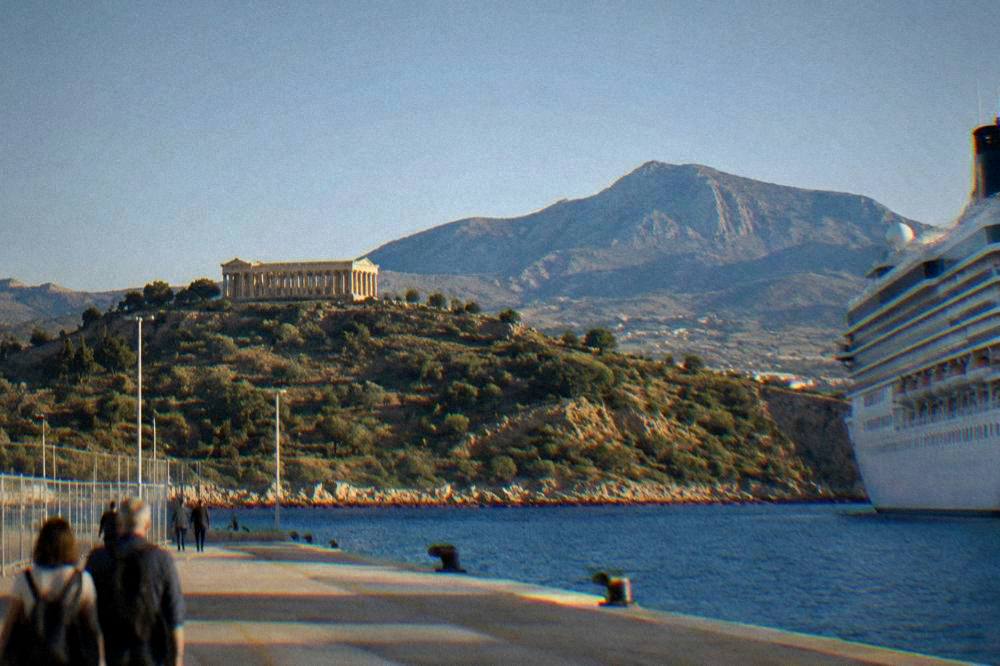
Day-tripping from Palermo works better than its reputation suggests, because the distances are short. Monreale is 16 minutes by road, or a 1.40 EUR AMAT 389 bus from Piazza Indipendenza running about every 40 minutes, where the cloister costs 8 EUR full and 4 EUR reduced and the cathedral is a separate visit. Segesta's archaeological park is 64 minutes away, with entry at 14 EUR full and 7 EUR reduced. The Segesta, Erice and salt pans excursion chains the Greek temple, the hill town reached by a 9 EUR one-way cable car, and the free salt museum at Nubia into a single day.
Longer arcs need either the car in the ferry hold or the train. Agrigento's Valley of the Temples, 14 EUR full and 7 EUR reduced and open 8:30 to 20:00, is about 2 hours away by direct regional train as well as by road. Mount Etna's Rifugio Sapienza is about 3 h 20 of driving, and the cable car there climbs from about 1,920 m to about 2,500 m, with a guide required above about 2,500 m under current ordinances. A loop that arrives by ferry, day-trips for three days, then drives east to Etna and Taormina before flying home from Catania is the pattern the geography rewards.
For a first visit, the three days in Palermo itinerary sequences the city and the closest day trips, and the question of how long to give the city has its own answer in the how many days in Palermo guide.
When Is The Best Time Of Year To Take The Ferry To Palermo?
The climate table shows Palermo at its warmest in August with a mean of 26.8 C and its driest in July with 7 mm of rain, while October is the wettest month at 81 mm and February the coldest at 11.2 C, all modelled ERA5 normals for 1991 to 2020, so the shoulder months of May, June and September combine warm means of 19.1, 23.4 and 23.4 C with sharply lower rainfall than autumn. For a ferry arrival specifically, spring and early summer also mean the markets and the roof terraces are fully in season without the August heat.
| Month | Mean temperature | Rainfall |
|---|---|---|
| February | 11.2 C | 73 mm |
| May | 19.1 C | 36 mm |
| July | 26.2 C | 7 mm |
| August | 26.8 C | 19 mm |
| September | 23.4 C | 61 mm |
| October | 20.1 C | 81 mm |
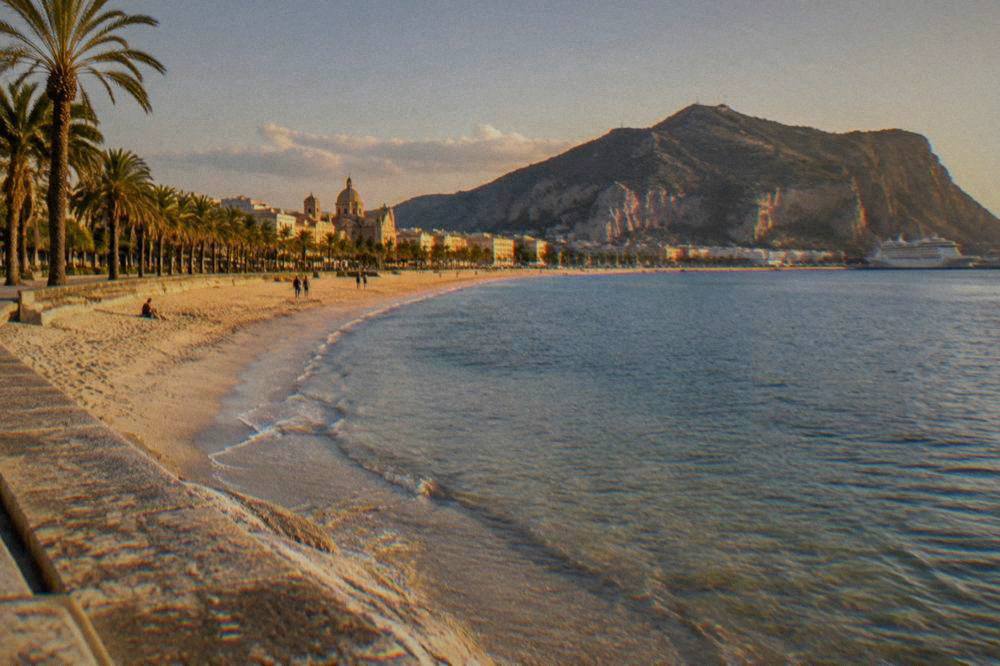
July and August are when Mondello's beaches fill and when the 806 bus runs its fullest summer frequency. Mid-July brings the Festino of Saint Rosalia, held each year from 10 to 15 July, with the chariot procession on 14 July along the Cassaro to Porta Felice and fireworks the same night, and the religious procession with the silver urn on 15 July. Book the ferry and the cabin early for those dates, because the whole city is the destination. The best time to visit Palermo guide works through the full year month by month.
What Does The Crossing Actually Cost And How Should You Book It?
Ferry fares for Naples to Palermo are not printed on any page of this site, because cabin class, season, vehicle length and foot-passenger status change the price from sailing to sailing, so the figure to trust is the one on each operator's live listing at the moment you book. What can be said with confidence is structural: GNV, Grimaldi and Tirrenia all quote foot passenger, cabin and vehicle rates separately, an overnight crossing almost always works best with a cabin, and vehicles are priced by length.
A few booking habits serve the route well. Compare all three operators for your date, since their evenings differ. If you are travelling without a car, check whether the departure and arrival times let you connect with a train or hotel check-in on either end. And if you are bringing a vehicle, read the ZTL rules before you drive off the ship in Palermo: the historic centre is a paid, camera-enforced limited-traffic zone, and a pass is bought through the municipal portal, with same-day activation possible within its limits.
Common Questions About The Naples To Palermo Ferry
How long is the ferry from Naples to Palermo?
The GNV crossing takes about 11 hours and sails overnight, with evening departures from Naples and early-morning arrivals in Palermo, daily year-round. Grimaldi Lines and Tirrenia also serve the route with their own schedules.
Do Naples to Palermo ferries take cars?
Yes. GNV, Grimaldi Lines and Tirrenia all accept vehicles as well as foot passengers on the Naples to Palermo route, including cars, motorcycles and campers. Vehicle pricing depends on length and is quoted on each operator's listing.
Can you take the ferry from Naples to Palermo without a car?
Yes, foot passengers travel on all the Naples to Palermo sailings. The Palermo terminals sit on the central waterfront, about 15 to 20 minutes on foot from the Quattro Canti, and AMAT buses and trams cover the rest of the city from there.
Where does the ferry arrive in Palermo?
Ships berth at the Stazione Marittima on Molo Vittorio Veneto or the Sammuzzo terminal on Via Francesco Crispi, both on the central waterfront next to La Cala. The historic centre begins a short flat walk inland.
Is there a daytime ferry from Naples to Palermo?
Most sailings on the route depart in the evening and arrive the next morning. Tirrenia lists both day and night timings on the route, so a daytime crossing exists on some dates and should be checked on the operator's live timetable.
How do you get from the Palermo ferry port to the city centre?
On foot in about 15 to 20 minutes via Via Emerico Amari and Via Maqueda, a flat route of about 1.5 to 1.8 km to the Quattro Canti. Taxis are available at the terminals for anyone with heavy luggage.
The ferry turns the journey into part of the holiday: an evening departure from Naples, a night at sea, and a morning arrival within walking distance of one of the most layered historic centres in the Mediterranean. Plan the crossing against the operators' live timetables, decide early whether Sicily means a car in the hold or day trips on foot, and the rest of the route, from the Quattro Canti to the temples of Segesta, falls into place.