Where Do Locals Eat In Palermo, Sicily?
Where Palermo residents actually eat, from the Ballarò and Capo market stalls to the evening Vucciria and the trattorias of the old mandamenti, with the dishes to order and the practical rules of the table.
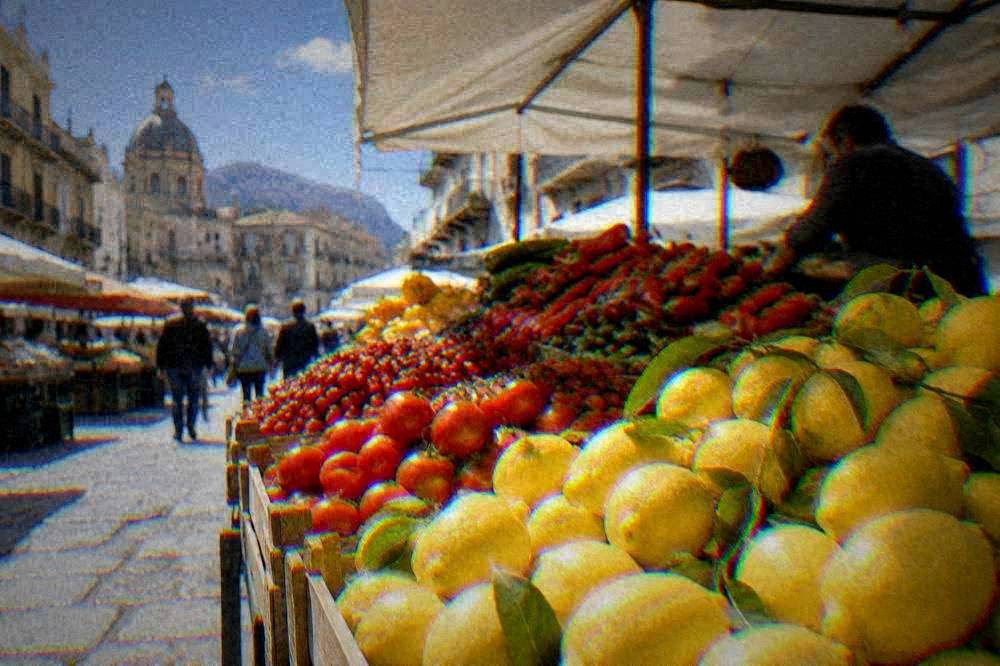
Palermo, the coastal capital of Sicily on the Tyrrhenian Sea, eats differently from the cities on the standard Italian circuit. The day starts at a market bar with a brioche and a coffee, continues with fried chickpea fritters bought from a window, and ends late, sometimes standing, in the streets around the Vucciria. The municipal tourism portal names Ballarò, Capo and Vucciria as the three historic markets of the old centre, and that trio is the honest skeleton of an answer to this question.
Where Do Locals Eat In Palermo, Sicily?
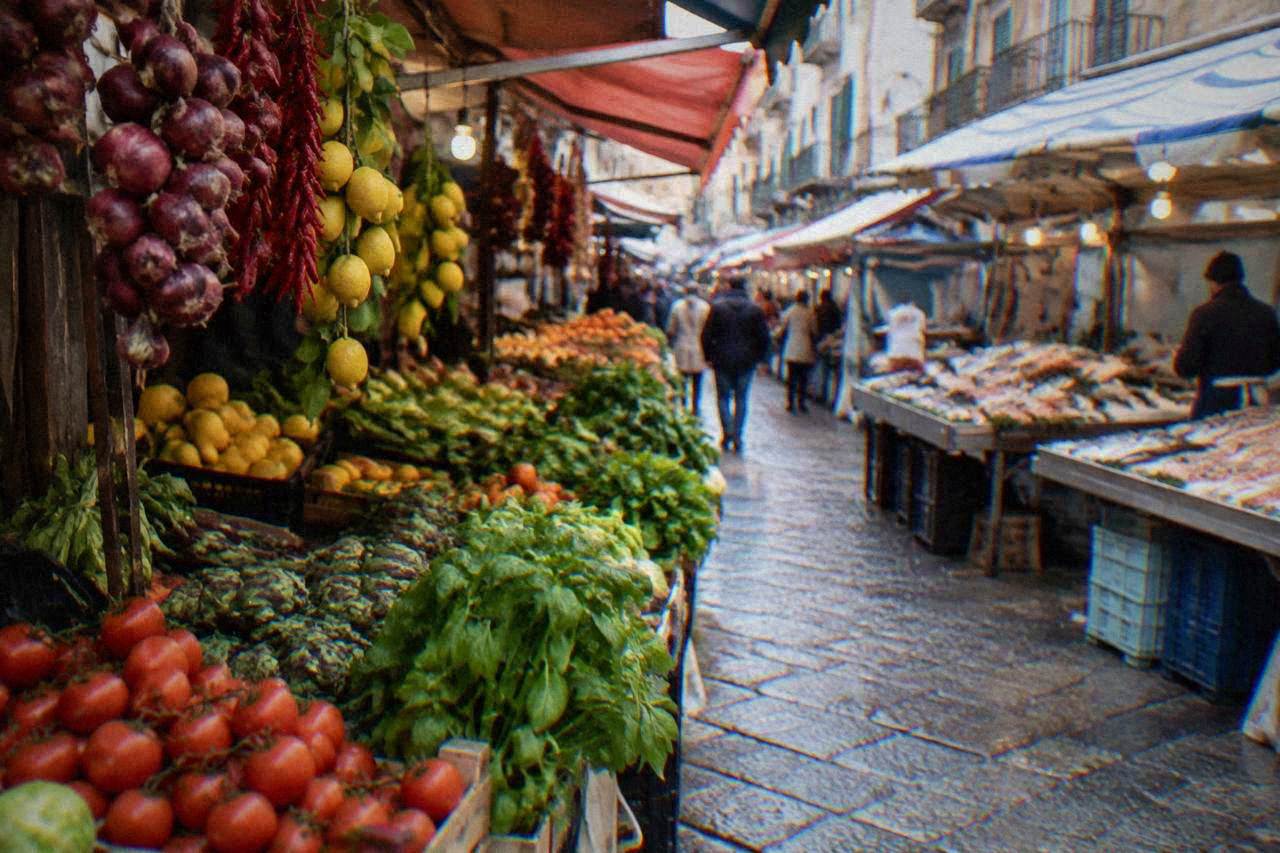
Locals in Palermo eat at the three historic markets of the old centre, Ballarò, Capo and Vucciria, at the street-food fry shops around them, and in the small trattorias of the four mandamenti. The municipal tourism page describes Ballarò as the oldest and largest historic market, of Arab origin, open roughly Monday to Saturday from 7:30 to 20:00 with Sunday mornings, and residents shop and snack there before any visitor arrives.
The four districts of the old centre, Capo, Albergheria, Kalsa and Loggia, each carry their own food habits. Ballarò sits against the Albergheria, a short walk from the station, and it is a working market first and a sight second. The Capo market runs mornings near the cathedral end of town and does not operate on Sundays. The Vucciria trades by day and turns into an open-air evening scene, strongest from Thursday to Saturday nights in the warmer months.
What joins all three is that eating happens standing, at a counter, or on the move. The pizza-like sfincione, the chickpea fritters called panelle and the spleen sandwich known locally as pani ca' meusa are sold by weight or by the piece, and a local will eat one standing at the stall rather than sitting at a table. The deeper food background, dish by dish, is covered in what food Palermo is famous for, which pairs well with this page.
Which Palermo Markets Do Residents Actually Shop In?
Residents shop in Ballarò for the full weekly shop, in Capo for morning meat and fish, and in the Vucciria less for groceries than for its evening life. The municipal tourism page lists all three as the main historic markets, describes Ballarò as of Arab origin with free entry, and gives its rough hours as Monday to Saturday 7:30 to 20:00 plus Sunday mornings. Capo runs mornings and rests on Sundays.
The practical pattern matters more than the individual stalls. Ballarò is at its loudest and freshest before midday, when the fish stalls are full and the fryers are running; by late afternoon it thins out. Capo peaks earlier still and shuts down around lunchtime, so a visitor arriving at 15:00 finds it half closed and wrongly concludes it is finished. The Vucciria keeps a reduced daytime trade and then fills again after dark with drinks and fried food served from openings in shuttered storefronts, a scene the neighbourhood listings describe as running daily but strongest toward the weekend.
Two rules of the table follow residents everywhere in Sicily. A coperto, the cover charge, is legal when it is printed on the menu, and it appears as a small per-person line on the bill in sit-down places. Tipping is not obligatory anywhere. Anyone planning a full circuit of the old town on foot should also read whether you can walk around Palermo, since the three markets sit within easy walking distance of each other.
| Market | District (mandamento) | Rough hours | Character |
|---|---|---|---|
| Ballarò | Albergheria | Monday to Saturday about 7:30 to 20:00, Sunday mornings | Produce, fish, street food, the largest of the three |
| Capo | Capo | Mornings, closed Sunday | Meat, fish and fry shops near the cathedral |
| Vucciria | Loggia | Daytime trade, evenings strongest Thursday to Saturday | Night eating, drinks, fried food from storefront windows |
What Do Palermo Locals Order For Lunch And Dinner?
The everyday plates are pasta with sardines, pasta with broccoli and anchovies, panelle in a sesame bun, sfincione by the slice, and whatever fish the market stalls carried that morning, with spleen sandwiches as the full local commitment at lunch. Arancina is the Palermo form of the fried rice ball, round rather than conical, and the Accademia della Crusca accepts both it and the Catania form arancino as correct.
Lunch is the cheaper, faster meal and it is where the street food lives. A cunzatu bun with panelle, crocche and ricotta costs a few euro at a market window, and the climate table explains why: midday in July averages a mean of 26.2 C, and nobody wants a long hot sit-down meal. Dinner starts late by northern standards, often after 20:30, and it is when the trattorias of the old centre fill with families. Couscous appears on menus in the historic fishing tradition of the city, a legacy the tourism pages acknowledge alongside the markets.
For visitors who want to do more than watch, a cooking class is the one purchase that explains the local table rather than just feeding it. The pasta and tiramisu class with wine run by Cooking Italy covers exactly the plates described above, and it can be booked through the operator's live listing.
Ready to make those plates yourself? Book a pasta and tiramisu cooking class here.
Between the two, an evening street food tour covers the after-dark half of the answer, the Vucciria and the fry shops that locals use when the market stalls have closed.
Which Neighbourhoods Outside The Markets Have Local Tables?
The streets around the Kalsa and the Loggia hold the sit-down trattorias residents book for family dinners, the Politeama and Libertà quarter carries the more polished evening scene, and Mondello, the beach district 13.9 km and about 27 minutes by road from the Quattro Canti, is where the city eats seafood in summer. The municipal listings describe the Kalsa as a historic quarter at the heart of old Palermo.
The Kalsa, east of the Quattro Canti along Corso Vittorio Emanuele, is the quarter where small dining rooms sit beside palaces and churches, and it is the closest thing Palermo has to a restaurant district. The Loggia around the Vucciria and the old harbour of La Cala holds the evening bar scene. Politeama, in the newer city north of the historic centre, skews to aperitivo bars and smarter dining rooms, and the municipal tourism pages list the quarter by name among the city's reference points. In summer the centre of gravity moves to Mondello, reachable on the AMAT summer line 806, where the seafood restaurants sit a short walk from the beach the tourism portal calls the beach of the Palermitans. The full index of guides sits on Palermo Italy Travel Guide.
Prices in the trattorias are moderate for a regional capital, and the cost question is answered in detail in whether Palermo is expensive to visit. The short version: eating where locals eat, at markets and fry shops and simple trattorias, costs noticeably less than eating on the main tourist streets.
Which Dishes Should You Order To Eat Like A Local?
Order panelle in a bun, sfincione by the slice, an arancina, pani ca' meusa if you are bold, pasta chi sardi, and fresh fish from the morning market, followed by a cannolo filled while you wait. The sfincione is Palermo's thick, onion-heavy answer to pizza, and the arancina is the round fried rice ball the Accademia della Crusca confirms as the standard western Sicilian form.
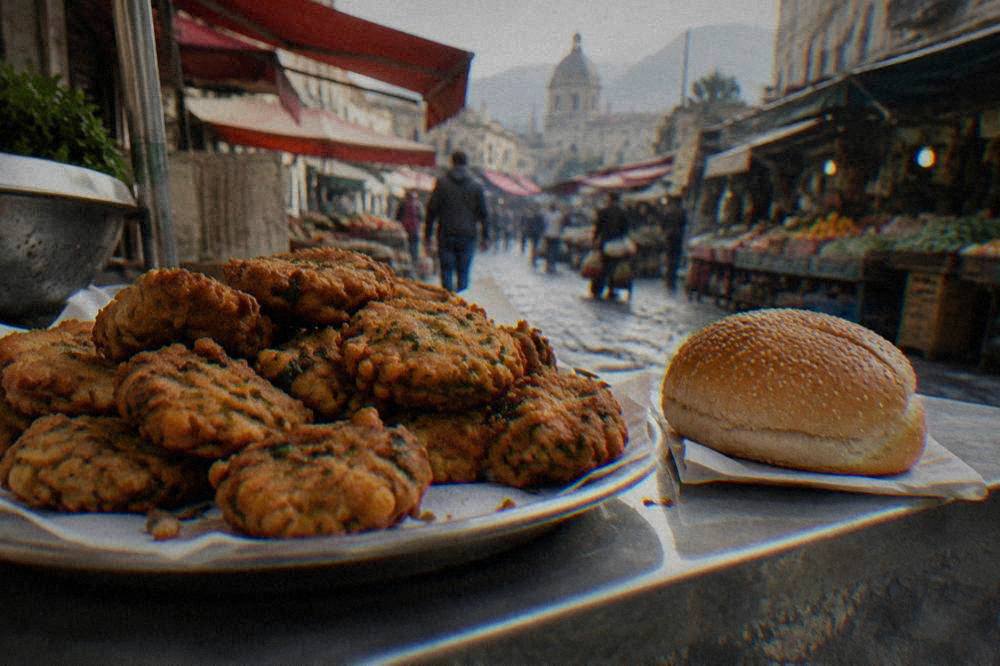
The canon is short and every dish in it comes from the market tradition rather than from restaurant menus invented for visitors. Panelle, chickpea fritters, go into a soft sesame bun with a squeeze of lemon. Sfincione, a spongy tomato-and-onion pizza, is sold by weight and eaten at room temperature. The spleen sandwich divides newcomers and defines locals. Cannoli are filled to order, never in advance, and the ricotta comes from the same dairies that supply the markets.
| Dish | What it is | When locals eat it |
|---|---|---|
| Panelle | Chickpea fritters in a sesame bun | Midday snack, any day |
| Sfincione | Thick spongy pizza with onion and cheese | Afternoon, by the slice |
| Arancina | Round fried rice ball with ragu or butter | Any time, from market fryers |
| Pani ca' meusa | Spleen sandwich, boiled then fried | Lunch at the Capo and Ballarò fry shops |
| Pasta chi sardi | Pasta with sardines, wild fennel and pine nuts | Family lunch or dinner |
| Cannolo | Pastry shell filled with ricotta to order | After a meal, or standing in the street |
When Is The Best Time Of Day To Eat Where Locals Eat?
Morning belongs to the market bars, lunch belongs to the fry shops between about 12:00 and 14:00, and the evening belongs to the Vucciria and the trattorias after 20:30, with Sunday morning reserved for a reduced market run and a long family lunch. Ballarò keeps roughly Monday to Saturday 7:30 to 20:00 with Sunday mornings, and Capo runs mornings only and rests on Sunday.
The rhythm is fixed enough to plan around. Arrive at Ballarò or Capo before 11:00 and the markets are at full pitch, with the fish stalls and the fryers working. Arrive after 14:00 and Capo is finished for the day while Ballarò still trades in a quieter key. The evening shift begins when the Vucciria's shuttered storefronts open as bars, and the listings describe the night scene as strongest from Thursday to Saturday and through the summer months. Anyone whose main worry is the city itself rather than its timetable can check the current advisory picture in whether Palermo is safe to travel to right now; the short answer for eating out is the usual urban one, keep a bag closed and in front in crowds.
Tap water is drinkable, which AMAP, the city water utility, states plainly, so a carafe of water at the table is normal and free or nearly free. The coperto, if it appears, is legal when printed on the menu, and tipping is not obligatory.
Common Questions About Eating Like A Local In Palermo
Where do locals eat in Palermo, Sicily?
At the three historic markets of the old centre, Ballarò, Capo and Vucciria, at the street-food fry shops around them, and in the small trattorias of the Kalsa and the Loggia, with summer evenings spent in Mondello. The municipal tourism page names those three markets as the city's main historic markets.
Is it cheaper to eat at the markets than in restaurants?
Yes, generally. Fried food sold by the piece or by weight at a market window costs a few euro, while a sit-down trattoria meal carries table service and possibly a coperto, the cover charge that is legal when printed on the menu.
Do Palermo restaurants close in the afternoon?
The markets largely do. Capo finishes around lunchtime and rests on Sundays, and Ballarò thins out in the afternoon though its rough hours run to about 20:00. Restaurants serving dinner open again in the evening, typically after 19:30.
What is the difference between arancina and arancino?
The Accademia della Crusca accepts both forms. Palermo and western Sicily say arancina, usually round, while Catania and eastern Sicily say arancino, usually conical. Order either and you will be understood.
Do you need to tip in Palermo?
No. Tipping is not obligatory in Italy, and rounding up the bill or leaving small change is the local habit. Check the bill for a coperto line, which is legal when it is printed on the menu.
Can you drink the tap water in Palermo restaurants?
Yes. AMAP, the municipal water utility, states that the water distributed in Palermo is suitable for human consumption, so a carafe of tap water at the table is a normal request.
Eat where the shopping bags are, follow the fryers rather than the awnings, and the local table in Palermo opens by itself.