What Food Is Palermo Famous For?
The dishes Palermo is known for, from arancine and sfincione to cannoli and market street food, with where to eat them and how the markets work.
Palermo, the coastal capital of Sicily on the Tyrrhenian Sea, is famous above all for its street food: fried, stuffed and baked things eaten standing up, sold from the historic markets that cut through the old centre. The city's food identity comes from layer upon layer of influence, Arab, Norman and Spanish among them, and it survives in dishes that barely exist in the same form anywhere else in Italy. The arancina rather than the arancino, the sfincione that is Palermo's own answer to pizza, the pannelle fried from chickpea flour, and the cannolo filled to order: these are the four names that anchor every food conversation about the city.
What Food Is Palermo Famous For?
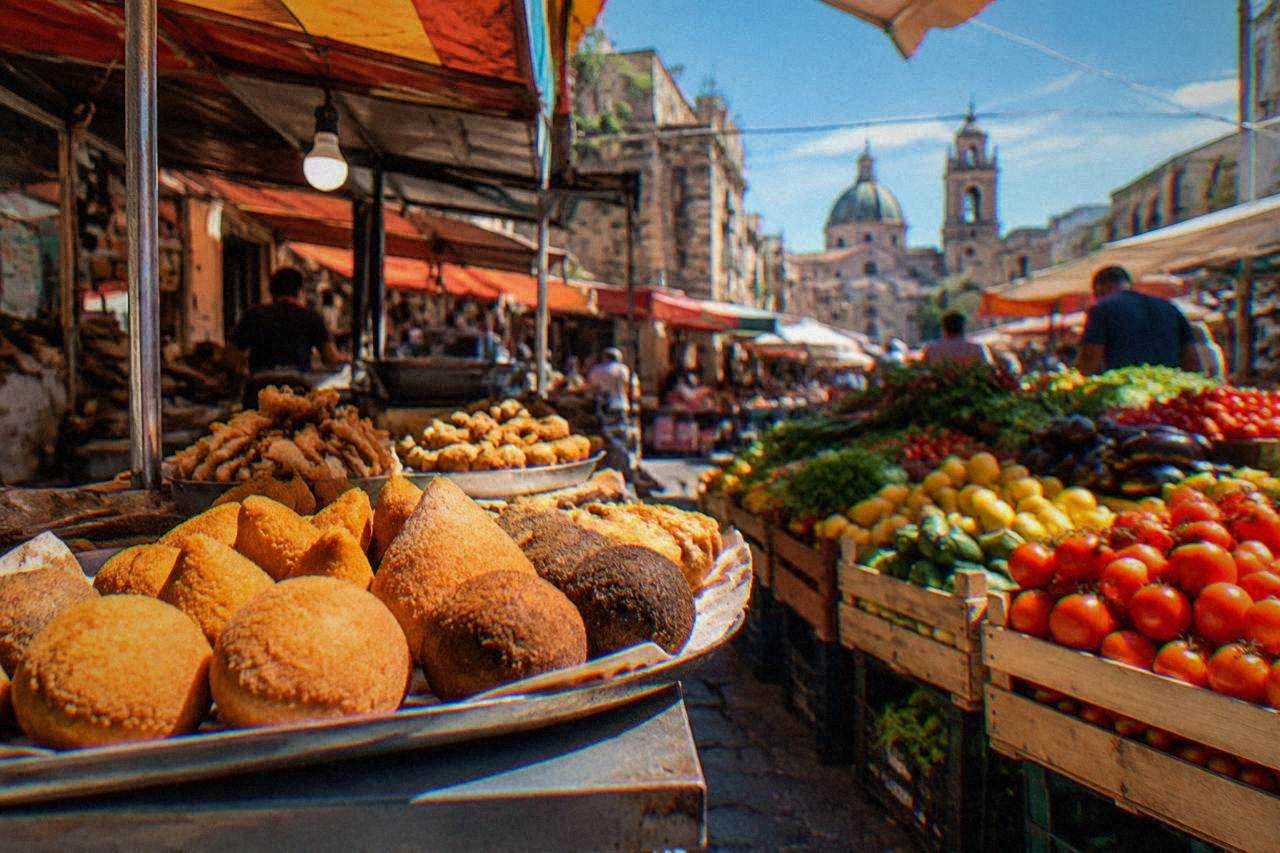
Palermo is famous for its street food, above all the arancina, a fried rice ball filled with meat ragu or butter and ham, together with sfincione, a thick spongy pizza topped with onion, anchovy and caciocavallo cheese, pannelle, chickpea-flour fritters eaten in a bun, and cannoli filled with sweet ricotta. The Accademia della Crusca, Italy's reference body on language, confirms both arancina and arancino are correct, with Palermo and western Sicily using the feminine form.
Those four dishes are the headline acts, but they sit inside a much broader fried-and-fast tradition. The markets of Ballarò, Capo and Vucciria, the three historic markets named by the municipal tourism page, are where that tradition lives. Stalls sell fish fried to order, spleen sandwiches known as pani ca meusa, octopus, seasonal vegetables and cheese alongside the household produce of any southern Italian market. Eating in Palermo is therefore less about a single restaurant dish and more about a route: a walk through a market with a series of small stops.
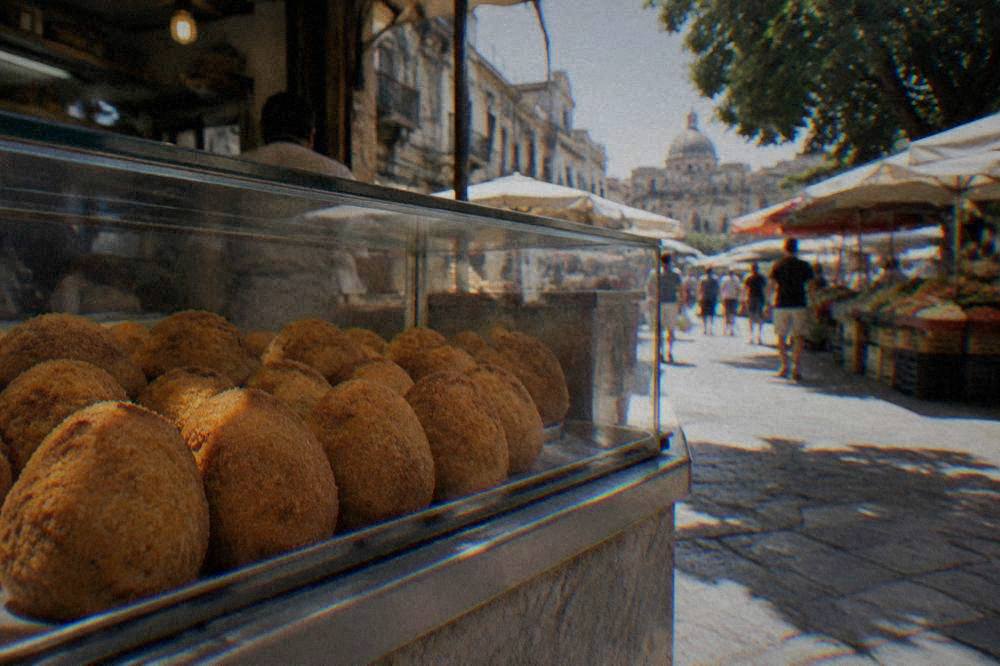
The language detail matters more than it first appears. The Accademia della Crusca's official response on the question notes that the feminine form aligns with standard Italian for the fruit, arancia, while the masculine form has dialect roots in the east of the island. In Palermo the round arancina is the default; in Catania the conical arancino. Ordering either word will be understood in both cities, but the shape on the counter tells you where you are.
Which Street Foods Should You Try In Palermo?
The core Palermo street foods are the arancina, sfincione, panelle, pani ca meusa, a sandwich of sliced veal spleen and lung, and cuccia, a wheat and ricotta dessert tied to Santa Lucia in December. Each is cheap, sold by weight or by the piece, and eaten on the move. The markets Ballarò, Capo and Vucciria are the classic places to find them, with Ballarò running Monday to Saturday and Sunday mornings.
The list below covers the dishes the city is named for. Prices vary by stall and are shown at the counter, so check the posted list before ordering rather than expecting a fixed tariff.
| Dish | What It Is | Where To Find It |
|---|---|---|
| Arancina | Fried rice ball, round in Palermo, filled with ragu or butter and ham | Fry shops and market stalls citywide |
| Sfincione | Thick spongy bread base with onion, anchovy and caciocavallo | Bakery counters and street carts, especially in the old centre |
| Panelle | Chickpea-flour fritters, often served in a sesame bun | Market fry stalls |
| Pani ca meusa | Bread roll with boiled and fried spleen and lung, with or without ricotta | Market food stalls in Ballarò and the Vucciria area |
| Cannolo | Fried pastry tube filled with ricotta, filled only when ordered | Pastry shops across the city |
| Cassata | Sponge cake with ricotta, marzipan and candied fruit | Pastry shops |
Pani ca meusa divides opinion more than any other item on the list, and it is the one dish that marks out a Palermo market from a tourist food court. It descends from the city's historic offal trade and remains a working lunch rather than a curiosity. Anyone unsure can order it schietta, plain, or maritata, married with ricotta, and decide from there.
The companion piece is the Palermo street food guide, which walks the same route in more detail. For visitors who would rather taste first and read later, a guided tasting changes the calculus at the fry stalls, since the guide orders, translates and explains each dish as it arrives. The listing for the all-inclusive evening street food tour shows what the route covers, and Check availability for the current season.
Where Does Palermo Eat Its Street Food? The Markets
Palermo eats its street food in three historic markets: Ballarò, which the municipal tourism page describes as the largest of the old Arab-origin markets, running Monday to Saturday from about 7:30 and on Sunday mornings; Capo, which trades in the mornings and closes on Sundays; and the Vucciria, whose daytime market has partly given way to a night-time bar scene. All three are free to enter and form part of the old town walk.
The markets sit inside the four mandamenti, the quarters the municipal page says were created when Via Maqueda and Corso Vittorio Emanuele crossed at the Quattro Canti: Capo, Albergheria, Kalsa and Loggia. Ballarò serves the Albergheria side, the Capo market gives its name to its quarter, and the Vucciria sits between the Loggia and the port. Eating across two of them in one morning is a realistic plan, and the walk between them passes the Cathedral, the Quattro Canti and Piazza Pretoria.
| Market | Days | Rough Hours | Character |
|---|---|---|---|
| Ballarò | Monday to Saturday, Sunday mornings | From about 7:30, winding down by early evening | Produce, fish, fry stalls, the largest of the three |
| Capo | Monday to Saturday, mornings | From about 7:00 to early afternoon | Food and household stalls beside San Salvatore |
| Vucciria | Monday to Saturday daytime | From about 7:30, thinning by afternoon | Daytime stalls, evening bars and street food |
Hours shift with the season and the individual stall, so treat the times above as a planning range and check on arrival. The stalls that fry to order will sell out of the best items well before the market closes.
Is There A Difference Between Sicilian Sweets In Palermo And Elsewhere?
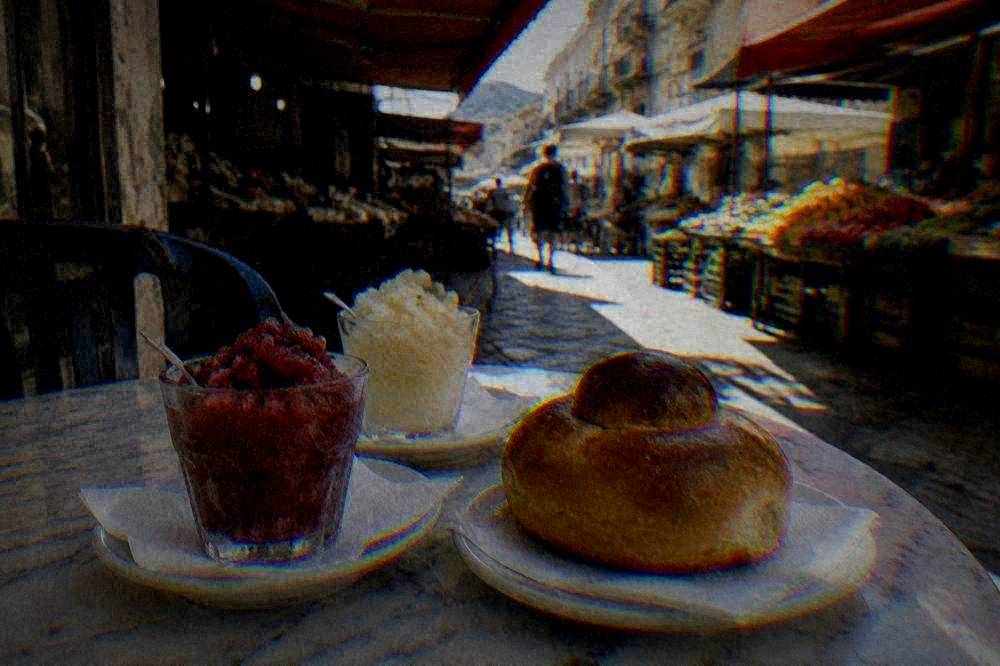
Yes: Palermo's dessert identity centres on ricotta-based sweets, above all the cannolo filled to order and the cassata covered in marzipan and candied fruit, alongside the ice cream and brioche combination eaten at breakfast. The city also holds its own rituals, such as cuccia for Santa Lucia and the sfince di San Giuseppe prepared around 19 March. Catania answers with its own granita and pistachio tradition, but the cannolo and cassata canon belongs to the Palermo side of the island.
The cannolo rule that matters is the filling. A cannolo filled in advance goes soft, so the counter that fills the shell only when you order is the counter doing it properly. Ricotta di pecora, sheep's milk ricotta, is the traditional filling, with chocolate chips or candied fruit as the common additions. Cassata is the same ricotta in cake form, layered with sponge and liqueur, covered in marzipan and finished with candied fruit, and it is heavier and sweeter than its appearance suggests. Everything else covered here is indexed on Palermo Italy Travel Guide.
The Sicilian desserts guide covers the pastry shops street by street. For visitors who want to move from eating to making, the city's cooking classes build the same canon from the kitchen side: fresh pasta, tiramisu and, in the best cases, a market visit first for the ingredients. The pasta and tiramisu class with wine is the strongest of these for a first visit, and Check availability for dates and the meeting point.
To move from tasting to making, book a pasta and tiramisu cooking class here.
Can You Drink The Tap Water And What About Restaurant Charges In Palermo?
Palermo's tap water is suitable for drinking according to AMAP, the municipal water company, which states the distributed supply meets consumption standards under ongoing monitoring. In restaurants, the coperto, a per-person cover charge, is legal in Italy when printed on the menu beforehand, typically a few euro per head, and tipping is not obligatory. Check the menu before ordering for the coperto line rather than assuming it applies.
Both facts save money and argument. The tap water statement comes from AMAP's own communications on the city supply, so a refillable bottle is a reasonable piece of kit for a market walk. The coperto is a national rule, not a Palermo invention, and it appears as a printed line, not a surprise, on any menu that charges it. Bread and cover are what the line covers; service in the sense of a gratuity is separate and discretionary.
Which Food Tour Or Cooking Class Suits A Short Visit?
For a short visit, a guided street food walk suits a first evening and a cooking class suits a rainy or slow afternoon, because the walk covers the markets at eating pace while the class turns one sitting into a full meal you have made yourself. The all-inclusive evening street food tour runs the market route at night, and the pasta and tiramisu class with wine covers fresh pasta, tiramisu and dinner with wine. Prices and current ratings sit on each listing.
The choice comes down to energy and appetite. A walking food tour keeps moving, which suits visitors who want the markets explained and several dishes tasted without committing to a table. A class is slower and indoors, and it ends with the meal itself. Families generally manage the class better than a three-hour walk, and the pasta-and-tiramisu format is the one children can actually cook.
Between the two, the cooking class is the easier gift to give and the more weatherproof booking, and this site's Palermo food guide hub compares the formats in full. Whichever you pick, book ahead for the Festino week in July, when the city fills for the 10 to 15 July celebrations around Saint Rosalia and tables everywhere tighten up.
How Do You Eat Well In Palermo On A Budget?
Eat where the markets fry: Ballarò, Capo and the Vucciria sell arancine, pannelle and spleen sandwiches by the piece at counter prices, a slice of sfincione from a bakery costs less than any restaurant starter, and tap water is drinkable straight from the municipal supply according to AMAP. Adding the coperto line, usually a few euro, is the main unavoidable restaurant charge, and tipping on top is optional.
The budget logic of Palermo is that its best food was never restaurant food to begin with. The fried canon was born as market food for people with no kitchen, and it still prices that way. A morning spent grazing Ballarò from stall to stall costs less than a single hotel breakfast, and it is closer to the point of the city. Pair it with the free sights on the same streets, the Quattro Canti, Piazza Pretoria's exterior and the Cathedral's outside, and a full day of Palermo costs very little beyond the eating.
Pastry shops run the same way. A cannolo filled to order at a counter is a fraction of a seated dessert, and the arancine guide maps the fry shops worth crossing town for. The one cost worth planning for is a guided experience, whether a tasting walk or a class, because that is the part of a food trip that benefits from being booked before arrival rather than improvised on the day.
Common Questions About Palermo Food
What food is Palermo famous for?
Palermo is famous for street food: the arancina, sfincione, panelle and pani ca meusa from the market fry stalls, and the ricotta-based cannolo and cassata from the pastry counters, all centred on the historic markets of Ballarò, Capo and Vucciria.
Is it arancina or arancino in Palermo?
In Palermo the feminine arancina is the local form, usually round. The Accademia della Crusca accepts both forms, with eastern Sicily, including Catania, favouring the masculine arancino.
When are Palermo's markets open?
Ballarò runs Monday to Saturday from about 7:30 with a Sunday morning session, the Capo market trades weekday and Saturday mornings and rests on Sundays, and the Vucciria keeps daytime market hours with a separate evening bar scene. Hours vary by stall and season.
What is sfincione?
Sfincione is Palermo's thick, spongy take on pizza, topped with onion, anchovy and caciocavallo cheese, sold by the slice from bakery counters and street carts rather than eaten in restaurants.
Can you drink tap water in Palermo?
Yes. AMAP, the municipal water company, states that the water distributed in Palermo is suitable for human consumption.
Is the coperto a scam in Palermo?
No. The coperto, a per-person cover charge, is legal across Italy when it is printed on the menu beforehand. Check the menu for the line, and treat any tip beyond it as optional.
Read the full eating route in the Palermo Italy Travel Guide street food pages, then decide whether your visit begins at a fry stall or at a rolling pin.