Syracuse Sicily: Planning The Long Day Trip From Palermo
Syracuse sits on Sicily's east coast, a long way from Palermo, and this page sets out honestly what the journey involves, what Ortigia and the archaeological park hold, and when an overnight stay beats a day trip.
Short answer
Syracuse is reachable from Palermo as a very long day trip by train or coach with a change, usually at Catania or Messina. Ortigia island and the Neapolis archaeological park are the two headline sights, and an early start is not optional.
Syracuse, on Sicily's Ionian coast, is the farthest of the classic day trips from Palermo, and the honest starting point is that it is the one destination on this site's day-trip list where the journey itself shapes the plan.
Where Is Syracuse And How Far Is It From Palermo?
Syracuse stands on Sicily's south-eastern corner, on the Ionian coast, roughly opposite side of the island from Palermo, which faces north on the Tyrrhenian Sea. Ortigia is the small island connected by bridge to the modern city, and it carries the historic centre. The crossing of Sicily from one coast to the other is a trip of several hours each way, which is why every planner should treat Syracuse differently from Monreale or Mondello.
Palermo sits on the north-west; Syracuse sits south of Catania and south of Taormina, so any route east from Palermo passes through or past the Catania area. The road and rail corridors run across the interior of the island.
What the research does carry are the neighbouring legs, which frame the scale of the day. The direct regional train from Palermo Centrale to Catania takes about 3 hours, and the direct coaches run between about 2 hours 35 and 3 hours 30. Taormina, west of Syracuse, needs a rail change and takes about 3 hours 47 or more. Syracuse sits beyond Catania, so a same-day return means two long legs plus a connection, every time.
Can You Visit Syracuse As A Day Trip From Palermo?
Yes, Syracuse works as a day trip from Palermo, but only as a full-day commitment with an early start and a late return, because the crossing of Sicily eats the middle of the day twice. A realistic plan leaves Palermo in the early morning, reaches Ortigia by late morning, and returns after dark. Anyone who prefers slower mornings should look at the closer trips first and save Syracuse for a separate stage of a Sicily itinerary.
The trade-off is time on the ground versus time in transit. With two transfers or one change each way, a day visitor gets a compressed slice of Ortigia and, if the legs cooperate, a short window at the archaeological park. That is enough to walk the island's sea walls, see the cathedral square and eat a late lunch, but it does not leave room for museums, the market at a relaxed pace or a swim.
Before committing the day, it helps to check what a shorter excursion from Palermo actually delivers. The half-day Corleone excursion covers the anti-mafia story at its source in a fraction of the travel time, and Check availability for dates before the Syracuse plan is fixed. Palermo's own guided products, from street food walks to wine tastings, need no transfer at all.
The other honest comparison is Taormina, which sits on the same eastern side but slightly closer to Palermo than Syracuse. A traveller set on the east coast who cannot stretch to Syracuse often finds Taormina a workable substitute for the day, with the same change-of-train reality and a hilltown rather than an island to explore. Mount Etna excursions from Palermo also run east, and the Mount Etna guide covers what that climb involves.
What Should You See In Ortigia?
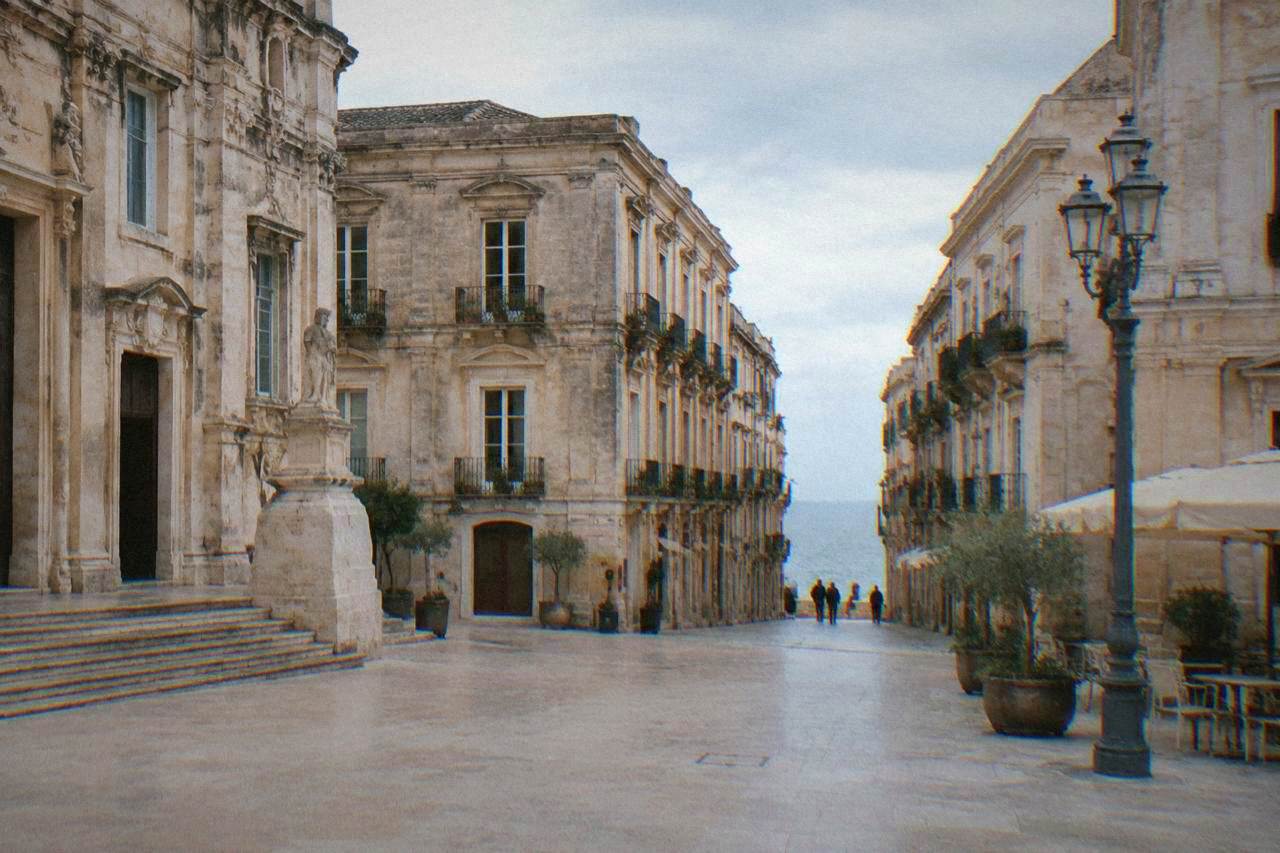
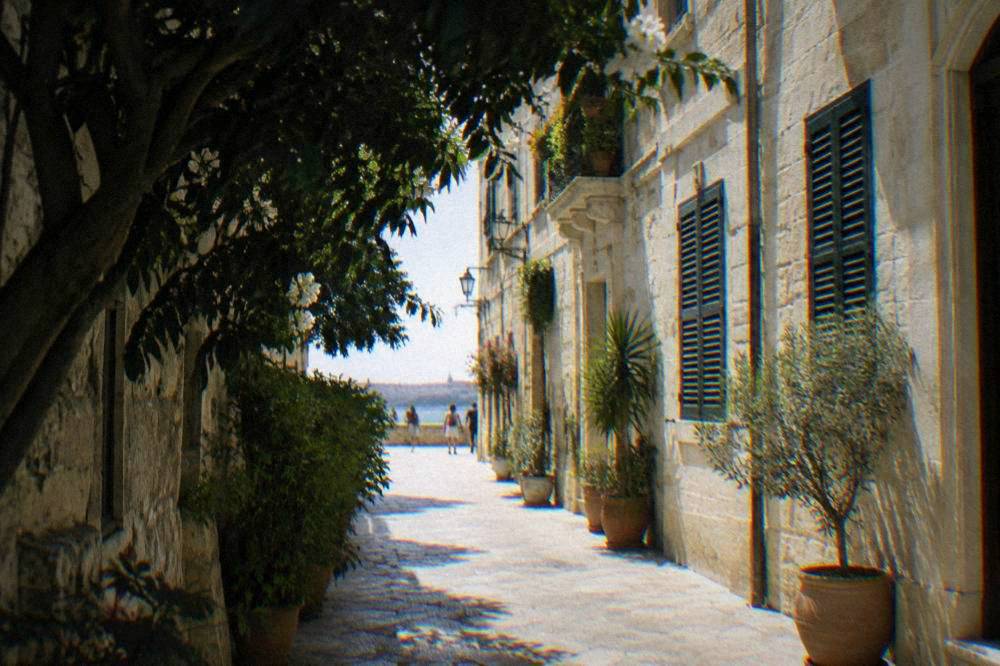
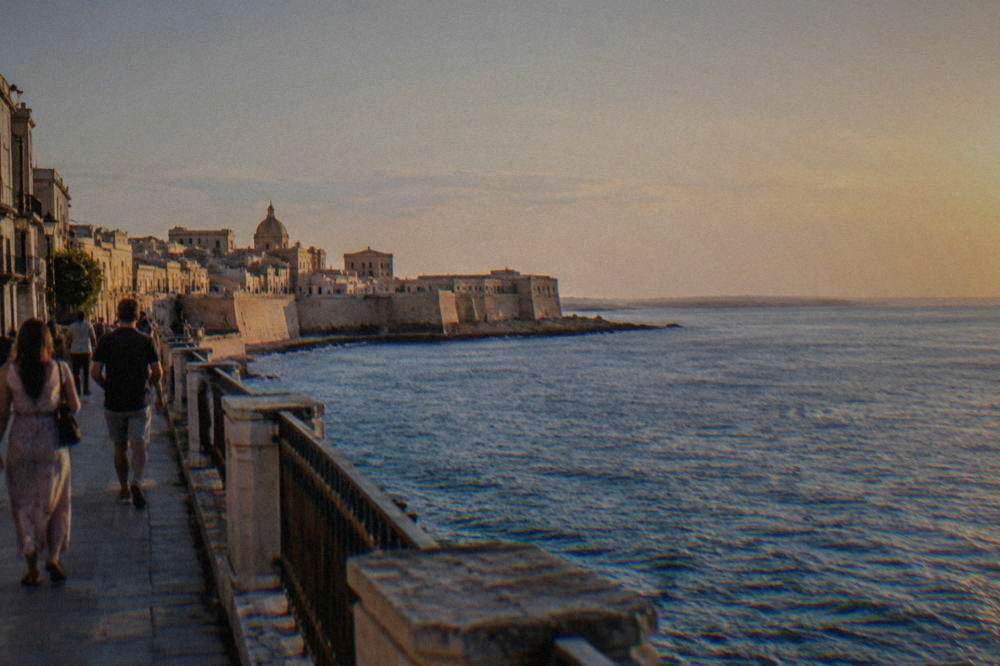
Ortigia's core sights sit within a few minutes' walk of each other: the cathedral square at the island's heart, the sea walls and the spring of fresh water at one edge, and the network of narrow lanes running between them. The island is small enough to cross on foot in under half an hour, so the plan is simple: the square, the water, and the streets in between, with a market stop if the timing lands on a trading morning.
The municipal and regional tourism pages describe Ortigia as the historic heart of Syracuse, a compact island where the layered past of the city shows in the stones of its main square and its street grid. What a visitor actually does is walk. The cathedral square is the natural anchor; the seafront promenade on the southern edge gives the flat, straight walk with views over the Ionian; and the lanes between hold workshops, small trattorie and bars.
Two practical notes carry real weight. Second, the island is where the day's eating should happen: the market area and the lanes around the square are the natural lunch stop before the afternoon leg, and a market visit early in the day beats an afternoon arrival when stalls may be closing.
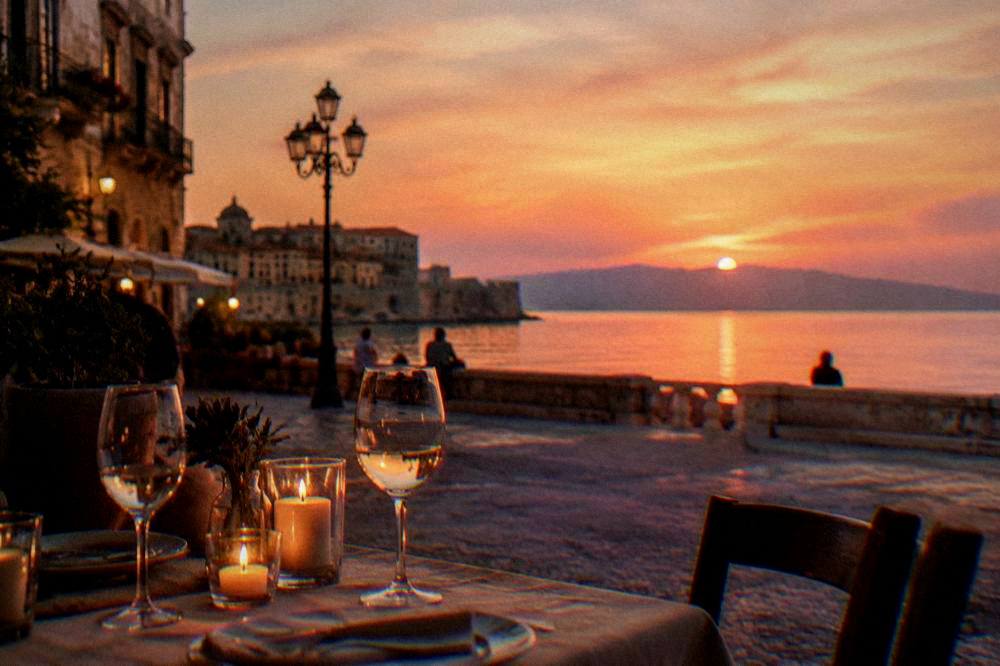
A late afternoon on the sea walls is the classic close of an Ortigia visit. The flat rocks below the promenade double as swimming spots in warm months, and the light across the water in the last hours of the day is the reason the return train is worth pushing to the latest sensible departure.
What Is In The Neapolis Archaeological Park?
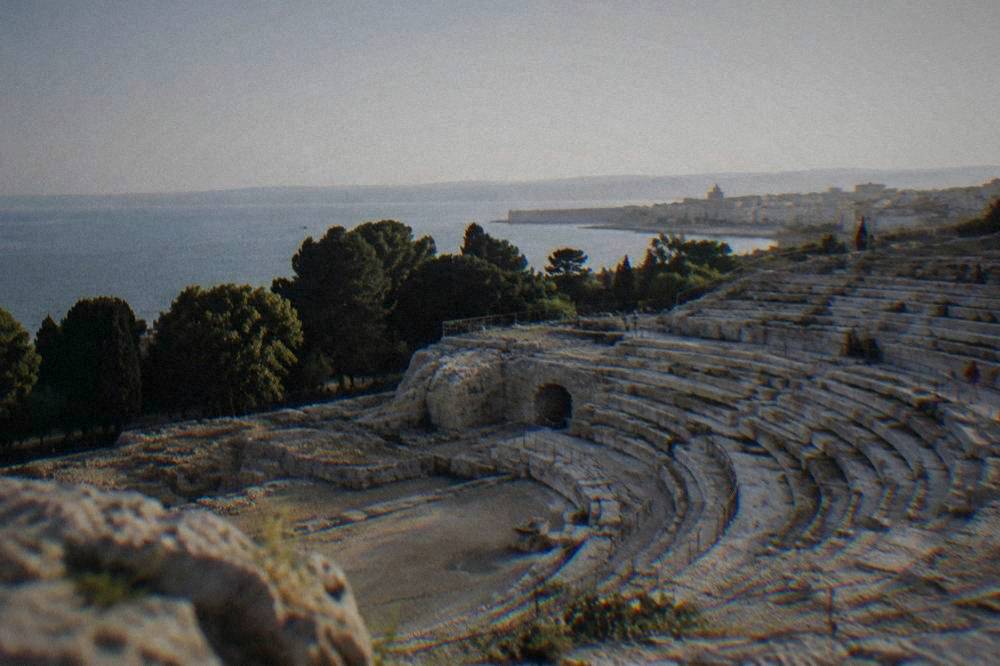
The Neapolis archaeological park, on the mainland side of Syracuse, holds the Greek theatre, the Roman amphitheatre and the Ear of Dionysius, a man-made cave famous for its echo, and together they form one of the largest classical sites in Italy. The park sits a short drive or bus ride inland from Ortigia, so fitting it into a day trip means choosing between a full morning there or a rushed hour after lunch.
The site is open air and largely unshaded, which matters for planning: the heat of a summer afternoon on stone is a real constraint, and the climate logic that applies to Palermo applies doubly here.
The live figures sit on the regional archaeological parks portal, the same body whose pages price Segesta at EUR 14 full and EUR 7 reduced and the Valley of the Temples at EUR 14 and EUR 7, and first-Sunday free entry applies at many state and regional museums across Sicily, to be confirmed per site before the trip.
For scale, the table below shows what Palermo's own headline sites cost, as a baseline for anyone budgeting a Sicily trip that includes both cities.
| Site (Palermo unless noted) | Full ticket | Reduced |
|---|---|---|
| Palazzo dei Normanni and Palatine Chapel | EUR 14.50 | EUR 12.50 |
| Teatro Massimo guided tour | EUR 14 | EUR 7 under 26 |
| Capuchin Catacombs | EUR 5 | EUR 3 |
| Monreale cloister | EUR 8 | EUR 4 |
| Salinas Archaeological Museum | EUR 7 | EUR 3.50 |
How Do You Get From Palermo To Syracuse Without A Car?
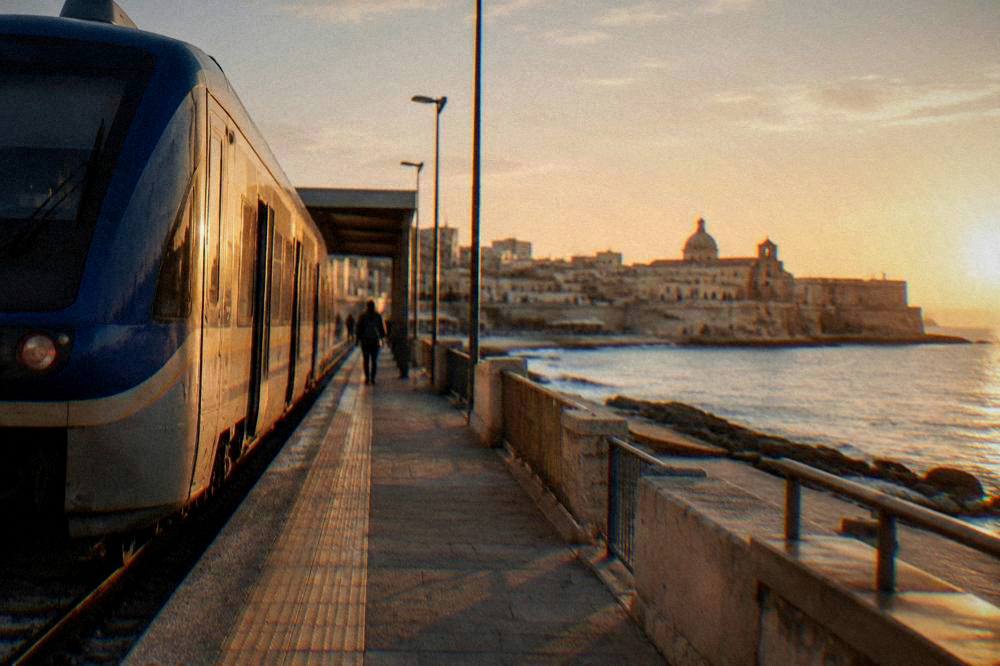
The car-free route from Palermo to Syracuse runs by train with a change, usually at Catania or Messina, or by a combination of the direct Palermo to Catania coach or train with an onward connection; there is no direct service on any mode. The journey is booked in two legs, and the safest pattern is one through-ticket on the rail operator's site with the change built in, checked the day before travel.
The verified pieces of the east-coast network are set out below.
| Leg | Mode | Typical time | Notes |
|---|---|---|---|
| Palermo Centrale to Catania | Direct regional train | About 3 hours | Several daily |
| Palermo to Catania | Direct coach | 2 h 35 to 3 h 30 | Operator timetables vary |
| Palermo to Taormina-Giardini | Train with 1 change | About 3 h 47 or more | Change usually at Messina |
| Catania to Syracuse | Regional connection | On the operator's page | Book as one rail journey |
Driving is the alternative, and the same honesty applies: the motorway between Palermo and Catania is toll-free, per the motorway operator's listings, which removes one small cost from the calculation. But a same-day drive east and back leaves the driver with hours at the wheel on each side, and parking in Ortigia is restricted in the way every Sicilian historic centre restricts it. Most day-trippers who drive choose to park once on the mainland edge and cross to the island on foot.
Within Palermo itself before departure, the practical numbers are the city ones. The AMAT fares page lists EUR 1.40 for a 90-minute ticket, EUR 3.50 for a day and EUR 8.00 for three days, and Palermo Centrale, where the eastbound trains leave, has the ticket office, luggage storage and the taxi rank outside.
Should You Stay Overnight In Syracuse Instead?
An overnight stay converts Syracuse from a compressed dash into a relaxed evening-and-morning visit, and for this one destination that is the recommendation worth taking seriously: the journey is long enough that a single night roughly halves the time spent in transit across the whole trip. Ortigia after the day visitors leave, and the archaeological park at opening time, are the two experiences a day trip structurally cannot deliver.
The tourist tax runs a maximum of four consecutive nights for non-residents, collected by the accommodation, at per-night amounts by star rating from 1 July 2025: EUR 3 at one star rising to EUR 5 at five stars, and EUR 4 for short-term rentals. Short-term rentals must display a CIN code and register guests through the Alloggiati Web system within 24 hours, with identity checked in person, so a listing without a CIN is a listing to query.
| Accommodation type | Tourist tax per night | Notes |
|---|---|---|
| 1-star hotel | EUR 3 | Maximum 4 consecutive nights |
| 2-star hotel | EUR 3.50 | Collected by the accommodation |
| 3-star hotel | EUR 4 | Confirm at booking |
| 4-star hotel | EUR 4.50 | Confirm at booking |
| 5-star hotel | EUR 5 | Confirm at booking |
| Short-term rental | EUR 4 | CIN code must be shown |
The seasonal logic for the overnight option follows the same table that governs Palermo. The wettest month on the modelled normals is October at 81 mm and the driest is July at 7 mm; the shoulder months of May and September balance warmth against the crowd peaks of high summer, and the Festino period in Palermo each July, 10 to 15 July in 2026, is a week when Palermo itself is at its busiest and an east-coast overnight makes a calm counterweight.
How Does Syracuse Compare With Palermo's Other Day Trips?
Syracuse is the longest standard day trip from Palermo, while Monreale at about 16 minutes by road and Mondello at about 27 minutes sit at the opposite end of the scale, with Cefalu at about 65 minutes in between; the east-coast destinations, Etna, Taormina and Syracuse, all demand the full day. The right choice depends less on the sights and more on how many hours of the day a visitor will give to a vehicle.
| Day trip from Palermo | Travel character | Time commitment |
|---|---|---|
| Monreale | Short hop, bus 389 from Piazza Indipendenza, EUR 1.40 | Half day |
| Mondello | City bus, summer line 806 | Half day |
| Cefalu | Train about 39 to 60 min, hourly | Full morning or day |
| Taormina | Train with a change, about 3 h 47 or more | Full day |
| Syracuse | Train or coach with a change via Catania | Full day or overnight |
The pattern to notice is that Palermo's own peninsula of options, the markets, the Norman Palace and the Quattro Canti, compete with every one of these trips on cost and win on time. A traveller with three days in the city does better to take one long day trip and spend the rest walking Palermo, and the two days in Palermo planning pages on this site set out that balance in detail.
What Does A Syracuse Day Trip Cost From Palermo?
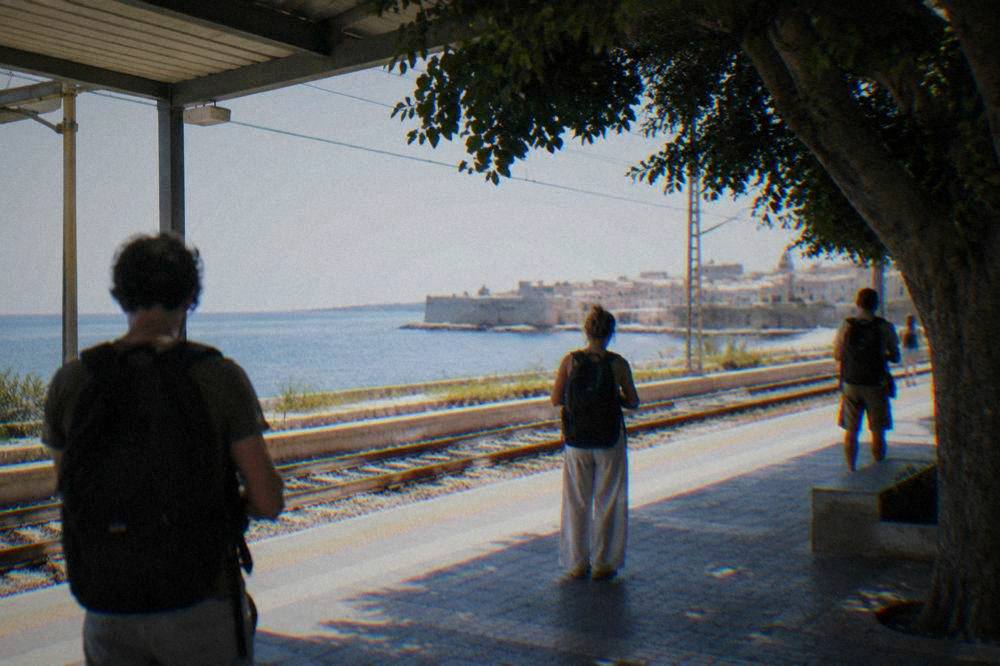
Rail travel across the island is priced per leg on the operator's site, and booking the through journey in one search is both simpler and usually cheaper than two separate tickets.
The park entry, as noted above, follows the regional portal's live prices, in the same family as Segesta at EUR 14 and EUR 7 and the Valley of the Temples at EUR 14 and EUR 7. The first Sunday of the month brings free entry at many state and regional museums, which is worth checking against the intended travel date.
Food is where Ortigia rewards the stop. The island's market and lanes carry the Sicilian standards, and the same vocabulary travelled with them: arancina is the Palermo form, Catania and the east say arancino, and the Accademia della Crusca accepts both, a small linguistic hinge that fits the journey east perfectly.
When the transit hours are counted against the sightseeing hours, a guided product that keeps the traveller inside Palermo often delivers more per hour, and the street food walks and wine tastings in the band above run without any cross-island transfer at all.
Common Questions About Syracuse And Ortigia From Palermo
Is Syracuse Sicily worth the trip from Palermo?
Ortigia and the Neapolis park are among Sicily's headline sights, so the destination justifies the effort; the honest caveat is the transfer time, which takes the largest share of any Palermo day trip. A single night in Syracuse converts the same sights into a relaxed visit.
How long does it take to get from Palermo to Syracuse?
There is no direct service. The route runs by train with a change, usually at Catania or Messina, or by coach to Catania with an onward connection. The Palermo to Catania leg alone takes about 3 hours by train, and the through times are shown on the rail operator's booking page for the travel date.
Do you need tickets for the Neapolis archaeological park?
Yes, the park is ticketed. The live prices are published on the regional archaeological parks portal, the same body that prices Segesta and the Valley of the Temples, and free entry applies on the first Sunday of the month at many state and regional sites, to be confirmed before travel.
Is one day enough for Syracuse?
One day covers Ortigia's walkable core and either the archaeological park or a market and swim, but not all three at leisure. The early start and the fixed return leg set the day's shape more than any sight list does.
Is Syracuse or Taormina a better day trip from Palermo?
Taormina is closer, reachable with a single train change in about 3 h 47 or more, while Syracuse is farther and needs the Catania leg as well. Taormina suits a hilltown day with a view; Syracuse suits the traveller who wants the island old town and the classical sites, ideally overnight.
The final planning rule is the simplest one: book the through rail journey before the accommodation, because the first and last departures of the day are what turn Syracuse from a rushed excursion into a day that works.