What To Avoid In Palermo?
The mistakes worth sidestepping in Palermo, from menu cover charges and market hours to ticketed sights, transport rules and beach planning, reported from official information.
Palermo is the coastal capital of Sicily, a city of about 628,693 residents at 31 December 2024 by municipal statistics, layered around four historic districts that meet at the Quattro Canti. The mistakes that trip visitors up here are rarely dramatic ones. They are small, avoidable errors: an unpaid bus ticket that turns into a fine, a restaurant bill with a cover charge nobody mentioned, a drive through a camera-enforced traffic zone, or a Monday arrival at a museum that closes on Mondays. The city's own sources, from the AMAT fares page to the municipal tourism portal, give the reader everything needed to dodge each of these.
What To Avoid In Palermo?
The things to avoid in Palermo are practical rather than scary: unprinted cover charges, unvalidated bus tickets, driving into the camera-enforced ZTL, museum closures on Mondays, market visits after mid-afternoon, and beach plans built around a concession in a court dispute. Official advisories rate Italy normal with standard urban precautions, so the real risks to a trip are planning errors, not danger.
That framing matters. The US State Department advisory for Italy notes petty crime such as pickpocketing and bag-snatching around tourist sites and on public transport, and the UK FCDO says the same about Italian city centres. Neither suggests avoiding Palermo. The response both advisories imply is a zipped bag held in front on a crowded bus, not a list of districts to skip. For the broader safety picture, see the site's pages on safety for travellers and which areas raise questions; the rest of this page deals with the mistakes that cost money and time.
Prefer to explore with a local alongside you? Book an anti mafia walking tour here.
Menu Cover Charges And Restaurant Bill Traps In Palermo
The cover charge, or coperto, is legal in Palermo only when it is printed on the menu before you order, and tipping is not obligatory. Ask for an itemised bill, check that each dish matches the menu price, and treat any cover charge that appears on the bill but not on the menu as something to query on the spot, calmly, before paying.
Italian national rules allow the coperto when it is listed in advance, and there is no Sicilian ban on it, so the charge itself is not a scam. The check is simple: read the menu before ordering. If a service line appears that was never shown, ask the waiter to explain it. Prices per dish should match the menu, and the itemised bill, the scontrino, should list everything. A further habit worth keeping anywhere in Italy: pay attention when card terminals show the amount before tapping.
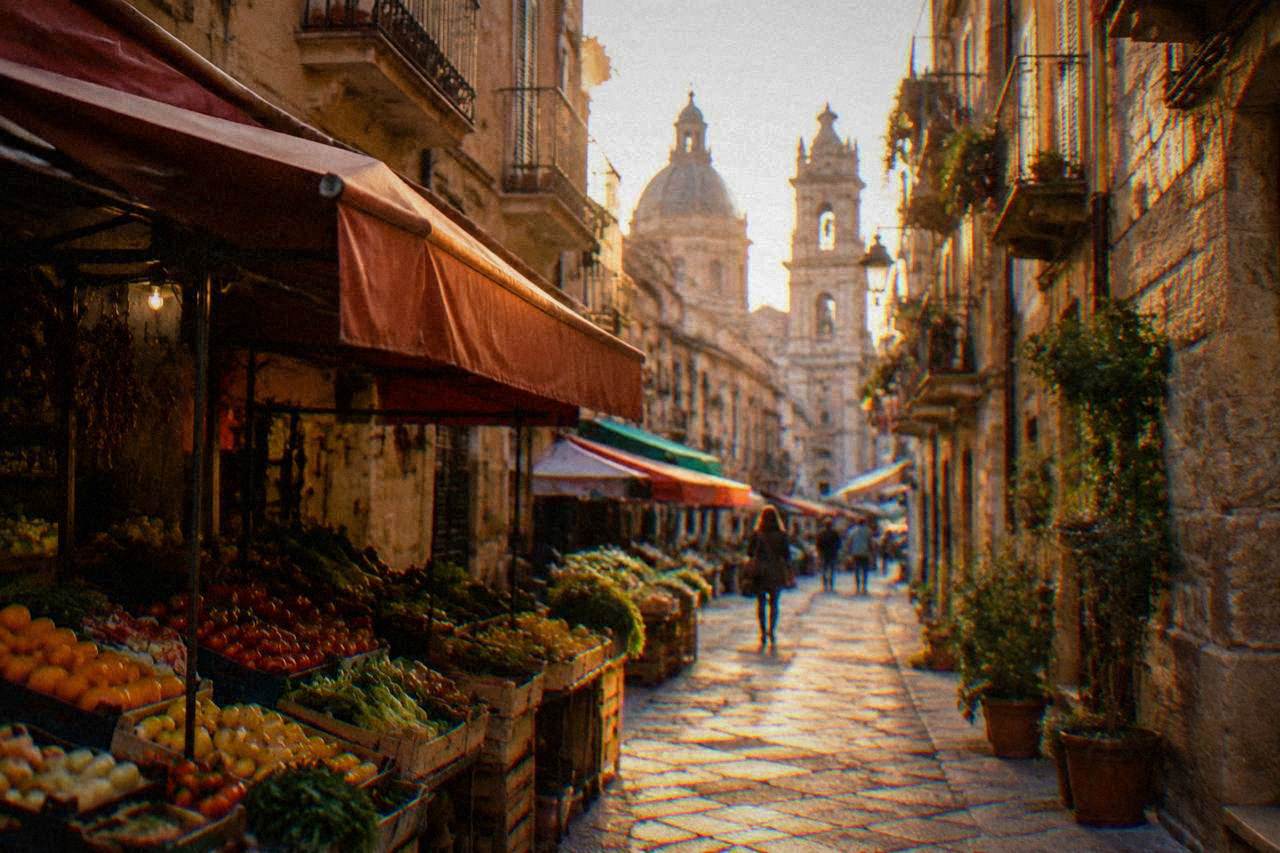
Street food has its own version of this discipline. The stalls of Ballarò and the Capo sell by weight or by piece, and a good rule is to ask the price before pointing. The question costs nothing and settles the transaction before it starts. Visitors who want the market's food with a guide alongside can read the site's page on what food Palermo is famous for, or consider a guided tasting.
| Check To Make | Details | Where It Applies |
|---|---|---|
| Cover charge (coperto) | Legal when printed on the menu beforehand; tipping is not obligatory | Restaurants citywide |
| Itemised bill | Ask for the scontrino and compare it line by line with the menu | Restaurants and cafes |
| Street food pricing | Ask the price before ordering, by weight or by piece | Ballarò, Capo, Vucciria stalls |
| Tap water | AMAP states the city's distributed water is suitable for drinking | Ordering water at dinner is a choice, not a necessity |
Market Timing Mistakes In Palermo
Ballarò runs Monday to Saturday from about 7:30 and eases through the day, with Sunday mornings only; the Capo market works mornings and does not run on Sundays; Vucciria's daytime trade fades while its evening bar scene takes over. Arriving after mid-afternoon is the single commonest market mistake, and treating the three markets as interchangeable is the second.
The municipal tourism page lists Ballarò, Capo and Vucciria together as the historic markets, but their rhythms differ, and no closing hour should be treated as fixed. Ballarò is the one to visit for the full produce-and-street-food sprawl; the Capo sits at its best in the morning; Vucciria belongs to the evening, when the stalls are gone and the bars are open. Missing a market entirely is easy too: a Sunday visitor who wants produce should be at Ballarò in the morning, because the Capo will not be running. None of the three charges entry, so the only cost of bad timing is a half-empty street.
Transport Mistakes: Tickets, The ZTL And Airport Runs
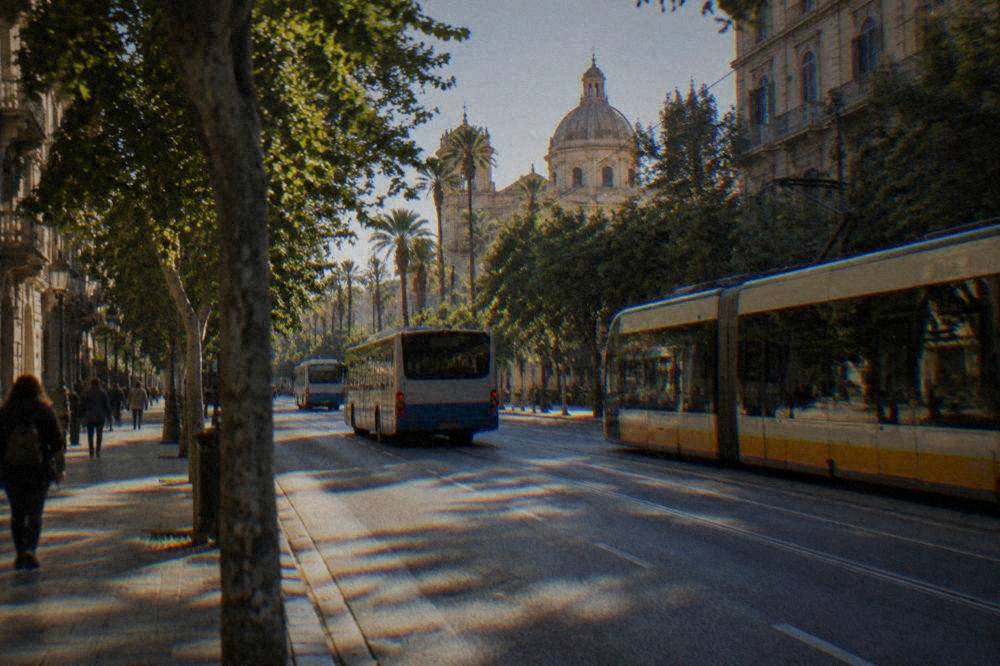
Buy AMAT tickets before boarding, at 1.40 EUR for 90 minutes from the AMAT fares page, and validate at once on the first vehicle, because an unvalidated ticket is treated as no ticket. Do not drive into the historic centre's ZTL without a pass: entry is camera-enforced and fined, with daily passes at 5 EUR for petrol and diesel cars and 2.50 EUR for hybrids, electric free, via the official portal.
The onboard surcharge is real: the same ticket costs 1.80 EUR from the driver, and a day ticket is 3.50 EUR, so anyone making more than two trips should buy in advance. There is no metro in Palermo; the Passante is a suburban rail line, and the four tram lines converge from the periphery to the centre, so a tram is often the cleaner option than a bus through the old streets.
Two further traps sit at the airport end. The first is relying on a ride-hailing app without checking it: app availability changes, and the regulated option is a white licensed taxi from the rank, with reported fixed rates of 39 EUR to the port side, 44 EUR to the historic centre and 50 EUR to the Foro Italico side for up to four passengers with luggage under the 2025 tariff, to be confirmed with the driver before setting off. The second is arriving late: GESAP advises 2 hours before Schengen flights and 3 hours before non-Schengen departures. The site's page on the best way to get around Palermo unpacks the rest.
Sightseeing Errors: Tickets, Hours And Closures In Palermo
The sightseeing mistakes to avoid are assuming every church is free, arriving on a day a site closes, and treating the Palazzo dei Normanni as a whole-day certainty: its royal apartments close Tuesday and Wednesday when parliament sits. A full palace ticket is 14.50 EUR with the Palatine Chapel included, and many state and regional museums are free on the first Sunday of the month, to be confirmed per site.
Palermo Cathedral's monumental area, covering the roof, royal tombs, treasury and crypt, is ticketed, and the price is shown at the ticket point or on the cathedral's own ticket shop rather than assumed; the site's page on cathedral tickets covers the detail. The Capuchin Catacombs sell tickets only at the office, at 5 EUR full and 3 EUR reduced, and prohibit photography. Palazzo Abatellis is closed or closing for climate-control works for about 18 months from mid-July 2026 with no confirmed reopening date, so it should not anchor an itinerary. Teatro Massimo runs guided tours daily, and its 2026-27 season opens 22 November 2026 with Samson et Dalila.
| Sight | The Mistake To Avoid | Details |
|---|---|---|
| Palazzo dei Normanni | Booking Tuesday or Wednesday and expecting the royal apartments | Apartments close Tue-Wed when parliament sits; ticket 14.50 EUR full, 12.50 EUR reduced |
| Palermo Cathedral | Assuming a printed roof or tombs price | Monumental area is ticketed; price shown at the ticket point or ticket shop |
| Capuchin Catacombs | Expecting online tickets or photos | 5 EUR full, 3 EUR reduced, tickets at the office only, photography prohibited |
| Palazzo Abatellis | Planning a visit without checking status | About 18 months of closure works from mid-July 2026, no reopening date confirmed |
| State and regional museums | Paying on the first Sunday | Many are free the first Sunday of the month; confirm per site |
Beach And Day Trip Planning Mistakes From Palermo
Do not build a Mondello beach day around one operator: the beach mixes free public stretches with paid lidos, and the low-cost 6 EUR access ran in the 2026 season while the area's concession sits in a legal dispute, so check before planning. Do not claim a Blue Flag for any Palermo beach, because none in the area holds one for 2026, and do not underestimate distances: Agrigento is over two hours by road.
Mondello is about 27 minutes by road from the Quattro Canti, and AMAT's summer line 806 serves it, but a beach day should start from what the reader can verify on the day, not from a promise made in a brochure. The same discipline applies to day trips. Monreale is 16 minutes by road and reachable by AMAT line 389 from Piazza Indipendenza for a 1.40 EUR ticket; Cefalu is about an hour by road or 39 to 60 minutes by train; Segesta, Erice and Trapani sit west; Etna is over three hours by road. Trying to chain two far-flung sights in one day is the classic error, and the sites' own opening hours, such as the Valley of the Temples at 8:30 to 20:00, fix the realistic windows. The page on whether Mondello beach is worth visiting adds the beach-side detail.
A cooking class offers one way to fold the city's food culture into a fixed, pre-planned block instead of a rushed circuit, and the site's featured class pairs pizza and gelato making with a sit-down meal and wine: Check availability.
Money And Booking Mistakes In Palermo
The money mistakes to avoid are unregistered short-term rentals, unknown tourist tax amounts, and arrival-day surprises at the border. A rental listing must show a CIN code and the host must register guests within 24 hours, the tourist tax runs a maximum of four consecutive nights and is collected by the accommodation, and from April 2026 the EES system records biometrics at Schengen borders while ETIAS is not yet live.
Short stays in Italy now come with obligations that a legitimate host meets without fuss: a national CIN code displayed on the listing, registration through Alloggiati Web within 24 hours, and an identity check in person, so a bare keybox with no host contact is a warning sign regardless of the price. The tourist tax per night varies by accommodation rating and should be confirmed at booking rather than guessed. At the airport, the EES entry system, fully operational from 10 April 2026, records fingerprints and facial images for non-EU short-stay travellers, and ETIAS travel authorisation is not yet in force and has no fixed start date, so no third-party site should be paid to "register" for it.
Common Questions About Avoiding Mistakes In Palermo
What to avoid in Palermo?
Avoid unprinted cover charges, unvalidated bus tickets, driving into the ZTL without a pass, museum arrivals on closed days, market visits after mid-afternoon, and beach or day trip plans built on unverified details. The official advisories describe ordinary urban precautions, so the practical errors are the ones that actually cost a visitor money or time.
Is the coperto a scam in Palermo?
No. The cover charge is legal in Italy when it is printed on the menu before ordering, and Sicily has no regional ban on it. Tipping is not obligatory. If a charge appears on the bill that was never shown on the menu, query it on the spot.
Can you drive into Palermo's historic centre?
Only with a permit. The central ZTL is camera-enforced and entering without a pass is fined. Daily passes cost 5 EUR for petrol and diesel cars, 2.50 EUR for hybrids and nothing for electric cars, via the official municipal portal; the fine amount itself is not published in the sources.
When should you not visit the Palermo markets?
Do not visit the Capo on a Sunday, when it does not run, and do not expect full trade at Ballarò after mid-afternoon or on a Sunday afternoon. Ballarò runs Monday to Saturday from about 7:30 with Sunday mornings only, and Vucciria shifts to its evening bar scene after the daytime stalls close.
What should you not do on a day trip from Palermo?
Do not chain two distant sights into one day. Agrigento is over two hours by road, Etna over three, and Taormina needs a change of train. Fix the plan around the sites' published hours, such as the Valley of the Temples at 8:30 to 20:00, and leave one far destination per day.
Every item on this page comes down to the same habit: read the posted price, the published hour or the official page before committing money or time. Visitors who want the fuller safety picture can start with whether Palermo is safe to travel to right now, and the Palermo Italy Travel Guide covers the rest of the city, sight by sight.
