Is There A Market In Palermo, Sicily?
Yes, Palermo has several historic markets. This guide covers Ballarò, Capo and Vucciria, their opening patterns, the street food to try and how to plan a visit.
Yes, there are several, and they sit at the centre of everyday Palermo. The municipal tourism page names Ballarò, Capo and Vucciria as the city's main historic markets, describing Ballarò as the largest of them and of Arab origin. All three are free to enter, all three lie inside the old centre, and together they are where Palermo's street food reputation is actually earned, at the stalls rather than in the restaurants. For a wider sense of the city's food identity, the companion page on what food Palermo is famous for covers the dishes themselves.
Is There A Market In Palermo, Sicily?
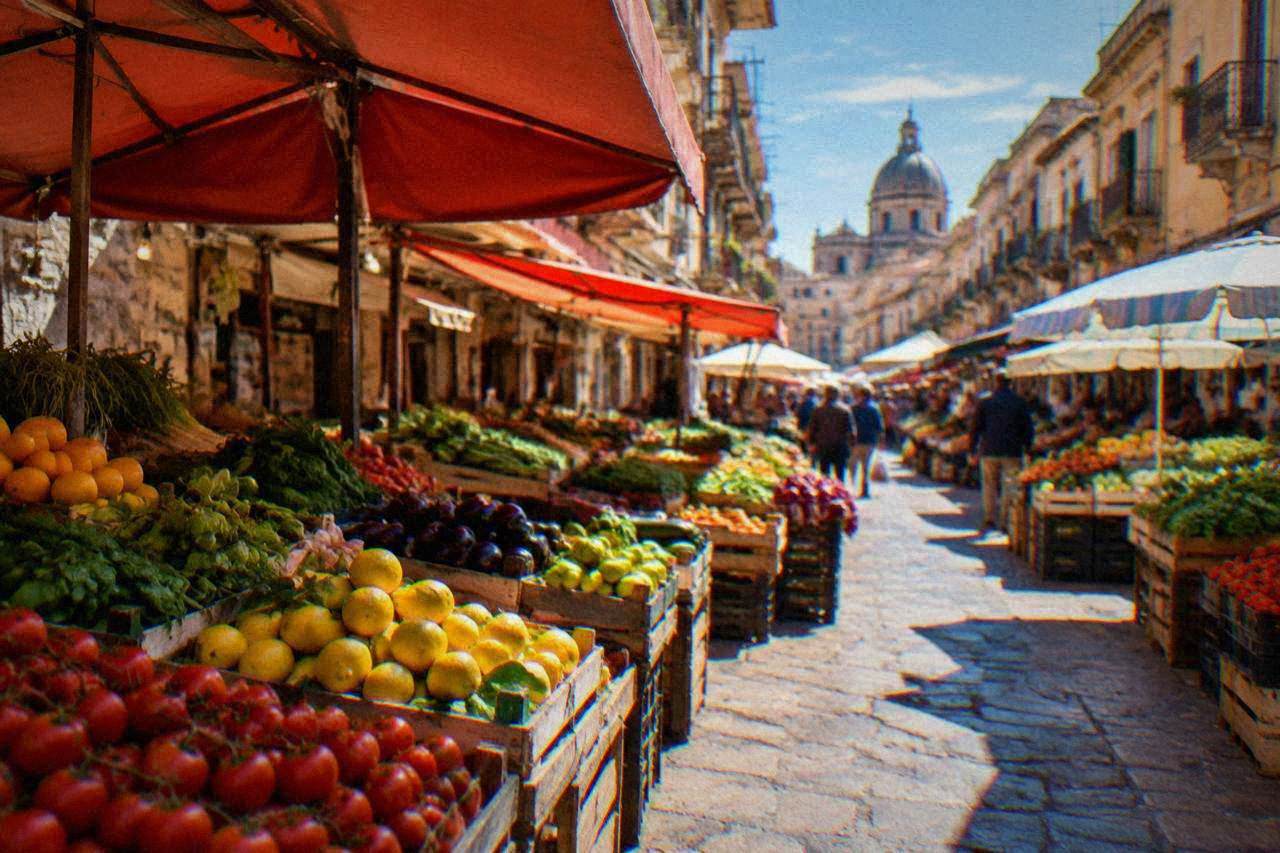
Yes, Palermo has several working historic markets, and the municipal tourism page names three as the main ones: Ballarò, Capo and Vucciria. Ballarò is described as the largest, of Arab origin, and it runs roughly Monday to Saturday from about 7:30 to about 20:00, with Sunday mornings as well. Entry is free, no ticket exists, and the stalls sell food alongside household goods, exactly as they have for centuries.
Each market sits in a different corner of the old centre. The crossing of Via Maqueda and Corso Vittorio Emanuele at the Quattro Canti divides the historic city into four districts, Capo, Albergheria, Kalsa and Loggia, and the markets grew up serving them. Ballarò stretches through the Albergheria side, the Capo market sits near the cathedral end of town, and the Vucciria occupies the stretch between the Cassaro and the port side of the centre.
What makes them worth planning around is that they are not museums. Residents still shop at them, the fish and produce arrive in the morning, and the rhythm of the day shapes the stalls: loud and full until early afternoon, quieter through the mid-afternoon, then busy again toward evening in the Vucciria, which has a second life after dark. A visitor who arrives at 10:00 sees a different market from one who arrives at 19:00.
The markets also anchor the city's reputation. Palermo appears on lists of great street food cities largely because of what is sold from these stalls, and a walk through one of them, snack in hand, is the single activity that ties together food, history and ordinary city life in one visit. The Ballarò market guide goes deeper on that specific market.
If you'd like to dig deeper into the food, book a cooking class with market tour here.
Which Historic Markets Should You Visit In Palermo?
Visit Ballarò first if food is the priority, the Capo if you want the market nearest the cathedral and the Teatro Massimo, and the Vucciria if you want the evening version of a Palermo market, food stalls by day and bars by night. All three are free, all three are within walking distance of each other, and no ticket or booking is needed to walk through any of them.
Ballarò is the one the municipal tourism page describes as the largest of the historic markets. It sprawls through the streets of the Albergheria, closest to the central station, and it is the market where the full range is on show: fish on ice, vegetables, spices, cheap clothing and household goods stacked to the awnings. Its Arab origin is part of the city's layered history, and the noise, the calls of the vendors and the narrowness of the streets all belong to that tradition.
The Capo market runs mornings near the cathedral end of the old centre, and it is the natural pairing with a cathedral visit or a Teatro Massimo tour, since both sit within a short walk. It is smaller in footprint than Ballarò and its trading day is concentrated in the earlier hours, so plan it for the start of a morning rather than the end of an afternoon.
The Vucciria is the market that changed most. Its daytime market still runs through the week, but the area is now equally known for its evening scene, with street food stalls and bars drawing crowds after dark, strongest from Thursday to Saturday and through the summer. Coming here twice, once by day and once in the evening, shows two sides of the same streets.
When Are The Palermo Markets Open?
Ballarò runs roughly Monday to Saturday from about 7:30 to about 20:00, with Sunday mornings as well. The Capo market trades in the mornings and does not operate on Sundays. The Vucciria keeps daytime market hours Monday to Saturday, with Sunday mornings, and its bars and food stalls continue into the evening. None of these hours is fixed by a timetable, so treat them as a pattern rather than a schedule.
Market hours in Palermo are habits, not regulations. Stalls open early, the trade peaks through the morning, and individual vendors pack up when their stock is gone, which is why a closing hour should never be treated as a promise. The practical rule is simple: the earlier you go, the more you see, and by mid-afternoon several streets that were full at 9:00 are half empty.
Sundays are the exception that matters. Ballarò keeps a Sunday morning session, and the Vucciria does the same, but the Capo does not operate, so a Sunday visitor has two of the three markets available and only until early afternoon. Public holidays follow a similar pattern, with reduced trade and no guarantee of any particular stall being open.
The table below summarises the pattern for planning:
| Market | Days | Rough pattern | Character |
|---|---|---|---|
| Ballarò | Monday to Saturday, Sunday mornings | From about 7:30 to about 20:00 | The largest, produce and fish, closest to the station |
| Capo | Monday to Saturday | Mornings only, closed Sunday | Food stalls near the cathedral and Teatro Massimo |
| Vucciria | Monday to Saturday, Sunday mornings | Daytime market, evening bars and street food | Market by day, nightlife by evening |
Pairing the markets with the rest of a day takes little effort, because everything sits close together. A morning at the Capo, a cathedral visit and then the Quattro Canti can be walked in one stretch, and the same logic applies from Ballarò toward the station. The page on how many days are recommended for a trip to Palermo shows where market mornings fit in a first visit.
What Should You Eat At The Palermo Markets?
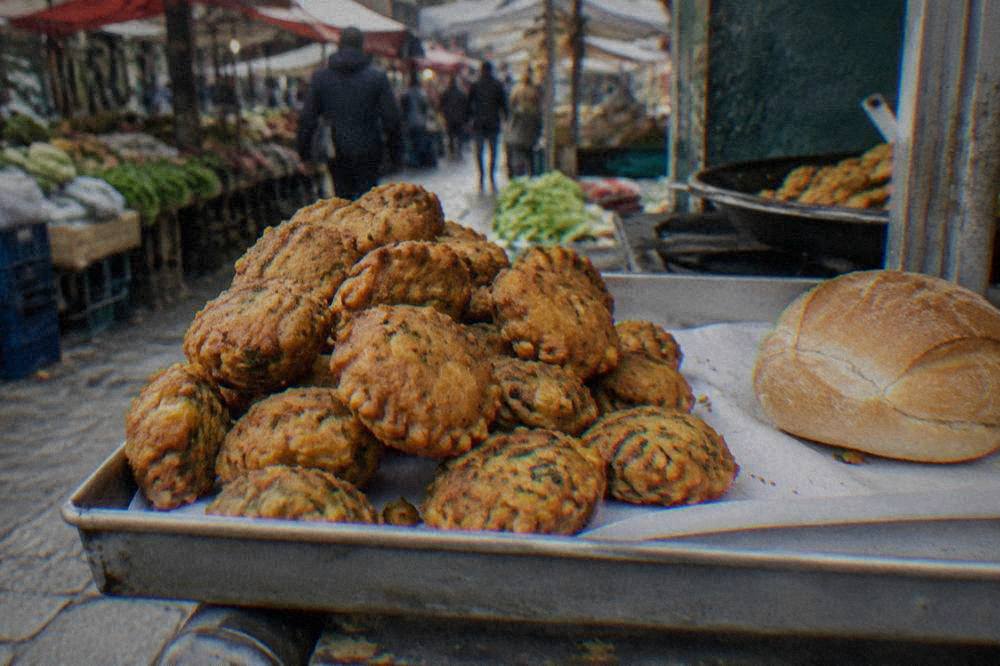
Eat the fried street food the markets are known for: panelle, chickpea fritters served in a sesame roll, sfincione, a spongy Sicilian pizza, and potato crocche, alongside an arancina, the round stuffed rice ball that Palermo claims as its own form. The Accademia della Crusca accepts both arancina and arancino, with Palermo and western Sicily using the feminine form. Prices are posted at the stalls, so check the board before ordering.
This is the part of a Palermo visit that rewards hunger. Panelle and crocche together in a mafalda roll is the classic market lunch, cheap by any standard and sold everywhere from Ballarò to the Vucciria. Sfincione, topped with onion, anchovy and caciocavallo, appears on trays at the markets rather than by the slice in a shop, and it is a mid-afternoon food as much as a lunch one. Other pages covering the same trip are gathered on Palermo Italy Travel Guide.
The arancina question is settled enough not to argue about: the Accademia della Crusca, the reference body for the Italian language, accepts both forms, noting that Palermo and western Sicily tend toward the feminine arancina, often round, while Catania and the east use arancino, often conical. Order either in Palermo and you will be understood.
A short list of what to look for:
| Food | What it is | Where to find it |
|---|---|---|
| Panelle | Chickpea fritters, often in a sesame roll | Fried-food stalls at all three markets |
| Crocche | Potato croquettes, usually mixed with panelle | Same stalls as panelle |
| Sfincione | Thick sponged pizza with onion and anchovy | Market trays and street carts |
| Arancina | Round stuffed and fried rice ball | Markets, bakeries and bars |
| Cannolo | Fried pastry tube filled with sheep's-milk ricotta | Market sweet stalls and pastry shops |
One habit worth keeping at the stalls: check the posted price before you order, and expect to pay at the counter. A coperto, the cover charge, is common at restaurants and legal when printed on the menu, but at a market stall the price on the board is the whole transaction, and tipping is not obligatory anywhere in Italy.
Is The Vucciria Still A Market At Night?
Yes, the Vucciria remains a market by day and becomes a street-food and bar district in the evening, with the nightlife strongest from Thursday to Saturday and through the summer months. The daytime fish and produce stalls still operate Monday to Saturday with a Sunday morning session, so the evening scene has been added to the market rather than replacing it. Visitors after dark should keep the normal city precautions about bags and valuables.
The evening Vucciria is where the two sides of Palermo's food culture meet. The same streets that sell fish in the morning fill with people drinking and eating fried food at night, and the atmosphere is closer to an open-air bar than a market. Some of the old market buildings now hold bars and venues, and the change has been gradual rather than sudden.
By day it is quieter than Ballarò, and some visitors find the contrast between morning and evening the most interesting thing about it. A walk through at 9:00 and a return at 21:00 shows a neighbourhood doing two different jobs with the same square metres.
The standard city-centre advice applies in the evening as anywhere: the UK FCDO notes that bag-snatching and pickpocketing are more common in city centres and at major tourist attractions, so a zipped bag held in front is the sensible habit. The page is Palermo safe to travel to right now covers the current advisories in full.
How Do The Palermo Markets Fit Into A Longer Visit?
The markets fit naturally into a first day, usually as a morning at Ballarò or the Capo combined with the cathedral, the Quattro Canti and the Norman Palace, which are all within walking range of one another. A second day can pair a market breakfast with a Monreale or Cefalu trip, since both leave from stops close to the centre. Two or three days is the usual recommendation for a first Palermo visit, and a market morning belongs on every one of them.
The geography makes this easy. Ballarò lies near Palermo Centrale, the Capo lies near the cathedral, and the Quattro Canti sits between them, so a single walking line connects station, market, cathedral and centre. The Norman Palace and the Palatine Chapel sit slightly outside that line in the Albergheria, a short walk from Ballarò's streets, and the two together are the city's headline sight. A guided visit, such as Check availability for the small-group or private option, pairs well with a Ballarò morning.
Day trips fold around the markets too. Monreale leaves by AMAT bus 389 from Piazza Indipendenza, and Cefalu leaves by train from Palermo Centrale, so an early market breakfast before either departure costs nothing and delays nothing. The overall shape of a visit is covered in the things to do in Palermo overview.
Common Questions About Palermo Markets
Yes, Palermo has three main historic markets, Ballarò, Capo and Vucciria, all free to enter and all inside the old centre, with Ballarò the largest of them and the closest to the central station.
Is there a market in Palermo, Sicily?
Yes, several. The municipal tourism page names Ballarò, Capo and Vucciria as the main historic markets. Ballarò, described as the largest and of Arab origin, runs roughly Monday to Saturday from about 7:30 to about 20:00 with Sunday mornings. All are free to enter and need no ticket.
Which Palermo market is best for street food?
Ballarò and the Capo are the strongest for daytime street food, with fried panelle, crocche and sfincione sold at the stalls. The Vucciria is the one to choose in the evening, when its bars and street-food stalls take over from the daytime market.
Are the Palermo markets open on Sunday?
Partly. Ballarò keeps a Sunday morning session and the Vucciria does the same, but the Capo does not operate on Sundays. Sunday trade ends in the early afternoon, so plan market visits on the earlier side of the day.
Do you have to pay to enter a Palermo market?
No. All three historic markets are ordinary public streets and entry is free. You pay only for what you buy at the stalls, and prices are posted at each stall, so check the board before ordering.
Is it safe to visit the Palermo markets?
Yes, with normal city precautions. The UK FCDO notes that bag-snatching and pickpocketing are more common in city centres and at major tourist attractions, so a zipped bag held in front is the sensible habit in the market crowds, exactly as on public transport.
Palermo's markets are free, central and open most of the week, and one morning spent walking them with a fried snack in hand covers more of the city's character than any single ticketed sight, which is why they belong on the first day of every visit.