Is There A Botanical Garden In Palermo?
Yes, Palermo has a botanical garden, the Orto Botanico on Via Lincoln. This guide covers its hours, location, what grows there and how to fit it into a visit.
Palermo, the coastal capital of Sicily on the Tyrrhenian Sea, keeps its botanical garden a short walk south of the historic centre, behind walls on Via Lincoln. The Orto Botanico is a research garden run by the University of Palermo, and the official garden site lists its opening hours, its address at Via Lincoln 2, and its closure days. It is a green stop that sits comfortably beside the markets, churches and palaces covered across this Palermo Italy Travel Guide, and it needs only an hour or two of a day.
Is There A Botanical Garden In Palermo?
Yes, Palermo has a botanical garden, the Orto Botanico, at Via Lincoln 2, run by the University of Palermo as a living research collection rather than a park. The official garden site publishes seasonal opening hours, with entry closing an hour before the gates shut, and the garden closes on 1 January and 25 December. It sits directly south of the historic centre, within walking distance of the old mandamenti.
The garden's position matters for planning. The old centre of Palermo is divided into four mandamenti, Capo, Albergheria, Kalsa and Loggia, by the crossing of Via Maqueda and Corso Vittorio Emanuele at the Quattro Canti, and the municipal tourism page describes that layout in detail. Via Lincoln runs along the southern edge of that old fabric, so the garden works well as the last stop of a walking morning before lunch, or as a calm counterweight to the street noise of the Ballarò market a few blocks north.
Because it is a university garden, the planting is arranged as a collection rather than as ornamental bedding. That is the honest expectation to set: the Orto Botanico is closer to an outdoor museum of plants, with labels, greenhouses and avenues, than to a pleasure garden with flowerbeds rotated through the seasons. Readers who want the full sight-by-sight treatment will find it in the site's dedicated guide to the Palermo Botanical Garden.
Where Is The Garden And When Can You Visit?
The Orto Botanico stands at Via Lincoln 2, Palermo, just south of the historic centre, and the official garden site gives seasonal hours: in October, for example, Monday to Saturday 09:00 to 18:00 and Sunday 10:00 to 18:00, with the last entry an hour before closing. The garden is closed on 1 January and 25 December. Hours shift with the seasons, so the current timetable should be read on the garden's own page before a visit.
Those October hours are an example of the pattern, not a promise for every month. The site groups its timetable by season, with longer evening openings in the summer stretch and earlier closures through the winter, and the last-entry rule means a late arrival shortens the visit by design. A morning arrival is the safer plan, and it pairs naturally with the market hours nearby: the Italia.it tourism listing for Ballarò gives Monday to Saturday from about 7:00 or 7:30 in the morning, with Sunday mornings only.
| What | Detail |
|---|---|
| Address | Via Lincoln 2, Palermo |
| October hours (official site) | Mon to Sat 09:00 to 18:00, Sun 10:00 to 18:00 |
| Last entry | One hour before closing |
| Closed | 1 January and 25 December |
| Getting there | Walk from the historic centre, or AMAT bus or tram toward the south of the centre |
Getting around the city on foot is realistic for this itinerary, and the question can you walk in Palermo has its own answer page on this site. For anything farther, the AMAT fares page lists 1.40 EUR for a 90-minute ticket, 3.50 EUR for a day ticket and 8.00 EUR for three days across the bus and tram network, with a surcharge to 1.80 EUR for a ticket bought on board.
Prefer to ride between the sights instead of walking? Book a hop-on hop-off bus ticket here.
What Grows Inside The Palermo Botanical Garden?
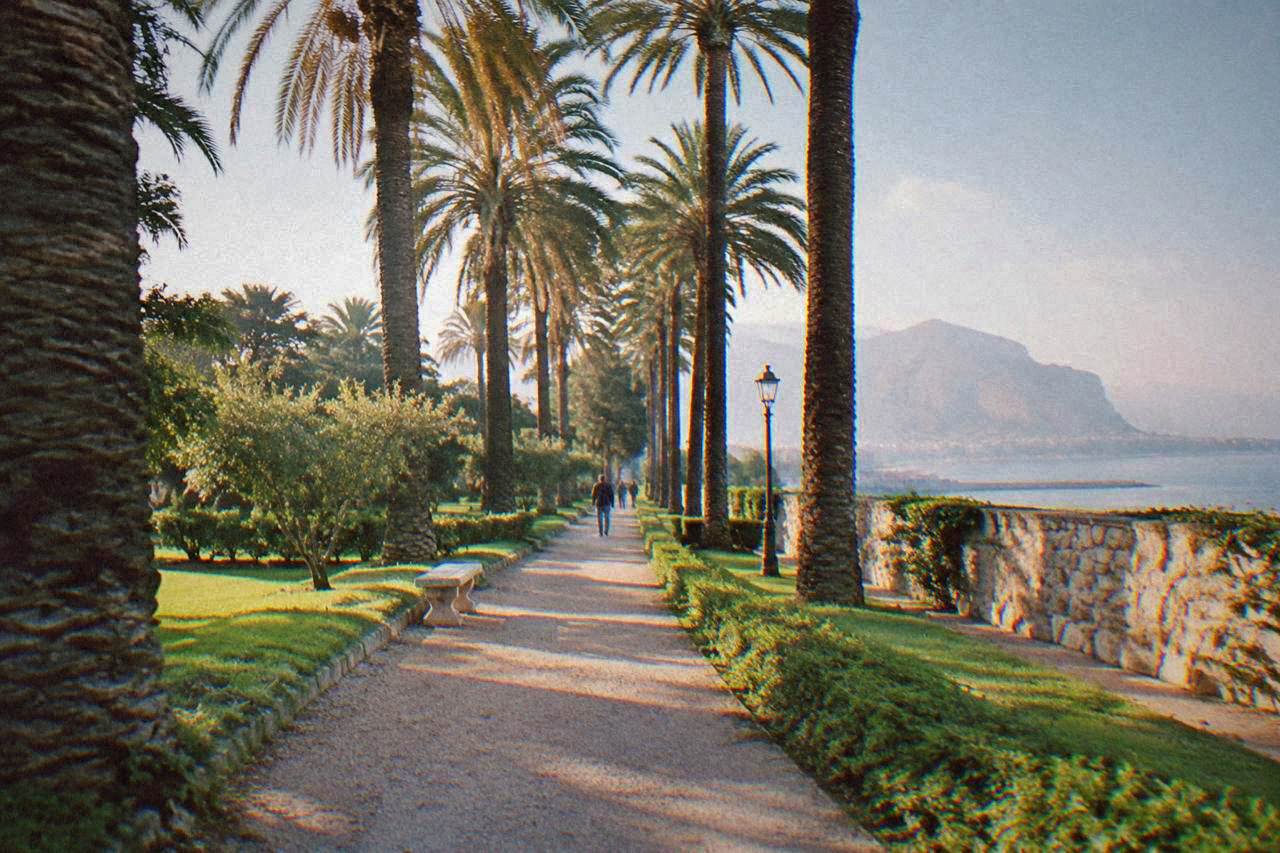
The Orto Botanico holds the university's living plant collections, laid out in avenues, beds and greenhouses, and the garden's own materials highlight its palms, its ficus and other large subtropical specimens suited to Palermo's mild coastal climate. The climate table for the city shows why: modelled 1991 to 2020 normals put the January mean at 11.3 C and the August mean at 26.8 C, a range that lets tender species grow outdoors year round.
The scale of the planting is what distinguishes the garden from a city park. Old ficus trees with buttress roots, tall palm avenues and dedicated greenhouse structures for species that need different conditions are the recurring features named in the garden's descriptions. The layout follows the academic tradition of the collection, with linear avenues and ordered beds, so the visit reads as a walk through a classified catalogue of plants rather than a ramble.
Two seasonal notes are worth carrying. First, the climate table shows October as the wettest month of the Palermo year at 81 mm of modelled precipitation against 7 mm in July, so a visit from autumn onward benefits from a check of the forecast, though the greenhouses give a partial refuge. Second, the summer months of July and August, with means of 26.2 C and 26.8 C, make the shaded avenues far more comfortable than the open beds at midday, and the August mean maximum of 30.4 C is the figure the climate table attaches to that month.
If a garden morning leaves the afternoon open, the Cefalu coast is a workable contrast, and the Cefalu and Castelbuono full-day excursion covers it in one booked day. The listing shows what the trip includes, and Check availability gives the live dates.
Is The Garden Worth Combining With Palermo's Other Sights?
The Orto Botanico earns its place on a Palermo itinerary as a half-morning stop, best combined with the nearby market quarter in the morning or with a museum in the afternoon. It stands within the same walkable band as Ballarò to its north, and it sits close to the garden and museum cluster that includes Villa Giulia, which is free to enter, and the Foro Italico waterfront, both also free and both covered in the site's guide pages.
A realistic day keeps the garden in the morning slot. Palermo's paid sights cluster around timed entries, for example the Palazzo dei Normanni, whose ticket page lists a 14.50 EUR full ticket covering the Palatine Chapel and the royal apartments with last admission at 16:30 from Monday to Saturday, and the Teatro Massimo guided tour at 14 EUR full. Fitting the garden before those afternoon entries avoids the squeeze.
The garden also answers the rainy-day question partly. Its greenhouses and covered walks give some shelter, but the site is fundamentally outdoor, so on wet days the indoor set wins: the Teatro Massimo tour, the Marionette Museum at 5 EUR full entry with puppet shows, and the Salinas Archaeological Museum at 7 EUR full, closed Monday, are the listings the site holds.
How Much Does It Cost And Who Is It For?
No admission figure for the Orto Botanico is carried on this site's pages, so the price should be read at the entrance or on the garden's official site before visiting.
For families, the garden sits well in a day that includes Villa Giulia, whose playground and ponds the municipal tourism pages describe as free and generally open from about 07:00 to 20:00, and the Giardino Inglese with its dedicated play spaces for small children. The pairing of a quiet garden and a playground balances a city that can otherwise be all stone and traffic.
Budget context helps too. The question is Palermo expensive to visit has a full answer on this site, and the free tier of the city is genuinely deep: the Quattro Canti, the Foro Italico, Villa Giulia, Parco della Favorita and the markets all cost nothing, and many state and regional museums are free on the first Sunday of the month, to be confirmed per site.
How Do You Fit The Garden Into A Palermo Trip?
Plan the Orto Botanico as a morning stop of one to two hours on the southern edge of the centre, before timed afternoon entries such as the Palazzo dei Normanni or a Teatro Massimo tour. On a first two-day visit it slots into day one alongside Ballarò and the Quattro Canti, while day trips to Monreale, Cefalu or Segesta, all under 90 minutes by road from the Quattro Canti, claim their own full days.
Trains also serve Cefalu, with the regional service taking about 40 to 60 minutes and 19 to 24 direct trains a day. Those journeys are covered in the site's day-trip guides.
For a trip of four or five days, the garden becomes the flexible piece, the stop that absorbs a quiet morning or a jet-lagged first afternoon. The site's answer to how many days are recommended for a trip to Palermo sets out the fuller sequencing.
When the garden and the city are done, the booked excursions below take the planning off your hands, with the operator's live listing carrying current dates and inclusions.
Common Questions About The Botanical Garden In Palermo
Is there a botanical garden in Palermo?
Yes. The Orto Botanico at Via Lincoln 2 is the city's botanical garden, run by the University of Palermo, with seasonal hours published on the official garden site and closures on 1 January and 25 December.
How do I get to the Orto Botanico from the historic centre?
It is a walk south from the old mandamenti, past the edge of the Ballarò quarter. AMAT buses and trams serve the area, and the AMAT fares page lists a 1.40 EUR 90-minute ticket.
Is the Palermo botanical garden good for children?
The avenues and lawns suit a family stop, and the municipal tourism pages describe free nearby options including Villa Giulia's playground and the Giardino Inglese play spaces.
Is the botanical garden open on Sundays?
The official site's seasonal timetable includes Sunday openings, with October hours of 10:00 to 18:00 shown as the example. Check the garden's own page for the current season before setting out.
Is the botanical garden a rainy-day option in Palermo?
Partly. The greenhouses give shelter, but the garden is mostly outdoors. The Teatro Massimo tour, the Marionette Museum and the Salinas Archaeological Museum are the stronger wet-weather picks.
The Orto Botanico is the calmest hour in a loud, generous city, and its gates on Via Lincoln sit close enough to everything else in central Palermo that no itinerary has to bend to include it.
