Is Saint Rosalia The Patron Saint Of Palermo?
Yes, Saint Rosalia is the patron saint of Palermo. The Santuzza, the 1624 relics on Monte Pellegrino, and the Festino each July.
Yes, Saint Rosalia is the patron saint of Palermo. The municipal tourism portal states it plainly, the diocese's own pages repeat it, and the whole city calendar bends around her feast each July. Palermo, the coastal capital of Sicily on the Tyrrhenian Sea, keeps a short list of civic symbols, the eagle, the Genius of Palermo, and the Santuzza, as she is called in Sicilian, and of the three she is the one with a date, a procession and a mountain.
Is Saint Rosalia The Patron Saint Of Palermo?
Yes, Saint Rosalia is the patron saint of Palermo, and the city's own tourism portal says so on its Festino page. She is affectionately called the Santuzza, the little saint, and her cult was adopted after 1624, when her relics were found in a cave on Monte Pellegrino, the mountain that closes the Gulf of Palermo to the west. Palermo honours her with a fixed place in the calendar, a procession and a sanctuary.
The story the diocese and the comune tell is short on paperwork and long on consequence. In 1624, with plague in the city, her remains were discovered on Monte Pellegrino, carried into Palermo, and the epidemic was read as having ended with her intercession. The Senate of Palermo proclaimed her patron saint, and the anniversary has been kept each July since.
What makes her unusual among patron saints is how civic the cult is. The municipal Festino page describes a triumphal chariot procession along the Cassaro, the straight old street now called Corso Vittorio Emanuele, ending at Porta Felice by the sea, with fireworks over the Foro Italico. A religious procession with her silver urn follows. The saint belongs to both the Archbishop and the city council, and each July both show up.
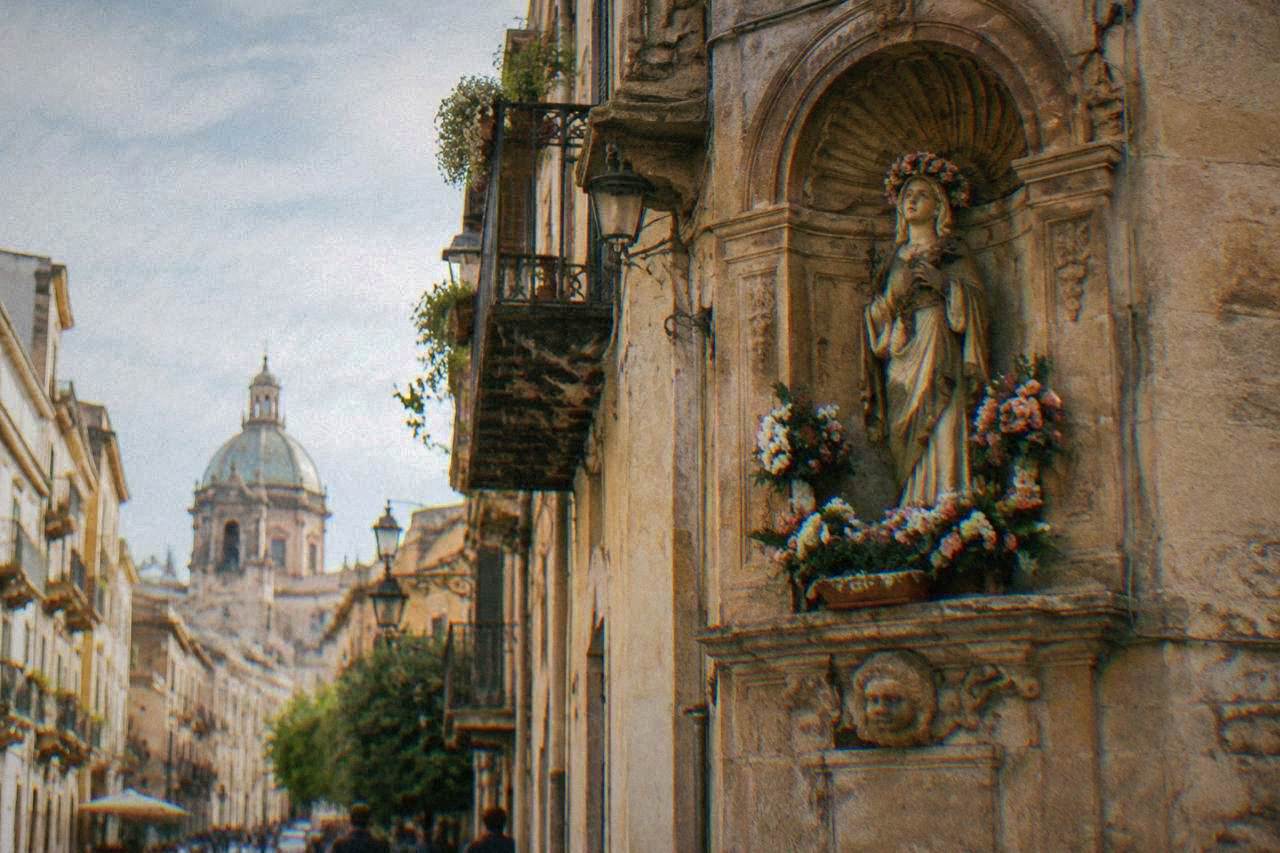
If the question behind the question is whether she matters to a visit, the answer is that she is impossible to miss. Her image hangs in street shrines across the old centre, she appears on fountains and banners, and the sanctuary on Monte Pellegrino is one of the fixed points on the city's skyline. Readers planning a first trip may also want the companion page on what Palermo is best known for.
Who Was The Santuzza, And Why Does Palermo Call Her That?
The Santuzza is Saint Rosalia, and the name is simply the Sicilian diminutive, the little saint, that Palermo uses for its patron.
That reticence is worth respecting, because a lot of what circulates about her is legend rather than documentation. What the official pages do commit to is the sequence: relics found in the cave on the mountain in 1624, plague interpreted as ended, patronage proclaimed. The cave itself, on Monte Pellegrino, became a sanctuary and remains the devotional centre of the cult, a short drive or a determined walk from the city, inside the natural reserve that covers the mountain.
Beyond it, the Santuzza lives in the present tense: in the fireworks over the sea, in the chariot, in the street name Via Santuzza off the Cassaro, and in the small acts of decoration around her street shrines that residents keep up all year.
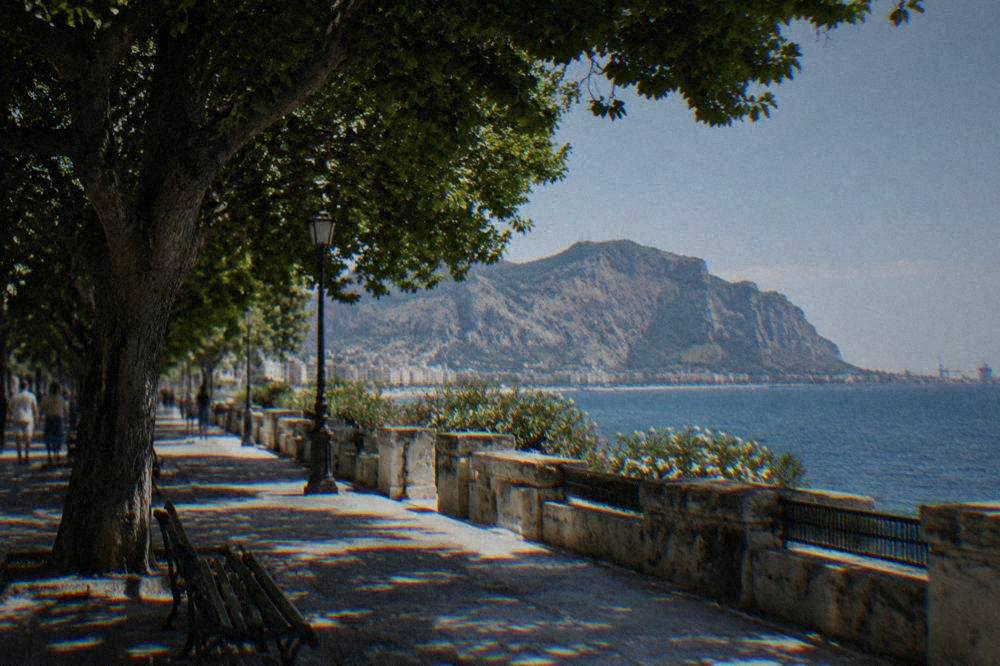
The mountain is the physical anchor. Monte Pellegrino rises at the north-western edge of the city, between the historic centre and Mondello, and the municipal pages treat it as part of the city's green frame together with Parco della Favorita. For a visitor deciding how to split time between her sites and everything else, the guide to how many days are recommended for a trip to Palermo sets out a workable order.
What Happens At The Festino Di Santa Rosalia In Palermo?
The Festino runs each July, and in 2026 it ran from 10 to 15 July with the main events on 14 and 15 July, according to the municipal tourism page. On 14 July a triumphal chariot carrying the saint's image processes along the Cassaro to Porta Felice with fireworks, and on 15 July a religious procession carries her silver urn with the relics through the city.
The two days do different jobs. The 14 July chariot procession is the civic spectacle: a float, music, crowds along Corso Vittorio Emanuele, and fireworks over the Foro Italico, the seafront lawn where the city gathers. The 15 July procession is the devotional counterpart, the silver urn carried in a formal religious procession. The 2027 dates are not announced, so a reader aiming for the Festino should check the comune's pages closer to the season rather than assume the same calendar.
| Element | What To Know | Where It Happens |
|---|---|---|
| Festino dates | Each July; 10 to 15 July in 2026, main events 14 and 15 July | Across the historic centre |
| Chariot procession | Triumphal chariot along the Cassaro to Porta Felice, with fireworks | Corso Vittorio Emanuele, ending at the sea |
| Religious procession | Silver urn with the relics carried in procession | Through the city streets |
| Relics | Found on Monte Pellegrino in 1624 | Sanctuary on Monte Pellegrino |
| 2027 programme | Not announced; check the municipal pages | comune.palermo.it |
The route is a walk almost any visitor can follow at other times of year without a festival: the Cassaro runs straight from the cathedral quarter down to Porta Felice, passing the Quattro Canti, Piazza Pretoria and the markets quarter on the way. Walking it is the simplest answer to the question can you walk in Palermo, and during the Festino it is also where the whole city stands.
Where Can You See Saint Rosalia In Palermo Today?
Four places carry her presence year round: the sanctuary in the cave on Monte Pellegrino, where her relics were found in 1624; the street shrines and statues scattered through the old centre; the Foro Italico and the Cassaro, the stage of the July procession; and the art and objects in the city's churches and museums, where she is shown in her habitual pose with a skull and a crown of roses.
The sanctuary on Monte Pellegrino is the destination for anyone who wants the cult at its source. The road up starts near Parco della Favorita, and the view from the top takes in the whole Gulf of Palermo. The cave church itself is the point: a natural grotto turned into a sanctuary, the place the 1624 story happened.
In the streets, she is quieter but everywhere. Look up at corner niches in the Kalsa and Albergheria and along the Cassaro, and a small Madonna-like figure with a skull appears again and again, often with fresh flowers. The pose is her signature in painting too: Rosalia in a cave, skull at her feet, roses in her hair. Museums that hold Palermo's art carry versions of it, and the Palermo Italy Travel Guide covers those collections in its museums pages.
| Site | Connection to the saint | Practical note |
|---|---|---|
| Sanctuary on Monte Pellegrino | Cave where the relics were found in 1624 | Reached by road from the Parco della Favorita side |
| Corso Vittorio Emanuele, the Cassaro | Route of the 14 July chariot procession | Walkable end to end through the old centre |
| Porta Felice and the Foro Italico | Procession destination and fireworks over the sea | Free public space, open all year |
| Street shrines in the old centre | Year-round devotion, flowers and lights | In Kalsa, Albergheria, Capo and Loggia districts |
How Does The Festino Change A Trip To Palermo?
The Festino fills the historic centre with processions, music and crowds on the nights of 14 and 15 July, and the municipal page presents it as the city's principal event of the year. A traveller who plans around it gets the procession and the fireworks; a traveller who wants quiet sightseeing at the Palazzo dei Normanni or the cathedral should treat those two days as busy rather than calm.
That is a planning trade-off, not a verdict. The palaces, the markets and the day trips do not stop, and Palermo's position as the base for western Sicily means Monreale, Cefalu and Segesta stay reachable. A reader weighing the city against the east coast can compare on the question which is nicer, Palermo or Taormina.
For anyone whose trip does not fall in July, none of the Rosalia sites close with the festival. The sanctuary, the Cassaro and the shrines are simply there, and the feast survives as the explanation for why a small saint in a cave owns the city's imagination.
One of the clearest ways to see how deep the civic cult runs is to pair her city with its hinterland. The Agrigento Valley of the Temples and Villa Romana tour covers two of Sicily's UNESCO-listed sites in one long day from Palermo, a reminder that the Santuzza's city is also the doorway to older layers of the island's past. Check availability if that day belongs in your plan.
Common Questions About Saint Rosalia And Palermo
Is Saint Rosalia the patron saint of Palermo?
Yes. The municipal tourism portal and the diocesan pages both name Saint Rosalia as the patron saint of Palermo, honoured each July since her relics were found on Monte Pellegrino in 1624.
When Is The Festino Di Santa Rosalia Held?
The Festino runs each July. In 2026 it ran from 10 to 15 July, with the chariot procession on 14 July and the religious procession with the silver urn on 15 July. Dates for 2027 are not announced, so check the municipal pages closer to the season.
Where Were Saint Rosalia's Relics Found?
In a cave on Monte Pellegrino, the mountain at the north-western edge of Palermo, in 1624. The cave is now a sanctuary and remains the devotional centre of the cult.
Why Is She Called The Santuzza?
Santuzza is the Sicilian diminutive, the little saint, the affectionate name Palermo uses for its patron. It appears on the comune's own Festino pages.
Can You Visit The Sanctuary On Monte Pellegrino Outside The Festival?
Yes, the sanctuary is a year-round site reached by road from the Parco della Favorita side of the mountain, and the view covers the Gulf of Palermo.
What Route Does The July Procession Take?
The triumphal chariot travels along the Cassaro, today's Corso Vittorio Emanuele, to Porta Felice at the sea, with fireworks over the Foro Italico, followed by the religious procession with the silver urn on 15 July.
