Is Uber Available In Palermo, Sicily?
What the rules say about ride-hailing in Palermo, the regulated taxi alternative, airport transfer prices, and how to get around the city by bus, tram and on foot.
Palermo, the coastal capital of Sicily on the Tyrrhenian Sea, is a city where the ride-hailing question comes up early, usually at the airport or outside Palermo Centrale station. The honest answer is that app availability changes with local licensing decisions and enforcement, and no page can promise a car will appear. The transport basics are covered in more detail in how to get around Palermo.
Is Uber Available In Palermo, Sicily?
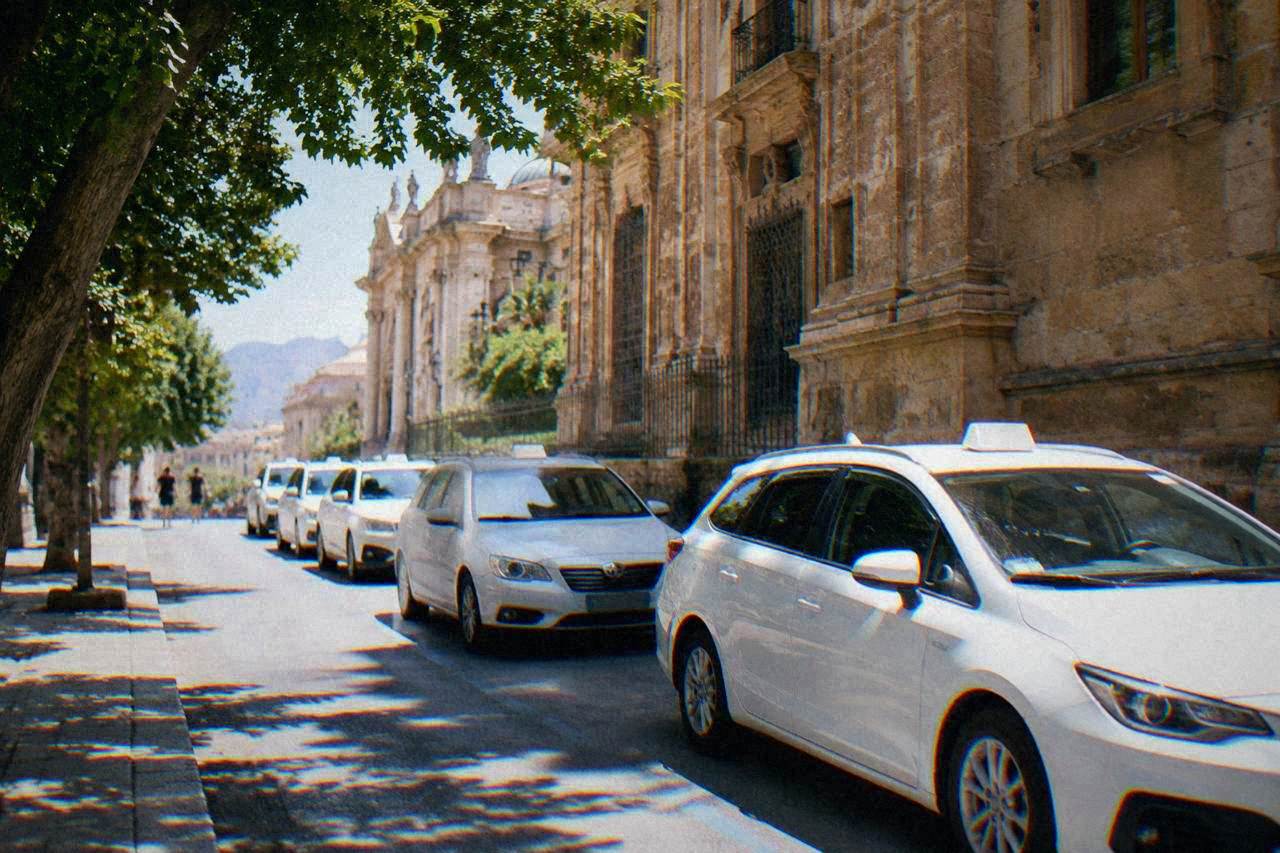
No stable claim can be made either way: app-based ride-hailing in Palermo changes with licensing rounds and enforcement, and the app itself is the only live source. The regulated, always-legal option is the white licensed taxi, taken from a rank, booked by phone, or flagged with the fixed airport rates.
Italian law treats ride-hailing as a licensed hire service rather than private individuals giving lifts, and each city's licensing picture decides what actually appears in an app there. That picture shifts, which is why a guide that says a firm "does operate" or "does not operate" in Palermo is promising something it cannot stand behind. What does not shift is the regulated alternative. Taxis in Palermo are white, licensed, metered inside the city, and organised around ranks at the airport, at Palermo Centrale, at the port and at main squares. The municipal rules behind them are the reason an app car, where one is available, is not always cheaper or faster. For a sense of how the city feels on the ground, the walkability question matters too: the historic centre is compact, and can you walk in Palermo is worth reading before deciding how much transport is needed at all.
One more layer: the historic centre is a camera-enforced limited traffic zone, the ZTL. Unregistered cars that cross its telematic gates are fined, with the amount set by municipal regulation rather than by any figure a travel page should print. Any car that picks a visitor up, app or taxi, works around that perimeter. A zipped bag held in front on a crowded bus remains the standard urban precaution; the safety question for Palermo is covered separately with the official advisory wording.
What Is The Regulated Alternative To Ride-Hailing In Palermo?
The regulated alternative is the white licensed taxi: taken from a rank at the airport, Palermo Centrale or the port, booked by phone, or flagged on the street where permitted. Inside the city the meter applies, and no reliable published tariff table exists for city trips, so the honest advice is to confirm the fare with the driver before setting off. For the airport, fixed zone rates exist and are listed below.
Palermo Centrale station, with its bus stops and taxi rank directly outside, is the natural hub for anyone arriving by train and then moving on within the city. The rank system matters here more than in cities where hail-and-app services are dense: at peak times, the rank is where the cars physically are. Phone dispatch from a hotel desk is the other standard route, and hotel staff will do this routinely.
Inside the city, no published official tariff table for urban taxi meters is available to quote, so any number a page prints for a cross-town ride is an invention. The fare conversation with the driver, before the car moves, is the control that actually works. For the airport, by contrast, the Comune has set fixed rates by zone, and those figures, reported for the 2025 tariff, are given in full in the next section.
How Much Is A Taxi Or A Bus From Palermo Airport?
Reported for the 2025 tariff, a licensed taxi from Falcone Borsellino airport to the city costs 39 EUR to the port side, 44 EUR to the historic centre and 50 EUR to the Foro Italico side, for up to four passengers with luggage; confirm with the driver before setting off. The airport bus runs every 30 minutes, takes about 50 minutes, and costs 6 EUR one way bought online, 6.50 EUR on board.
Rather have a driver waiting when you land? Book a private airport transfer here.
Those three zone rates are the only taxi figures worth printing, because they are the ones set rather than metered. They cover the vehicle, not per passenger, which makes a group of three or four the case where the taxi clearly competes. The bus, operated by Prestia e Comande, is the budget answer: the operator's published fare page gives 6 EUR single and 10 EUR return online or in advance, 6.50 EUR and 11 EUR bought on board, with children 3 to 12 at 4 EUR one way. It calls at Politeama, Via Roma and the Centrale station area, runs airport to city from 05:05 to 01:05 and city to airport from 03:30 to 21:30, and runs all year including holidays. A regional train also links the airport with Palermo Centrale in about an hour; the fare is shown on the Trenitalia ticket page.
| Option from Falcone Borsellino (PMO) | Published cost | Notes |
|---|---|---|
| Licensed taxi, port side zone | 39 EUR reported, 2025 tariff | Up to 4 passengers with luggage |
| Licensed taxi, historic centre zone | 44 EUR reported, 2025 tariff | Up to 4 passengers with luggage |
| Licensed taxi, Foro Italico side zone | 50 EUR reported, 2025 tariff | Up to 4 passengers with luggage |
| Airport bus, single, online | 6 EUR | Every 30 min, about 50 min |
| Airport bus, single, on board | 6.50 EUR | Same service, higher walk-up fare |
| Airport bus, return, online | 10 EUR | 11 EUR if bought on board |
| Regional train to Palermo Centrale | Fare on the Trenitalia ticket page | About 1 hour |
Arrival timing is a separate question from the mode: the airport operator's advisory is to be present 2 hours before Schengen flights and 3 hours before non-Schengen flights. On the way out, the bus and the taxi both serve the airport around the clock between them, which is why the airport to town transfer question has its own full page. Two airports serve this corner of Sicily, Falcone Borsellino and Trapani Birgi, and transfer advice only holds for the one you actually land at.
Can You Get Around Palermo Without A Car Or A Ride-Hailing App?
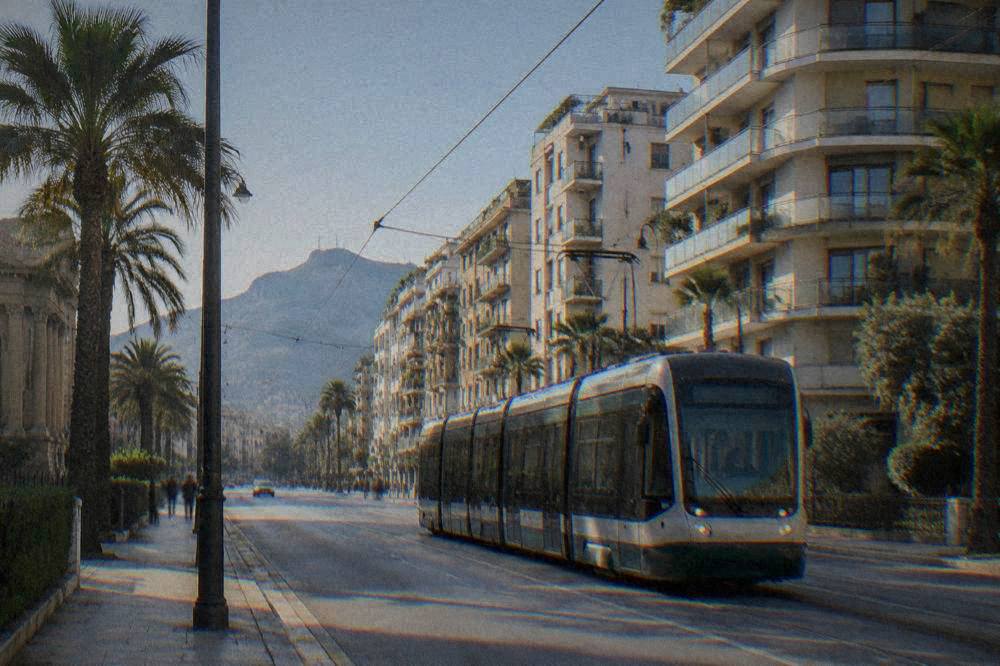
Yes, comfortably: AMAT runs the buses and four tram lines with a 1.40 EUR ticket valid 90 minutes, a 3.50 EUR day ticket and an 8 EUR three-day ticket, the historic centre is walkable end to end, and shared scooters from Dott, Lime and Bird have operated under a city concession since late 2025. The only gap is late-night return from outer areas, where the taxi rank is the fallback.
The AMAT fares page is the source for every figure above, and it adds the details that matter in practice: a single bought on board costs 1.80 EUR rather than 1.40 EUR, tickets are bought before boarding where possible, and each ticket is validated the moment you board, with the 90-minute window running from validation. Multi-day passes exist at 6 EUR for two days, 8 EUR for three and 16.50 EUR for seven, sold through the operator's app. There is no underground metro: what the city has is a suburban rail service, the Passante, with Line A running from Palermo Centrale to the airport, and a new Giachery to Politeama section approved to open from November 2026, which should be written as planned until it runs.
The walkability of the centre is the real reason the ride-hailing question matters less here than in, say, a spread-out capital. The four historic districts, Capo, Albergheria, Kalsa and Loggia, meet at the Quattro Canti, and the distances between the cathedral, the markets and the palace are short walks rather than journeys. Shared scooters fill the middle distance. The fold is at night and in the rain, when the tram and a taxi rank between them carry the load.
For the planning frame around all of this, how many days a Palermo trip needs shapes how many day tickets make sense, and a first visit overview sits on the Palermo Italy Travel Guide homepage.
Do You Need A Car In Palermo, And What About The Day Trips?
For the city itself, no: the ZTL camera zone, paid blue-line parking and dense one-way streets make a car a burden, and the centre is served by bus, tram and foot. For day trips, a car helps only for chains of small towns; Monreale, Cefalu and Agrigento all have direct bus or train links, and a guided excursion removes the driving entirely.
The ZTL is the reason rental-car itineraries go wrong in Palermo. The central zone is camera-enforced, access needs a permit bought through the official municipal portal, and a daily pass costs 5 EUR for petrol and diesel cars, 2.50 EUR for hybrids, with electric vehicles free; check the official portal for current hours, which run weekday daytime with extra Friday and Saturday evening windows that change by season. Parking outside the zone means blue-line spaces paid by app. None of this argues against renting for a tour of western Sicily, and the car rental question at Palermo airport is covered on its own page; it argues against a car for the city days.
The day-trip maths is different. Monreale is 16 minutes by road, and AMAT bus 389 runs there from Piazza Indipendenza on a 1.40 EUR city ticket, 47 runs a day. Cefalu is 65 minutes by road or 39 to 60 minutes by train, with 19 to 24 direct trains daily from Palermo Centrale. Agrigento has a direct regional train of about two hours. Segesta, Erice, Scopello and the Etna side are where a car or a booked excursion starts to pay for itself, and the Villa Romana and Valley of the Temples excursion, which this site features, covers the two headline ancient sites south of the city in one day with the driving handled: Check availability.
| Day trip from Palermo | By road, free-flow | By public transport |
|---|---|---|
| Monreale | 16 min | AMAT bus 389, 1.40 EUR, about every 40 min |
| Mondello | 27 min | AMAT summer line 806 |
| Cefalu | 65 min | Train, 39 to 60 min, 19 to 24 direct daily |
| Segesta | 64 min | Segesta Autolinee bus, about 70 min |
| Agrigento | 2 h 16 | Direct regional train, about 2 h |
| Erice | 96 min | Bus to Trapani, then cable car |
Common Questions About Uber And Taxis In Palermo
Is Uber available in Palermo, Sicily?
App availability changes with local licensing and enforcement, and the app itself is the only live source, so check it before relying on it. The regulated, always-available option is the white licensed taxi from a rank or by phone, with fixed published zone rates for the airport.
How much is a taxi from Palermo airport to the city centre?
Reported for the 2025 tariff, 39 EUR to the port side, 44 EUR to the historic centre and 50 EUR to the Foro Italico side, up to four passengers with luggage included. Confirm the zone rate with the driver before setting off.
Can you pay for the airport bus on board?
Yes. Prestia e Comande sells tickets on board at 6.50 EUR single and 11 EUR return, against 6 EUR and 10 EUR bought online or in advance. Children 3 to 12 pay 4 EUR one way and under 3s travel free.
Is there a metro in Palermo?
No underground metro exists. The city has a suburban rail service, the Passante, with Line A running from Palermo Centrale to the airport, plus four AMAT tram lines and the city bus network. A new Giachery to Politeama rail section is approved to open from November 2026.
Do taxis in Palermo use a meter?
Inside the city, yes, licensed taxis run on the meter, but no official published urban tariff table is available to quote, so agree the fare or confirm the meter before the car moves. The airport runs on fixed zone rates instead of the meter.
Can you drive into Palermo's historic centre?
Only with a ZTL permit: the central limited-traffic zone is camera-enforced and entering without a pass is fined. Daily passes cost 5 EUR for petrol and diesel cars, 2.50 EUR for hybrids and nothing for electric vehicles, bought through the official municipal portal.
The short version for a visitor standing at Falcone Borsellino with a phone in hand: check the ride-hailing app, but do not build the trip on it. The 6 EUR airport bus, the 1.40 EUR city ticket and the rank of white taxis at the station cover everything the app might, on fares the operators publish and a traveller can verify before the journey starts.