What Is The Best Month To Visit Palermo?
Month-by-month guidance for choosing when to visit Palermo, covering weather, the Festino of Saint Rosalia, market seasons, beach days at Mondello and the theatre calendar.
Palermo sits on the north-west coast of Sicily, facing the Tyrrhenian Sea, and its calendar shapes the visit as much as its streets do. July brings the Festino of Saint Rosalia, the city's patron, with the chariot procession on 14 July and the silver urn procession on 15 July. Late spring and early autumn carry warm sea and thinner crowds at the markets, while November opens the opera season at Teatro Massimo. The month that fits best depends on what the trip is for: festivals, beaches, food or sightseeing at an easy pace.
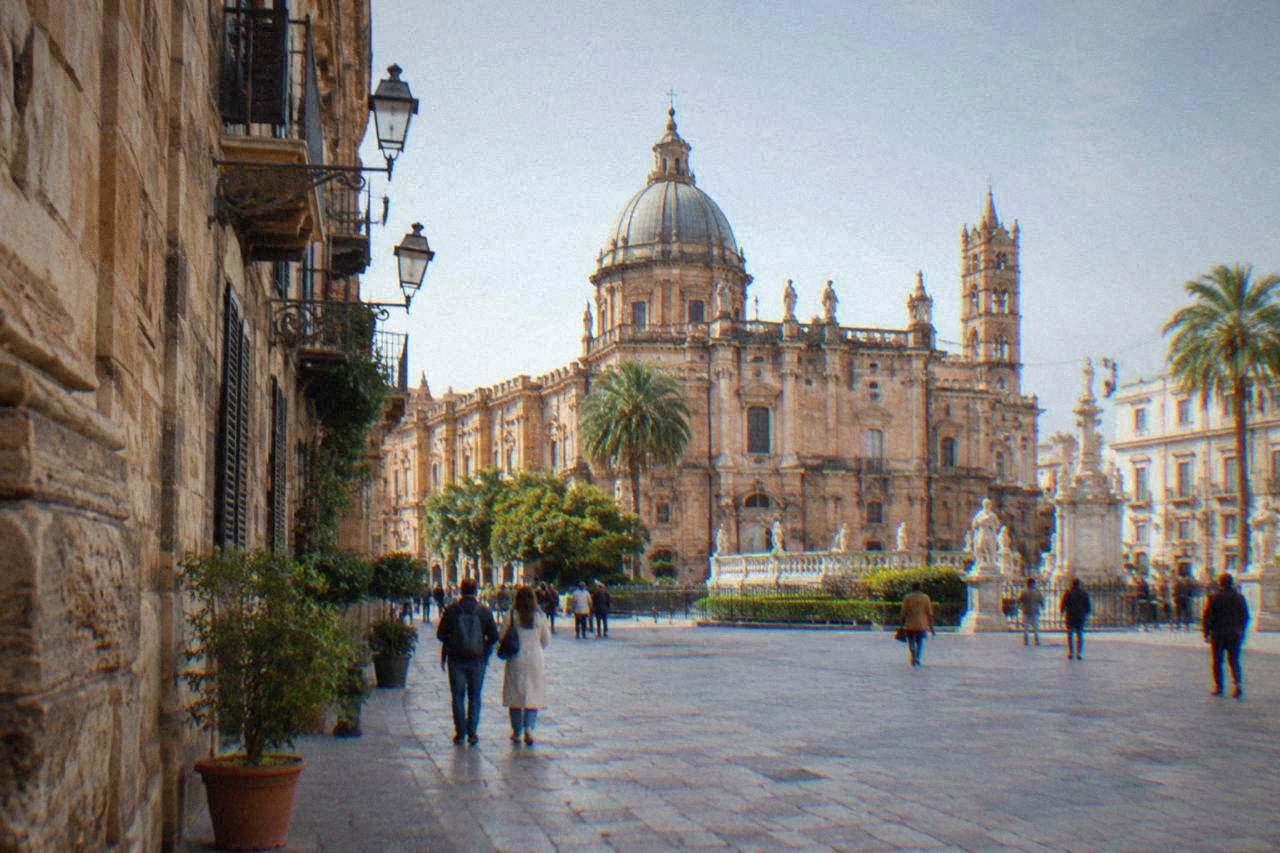
What Is The Best Month To Visit Palermo?
May and late September to early October are the strongest months for a first visit to Palermo, and mid-July is the strongest for the festival. May offers warm days, open beach weather beginning at Mondello and a city still running at full pace before the summer heat. Late September and early October combine sea that is still warm enough for swimming with the restart of the cultural season, and the markets stay lively through the whole stretch.
The reasoning is practical rather than sentimental. Palermo's climate is Mediterranean and coastal: hot, dry summers and mild, wetter winters. In the depth of summer the midday hours push sightseeing indoors, while in the middle of winter some coastal services slow down and the light goes early. The shoulder months give the widest window for walking the four mandamenti, the historic districts that meet at the Quattro Canti, and for day trips to Monreale and Cefalu without the summer pressure on trains and buses.
For a reader weighing the city itself against the region, the how many days are recommended for a trip to Palermo question matters as much as the month: a short stay in a festival week plays very differently from a long stay in a quiet one.
Which Months Have The Best Weather In Palermo?
Palermo's weather follows a classic coastal Mediterranean pattern: hot, dry summers, mild and wetter winters, and two shoulder seasons in between. From about late spring into autumn the sea at Mondello is warm enough for swimming, and the beach season proper runs through the summer months. Rain concentrates in the winter half of the year, and the city's outdoor life, from the markets to the Foro Italico, moves with that rhythm.
Spring is when the city opens outward. Parco della Favorita and Villa Giulia turn green, the walk up Monte Pellegrino to the sanctuary of Saint Rosalia becomes a comfortable outing rather than a hot climb, and the long seafront at Mondello, about 27 minutes by road from the Quattro Canti, starts filling on weekends. The municipal tourism page describes Mondello as the beach of the Palermitans, with its long stretch of fine sand and equipped lidos, and that local habit tells the calendar better than any forecast: when the locals swim, the sea is right.
Autumn keeps the sea warm after the air has cooled, which is why September and early October suit visitors who want both a city week and beach days. Free public stretches and paid lidos sit side by side at Mondello; in the 2026 season one concession area ran a low-cost access at 6 EUR, though that concession is the subject of a court dispute, so check locally before planning around it. Winter is mild by northern European standards but wetter, and it is the season for Teatro Massimo, the museums and the puppet theatre rather than the shore.
A good way to cover ground in the shoulder months, when the air is kind but the city is wide, is the guided bike tour with street food tasting, which links the markets and the waterfront in a single ride; Check availability if that rhythm suits the dates being considered.
When Are Palermo's Main Festivals And Events?
The Festino of Saint Rosalia, from 10 to 15 July each year, is Palermo's defining festival, with the triumphal chariot procession on 14 July along the Cassaro to Porta Felice and fireworks, followed by the religious procession with the silver urn on 15 July. Beyond it, the calendar holds Easter week in spring, the opera season at Teatro Massimo from late November, and the long summer beach season at Mondello from roughly June through September.
The Festino is the month-maker. The relics of Saint Rosalia were found on Monte Pellegrino in 1624, and the city has celebrated each July since, the municipal tourism page confirms the dates and the two processions. Anyone choosing July for the festival should book accommodation well ahead and expect the historic centre, especially the Cassaro, now Corso Vittorio Emanuele, to be crowded on the 14th and 15th. Easter Sunday falls on 28 March in 2027, so the Easter period sits early that year, and the 2026-27 opera season opens on 22 November 2026 with Samson et Dalila, with Falstaff scheduled in May 2027 as the theatre marks its 130th anniversary.
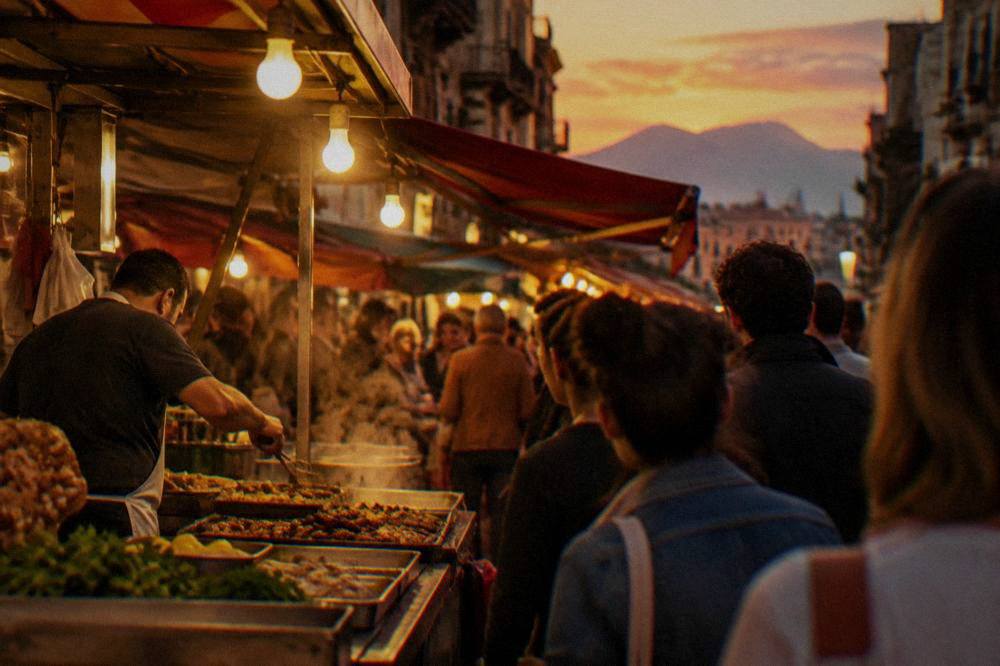
The markets follow their own weekly rhythm rather than a seasonal one, and they matter to any month choice because they are at their best in the morning. Ballarò runs Monday to Saturday from about 7:30 with Sunday mornings as well; the Capo market works mornings and closes on Sundays. A trip built around food should keep those hours in view whatever the month.
| Period | What is on in Palermo | Best for |
|---|---|---|
| March to early April | Easter week, spring light, mild walking weather | Processions, churches, city walking |
| May | Warm days, beach season starting at Mondello, green parks | First visits, day trips to Monreale and Cefalu |
| 10 to 15 July | Festino of Saint Rosalia, chariot procession 14 July, fireworks | Festival travel, street crowds, summer nights |
| Late September to early October | Sea still warm at Mondello, markets at full pace | Mixed beach and city weeks |
| From 22 November 2026 | Teatro Massimo season opens with Samson et Dalila | Opera, museums, indoor culture |
Which Months Are Quietest In Palermo?
November, excluding the season opening on 22 November 2026, plus December outside the Christmas period, January and February are the quietest months in Palermo. The trade is real: shorter days, cooler and wetter weather and a calmer beach scene at Mondello, but also thin crowds at the Palazzo dei Normanni, the Capuchin Catacombs and the markets, and easier seats for guided tours of Teatro Massimo.
Quiet-season travel changes the practical picture in the visitor's favour in specific ways. The Palazzo dei Normanni and the Palatine Chapel share one ticket, at 14.50 EUR full and 12.50 EUR reduced with the royal apartments included, and the apartments close on Tuesdays and Wednesdays when the regional parliament sits, so midweek planning still applies even in a quiet month. The Capuchin Catacombs charge 5 EUR full and 3 EUR reduced, with tickets sold at the office only and photography prohibited. Many state and regional museums are free on the first Sunday of the month, which holds in every season, and should be confirmed per site.
Winter is also when the indoor city earns its keep. The Marionette Museum runs puppet shows Tuesday to Saturday at 17:00, and the museum plus show ticket is 10 EUR full and 8 EUR reduced. The Salinas Archaeological Museum, at 7 EUR full, closes on Mondays. Rainy days have real answers here, and the rainy day in Palermo guide lists them in order. For travellers who want the city rather than the beach, the quiet months are not a compromise; they are the point.
How Does The Month Choice Change A Palermo Itinerary?
The month determines the shape of the trip more than the length of it: beach months push the itinerary outward to Mondello and the coast, festival months concentrate it on the historic centre, and quiet months pull it indoors toward Teatro Massimo and the museums. A three-day spring stay can mix the markets, the Quattro Canti and a Monreale day trip, while a July stay centres on the Festino and the evening hours, and a November stay leans on the opera and the galleries.
Day trips are the second factor. Monreale is 16 minutes by road from the Quattro Canti, and AMAT bus 389 runs there from Piazza Indipendenza on a 1.40 EUR city ticket, with about 47 runs a day. Cefalu is about 65 minutes by road, or 39 to 60 minutes by train with 19 to 24 direct services a day. Segesta sits 64 minutes away by road, Erice about 96 minutes with its cable car at 9 EUR one way and 15 EUR return. In the hot months these trips are best in the morning; in spring and autumn they can fill whole days comfortably. The Palermo and western Sicily week itinerary shows how those pieces fit across a longer stay.
Food runs through every month, but the form changes. Summer evenings belong to street food and the night scene around the Vucciria, while cooler months favour longer market-to-table lunches and cooking classes. The Accademia della Crusca accepts both arancina and arancino, and Palermo says arancina, so the fried rice ball of choice carries no seasonal rule at all.
| Trip type | Strong months | Anchor plans |
|---|---|---|
| First city visit | May, late September | Quattro Canti, markets, Palazzo dei Normanni, Monreale day trip |
| Festival trip | 10 to 15 July | Festino processions, evening street food, Monte Pellegrino |
| Beach and city mix | June, September | Mondello, Foro Italico, Capo Gallo coast |
| Culture and opera | November to May | Teatro Massimo season, museums, puppet shows |
| Quiet sightseeing | November, January, February | Catacombs, Salinas, Marionette Museum, free first Sundays |
What Should You Book Differently By Month In Palermo?
In festival months, accommodation and the Palazzo dei Normanni time slot come first; in summer, the beach transport and any boat trip come first; and in the quiet months, little needs advance booking beyond the Teatro Massimo season nights. The tourist tax applies year-round to non-residents for a maximum of four consecutive nights, at rates by accommodation category from 1 July 2025, so it is confirmed at booking in every month alike.
Getting around does not change with the season, but the crowds on it do. An AMAT ticket is 1.40 EUR for 90 minutes, 1.80 EUR bought on board, 3.50 EUR for a day and 8.00 EUR for three days, per the AMAT fares page, and the summer line 806 serves Mondello from April. The airport bus, Prestia e Comande, runs every 30 minutes, takes about 50 minutes, and costs 6 EUR one way bought online against 6.50 EUR on board. Those figures hold across the calendar, which is why the month decision belongs to weather, festivals and crowds rather than to transport costs. The what is the best way to get around Palermo page carries the full detail.
Guided tours deserve a month-aware eye. Walking tours in July run better in the cooler ends of the day, while the same routes in May or October fill the middle of the day happily. The Palermo Italy Travel Guide site carries seasonal pages for winter and summer that expand on each stretch of the year.
Common Questions About The Best Month To Visit Palermo
What is the best month to visit Palermo?
May and late September to early October suit a first visit best, while mid-July, from 10 to 15 July, suits festival travel built around the Festino of Saint Rosalia. November through February suits travellers who want the museums, the opera season and thin crowds rather than the beach.
Is Palermo too hot in summer?
Palermo has a hot, dry Mediterranean summer, and midday sightseeing in July and August is harder work than in the shoulder months. The practical answer is to shift the day: markets and main sights in the morning, the beach or a long lunch at midday, and the old centre in the evening, which is exactly how the Festino week itself is structured.
When can you swim at Mondello?
The sea at Mondello is warm enough for swimming from about late spring into autumn, and the summer beach season runs through the warmer months. Free public stretches and paid lidos sit side by side; in the 2026 season one area offered low-cost access at 6 EUR, but that concession is in a court dispute, so check locally before planning.
What is the rainiest time of year in Palermo?
Rain concentrates in the winter half of the year in Palermo's Mediterranean climate, with milder but wetter months from late autumn through winter. A rainy-day plan is easy to build here: Teatro Massimo tours, the Marionette Museum, the Salinas Archaeological Museum and the churches of the old centre all stay open whatever the sky does.
Is winter a good time to visit Palermo?
Winter suits culture-led travel: the Teatro Massimo season opens on 22 November 2026 with Samson et Dalila, museums run their normal hours, and the first Sunday of the month is free at many state and regional museums, confirmed per site. Beach days are off the table, but the markets keep their weekly rhythm and crowds are thin.
The month is the first itinerary decision, and in Palermo it is a generous one: pick the festival, the beach or the opera house, and the city will meet that choice.
