Is It Better To Stay In Cefalù Or Palermo?
A side-by-side comparison of staying in Palermo or Cefalù on a Sicily trip: bases, day trips, transport links, beaches and how to split your nights.
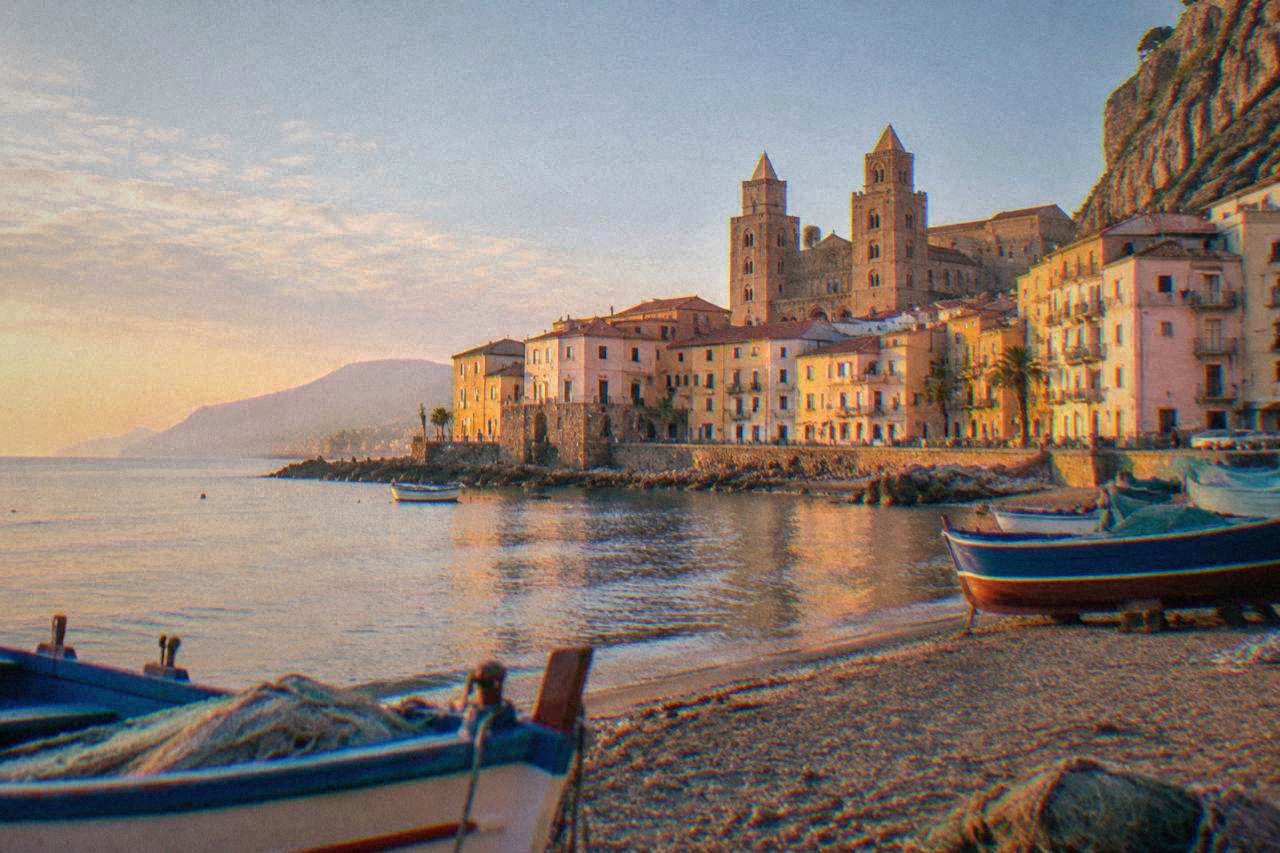
Palermo is the coastal capital of Sicily, a city of 628,693 residents at 31 December 2024 in the municipal statistics, and Cefalù is a far smaller seaside town about 65 minutes away by road or train. The question of which one to sleep in is really a question about what a trip is for: the city holds the markets, the royal palace and the day-trip departures, while the town holds a long sandy beach, a cathedral with free entry and a quieter rhythm after the day visitors leave.
Is It Better To Stay In Cefalù Or Palermo?
Stay in Palermo if the trip is short, museum-heavy or built around day trips, because the city is the transport hub for Monreale, Segesta, Agrigento and the rest of western Sicily. Stay in Cefalù if the trip is a beach holiday with one or two sightseeing days, because the town keeps a sandy waterfront and a freer pace.
The case for the city is practical before it is anything else. The trains to Cefalù, Monreale buses, airport coaches and excursion departures all run from Palermo, so every day trip in the region is shortest from there. The case for the town is equally practical in the other direction: Cefalù places a beach, a free-entry cathedral and a walkable old centre within a few minutes of a hotel door, which the city cannot do at the same scale. Mondello is Palermo's own beach, 13.9 km and about 27 minutes by road from the Quattro Canti, but it is a bus ride rather than a doorstep.
Neither choice is wrong, and the wrong choice is usually the one that misreads the trip. A visitor who books four nights in Cefalù and then tries to see Segesta, Monreale and the Palatine Chapel will spend the week on trains and coaches. A visitor who books Palermo hoping for a swim-before-breakfast morning will be disappointed by the commute to the sand.
What Does Each Place Offer As A Base?
Palermo offers the Palazzo dei Normanni and Cappella Palatina on a single 14.50 EUR ticket, the markets, the Teatro Massimo tour and departures to a dozen day trips; Cefalù offers its cathedral with free entry, paid tower and museum itineraries at 10 and 13 EUR, the La Rocca walk at 5 EUR and a beach on the doorstep. The city wins on quantity and range; the town wins on concentration and calm.
The city's sight list is long enough to fill several days on its own. The Palazzo dei Normanni ticket page lists 14.50 EUR full and 12.50 EUR reduced with the royal apartments included, open Monday to Saturday to a 16:30 last admission and Sundays to 12:30. The Teatro Massimo guided tour runs daily for 14 EUR full and 7 EUR under 26. The Capuchin Catacombs charge 5 EUR, with tickets sold at the office only and photography prohibited. Around them sit the free Quattro Canti, the Foro Italico, the markets and the churches of the UNESCO Arab-Norman listing, which also includes Cefalù Cathedral as one of its nine components.
Cefalù's list is shorter but unusually compact. The cathedral entry is free, with paid itineraries for the towers, roofs and museum at 10 and 13 EUR depending on the route, and La Rocca, the rocky headland above the town, at 5 EUR full and 2.50 EUR reduced. Its visitor pages ask for closed shoes on the Rocca paths and warn against the midday heat in summer. Between the two, a full day in town covers the lot at a slower pace than a single morning in Palermo.
The evening weight also differs. Palermo's Vucciria and the streets off Via Maqueda keep a late street-food scene, while Cefalù is a small town where the seafront quiets once the day excursioners have gone home. Readers weighing a second coastal comparison can also see the site's page on Palermo or Taormina as a base.
How Do You Travel Between Palermo And Cefalù?
The Palermo to Cefalù regional train takes about 39 to 60 minutes with roughly hourly service across 19 to 24 direct runs a day, and the drive is about 65 minutes and 71.5 km from the Quattro Canti. The link is close enough that a day trip either way is easy, which is exactly why a split stay works.
If you would rather not plan the route yourself, book a Cefalu and Castelbuono day trip here.
The train is the simplest option for a visitor without a car. The site's transport page for the route carries the full detail, including the frequency and the stations: getting from Palermo to Cefalù. Coaches also run from stops near Palermo Centrale, and the station itself holds the ticket office, the luggage storage and the taxi rank, with the airport bus stops outside.
| Route or item | Figure the sources give | Notes |
|---|---|---|
| Palermo to Cefalù by train | 39 to 60 minutes | Roughly hourly, direct regional services |
| Palermo to Cefalù by road | 71.5 km, about 65 minutes | Free-flow route calculation from the Quattro Canti |
| Palermo to Monreale by road | 10.4 km, about 16 minutes | Day trip only from the city side |
| Palermo to Segesta by road | 76.2 km, about 64 minutes | Day trip only from the city side |
| Cefalù Cathedral entry | Free | Paid tower and museum itineraries 10 and 13 EUR |
Which Suits A Short Trip And Which Suits A Longer One?
For a trip of one to three nights, Palermo alone is the stronger choice, because the city's sights, markets and food stops are dense enough that no travel day is wasted. For a week or more, either base works, and the best-supported plan is a split: nights in Palermo first for the city and the day trips, then nights in Cefalù for the beach and the slow mornings before flying home.
The logic is about dependence. Almost every western Sicily day trip departs from Palermo, so a longer stay in the city keeps options open without relocating. The site's itinerary pages set out the pacing in detail, starting with how many days are recommended for Palermo and the fuller Cefalù day trip guide.
Cefalù as a base narrows the map. From the town, Palermo is under an hour by train and the rest of the region needs a change of vehicle or a tour. That suits a visitor whose priority is the sea, not a checklist. Anyone still weighing the town on its own merits should read whether Cefalù works as a day trip from Palermo, because the answer shapes whether a split stay is even needed.
Where Should You Sleep In Each Place?
In Palermo the practical sleeping areas are the four old mandamenti around the Quattro Canti for walkability, or the Politeama and Libertà side for a calmer, more residential feel; in Cefalù the choice is essentially the old town by the beach or the streets climbing inland from it. In both places a per-night tourist tax applies, about 3 to 5 EUR by star rating in Palermo and confirmed at booking.
The municipal tourism page names the four mandamenti as Capo, Albergheria, Kalsa and Loggia, and each puts markets, churches and the waterfront within walking range. The site's own area guide covers the trade-offs street by street: where to stay in Palermo. Cefalù needs no such map, because the town is small enough that almost any address is a short walk from the beach and the cathedral.
Two lodging rules apply across Sicily and are worth knowing before booking. Short-term rentals must display a national CIN code, and hosts must register guests through the police Alloggiati Web system within 24 hours, checking identity in person; a bare keybox with no in-person check is not compliant. The tourist tax is capped at four consecutive nights, with the per-night amounts written as about 3 to 5 EUR by hotel star rating and 4 EUR for short-term rentals from 1 July 2025, confirmed at booking. The rest of the planning pages sit on Palermo Italy Travel Guide.
What About Weather, Beaches And Food On Each Side?
The climate figures are for Palermo, and the modelled 1991 to 2020 normals show August as the warmest month at a 26.8 C mean and July as the driest at 7 mm; Cefalù shares the same coastal regime, so weather should not decide the choice. Beaches and food do: Cefalù has the town beach on the spot, while Palermo pairs its street food with a bus ride to Mondello.
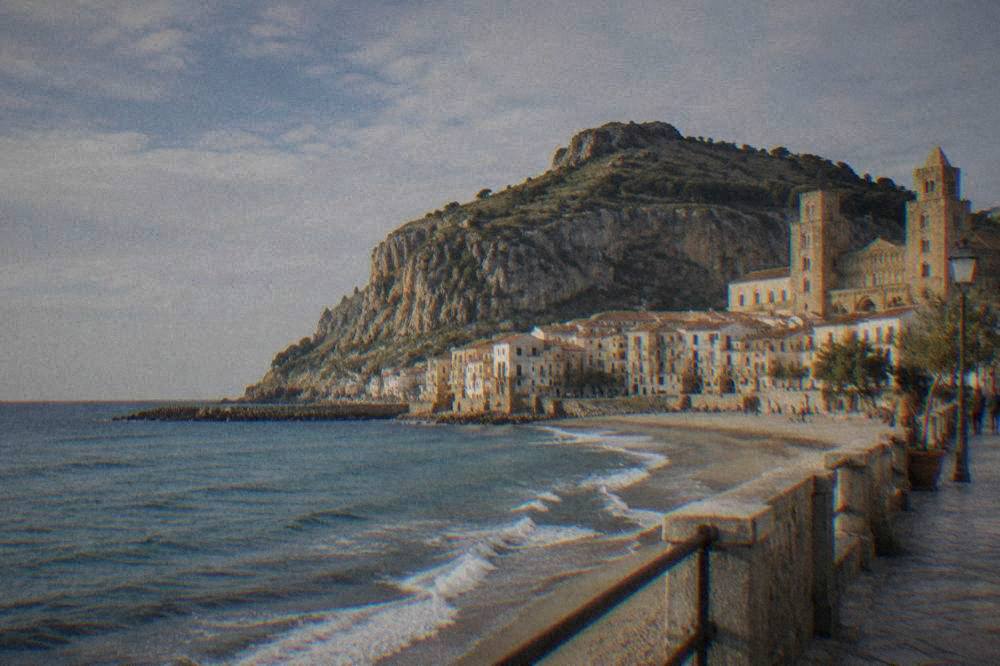
No Palermo-area beach appears on the 2026 Sicily Blue Flag list, so neither town can claim that badge. Cefalù's own waterfront is a long sandy stretch along the promenade, partly free and partly equipped with lidos and loungers, and the town's visitor pages describe it as a family-friendly option. Mondello, Palermo's beach district 13.9 km from the centre, mixes free public stretches with paid lidos, and the AMAT summer line 806 serves it.
Food follows population. Palermo's markets, Ballarò first among them, carry the street-food culture the city is known for, and the site's food pages cover it in depth. Cefalù eats well but smaller: a seafront town's restaurant list rather than a city's. On the spelling that visitors argue about, the Accademia della Crusca accepts both arancina and arancino, with Palermo and western Sicily saying arancina.
Readers comparing coastal bases more widely can also check whether Palermo or Catania is better for beaches and the site's overview of Palermo as a destination.
Common Questions About Staying In Cefalù Or Palermo
Is it better to stay in Cefalù or Palermo?
Stay in Palermo for short, sight-heavy trips and day-trip flexibility; stay in Cefalù for a beach-first holiday at a slower pace. A split stay, city first and coast after, uses the 39 to 60 minute train link well.
How far apart are Palermo and Cefalù?
By road the route is about 71.5 km and 65 minutes from the Quattro Canti; by train the fastest regional services take about 39 minutes.
Can you visit Cefalù as a day trip from Palermo?
Yes. Roughly hourly direct trains each way make a day trip straightforward, and the cathedral's free entry and compact old town suit a single day. The site's day-trip page carries the detail.
Does Cefalù have a beach in the town?
Yes. The sandy town beach runs along the seafront promenade, partly free and partly equipped with lidos, with additional coves such as Kalura and Mazzaforno nearby.
Is a car needed if you stay in either place?
No for the link itself, since trains run roughly hourly. Within Palermo the AMAT network and walking cover the centre, and in Cefalù the town is compact. A car matters only for scattered rural day trips, which guided excursions also cover.
The short version: let the trip's purpose pick the bed. Palermo rewards the curious and the mobile, Cefalù rewards the unhurried, and the hourly train between them means you never have to choose just one.